MAKING STORIES VISIBLE, A YEMENI ART HISTORY\ By: Anahi Alviso-Marino

ibraz

Making Stories Visible

A Yemeni Art History

9 September 2014

I.

In March 2012, a month after former president of Yemen Ali Abdallah Saleh[1] formally left power following a year of contentious mobilizations demanding his overthrow, the walls of Sana’a started being covered by colourful murals and sprayed with myriad paintings. Located on walls that were bullet-marked by violent clashes between demonstrators and forces loyal to the regime during the period before Saleh’s departure, the first paintings to appear were all dated and signed. They were attributed to Murad Subay, the painter in his twenties who initiated this artistic action.[2] Up until he decided to place a call on his Facebook page to take over the streets with brushes and sprays, he had worked on his canvases – which he recreated in March 2012 onwards on Sana’a’s walls – without exhibiting his work at any of the art spaces that existed in the city[3]. Through this initiative, he triggered an artistic action characterized by the use of public space not only to paint, but also to reflect on issues of political concern through art, involving a participative audience.


The campaigns Murad Subay initiated became Yemen’s largest art exhibition ever undertaken in public space. In Sana’a, kilometres of walls were intervened by a diverse public made up of an eclectic youth mostly under thirty and forty, formed by painters, activists, writers and all sorts of passers-by including, at times, even the military stationed at nearby crossroads. Other cities of the country followed suit, and in places like Taez, the walls showed reproductions of works by Hashem Ali (1945–2009), one of the pioneering figures of Yemeni modern painting.[4] In a country without museums specifically dedicated to modern and contemporary art, street art became a medium to portray pioneering works side by side with those of the youngest generation of painters and photographers. Street art was, for the first time, making it possible for art to reach unknown numbers – an unspecified audience, or public, who not only watched the walls as they were being transformed, but participated in that very change. In all, the interventions in public space portrayed mixed aesthetics, combined artistic expression with social and political commentary, and brought to the street snapshots, sequences of Yemeni art history.


The art campaigns initiated by Subay have radically and symbolically changed public space in urban centres of Yemen, namely Sana’a, turning the walls into memorial sites of struggle and public paintings into political awareness devices, making them, at times, reflect and refract collective action.[5] By referring to this now, my aim is to point out the dynamics affecting Yemeni art worlds[6] so as to explore how arts infrastructures were developed and used in Yemen before artistic practices took over street walls. Certainly, if young painters in their twenties find in public space and – more specifically -– the walls of the streets, possible canvases where they are able to reproduce old and new works, then it is certain that prevalent models of exhibition, valorisation, and recognition are being questioned as relatively obsolete.


However, it is important to note that street art is not the central focus of this essay. The case of Subay’s campaigns serves to point out ongoing questions about the dynamics of Yemen’s art infrastructures. I have written elsewhere about these street art campaigns, explaining more about how and when these practices emerged and how they differ from Arab and European street art, not to mention the ways they are similar (mainly during 2011) to Egyptian, Libyan or Bahraini street art. [7]


Indeed, street art has become rather visible in the international media, which has equally contributed to obscure the clearly different dynamics at play in the Yemeni case. Thus, in what follows, I will focus on describing the larger context from which these street art campaigns emerged. By contextualizing the emergence of artistic practices, my aim is to provide a rough cartography of arts infrastructures in Yemen.[8]


II.


Although historicizing artistic practices in Yemen is limited here by space and scope, it is possible to highlight certain elements pertinent to providing a general image of Yemeni art history. In order to do so, it should be stressed that painting is certainly the most visible and recognized of all disciplines. Practised in the southern city of Aden since the 1930s and 1940s during the British occupation (1839–1967), and later developed in the northern cities of Taez and Sana’a[9] during the late 1960s and mainly the 1970s, painting has since occupied a central place in Yemeni visual arts. Today, sculpture and photography, though also pursued, remain relatively marginal in relation to painting, as also do installation and video art.


Since the first ‘clubs’ (s. nadi) of the 1930s and 1940s in Aden to the artistic associations of the 1950s, and to the establishment of the first spaces dedicated to  formalized learning, exhibition and commercialization of art in the late 1970s, very different initiatives structured the domain of the arts in Yemen such as workshops, institutes, artist studios, galleries and art departments at university and at non art-related museums (i.e: military museums). Most but not all of these initiatives participated in a process through which the arts were institutionalized – that is, regulated by the state. With different levels of intensity, the state established, intervened and incorporated art infrastructures at changing levels throughout the years. In this light, the state strongly mediated the art scene between the 1970s and until the 1990 unification, provoking a rich period of political art with trained painters producing posters for political parties or large canvases portraying political figures. From unification onwards and until 2002, followed a period marked by the retreat of the state from the artistic domain. A new phase of strong state intervention continued from 2002 until 2007, again followed by a new retreat. Intermittently, the state has played an important role in the establishment of institutions as well as in the education and professionalization of artists. As I illustrate in what follows, the fluctuating character of this intervention was equally marked by the emergence of independent and non-governmental initiatives, suggesting efforts being made towards a relatively more autonomous art scene.


This complex process started in the 1970s, linking the emergence of spaces where painting could be practised in a more independent manner, like in artist studios, to more or less formalized learning, like the state-run “free workshops”.[10] One example of the first type was the studio opened by Hashem Ali, which did not lead to any type of formal diploma but informally educated painters since the early 1970s.


The free workshop in Aden, 1978.

The second type dates back to 1976 and was located in Aden. Known as the ‘Free workshop’ (al marsam al hurr), it was an initiative of the Ministry of Culture and Education of the People’s Democratic Republic of Yemen that became the first space that provided a diploma after three years of study. It started with a group of thirty to forty Yemeni students taught by the Egyptian artist Abdul Aziz Darwish, whom like many other foreigners was employed by the state within an effort to expand education. Organized as an evening workshop, it lasted until 1978, when art classes where also being taught at the state-run Jamil Ghanem Institute of Fine Arts by Egyptian, Palestinian, Iraqi and Russian teachers artists.


During the 1980s the artistic movement located in Aden grew and expanded, in part through the establishment of professional associations for artists. For instance, the Association of Young Plastic [artists] (jama’ia al tashkilin al shabab) included, at that time, eighty members whose works were exhibited in Yemen and outside the country. Also during this decade, a few independent commercial galleries like Gallery N°1, Colours, and Al Ameen Gallery, opened in Sana’a and Aden after the initiative of painters. They reflected on the need to commercialise art works while also signifying an expansion in the art scene in terms of adding independent spaces to the arts infrastructures.


Al Ameen Gallery in Aden, invitation to exhibition from 1986.

It was also during these years that the largest group of Yemeni students to have studied abroad left the country to pursue Fine Arts-related degrees in the former Soviet Union.[11] Between the 1970s and the 1990s, state scholarships were provided to pursue such studies, both in former North and South Yemen, and students returned to Yemen after having earned qualifications ranging from Bachelor’s to Doctor of Philosophy degrees. The return of these students to Yemen around the time of the unification (1990) nourished a dynamic of nationalization affecting the domain of visual arts. Yemenis took over teaching jobs in Aden, Sana’a and later on, in the coastal city of Hodeidah.[12] Trained artists also worked in the art department of the military and national museums established during the 1960s in Aden and Taez and the 1980s in Sana’a,[13]which before and after unification made use of painting for political purposes.


Throughout the 1990s, ‘groups’ formed with large numbers of participants, generally more than ten and up to forty. These groups announced a feature in a period marked by a search, through collective efforts that were more or less independent from governmental resources, for better conditions that might alleviate reduced opportunities to exhibit and commercialise art works. Certain examples include the Group of Modern Art (jama’a al fann al hadith, 1990s) and the Cultural Circle al-Halaqa (jama’a al halaqa, 1996–2001). Other individual and collective initiatives emerged, taking the form of informal workshops to teach painting, such as the opening of Mohammed al-Yamani’s studio in Sana’a (1997–) and the establishment of non-governmental art spaces that combined exhibitions with art-related events and publications. Such was the case of Bayt al-Halaqa (1997–2001), an art space found by Dutch expatriates living in Sana’a, which was simultaneously a space for workshops and exhibitions linked to the group ‘Cultural Circle al-Halaqa’ with artists based in Sana’a, Aden and Taez, and a cultural publication, The Halaqa Journal (last issued in 2001). These types of initiatives reflected both, the diversification of spaces dedicated to visual arts as well as the search for independent networks, all triggered by a period marked by the retreat of the state.


Invitation catalogue of an exhibition of Yemeni painter Elham al Arashi in Moscow, 1990.

In the 2000s, another type of group of artists emerged. Among the main features these new groups introduced, they differed from the groups of the 1990s by their reduced membership (usually less than six), which contrasted also with the large memberships characteristic of associations, syndicates and federations that previously grouped artists. Some of them also differed from previous groups, in the fact that they were female-only groups like Halat Lawniafrom Hodeidah (2005–) and a group yet without a name based in Aden (2010–). Some of these groups were also linked to the establishment of art spaces dedicated not only to exhibit and possibly sell their works, but also to entertain debates through the organization of weekly meetings, as was the case with Group of Contemporary Art, which established Atelier, an artist-run space locatedin the old city of Sana’a (2001–2009). These initiatives were a variation from similar ones attempted in the 1980s in the fact that they not only served to commercialize art works, like galleries do, but they reflected the need to tackle different purposes, like promote debate among artists and their public, create networks, showcase works, and propose informal learning to artists without a formal training in fine arts.


During the years 2000s, these groups of artists participate to the expansion of artistic networks, reflecting independent efforts that notwithstanding aim to better integrate and attain institutionally run spaces and opportunities. Such are the cases of the only-female groups from Hodeidah and Aden above mentioned, but also mixed ones like the Sanaani Group of Contemporary Art or only-male groups such as jama’a ruh al-fann (Art’s Spirit Group, 2005–2007) based in Aden.


Bayt al Halaqa and price list from the grand opening of Bayt al Halaqa in December 1997.

From 2002 to 2007, another phase of institutionalization took place, this time through mainly fostering the establishment of art spaces dedicated to the exhibition and commercialization of art. Relatively decentralizing the artistic movement, which had until then been centred in the capital Sana’a, the Ministry of Culture established Houses of Art in different governorates[14] where permanent exhibitions and training workshops were organized, and where art works could be bought. Such efforts were successful at incorporating some of the young and emerging artists (below their thirties during these years) to state-run institutions and networks (i.e newly opened Houses of Art and exhibitions organized at the Houses of Culture). From 2008 onwards, the Ministry of Culture launched yearly international forums for plastic arts, which together with a state-run gallery opened in 2011 demonstrated an interest for the internationalization and commercialization of Yemeni art. These efforts apart, certain artists still describe the years that followed and led to the 2011 mobilizations and until 2014 by an again fluctuating retreat of the state. This perception is possibly due to the saturation of the state-run networks with always the same artists. Consequently, opportunities for independent experiences were again triggered and favoured by the experimental environment of revolutionary times. For instance, non-governmental multi-disciplinary spaces such as ‘The basement’ and the ‘Gallery Rauffa Hassan’ opened respectively in 2011 and 2013, mixing exhibitions with music concerts or poetry performances. Such spaces attracted young artists, among which those not included or not participant to state-run networks found different possibilities for visibility and recognition. It is during this relatively more independent and experimental phase that Murad Subay took over the streets to put his paintings on the walls and outside the market and the state-run spaces.


III.


As is evident in the case of the street art campaigns undertaken by Murad Subay, the period that followed the contentious mobilizations that spread throughout the country in 2011 have also affected the domain of visual arts. In the same way that the mobilizations unleashed political creativity, they also created a safe environment where different kinds of social experiments could be tried. Subay’s street art campaigns are one of such experiments.


Invitation catalogue to an exhibition organized by the French Cultural Centre in Sana’a, featuring the Group of Contemporary art, 2008.

As I have briefly explained, arts infrastructures have developed in Yemen not only through a process defined and directed by the state. Individual and collective non-governmental initiatives have also structured Yemeni art worlds. Nevertheless, both these realms were disrupted with Subay’s campaigns. This is because, although organized independently from governmental infrastructures, independent initiatives have seldom aimed at proposing an alternative to institutional artistic networks. In other words, art spaces or groups created with a will to obtain more autonomy from the state have rarely been established in order to counter governmental initiatives. On the contrary, they have produced ways to better compete, integrate and participate in those institutional networks of exhibitions, commercialisation, and in general, opportunities of visibility and recognition.


What Murad Subay’s campaigns introduced was a sort of break from these dynamics: by placing art expression on the street and by provoking participation from artists but not limited to them, he has disrupted modes of exhibition-making, not to mention art’s interaction with audiences. Most importantly, he has placed art works outside the market. These ruptures from the ways in which art has been displayed and recognized until 2011, has introduced a type of art that is extremely public, given the work is being shown on the streets and is thus accessible by anyone, free of any entry fee, and thus open to anyone. Audiences have turned into possible participants, and streets into open museums and galleries.


Given how different art initiatives such as multidisciplinary exhibition spaces and installations on the streets have been undertaken by different actors after 2011 and mostly also in their twenties, Subay’s campaigns have been successful at attaining a visibility unprecedented for any art initiative taking place in Yemen. Inscribing this painter’s campaign into a historicized context allows the opportunity to think about what kind of histories – understood both as narratives and as historical accounts – are put forward in a global context, where artistic practices of peripheral countries such as Yemen unfortunately remain invisible.


[1] He formally retained power since 1978, when he became president of the former Yemen Arab Republic (YAR). Upon the unification of 1990, he became president of the current Republic of Yemen (ROY) until 2012.

[2] Murad Subay developed three collective campaigns (s. hamla, pl. hamlat) in Sana’a between March 2012 and May 2014: « Color the walls of your street », « The walls remember their faces », and « 12 hours ». Besides these campaigns, he has also wheat-pasted photographs realized by one of his brothers. Refer to Murad Subay’s blog for short documentaries, articles, interviews and photographs of these campaigns:http://www.muradsubay.wordpress.com.

[3] There are several spaces dedicated to visual arts in the capital, Sana’a, both state-run and independent. Among the state-run: the House of Culture hosts temporary exhibitions while permanent ones can be viewed at the House of Art where paintings can also be bought; the National Museum in collaboration with European cultural institutions has hosted a number of art exhibitions and installations, and the Sana’a Gallery located whithin the main building of the Ministry of Culture besides exhibiting also comercializes art works. Whithin the framework of cultural cooperation, European cultural centers also organize temporary exhibitions. Some of the independent initiatives that opened in the last five years include Kawn Foundation, the Basement, Gallery Rauffa Hassan and Reemart Gallery.

[4] Called “Colors of life”, this artistic action took started possibly in May or July 2012 in Taez. For a brief explanation and images refer to http://www.youtube.com/watch?v=UR2qx14GO0Y&feature=youtu.be andhttp://www.al-monitor.com/pulse/contents/articles/galleries/yemen-graffiti-vandalism-or-high-art.html, last accessed on June 3, 2014. In Taez, certain images were vandalized with black painting.

[5] Mainly in a chapter under publication and presented at the symposium “The Revolutionary Public Sphere: Aesthetics, Poetics & Politics”, organized by the Project for Advanced Research in Global Communication (PARGC) at the Annenberg School for Communication, University of Pennsylvania, Philadelphia, April 2014. For shorter analysis refer to my chapter « Les murs prennent la parole. Street art révolutionnaire au Yémen», inJeunesses arabes. Loisirs, cultures et politique, Laurent Bonnefoy and Myriam Catusse (dir.), La Découverte, Paris, 2013, “Mobiliser et sensibiliser à travers le street art au Yémen”, in 34 Short Stories, Bétonsalon-Centre d’art et de recherche et les Editions de Beaux-Arts de Paris, Paris, forthcoming in 2014, and http://universes-in-universe.org/eng/nafas/articles/2013/street_art_yemen.

[6] Contrary to an individualistic conception of the artist and the art works, sociologist Howard S. Becker proposes a collective approach: “art worlds consist of all the people whose activities are necessary to the production of the characteristic works which that world, and perhaps others as well, define as art […] We can think of an art world as an established network of cooperative links among participants […] Works of art, from this point of view, are not the products of individual makers, ‘artists’ who possess a rare and special gift. They are, rather, joint products of all the people who cooperate via an art world’s characteristic conventions to bring works like that into existence”. H. S. Becker, Art Worlds, University of California Press, Berkeley, 1982 (2008), pp. 34-35.

[7] Mainly in a chapter under publication and presented at the symposium “The Revolutionary Public Sphere: Aesthetics, Poetics & Politics”, organized by the Project for Advanced Research in Global Communication (PARGC) at the Annenberg School for Communication, University of Pennsylvania, Philadelphia, April 2014. For shorter analysis refer to my chapter « Les murs prennent la parole. Street art révolutionnaire au Yémen», inJeunesses arabes. Loisirs, cultures et politique, Laurent Bonnefoy and Myriam Catusse (dir.), La Découverte, Paris, 2013, “Mobiliser et sensibiliser à travers le street art au Yémen”, in 34 Short Stories, Bétonsalon-Centre d’art et de recherche et les Editions de Beaux-Arts de Paris, Paris, forthcoming in 2014, and http://universes-in-universe.org/eng/nafas/articles/2013/street_art_yemen.

[8] I conducted my doctoral research in Yemen from May 2008 until March 2011.

[9] Until the unification of 1990, Yemen was divided into two separate states. The Yemen Arab Republic, in the northern part of the country, was established in 1962 and marked the end of the Zaydi Imamate, which also coincided between 1839-1918 with the Ottoman occupation. The south, divided in 25 sultanates and sheykhasthat during 128 years were grouped into two protectorates, was occupied by the British until 1967. Until unification, the People’s Democratic Republic of Yemen represented the only Arab regime of the region explicitly Marxist.

[10] Translated as “the Free Atelier” or “the Open Studio”, such workshops also emerged during the 1960s in other parts of the Arabian Peninsula, for instance in Kuwait or Qatar, and were also state-run initiatives. On Kuwait see for instance Fatima al Qadiri and Kaelen Wilson-Goldie, “Farida Al Sultan”, Bidoun, Spring 2010, pp. 42-45. The catalogue Swalif. Qatari art between memory and modernity published by the Mathaf museum in 2011 also mentions them on the glossary in p. 24.

[11] For a detailed analysis of this group, refer to my article « Impact of transnational experiences: the case of Yemeni artists in the Soviet Union », Chroniques Yéménites, N° 17, 2013.

[12] The University of Hodeidah, located in the Red Sea coast, is the only public university in the entire country to offer the possibility to study visual arts since the late 1990s.

[13] Museums from the former South were looted during the short war of 1994 (May 5 to July 7), where the armies of the former nothern and southern states confronted each other. For a study of museums in Yemen refer to Gregoire Nicolet’s master thesis Les musées du Yémen. Développement et enjeux de l’institution, Mémoire de DESS : Mondes arabes, mondes musulmans contemporains, Geneva, 2007.

[14] Sanaa, Dhamar, Ibb, Yarîm, Hodeidah and Aden among them.

Continue reading “MAKING STORIES VISIBLE, A YEMENI ART HISTORY\ By: Anahi Alviso-Marino”

النسخة الورقية للمقال الذي نشر في صحيفة “الليموندو” الإسبانية عن الرسم على الجدران في اليمن. Paper version of the article, that published in “Elemondo” Spanish Journal, about the street’s art in Yemen.

Elmondo1

“Un grafitero contra los drones” By:FLAVIA DE FARRACES “ELMUNDO” Journal


Elomundo


España
EL ZOO DEL SIGLO XXI MURAD SUBAY

Un grafitero contra los drones

  • Este artista pinta los muros de Sanáa para arremeter contra la ‘invasión de drones’

  • Invita a los residentes a unirse para borrar las heridas de la revolución fallida de 2011

El joven posa junto a uno de sus murales en Sanáa.

El joven posa junto a uno de sus murales en Sanáa.

FLAVIA DE FARRACES

Actualizado: 10/09/2014 03:25 horas

Mientras en el cielo de Sanáa planean los drones, cuervos de acero siempre dispuestos a la caza del yihadista, en sus calles se disparan los aerosoles del grafitero más famoso de la urbe. Murad Subay reconoce sentirse halagado por la comparación con Banksy, aunque a diferencia del británico realiza sus proyectos a cara descubierta y orquestando una miríada de manos dispuestas a sumarse.

El artista, de 27 años, disimula con sus trazos los surcos desnudos de la ciudad. No se trata solo de una operación cosmética. A los habitantes de la capital los brillantes colores les hacen olvidar las cicatrices de los ataques de Al Qaeda en la Península Arábiga (Aqap). Los mismos que han atraído a los ‘buitres’ de EEUU y su célebre pericia ‘quirúrgica’ a este país continuamente al borde del abismo.“Los drones son una forma de invasión; la mayoría de las víctimas son inocentes” explica Subay a EL MUNDO.

En su último gran ‘asalto’ a las conciencias, el activista dirige sus dardos contra doce males de la sociedad yemení en el curso de un año. El reclutamiento de niños soldado, la corrupción y el sanguinario envite de Aqap, considerada la filial más mortífera de Al Qaeda aventajando a la matriz, son algunos de sus blancos.

El joven alumbró la idea de decorar la piel de Sanáa al calor de lasrevueltas de 2011, tras contemplar el “daño tanto físico -el de los barrios- como espiritual -el de sus residentes- que padecía la metrópoli”. Su primera campaña, ‘Pinta los muros de tu calle’, empujó a los vecinos a dibujar sobre los impactos de bala yconsiguió que los soldados trocaran momentáneamente los rifles por las brochas. “Intento sensibilizar a la población a través de un lenguaje pacífico”, expresa.

Poco después concibió ‘Las paredes recuerdan sus caras‘, donde tatuó en el ladrillo los rostros de 102 disidentes desaparecidos desde la década de los 70 apoyándose en los testimonios de sus allegados. Tras colonizar Sanáa, los semblantes de los ausentes se extendieron a las provincias de Ib, Taiz y Hudidah, avivando la memoria colectiva. Esta titánica labor ha impulsado una investigación para ahondar en la suerte de las víctimas y la ratificación de Yemen de la Convención para las desapariciones forzadas de la ONU.

Subay lamenta, sin embargo, la oportunidad perdida de 2011. “Los partidos políticos en Yemen, con el apoyo de EEUU, Arabia Saudí e Irán se las han arreglado para lanzar una contrarrevolución“, detalla decepcionado. El país que algunos toman como paradigma de éxito de la primavera árabe, no ha experimentado en realidad más que untraspaso de poder que ha permitido al ex tirano Saleh seguir gobernando en la sombra. Por lo que no es momento aún de enfundar los spray para seguir actuando. “Con un grafiti no necesitas ni medio segundo para llegar al público”.

‘Los drones son una forma de invasión, la mayoría de las víctimas son inocentes’

1987: Nace en la provincia de Thamar (Yemen). 2012: Lanza su primera movilización ‘Pinta los muros de tu calle’. 2012: Impulsa un proyecto para denunciar las desapariciones forzadas. 2014:Completa su campaña ‘Doce horas’, de un año de duración.

Read More>>

OZY\THE BANKSY OF YEMEN: BY LAURA SECORUN PALET


Rising Stars 

People who are accelerating our culture and advancing the conversation – for good or for ill. You may not have heard of them yet – but eventually everyone will.

WALLS OF PROTEST

The Banksy of Yemen

WHY YOU SHOULD CARE

Art can appear in the unlikeliest of places, and express what many people think and feel.

The streets of Sana’a, Yemen’s capital, bear the scars of jihadist attacks and sectarian clashes that have engulfed the country since 2011. Yet among bullet holes and crumbling facades appear colorful murals with messages of hope and calls for civic action. Behind them is Murad Subay, a 27-year-old painter. His poignant and often ironic murals have become part of the city’s landscape and have earned him the nickname of “Yemen’s Banksy,” after the famed U.K. street artist. Unlike Banksy however, Subay’s images are collective projects. By inviting others to join, he’s managed to create over 2,000 murals in just two and a half years. “My campaigns would not be anything without other people,” he tells OZY.

”Even soldiers put their weapons down and took brushes instead.”

The artist’s public image is also a far cry from Banksy’s. Unlike the mysterious British painter, Subay works in broad daylight, dressed in jeans and a t-shirt, sporting small glasses and curly long hair. And the government has yet to take measures to stop him. His timid demeanor vanishes when he talks about politics. “Yemen used to be a great civilization and now is at the worst point in its history,” he says. Yemen, with a population of 24 million, sits strategically at the southern tip of the Arabian Peninsula, where a strong Al Qaeda presence has drawn repeated drone strikes from the United States.

BW headshot of Murad Subay

SOURCE: SHARAF AL HUTHI

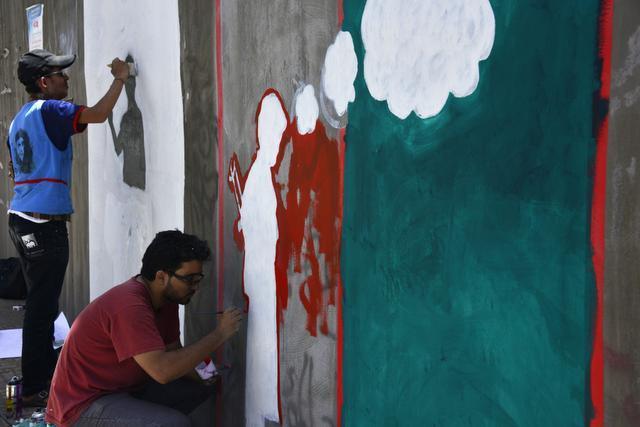
In 2011, Subay took to the streets of Sana’a to protest the country’s dysfunctional economy and institutionalized corruption. Demonstrations escalated into a violent uprising that pushed Yemen to the brink of a civil war and forced the dictator Ali Abdullah Saleh to step down in favor of his prime minister, Abd Rabbuh Mansur Hadi. “I thought, ‘Going to the street to throw stones is not enough, we won’t change anything. So what can I do? I can paint!’” He chose graffiti. “I don’t need an hour-long lecture to convey a message, with street art I only need a split second.” His first campaign, “Color the Walls of Your Street,” came in March 2012, when he used social media draw a crowd to paint over ”the scars of the clashes.” Hundreds showed up and by-standers joined in. “It was like a carnival!” recalls Subay. “There were friends, families, kids… even soldiers put their weapons down and took brushes instead.” Murals of bright colored flowers, smiling faces and calls for peace soon appeared all over Sana’a.

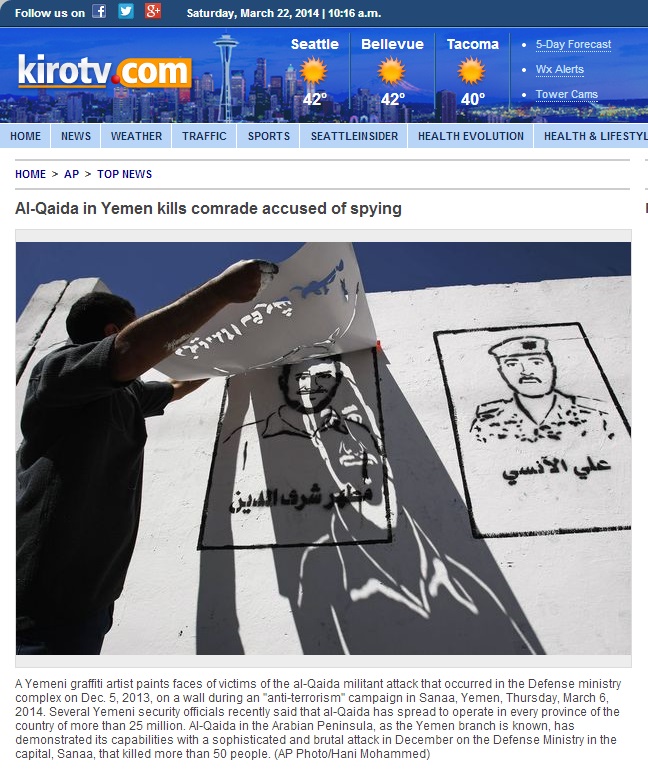
He began painting the portraits of 102 people, including journalists, politicians, writers and activists believed kidnapped or killed by Saleh’s regime.

Neighbors supported it. “Murad has chosen to cover the walls with color on the street that was filled with phrases which gave rise to hatred,” says Sana’a resident Nadia al-Kaokbani, referring to the inflammatory slogans from political groups. “Yemen’s Banksy” was soon painting in other Yemeni cities like Aden, Taizz, Ebb and Hodeidah. Encouraged by the hundreds who joined, Subay chose to tackle a sensitive issue: forced disappearances. In September 2012, under the title “The Walls Remember Their Faces,” he began painting the portraits of 102 people, including journalists, politicians, writers and activists believed kidnapped or killed by Saleh’s regime since the 1960s. After the campaign attracted media attention, the issue of disappearances went back on the political agenda. Human Rights Minister Hooria Mashhour vowed to continue the debate and a special investigative committee was formed. It’s hard to say his campaign has had much impact. “Everything is much worse,” says Subay. “The country is still in the hands of the same few.” Danya Greenfield, Yemen expert at the Atlantic Council, agrees. “Sadly, most of the decisions are being taken by a very narrow group of elite members of the political class and tribal leaders,” she says. “And so the ability to actually influence and access the levels of power I think is pretty minimal.”

Man looking at stenciled wall of another man painting wall

The fragile government has failed to stop Al Qaeda in the Arabian Peninsula (AQAP), which has gained a strong foothold in the eastern province of Hadramawt, where it has imposed Sharia law. “Terrorism and sectarianism had never been a problem in Yemen,” says Subay. “Now they’re growing stronger every day.” The turmoil, along with falling oil production and water shortages, has left Yemen’s economy in shambles with a 35 percent unemployment rate and high food prices. Subay has no full time job, though he occasionally works for the Ministry of Culture. Yet with his friends and family helping to buy art supplies, Subay seems inspired rather than discouraged.

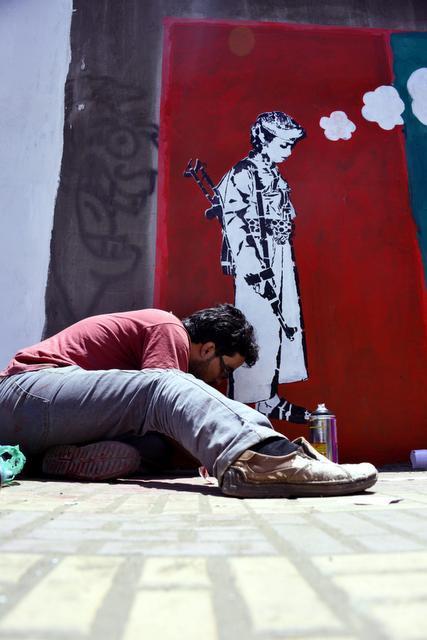
He focused on a different subject each month, including gun control, sectarianism, child recruitment, corruption and drone strikes.

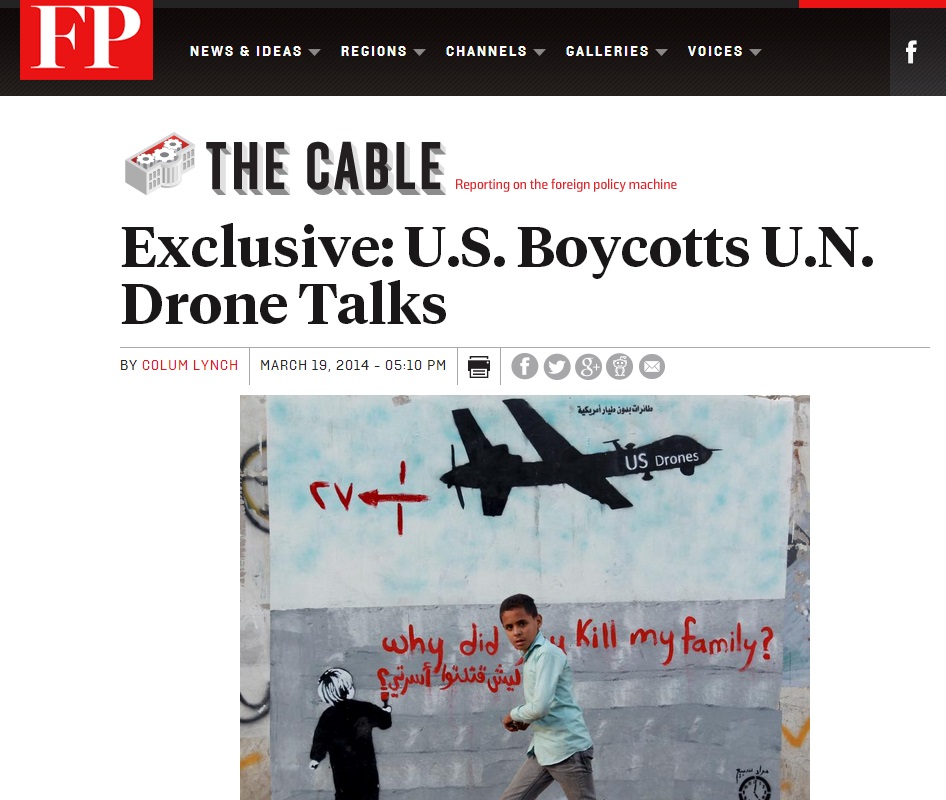
He won the “Art for Peace Award” from Italian Veronesi Foundation this year. Subay’s refused offers from several institutions, including the United Nations, to pay for art supplies, in order to preserve his independence. Growing up in a family of modest means with seven brothers and sisters, Subay dreamed of being an artist, not an activist. He started at 12, teaching himself to paint on canvas by copying the works of great artists. His family supported his passion but, with no local art schools, he chose to study English literature at the University of Sana’a. Subay’s third campaign, “12 Hours,” started in June 2013 and finished only a month ago. “I realized Yemen had so many different problems I had to put them all together,” says the artist. So he focused on a different subject each month, for 12 months, including gun control, sectarianism, child recruitment, corruption and drone strikes. They’re his boldest works yet, painted with spray and brush: A man putting his rifle in a trashcan saying “I want peace,” a young woman holding a white dove, a U.S. drone flying over a child who’s writing on the wall “Why did you kill my family?” Subay hopes to continue his art training, though he’s already fulfilled a big part of his dream.

Read more: Murad Subay: Yemen’s Banksy | Rising Stars | OZY

الفنان مراد سبيع: ثائر ملون/ السفير العربي، بقلم/ بشرى المقطري

toplogo

الفنان مراد سبيع: ثائر ملون
مراد سبيع

مراد سبيع
حينما نريد أن نكتب عن تجليات الثورة اليمنية الأكثر خلوداً ونقاءً في ذاكرة جيل لم تحقق له الهتافات الحماسية لاسقاط نظام لم يسقط أي نتيجة، وإنما بقت قفازاته الناعمة تخنق أحلامهم، فإننا سنبدأ من جدران “مراد” التي عبر بها عن رفضه ومقاومته لكل الصدوع العميقة التي تعيق المجتمع اليمني من تحقيق التحول الاجتماعي والثقافي.
لوّن جدار شارعك
مراد سبيع، الفتى الأسمر النحيل، قاد ثورة من نوع آخر، أكثر عمقاً وحيوية وديمومة. ثورة لم تُلقِ لها بالاً شاشات التلفزة الحريصة على نكهة الدماء والموت، وعلى مزادات الشهداء والجرحى، لأنها ببساطة ثورة فنية من عمق المجتمع. هو أشبه بنبي جاء بين زمنين: زمن الثورة وزمن الخيبة. هبط مراد فجأة من خيال هذا الجيل الجامح المتعب، ليبشر برسالته اللونية. من دون مقدمات نزل “مراد”، لا ليحمل حنجرته ويهتف لثورة سرعان ما ظهر جلادوها الجدد، بل ليحمل رسالته الجديدة. كان رافضاً لفوضى الصراعات والحروب الصغيرة، ولم يستسلم لإحباطنا حين اختبأنا في جحورنا نلملم خيباتنا. حمل ريشته ونزل إلى شوارع صنعاء الفائضة والمكتظة بلون الحرب والرصاص والرعب. بدأ أولاً بحملة أطلق عليها اسم “لون جدار شارعك”، كانت بمثابة وقت مستقطع لالتقاط الأنفاس في فصل ربيعي هادئ بعيداً عن كل المجازر والدماء التي تسيل. كانت نظرات الاستغراب تحيط بهذا الفتى المجنون الذي يريد من المواطنين ان يلونوا جدران شوارعهم بالرسومات والأزهار والصور التجريدية والتعبيرية. وعلى الرغم من كل ما أحاط الحملة من صمت ومضايقات، إلا أن مراد لم يكن يعرف بأنه وضع بصمته الخاصة في جذر وعينا المهزوم، لتصبح الريشة سلاحاً، مدشناً بذلك “فن الشارع” الذي لم تشهده اليمن من قبل.
أصداء حملة مراد سبيع الأولى، “لون جدار شارعك”، زرعت فينا حماسة تضيء القلب، وآمن الكثير بأن جدران الشوارع ليست للحرب، وظهر مشهد الجنود والنساء والأطفال وهم يرسمون على الجدران ويلونون شوارع صنعاء بأحلامهم.الجدران تتذكر وجوههم

لكن مراد لم يقف مبهوتاً من نجاح حملته الأولى، بل أوغل هذه المرة في ذاكرتنا الجمعية حينما اطلق حملته الثانية “الجدران تتذكر وجوههم”، والتي جعلت قلوبنا تخفق بالمرارة. الحملة نكأت ذاكرة جيل الآباء والسياسيين والمثقفين وفتحت نافذة الزمن الحاضر على ماضي وجوههم: “وجوه المخفيين قسراً”، أولئك الذين أخفاهم النظام في سبعينيات القرن الماضي، وفي محطات أخرى مختلفة ولم يعرف أهاليهم ولا ذووهم عنهم شيئاً حتى هذه اللحظة.
كانت صورهم ترمقنا بفضول ونرمقها نحن المارة بحسرة: اليساريون والناصريون، الشماليون والجنوبيون، ملامحهم التي اعاد لها مراد الحياة، تبصق على القتلة وتذكر الأجيال بأن أي ثورة لا تنسى مفقوديها، وأن عليهم الآن أن يكسروا الصمت الذي نسجه السجّان لسنين طويلة حول قصصهم المروعة.
كان مشهداً مؤثراً كلما أتذكره الآن من نافذة غرفتي، وأشعر برغبة عارمة بالبكاء. هكذا خرجتْ أُسر المخفيين عن صمتها بعد عقود طويلة، ونزلت إلى جوار مراد لتحفر وجوه احبابها الغائبين. كان ذلك التجمع المتحدي للرقباء والسجانين القدماء والجدد، استفزازاً لكتب التاريخ والصحف والقنوات الرسمية وخطب الرفاق والأعداء، التي طمست تاريخ هؤلاء بينما استعاده مراد في شوارع صنعاء وتعز والحُديدة.

12 ساعة

لم ينتظر الفنان صراعات السياسيين وعجز المثقفين لاتخاذ موقف تجاه البلد الذي يبدو الآن متجهاً إلى الهاوية بعد أعوام من الثورة. البلد الذي ما زال يتقاسمه جنرالات الحروب وملوك الطوائف ومروجو الموت والقتل والاختطاف والمتاجرون بالدين. واحتجاجاً على هذه الفداحة التي نعيشها والتي يدفع ثمنها هذا الجيل الحالم الذي اشعل الثورة ونادى للحياة، خرج مراد بحملته الشهيرة الثالثة “12 ساعة”. وكالمرات السابقة خرج مراد مع الشباب الذين وجودا في الفن وسيلة للتعبير على الاحتجاج ورفض الصراعات التي تسري في عروق المجتمع اليمني كنار هادئة.
حملة “12 ساعة” كانت مختلفة عن سابقاتها. كانت ذروة تألقه، إذ كانت فكرية أكثر مما هي لونية، أو ابتهاج لوني، بل حددت ظواهر المجتمع السلبية التي يرفضها اليمني. كانت الجداريات رفضاً للجوع والاختطاف والارهاب والكراهية الطائفية وتقسيم اليمن.
كتب عنه كارلي ويست (وهو باحث سياسي أميركي في جامعة “سانت جورج” الأميركية): يبدو كفنان بوهيمي يعمل بصمت ولا يحب الصخب، تراه غارقاً في قوقعته الداخلية يرسم عالماً مسالماً يليق بالانسان. افكر بمراد وبريشته وهو يمزق بمحبة وود كل جدراننا المظلمة بما ترمز إليه من خوف وظلم وسجن وكراهية وقيد ونقص خيال… ويحيلها إلى جدران أخرى يمكن ان نتصالح معها. أفكر به وبجيله ينتصر رغماً عن كل إحباطات الحياة اليومية في بلد كاليمن، وأشرب قهوتي المخفوقة بالحليب الأبيض: أبيض تماماً كحلم مراد، اليمني الفصيح.

رابط الموضوع..

“الألوان وحدها تواجه العنف في اليمن” صالح البيضاني لــ جريدة الحياة

الألوان وحدها تواجه العنف في اليمن

آخر تحديث: الأحد، ١٥ يونيو/ حزيران ٢٠١٤ (٠٠:٠٠ – بتوقيت غرينتش)

في بلد مدجّج بالسلاح ويتصاعد فيه العنف، لم يجد شباب يمنيون حالمون بمستقبل أفضل لبلدهم سوى الألوان لإشهارها في وجه فوهات البنادق. وعلى امتداد مساحات الوطن المثقل بالصراعات السياسية، قاد الفنان اليمني مراد سبيع حملاته الفنية المحملة بهموم الناس من خلال مبادرته للرسم على جدران الشوارع والتي استقطبت العشرات من الفنانين الشباب وحتى الناس البسطاء الذين عبروا بكل حرية عن همومهم وأحلامهم ومخاوفهم في الهواء الطلق وعلى جدران شوارعهم التي كانت على الدوام فريسة سهلة للشعارات الطائفية والسياسية التي فرقت اليمنيين عقوداً.

يقول سبيع إن مبادرته للرسم على جدران الشوارع أتت على شكل ثلاث حملات فنية متشابهة في الطابع والفكرة، كانت أولاها حملة «لوّن جدار شارعك» التي أطلقت في 15 آذار (مارس) 2012، واستمرت ثلاثة أشهر متتالية.

كما أطلقت حملة «الجدران تتذكر وجوههم» في 8 أيلول (سبتمبر) 2012، حتى 4 نيسان (إبريل) 2013 وكانت مكرسة لرسم وجوه المختفين قسراً واستمرت لسبعة أشهر متتالية ونجحت في التذكير بشخصيات سياسية كانت ضحية للصراع السياسي وابتلعتها دوامة الصراعات في مراحل سابقة من تاريخ اليمن المعاصر.

كما دشنت حملة «12 ساعة» الصيف الماضي، ولا تزال مستمرة. ويتحدث الفنان مراد سبيع عن المضامين والأهداف التي تقف خلف هذه الحملات قائلاً: «كانت حملة «لون جدار شارعك» تسعى للسلام ومحاولة طمس آثار الحرب في المناطق التي استهدفناها. وحملة «الجدران تتذكر وجوههم» كانت تستهدف تحريض ذاكرتنا وتذكير الناس بأبطال لم يعرف مصيرهم إلى اليوم.

أما حملة «12 ساعة» التي ما زالت مستمرة فتستهدف مناقشة 12 قضية يعانيها الشعب اليمني عبر الرسم على الجدران: انتشار السلاح، الطائفية، الاختطاف، العبث بالوطن، الدرونز، الفقر، الحروب الأهلية، ضحايا مجزرة العرضي الإرهابية، تجنيد الأطفال، العمالة «الخيانة الوطنية». وفي ساعتها الحادية عشرة ناقشنا «الفساد وسننهي الحملة في الساعة الثانية عشرة».

ويعود سبيع إلى بدايات هذه الفكرة وكيف أستطاع أن يستخدم الريشة سلاحاً في مواجهة الكثير من المشاكل التي يعاني منها المجتمع اليمني: «عندما فكرت في حملة «لون جدار شارعك»، لم يكن هناك أي تجارب للرسم في الشارع قد خطرت في بالي… ما كان يشغلني فقط هو قبح الحرب والإحباط الذي كان يلفني كغيري من اليمنيين في تلك الفترة، فأنا احد سكان المنطقة التي كانت تفصل بين قوات تسمي نفسها النظام، وقوات تسمي نفسها أنصار الثورة».

ويضيف: «كانت المدينة تعيش في فوضى من الحرب التي جرت عام 2011، كنت دوماً أتمنى أن أعمل شيئاً، ولم يكن في يدي إلا أن أحمل فرشاتي وخرجت للرسم. وواصلت العمل منفرداً لمدة أسبوع إلى أن استجاب اليمنيون لدعوتي فكانوا ينزلون معي إلى الشوارع للرسم كل خميس من كل أسبوع. وبعد شهر من نزولي يومياً للرسم بدأ الشباب المشاركون في الحملة أيضاً يشاركون في أيام أخرى غير الخميس. هكذا كانت بداية حملة «لوّن جدار شارعك».

وعن مدى تفاعل المجتمع مع الفكرة وتحمسه لها يوضح: «تقبل المجتمع اليمني كثيراً فكرة الرسم من خلال مابات يسمى «فن الشارع» الذي أصبح منصة أخرى لصوت الناس. غير أن ردود فعل مختلفة نتجت من حملة «الجدران تتذكر وجوههم» الخاصة بالمختفين قسراً، ربما لحساسية الموضوع من الناحية السياسية». ويسهب سبيع في الحديث عن النتائج السلبية التي أدت إليها حملة «الجدران تتذكر وجوههم» قائلاً: «كانت قضية المختفين قسرًا ولا تزال حساسة للغاية، وما زال المسؤولون عن إخفاء الناس إلى يومنا هذا يمسكون بالسلطة والقوة، لهذا تعرضت جداريات الحملة «وجوه المختفين قسراً» لطمس من حين إلى آخر».

استطاع الفنان اليمني أن يجعل من الفن عاملاً مؤثراً في مجتمع قبلي محافظ تسيطر عليه عوامل القوة المادية فقط لذلك حظي بتكريم محلي ودولي، ومنحته مؤسسة «فيرونيزي» الإيطالية أخيراً جائزتها التي تمنحها كل عام لفنان أبدى التزامه بالسلام من خلال أعماله. وسيجري تكريم سبيع تزامناً مع مؤتمر السلام العالمي الذي سيعقد في ميلانو في 14 تشرين الثاني (نوفمبر) المقبل.

ويعتبر سبيع أن نجاحه كان رهناً بتفاعل المجتمع مع مبادرته. ويقول: «أثبت الفن نجاحه لأن الناس في الشارع لم يكونوا مجرد متفرجين بل كانوا مشاركين وداعمين وناقدين… بالتأكيد هو فن تفاعل معه المجتمع ودعمه معنوياً ومادياً. وكانت فرق الحملات الثلاث هي أساس نجاح هذه الحملات وجعلها تصل إلى ما وصلت إليه، فشكراً لكل من ساهم في العمل وأخصّ أصدقائي الفنانين والمشاركين بطريقة أو أخرى».

رابط الموضوع..


“فنون الخليج”\جائزة “الفن من أجل السلام” الرسام اليمني “سبيع”

فنون الخليج

جائزة “الفن من أجل السلام” الرسام اليمني “سبيع”
جائزة
07-22-1435 01:31

صنعاء “فنون الخليج”

فاز الرسام اليمني مراد سبيع بجائزة الفن من أجل السلام لعام 2014 التي تمنحها مؤسسة فيرونيزي الإيطالية للفنانين الذين يبدون التزاماً بثقافة السلام في أنحاء العالم.

وأعلنت المؤسسة في موقعها على الإنترنت فوز سبيع بالجائزة لهذا العام، مشيدة بالفنان وبالتزامه بالدفاع عن الضعفاء من خلال الرسم.

وعدّ سبيع الجائزة تكريماً لليمن واليمنيين وذكر أن الجائزة ستكون حافزا إضافيا له للاستمرار في التعبير عن قضايا الناس في رسومه الجدارية”.

وقدم سبيع الشكر للمؤسسة ولزملائه من الشبان والفتيات الذين اشتركوا في حملات الرسم على جدران الشوارع ومنها حملات (لوّن جدار شارعك) و(الجدران تتذكر وجوههم) و(12 ساعة).

أحدث حملات مراد سبيع وفريق الفنانين المصاحب له انطلقت في صنعاء يوم 15 مايو وموضوعها سفر اليمنيين للعمل في الخارج وارتباطهم ماديا ومعنويا بالبلاد الأخرى التي يعملون فيها.

وتضمنت الحملة الجديدة أيضا رسوما تعبر عن الصراعات الطائفية والقبلية التي تكاد تمزق أوصال اليمن في الوقت الراهن.

وقال سبيع “الهدف من هذا كله هو إدخال نوع جديد جدا من التعبير إلى الشارع اليمني. وهناك جانب إيجابي في هذه الحملة أن الإنسان اليمني لم يكن مشاهدا بل مساهما ومشاركا ومعلقا أيضا ومنتقدا لهذه الحملات”. ومن المقرر أن يتسلم سبيع الجائزة في نوفمبرالمقبل في حفل مصاحب للمؤتمر العالمي السادس للسلام في ميلانو بإيطاليا. وفقا لما نشر بوكالة رويترز.


رابط الموضوع..

حاز الفنان التشكيلي اليمني الشاب مراد سبيع على جائزة «الفن من أجل السلام» التي تمنحها مؤسسة «فيرونيزي» الإيطالية.

logo

الفنان التشكيلي الشاب مراد سبيع يحصل على جائزة «الفن من أجل السلام» العالمية

الفنان التشكيلي مراد سبيعالفنان التشكيلي مراد سبيع

حاز الفنان التشكيلي اليمني الشاب مراد سبيع على جائزة «الفن من أجل السلام» التي تمنحها مؤسسة «فيرونيزي» الإيطالية.

وتمنح الجائزة السنوية هذا العام على هامش «المؤتمر العالمي السادس للسلام» الذي سيقام في مدينة ميلان الايطالية في الرابع عشر من نوفمبر.

وكان سبيع دعا زملاء له عبر صفحته على مواقع التواصل الاجتماعي لتنفيذ حملات رسم حرة في شوارع العاصمة التي شهدت جدرانها مواجهات بين خلال الثورة ضد علي عبدالله صالح منتصف عام 2011، وعكف على تنظيم حملة «لون جدار شارعك» ليستغل الجدران المخترقة بالرصاص ويشكل منها لوحات بديعة.

وأطلق الفنان الشاب ثاني حملاته في شوارع صنعاء وشوارع مدن عدة في اليمن -التي ازدحمت بشعارات المناوئين لنظام صالح والمؤيدين له- تتمثل في تخليد وجوه المخفيين قسرا، من خلال حملة «الجدران تتذكر وجوههم» للتذكير بسياسيين وعسكريين اختفوا خلال فترة الحكم الشمولي في الشطرين ولم يُعرف مصيرهم حتى الآن.

وناقش الفنان التشكيلي عبر جداريات فنية في شوارع صنعاء من خلال حملة «12 ساعة» وحملة «كتاب مفتوح» قضايا تتعلق باليمن والإنسان اليمني كالطائفية والغارات الجوية التي تنفذها طائرات امريكية بدون طيار أو بما يعرف «هجمات الدرونز».

ورسم الفنان وعدد من الشبان عدداً من اللوحات على جدار جنود وأطباء ومرضى وزوار قضوا في حادثة الهجوم على مشفى العرضي، الذين لقوا حتفهم في الخامس من ديسمبر الماضي حين هاجم مسلحو تنظيم القاعدة مجمع وزارة الدفاع.

وبالرغم من بساطة الفكرة إلا إن الشاب الرسام استطاع أن يدعو مجموعة من الفنانين من أبناء جيله في ثورة من الألوان لترويج ثقافة السلام والتسامح بلمسة جمالية جديدة ومبتكرة.

وتخصص جائزة «الفن من أجل السلام» العالمية لفنانين ومصورين وممثلين نشطوا في اشاعة ثقافة السلام.

ومراد سبيع درس الأدب الانكليزي في جامعة صنعاء، وتعل�’م الرسم في المنزل ليبدأ رحلته مع الألوان والرسم.

رابط الموضوع..

Photogallery for “12 Hours” graffiti camapaign “Child Recruitment”

معرض صور عن حملة “12 ساعة”، على الموقع الإسباني “El Nuevo Herald”، ضمن ساعتها التاسعة ” تجنيد الأطفال”. الصور من الوكالة الأوروبية و تصوير: يحيى عرهب.

Photogallery for “12 Hours” graffiti camapaign, in the 9th Hour “Child Recruitment” on the Spanish website “El Nuevo Herald”. Photo by: Yahya Arhab \EPA

Un artista yemení pinta un grafiti en el que se muestra un niño soldado con motivo de una campaña para acabar con el reclutamiento y el uso de los niños en los conflictos en Saná, Yemen, hoy, jueves 10 de abril del 2014. Varios artistas yemeníes lanzaron una campaña para acabar con el reclutamiento de las milicias y los grupos rebeldes de los niños soldado para los confictos del país. YAHYA ARHAB / EFE

1kYziS.St.84 1oE2WE.St.84 1wwtwB.St.84 DIHBC.St.84 TeHGV.St.84 tPoK2.St.84 XJlLO.St.84