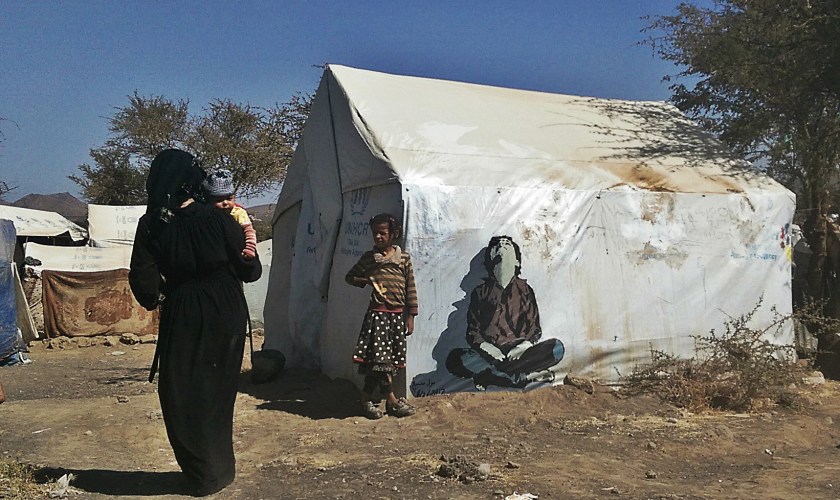
“Children of Graves” my mural in “Ruins Campaign”, Feb.6,2017.


“أطفال المقابر”

على الجهة اليسرى على الطريق الممتده من الطريق المتجهة لمحافظة “عمران” تضطجع مئات من مخيمات النازحين الذين أجبترهم أو دمرت منازلهم الحرب.
عندما وصلنا أنا والأصدقاء إلى مخيم “ضروان”، إستقبلنا النازحين هناك بلطف تام ومطلب هو الأهم، ألا وهو مدرسة لتعليم أطفالهم الذين منعوا من تدريس اطفالهم في المدارس الموجوده في المنطقة لعدم توفر مقاعد دراسية لهم، بحسب قولهم.
الأطفال وأهاليهم النازحين يعانوا الأمرين في مخيمات مهملة ن توفر أبسط الخدمات مثل “الحمامات”. من المؤسف ان هذا ما يعاني منه جميع النازحين في جميع المخيمات التي صنعتها ومازالت تصنعها الحرب الدائرة في اليمن.
جداريتي، ضمن #حملة_حطام، عن “النازحين”، في مخيم ضروان للنازحين، 6 فبراير 2017.

_________________________________

“Children of Graves”


On the left side of the road leading to Amran governorate lays hundreds of “Displacement Camps”, in which people have been forced to leave their houses and lands and move to live in camps due to the war.
When I arrived with my friends to “Dharawan’s displacementl camp”, we were welcomed warmly by the residents of the camp. Afterwards, they had only one simple and basic request, and that is a school for their children to learn. They told me they couldn’t register the children in the schools in the surrounding areas because there isn’t any space for them.
The displaced people and their children lack access to the most basic services like “bathrooms” and clean water. It saddens me to see people living under these harsh conditions for an indefinite time. This is only a small taste of what the displaces endure today in the camps that were and are still being made by this war.
My mural about “Displaced people” in #Ruins_campaign, in Dharawan’s 
displacement camp,February 6, 2017.

16463771_10212134051173078_5256887587311060357_o.jpg
Children of Graves
Children of Graves1
Children of Graves1

ட்ரம்பின் தடை தொடர்பில் யேமனியர்கள் அதிருப்தி\ On “Athavan News”

ட்ரம்பின் தடை தொடர்பில் யேமனியர்கள் அதிருப்தி

athavan-news

குறித்த தடை தொடர்பில் கருத்து தெரிவித்த யேமனின் புகழ்பெற்ற ஓவியர் முராட் சப்பே (Murad Subay), “இந்த தடை காரணமாக அமெரிக்காவில் உள்ள எனது மனைவியை சந்திக்க இயலாத நிலைமை தோன்றியுள்ளது. எனது மனைவி தற்போது அமெரிக்காவில் கல்வி கற்று வருகின்றார். குறித்த தடை அகற்றப்படும் வரை என்னால் அவரை சந்திக்க இயலாது. இந்த தடைக்கு அமெரிக்கர்கள் எதிர்ப்பு தெரிவிக்க வேண்டும்” என தெரிவித்தார்.

Video Link>>

Yemen conflict all but ignored by the West\ On “DW”

dw

Yemen conflict all but ignored by the West

Atrocities are being committed against an innocent Yemeni population on a scale as serious as Syria and Iraq. But why doesn’t this story get as much media attention as those conflicts? Gouri Sharma reports.

When the UN children’s rights organization UNICEF recently released a report stating that at least one child dies every 10 minutes in Yemen, the expectation was that the news would be picked up by international news outlets. But barring a few exceptions, including Al Jazeera and DW, the news was not carried by much of the global media prominently, and some not at all.


In its report, the humanitarian organization estimated that more than 400,000 Yemeni children are at risk of starvation, and a further 2.2 million are in need of urgent care. How could it be that statistics this alarming, the result of a war involving regional superpowers with the backing of the US and UK, does not make headline news?

But people close to the story say this example is just a reflection of how the war in Yemen is covered by the global media.

Yemen and the western media

It’s not that the conflict isn’t covered, but when it is, news outlets tend to focus on the ‘Sunni-majority Saudi Arabia versus the Shia Iran proxy war’ narrative which overlooks the country’s deepening humanitarian crisis.

Yemen, a country of 24 million people, has endured political strife for decades, but the situation worsened in March 2015 when a Saudi-led coalition began airstrikes with the aim of reinstating President Abdrabbuh Mansour Hadi, who had been ousted by the Houthi rebel group. The Houthis are said to be backed by Saudi Arabia’s regional political foe, Iran.

Since the bombing began, the UN estimates that more than 10,000 innocent people have been killed, 69 percent of the country is in need of humanitarian assistance, and three million people have been forced to flee their homes.

Wie die Medien über den Krieg im Yemen berichten (Murad Subay) Although atrocities are committed on a daily basis, the conflict in Yemen seems to have dropped off the radar

It’s a complex political situation and those closest to it – the local journalists – have been forced to stop telling the story because of the dangers they’ve been facing. The Committee to Protect Journalists, a New York-based press freedom watchdog, has recorded the deaths of at least six journalists caught in the crossfire since the start of the Saudi campaign. In its latest report, the Yemeni Journalist Syndicate said that more than 100 press violations were committed in the first six months of 2016, including 10 cases of attempted murder, 24 abductions and disappearances, and 12 cases of assaults on journalists and their offices. The situation for foreign journalists isn’t any better, amid reports that those who get access can be subject to harassment and kidnappings.

Afrah Nasser, an independent Yemeni journalist who is based in Sweden, told DW: “When western news outlets cover Yemen it’s often ‘parachute journalism.’ This is mainly because it’s been hard to access Yemen and if you want to get in you have to get permission from the Saudis and the Houthis. For foreign journalists, it’s become hell to enter or leave the country and a trip that used to take a few hours might now take days or even weeks.”

But Iraq and Syria, which has ranked as the world’s most dangerous place for journalists for at least two years in a row, are considered more difficult for journalists to report from than Yemen, yet both countries receive much more media coverage.

Syria, Iraq more ‘newsworthy’

Yemeni activists and journalists point to one other major factor as to why the country is kept lower down on news agendas. Many of the people attempting to get to Europe are from Syria and Iraq so western news audiences are more affected by the what’s happening in those countries than what’s happening in Yemen – news editors may not deem the war newsworthy enough for their audiences.

Watch video 05:27

Yemen’s forgotten war

“There isn’t a direct or immediate threat coming to western countries from Yemen,” Baraa Shiban, a London-based Yemeni human rights activist, tells DW. “There are no ‘waves’ of Yemeni refugees crossing the Mediterranean because it’s too far and if there are refugees they remain few in numbers. This is also related to the threat western countries feel they are facing. Dealing with the ‘Islamic State’ (IS) tops the list for western politicians. IS has claimed attacks inside Europe and such attacks could happen again. Al-Qaeda in the Arabian Peninsula has been busy hitting inside Yemen – recently killing soldiers in Aden – but it’s limited in its ability to hit in Europe or the US.”

Coverage could also be affected by who is involved in Yemen – and who isn’t. “Any journalist or researcher who tries to dig deeper into the situation will see it’s a local conflict, especially when we talk about specific places like Taiz, a city in the south which has been living under siege for the past year and a half by forces loyal to the former president, along with the Houthi rebels who come from the north. If you compare that with the situation in Aleppo, you have Russia, Iran and Hezbollah. That’s a more interesting story with international and regional powers,” says Shiban.

The biggest known player involved in Yemen is Saudi Arabia, who has been carrying out its military campaign with arms brought from the US and Britain. In December, the US announced it would be halting an arms deal worth $350 million to the Kingdom amid concerns of the coalition’s indiscriminate bombing inside the country. But up until that point, President Obama had reportedly sold arms to the tune of $115 billion (107 billion euros) to Riyadh during his eight years in office – more than any US administration in history.

Wie die Medien über den Krieg im Yemen berichten (Murad Subay) Many local observers accuse western media and western governments of double standards when it comes to Yemen

Double standards

The UK, meanwhile, approved 3.3 billion pounds (3.7 billion euros) worth of arms to the Kingdom in the first 12 months of its bombardment of Yemen. So it may not make for good business sense for the corporate media in the US and the British mainstream media to cover a war and the negative impact it’s having on civilian life when their governments are making huge profits from it.

“If there is one country in the world that has the most gross double-standards, it’s the UK. As long as the Saudis are their ally, they can overlook any of atrocities committed by their friend. Yemenis’ blood means nothing when Saudi’s cash is on the table and if you’re a foreign journalist, some big media outlets won’t buy your story because they don’t want to annoy the Saudis,” says Nasser.

But amidst all the reasoning, the facts remain. Atrocities are still being committed against innocent people on a daily basis and a humanitarian crisis is worsening as millions of people lack basic food and water supplies.

Murad Subay, an internationally renowned Yemeni street artist who has been using his art to call for peace, says that the situation in Syria should serve as a warning. “What happened in Syria is an example of where the world ignored the crisis until it turned into catastrophic war. We as citizens of the world have a responsibility to pressure countries to stop engaging in Yemen’s war and to stop selling the arms that fuel it. People suffering in faraway places doesn’t make the rest of the world immune from it. People everywhere should care because it is the right thing to do, because what’s happening is wrong and inhumane.”

Read More>>

Continue reading “Yemen conflict all but ignored by the West\ On “DW””

Stemmen uit Sanaa\ On “NPO radio”

nop-radio

“صوت من صنعاء”

حديثي مع راديو “ان بي او” الهولندي، حول الوضع في اليمن.

Interview Link>>

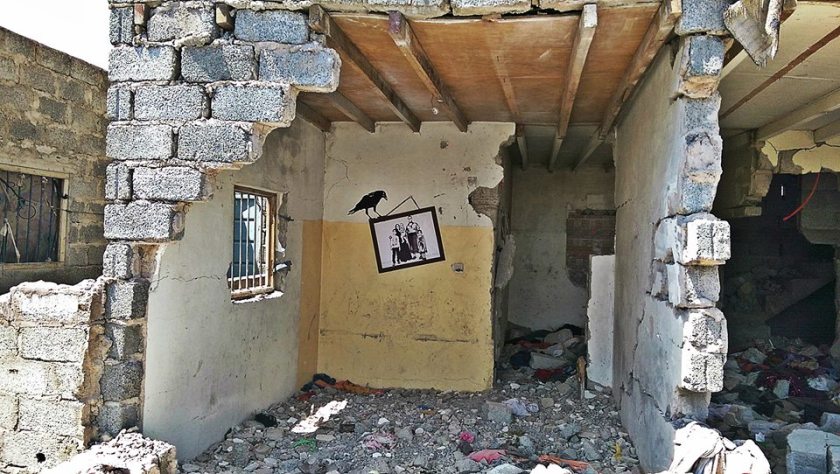
"The Family Photo"
“The Family Photo”

ศิลปินชาวเยเมนใช้ศิลปะแสดงความเห็นทางการเมืองอย่างสันติ\ On “CreativeMOVE”

creative-move

ศิลปินชาวเยเมนใช้ศิลปะแสดงความเห็นทางการเมืองอย่างสันติ

เยเมนเป็นอีกประเทศหนึ่งในตะวันออกกลางที่ประสบปัญหาความขัดแย้งทางการเมือง เนื่องจากกระแสการต่อต้านของประชาชนที่มีต่อรัฐบาลเป็นไปอย่างเข้มข้นและยาวนานมาจนถึงจุดแตกหัก ทำให้การเมืองเมืองของเยเมนขาดเสถียรภาพและประสบกับความปั่นป่วนอย่างหนัก ล่าสุดจากผลการสำรวจของฟอร์บส์ นิตยสารการเงินชื่อดังของสหรัฐฯ รายงานว่าประเทศที่มีเศรษฐกิจย่ำแย่เลวร้ายที่สุดของโลกคือ เยเมน ดินแดนที่เคยมั่งคั่งไปด้วยน้ำมันและก๊าซธรรมชาติ แต่กลับถูกรุมเร้าด้วยปัญหาความไม่สงบจากชนเผ่าภายในประเทศ รวมถึงภัยคุกคามจากเครือข่ายก่อการร้ายอัลกออิดะห์นานต่อเนื่องหลายปี  ในขณะที่ Sana เมืองหลวงของประเทศยังได้รับการโหวตให้เป็น 10 อันดับเมืองที่ไม่น่าอยู่ที่สุดในโลกอีกด้วย

อย่างไรก็ตาม เยเมนไม่ได้แร้นแค้นศิลปินไปด้วย ประเด็นปัญหาที่ฝังรากลึกมานานจึงถูกถ่ายทอดออกมาตามแนวกำแพงในเมืองหลวง โดยมี Murad Sobay ศิลปินแนว street art เป็นตัวตั้งตัวตีในการทำแคมเปญสุดครีเอท ‘12th Hour’ เพื่อต่อต้านรัฐบาล โดยได้ชักชวนบรรดาเหล่าศิลปิน รวมทั้งคนทั่วไปผ่านทาง social network ซึ่งได้รับการตอบรับเป็นอย่างดี ยิ่งในปัจจุบันกระแสกราฟฟิตี้ (graffiti) หรือภาพวาดล้อเลียนตามฝาผนังหรือกำแพง ไม่ได้เป็นเพียงพื้นที่ระบายอารมณ์ของพวกมือบอนเท่านั้น แต่ได้กลายมาเครื่องมือเพื่อสื่อ ‘สาร’ ของเหล่าศิลปินอิสระทั้งหลาย ซึ่งดึงดูดความสนใจของคนหมู่มากได้เป็นอย่างดี ทั้งในแง่ของการเข้าถึงได้ง่าย การได้มีส่วนร่วมของคนหมู่มาก บวกกับธรรมชาติของกราฟฟิตี้ ที่มักจะมีความน่ารักเจืออารมณ์ขันร้ายๆ ไว้เสมอ กับข้อความโดนๆ ที่สามารถสามารถเชื่อมโยงกับผู้คนได้ทุกชนชั้น ดังนั้นกราฟฟิตี้จึงสามารถสร้างแรงขับเคลื่อนและเปลี่ยนแปลงได้อย่างน่าสนใจ

ในชั่วโมงแรกของของเเคมเปญ Sobay ได้นำเสนอเรื่องความรุนแรงกับอาวุธปืน กับข้อมูลอันน่าตกใจที่ว่าประเทศเล็กๆ ของเขามีผู้ถือครองอาวุธปืนมากที่สุดเป็นอันดับ 2 ของโลก ทั้งกองทัพที่มีประสิทธิภาพสูงพร้อมปฎิบัติการทันที รวมถึงปัญหาความหลากหลายของเชื้อชาติซึ่งเป็นปัญหาระดับประเทศ ชั่วโมงที่ 2 เป็นเรื่องของความขัดแย้งรุนแรงของชาวมุสลิมระหว่างนิกายชีอะห์และสุหนี่ ทำให้เกิดความแตกแยกภายในประเทศ ชั่วโมงถัดมาเป็นเรื่องของสิทธิมนุษยชน ที่ประชาชนจำนวนมากถูกจับและหายตัวไปอย่างลึกลับ ‘The Walls Remember’ ที่เปิดพื้นที่ให้คนในครอบครัวหรือคนรู้จักมาวาดรูปใบหน้ารูปสเก็ตช์ หรือภาพ print และวันที่ของบุคคลที่หายไป ซึ่งแต่ละซีรี่ย์นั้นมีพลังเฉพาะตัวเพราะเกิดจากความรู้สึกส่วนลึกของคนในประเทศที่ได้รับผลกระทบ ที่มากไปกว่านั้นมันแสดงให้เราเห็นว่า ‘ศิลปะ’ สามารถเปลี่ยนแปลงโลกได้จริงๆ

อ้างอิง : Designboom

Graffiti artist paints for peace on Yemen’s bloodstained walls\ By: Sana Uqba, on “The New Arab”

The New Arab Logo


Graffiti artist paints for peace on Yemen's bloodstained walls Open in fullscreen

Sana Uqba

Graffiti artist paints for peace on Yemen’s bloodstained walls

Graffiti murals have propped up across walls destroyed by the two-year conflict [Muradsubay.com]

Date of publication: 11 November, 2016

Graffiti artist, Murad Subay believes painting the town red is one way to remind Yemen’s warring factions of the need for peace amid conflict and a two-year political deadlock
Yemen’s two year conflict has plunged the region’s poorest nation into depths of unseen darkness.

While the death toll stands at more than 10,000, a further 3 million have been flung to all corners of the nation and beyond, and more than half of the 22 million population are barely surviving the war.

Like Pandora’s Box, the conflict has unleashed even more fiends to concern Yemen’s otherwise peaceful and care-free civilians.

Hunger, poverty, kidnapping, airstrikes, drone strikes, sectarianism, civil war, recruitment of child soldiers, regional-meddling and government corruption are among the many crises to hit the country once described as ‘Arabia Felix’ – Happy Arabia – but one man has marched towards the frontlines of these battles, armed with nothing but a paintbrush and a graffiti can.

“I believe that art can have important messages,” Murad Subay told The New Arab. “It reaches more people – especially graffiti murals which are seen by hundreds of thousands of people walking by it every day.”

The 29-year-old has used his talents to paint the town red, white and black, since the extraordinary days of the 2011 Arab Spring.

What do child-soldiers dream of?

But among the flags and  the patriotic symbols,  Subay, along with his other  peers, have imprinted his  visions of both despair and  hope along Yemen’s iconic,  old-brick walls.

“People who pass by while  we’re painting praise us,  pray for us and sometimes  even join us in painting,” he  said, noting that men,  women, children the elderly “and even soldiers” have stopped to contribute to the colours seen on the walls of the city.

“They feel like we’re highlighting their concerns and issues by discussing them on the streets.”

The Sanaa-based artist himself has felt the blow of the conflict.

“My brother, a journalist and writer was shot in both legs twice for his satirical pieces against the warring parties,” he said.

“Two of my relatives were killed during the war and my 14-year old cousin was also killed,” he added, noting that he was recruited as a child soldier by one of the armed groups involved in the conflict.

Despite this, Subay remains hopeful and believes his efforts of the past five years have had an impact on society.

Ying and yang

“Even if art is not going to feed the poor or stop the killings, I still feel like its presence in these times is crucial. It is our way of saying we want peace. It is our way of saying there are other alternatives to violence.”

Several attempts have been made to arrive at a peaceful political settlement aimed at ending the conflict since it began in September 2014 and escalated with the Saudi-led coalition intervention in March the following year.

However, the peace talks – though backed by numerous global powers – have failed Yemen’s population time and time again, causing many to lose hope amid the ongoing suffering.

“Hope is all that is left for us now, the war has taken away everything else,” Subay suggests.

“If we to give up on hope, then the whole place will turn into a big grave of people who chose to let go.

“If the political parties fail to see a chance of cooperation and peace, then we’ll keep reminding them. It’s the only way out.”

Link>>


Au Yémen, le street-art entre en guerre\ On “Le FIGARO”

la-figaro

Au Yémen, le street-art entre en guerre

  • Par Inès Daif , agence Reuters
  • Publié le 29/10/2016 à 09:00
Graffiti de Murad Subai, Sanaa, Yémen.

Des artistes graffent les murs de la capitale Sanaa pour dénoncer les ravages de la guerre civile. Depuis l’engagement militaire de la coalition dirigée par l’Arabie saoudite, le conflit aurait déjà fait plus de 10.000 victimes. Continue reading “Au Yémen, le street-art entre en guerre\ On “Le FIGARO””

Yemeni Graffiti Artists Hope Images Will Highlight War Horrors\ On “Newsweek,me”

newsweek-me

Yemeni Graffiti Artists Hope Images Will Highlight War Horrors

Saida Ahmad Baghili, 18, who is affected by severe acute malnutrition, sits on a bed at the al-Thawra hospital in the Red Sea port city of Houdieda, Yemen REUTERS/Abduljabbar Zeyad TPX IMAGES OF THE DAY


SANAA, Oct 25 – Yemeni street artists are daubing the capital’s walls with haunting images of war and starving children in an effort to highlight the impact conflict is having on the country’s population.

The graffiti, including a malnourished child locked in a blood-red coffin, is turning heads in a country where more than two thirds of the population are in need of some form of humanitarian aid, according to the United Nations.

“We came up with this campaign because of the internal and external wars in Yemen, the economic crisis, all of these factors led to famine and poverty in Yemen,” said participating artist, Thou Yazan Al Alawi.

More than 10,000 people have been killed, thousands more wounded and the healthcare and education systems have crumbled in Yemen‘s 19-month civil war.

A Saudi-led coalition launched an offensive last March aimed at restoring exiled Yemeni president Abd-Rabbu Mansour Hadi to power and ousting the Iran-allied Houthi movement from their strongholds.

“The war has made this country sick, people are dying of hunger,” said one passer-by, Yousef Abdelqawi.

Link..

فنانون ينزلون إلى الشوارع لرسم جوع الأطفال على الجدران/ AJ+عربي

aob0nwwg

فنانون ينزلون إلى الشوارع لرسم جوع الأطفال على الجدران

رابط الفيديو..

aj-arabic

Some of Yemen’s kids are starving to death, so Yemen’s artists are taking to the streets.\ AJ+

aob0nwwg

Link..

aj-10th-ruins