






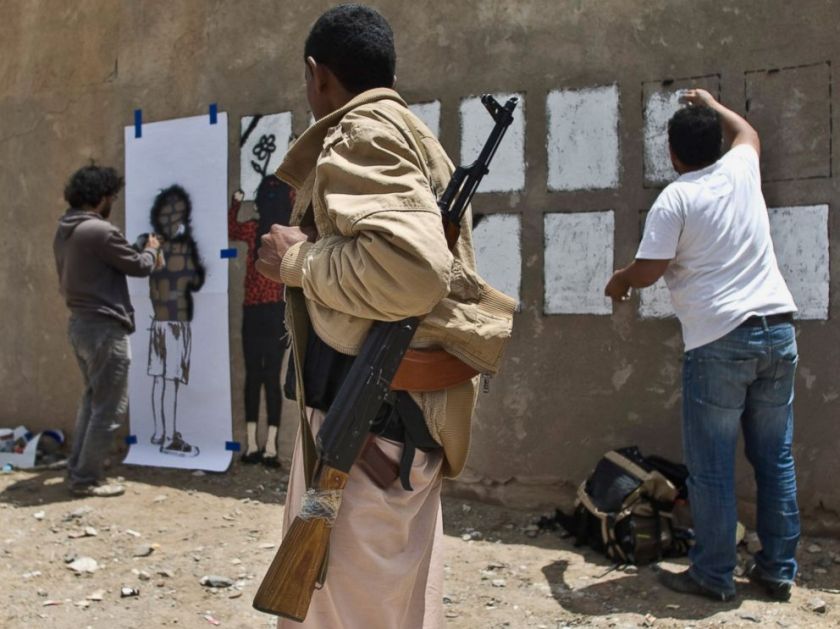
Des artistes graffent les murs de la capitale Sanaa pour dénoncer les ravages de la guerre civile. Depuis l’engagement militaire de la coalition dirigée par l’Arabie saoudite, le conflit aurait déjà fait plus de 10.000 victimes. Continue reading “Au Yémen, le street-art entre en guerre\ On “Le FIGARO””



When Murad Subay takes a walk in his city of Sana’a in Yemen, he witnesses scenes that he didn’t see two years ago:
There’s trash everywhere. The roads, even the main streets, are full of holes, some completely without asphalt. Passersby look sad and cautious.
Many don’t have access to clean water or enough to eat. Some beg for food, while others are too proud to ask. Instead, they go out at the end of the night, looking for leftovers in the trash.
“Before the war, people would go to gardens, recreational parks and take walks,” Subay, 29, told ABC News. “Now, they mostly stay in their homes and try to live.”

Subay, an artist originally from Dhamar, Yemen, moved to the capital Sana’a with his family in 1993. He now uses the walls of the city to paint about the 18-month-old war there.
Yemen is one of the world’s poorest countries and the war has made conditions much worse: The United Nations estimates that half the population — more than 12 million people — are in need of humanitarian assistance.
In June 2014, armed conflict between the government and militias spread across the country. Later that year, Houthi fighters, supported by former President Ali Abdullah Saleh forces, drove their way into Sana’a and, little by little, took over government institutions during the early months of 2015.
Interim President Abdrabbuh Mansour Hadi and his government fled the country. An Arab coalition of nine countries led by Saudi Arabia then initiated a military campaign to restore Hadi’s government to power.
Even before this conflict, Yemen had one of the highest rates of malnutrition in the world. The Rome-based World Food Programme is increasingly concerned about the lack of food and the growing rates of child malnutrition in Yemen.
In some areas like Hodeidah governorate, Global Acute Malnutrition rates have been recorded as high as 31 percent among children younger than 5, more than double the emergency threshold of 15 percent.
Almost half the children countrywide are irreversibly stunted, the World Food Programme says. Basic services across the country are on the verge of collapse. Chronic drug shortages, unpaid salaries and overall destruction restrict around 14 million Yemenis, including 8.3 million children, from accessing health care services, according to the World Bank.
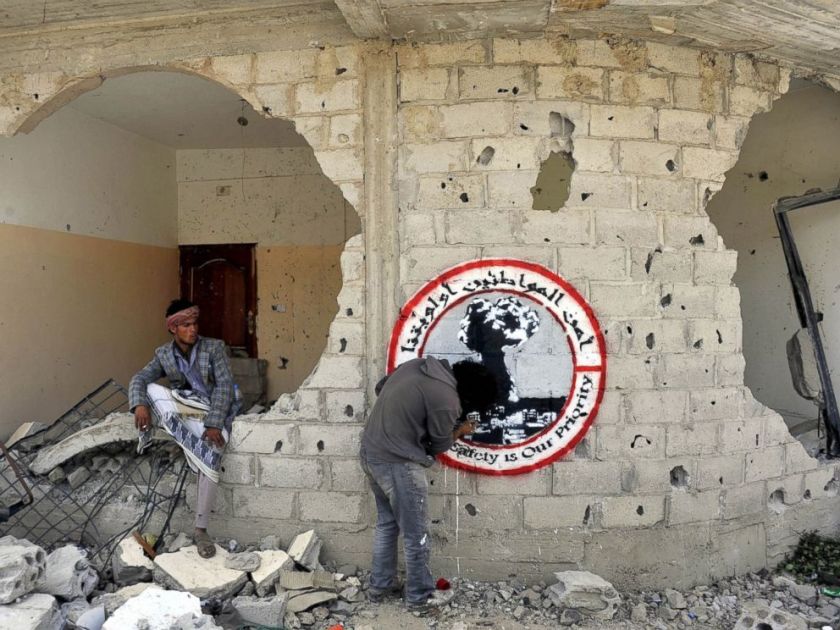
In his art campaign, “Ruins,” started in May 2015, Subay paints about some of the country’s problems. He painted on walls last week with his friends under the theme “death by hunger and disease.” An emancipated child in a casket was among the motives.
“There’s hunger, so much hunger,” Subay said. “People wait in line for water. Cholera was a disease of the 19th century but now we have people suffering from cholera in Yemen in the 21st century.”
When he was younger, Subay used to paint and draw at home. But that changed with the Arab Spring in 2011.
“We chanted for civil rights and for justice in the squares. People from every region of Yemen were there,” Subay said.
He decided to move his art out in the public and started painting with others on walls. During the first campaign in 2012, he and fellow artists painted portraits of more than 100 people who’ve disappeared.
Since then, he has painted about civilian deaths, destroyed homes, life under siege and restrictions on freedom of speech. Subay says there are only a few newspapers left in Yemen and that they all represent the same voice.
Subay’s brother Nabil, a journalist, was shot in both legs by unknown perpetrators after he wrote critically about the war. He is now being treated in Cairo.
The parties of the conflict have also occasionally interrogated Subay and prevented him from painting in certain places. But that has never stopped him from initiating new campaigns.

“When you are doing the right thing, you should not fear anybody,” Subay, whose wife studies at Stanford University in California, said.
Financial struggles, however, prevent him from painting as often as he would prefer. Like many other Yemenis in the Arabic-speaking country, Subay doesn’t have a salary.
“I can’t paint like before,” he said. “Materials are expensive, so I only paint every two months. Before, I would paint something every two weeks. There’s almost no work because of the war.”
He started painting and drawing in a serious way when he was in the eighth-grade in 2001. He did a sketch of a boy on an A4-sized paper sheet and showed it to his parents.
“They said, ‘You are an artist, go on. They started supporting me by buying me materials and then it started,” Subay said, adding that he wants friends, passersby and anyone elseo who wants to join to take part in his street art.

“Art gives hope and expresses the situation people are living,” he said. “It is the voice of people. In war, all voices are voices of hatred and destruction. What we do is show that there are other voices people can listen to. In times of war, even the smallest voices may save lives. Yemenis are in need of every voice in the world to push for stopping the war. The worst thing in war is when hope is lost. I personally also paint to protect myself from becoming hopeless.”



Saida Ahmad Baghili, 18, who is affected by severe acute malnutrition, sits on a bed at the al-Thawra hospital in the Red Sea port city of Houdieda, Yemen REUTERS/Abduljabbar Zeyad TPX IMAGES OF THE DAY
SANAA, Oct 25 – Yemeni street artists are daubing the capital’s walls with haunting images of war and starving children in an effort to highlight the impact conflict is having on the country’s population.
The graffiti, including a malnourished child locked in a blood-red coffin, is turning heads in a country where more than two thirds of the population are in need of some form of humanitarian aid, according to the United Nations.
“We came up with this campaign because of the internal and external wars in Yemen, the economic crisis, all of these factors led to famine and poverty in Yemen,” said participating artist, Thou Yazan Al Alawi.
More than 10,000 people have been killed, thousands more wounded and the healthcare and education systems have crumbled in Yemen‘s 19-month civil war.
A Saudi-led coalition launched an offensive last March aimed at restoring exiled Yemeni president Abd-Rabbu Mansour Hadi to power and ousting the Iran-allied Houthi movement from their strongholds.
“The war has made this country sick, people are dying of hunger,” said one passer-by, Yousef Abdelqawi.




Yemeni street artists are daubing the capital’s walls with haunting images of war and starving children in an effort to highlight the impact conflict is having on the country’s population.
The graffiti, including a malnourished child locked in a blood-red coffin, is turning heads in a country where more than two thirds of the population are in need of some form of humanitarian aid, according to the United Nations.
“We came up with this campaign because of the internal and external wars in Yemen, the economic crisis, all of these factors led to famine and poverty in Yemen,” said participating artist, Thou Yazan Al Alawi.
More than 10,000 people have been killed, thousands more wounded and the healthcare and education systems have crumbled in Yemen’s 19-month civil war.
A Saudi-led coalition launched an offensive last March aimed at restoring exiled Yemeni president Abd-Rabbu Mansour Hadi to power and ousting the Iran-allied Houthi movement from their strongholds.
“The war has made this country sick, people are dying of hunger,” said one passer-by, Yousef Abdelqawi.
(Reporting by Reuters Television; Writing by Adela Suliman; Editing by Patrick Johnston and Alison Williams)

حلت ثلاثية الحرب والجوع والكوليرا في رسوم غرافيتي جديدة نفذها الخميس الماضي، شابان يمنيان في محاولة منهما للفت الانتباه إلى اتساع المعاناة الإنسانية التي يعيشها المدنيون جراء النزاع الدائر في وقت تحولت مؤسسات الثقافة والإعلام إلى قنوات للدعاية الحربية وبث الكراهية.
في شارع الزبيري، أشهر شوارع العاصمة اليمنية صنعاء، الواقعة تحت سيطرة ميليشيات الحوثيين والقوات الموالية للرئيس المخلوع علي عبدالله صالح، عبر رساما الغرافيتي مراد سبيع وذي يزن العلوي، عن اللحظة المأسوية التي يشهدها وطنهما من خلال رسوم جسدت معاناة الأطفال اليمنيين، والذين يمثلون الحلقة الأضعف والأكثر تضرراً جراء استمرار الحرب التي يشهدها منذ سنتين البلد الأفقر عالمياً.
«كان يفترض أن ننفذ حملة الرسم هذه في محافظة الحديدة بوصفها المحافظة الأكثر جوعاً ومرضاً لكن إمكانياتنا المالية لا تسمح لنا بالسفر»، يقول لـ «الحياة» فنان الغرافيتي الشاب مراد سبيع الذي يقود مع رسامين شباب من الجنسين حملات غرافيتي بدأت في 2012 بحملة «لون جدار شارعك». واستهدفت الرسومات حينها مناهضة خطاب الكراهية الذي أفرزه انقسام الجيش والمجتمع على خلفية احتجاجات 2011 المطالبة بإسقاط النظام.
وتأتي حملة سبيع والعلوي هذه في وقت انتشرت المجاعة في شكل غير مسبوق وتفشت أمراض وأوبئة بينها الكوليرا. ومنذ مطلع تشرين الأول (أكتوبر) الجاري سجلت 11 حالة وفاة بالكوليرا. وأعلنت السلطات التربوية في مدينة عدن جنوب البلاد يوم الخميس الماضي عطلة في المدارس بعد اكتشاف عشرات الإصابات بين الطلاب.
وتوقعت مصادر طبية وجود إصابات أكثر من العدد المعلن, مشيرة إلى صعوبات تواجه ترصد الوباء بسبب ظروف الفقر وتدهور النظام الصحي وصعوبة الحصول على مياه نظيفة. فيما تقول منظمة الصحة العــالمية أنها بــحاجة إلى ما لا يــقل عــن 2 مــليون دولار لمـــكافـحة الوباء في اليمن.
وتتهم الأطراف اليمنية والإقليمية والدولية بعدم إعطاء أهمية كبيرة لحياة المدنيين الذين يشكلون، بحسب تقارير مختلفة، النسبة الأكبر من إجمالي الضحايا.
ومن إجمالي 2539 واقعة انتهاك رصدها الملتقى الوطني لحقوق الإنسان (مستقل) خلال الفترة تموز (يوليو)- أيلول (سبتمبر) من العام الحالي سجل انتهاك الحق في الحياة (القتل) أعلى الحقوق المنتهكة خلال الربع السنوي الثالث من العام الحالي بواقع 945 حالة يليه الاعتداء الجسدي ومحاولة القتل والتهديد 612 حالة وانتهاك حق الملكية بواقع 359 حالة والاعتقال والاحتجاز التعسفي 159 حالة.
ونفذ سبيع رسمة تمثل تابوتاً بداخله طفل غير متعاف يجلس في وضعية الرضيع في الرحم ويمتد من بطنه سلك شائك بدلاً من الحبل السري. فيما جاءت رسمة العلوي عبارة عن قنينة رضاعة فارغة داخلها طفل مسجى في إشارة إلى الافتقار لسلعة حليب الأطفال. ووفق منظمة «يونسيف» تسببت الحرب في قتل أكثر من ألف طفل يمني وإصابة 1730 طفلاً. وتعد منطقة الساحل الغربي (تهامة) أكثر المناطق معاناة جراء تفشي الجوع والمرض.
ويقدم سبيع ورفاقه الرسامون نموذجاً نادراً لجهة تبني الشباب اليمني لخطاب التعايش والسلام. فخلافاً للخطاب الوطني الجامع الذي أبرزته ساحات الاحتجاج إبان اندلاع ثورات الربيع العربي في 2011، تسبب انقلاب الحوثيين وصالح في تفشي الكراهية وبروز النزعات المناطقية والمذهبية والجهوية في شكل لم يشهد اليمن مثيلاً له. وبات لافتاً حالات التشجيع على القتل والتشفي بين أنصار أطراف الصراع.
ويعتمد سبيع ورفاقه على جهودهم الفردية في تنفيذ حملاتهم ويرفضون أي تمويل لكي لا يحسبوا على طرف. وذكر ذي يزن العلوي لـ «الحياة» أنه لم يستطع أن ينجز رسمته بحجم أكبر لافتقاره للمال اللازم لشراء مواد الرسم. وكثير من أعضاء فريق الغرافيتي الذي يقوده سبيع ما زالوا طلاباً ومنهم العلوي الذي يدرس في كلية الهندسة في جامعة صنعاء.
وتتفاوت النظرة إلى رسوم الشارع في الوقت الراهن، حيث الوقت وقت حرب وجوع ومرض بامتياز. ففي حين يعتبرها بعضهم ترفاً وغير ذات جدوى يرى آخرون فيها مقاومة ومحفزاً للوجدان العام. حتى أن بعض المواطنين الذين رافقوا حملة الخميس الماضي توقعوا أن تتناول الرسوم أيضاً قضية تأخر الرواتب وهي قضية صارت الشغل الشاغل للموظفين الحكوميين وأسرهم.
وبحسب الناشط المدني صادق غانم فإن رسوم الشارع قد لا تترك تأثيراً حقيقياً على الأحداث الجارية لكنها ستشكل تراكماً والأهم أنها تدون وتثبت صوت الضحايا والمقموعين خصوصاً الضعفاء منهم.





 Murad Subay