“Open Day of Art” March 15, 2017

“Open Day of Art”
——————-
At the time when wars and borders divide people, art reunites them from across different continents and cultures.
Open Day of Art is an annual event by the people and for the people. It is a day of art that seeks to give people the opportunity to express their different identities, their hopes for peace and values of coexistence, and their continued rejection of violence and war. To this end, we are pleased to invite you to participate in making this day by painting on the southern wall of Sana’a University, the venue off Rabat Street in front of “October 14” police station, Sana’a, Yemen, on March 15, 2017. In reviving this event, artists and people of Reading, Britain will be joining us this year in a collaboration organized by the brilliant British artist Lisa-Marie Gibbs. The event will forge a cross-border link between people in Britain and people in Yemen who are choosing to convert the walls of their cities into public art exhibitions open to all and reflecting their unique stories and different identities, simultaneously.
This invitation is open to everyone from across different cultural backgrounds, experiences, ages and races. Participation in this event is not limited to those who have a background in arts. Rather this event is an open platform for everyone to express themselves through art. Please bring your own colors and painting tools if you have them, and if you don’t have a background in arts then we will have enough colors to share with everyone.

‘Nobody taking responsibility for Yemen war’ – Arab Banksy to RT

rt

‘Nobody taking responsibility for Yemen war’ – Arab Banksy to RT

rt2

With the Yemeni conflict showing no signs of easing, RT spoke to a graffiti artist who’s been capturing the horrors and hardships with his brush and paint. He believes that, even amidst unrelenting war, art can bring people together.

“Yemen was dragged into a catastrophic war, and ordinary civilians are paying a high cost for it, and they will be paying it for decades,”Murad Subay, whose work recently started catching the attention of mainstream media, told RT. Subay, who not only creates graffiti himself, but also organizes mass workshops, says he is using his artwork to draw attention to the dire conditions in Yemen.

“There’s no responsibility, no sympathy with the difficulties Yemeni people are facing there.”


“It’s a catastrophic war, and no one is taking responsibility for it. We hope that the voice of reason will be heard, and the war will be stopped, so that we can overcome the consequences of this catastrophe,” he says.

READ MORE: UN ‘estimates’ death toll in Yemen war surpassed 10,000

Subay, who is already an award-winning artist, seems genuinely uninterested in pursuing glory and fame for the sake of it. He daubs the walls of ruined Yemeni houses with haunting images of war and starving children, and tents for the displaced with pictures of barbed wire or dream-homes, traveling across Yemen despite the dangers – all of it “for the sake of peace.”

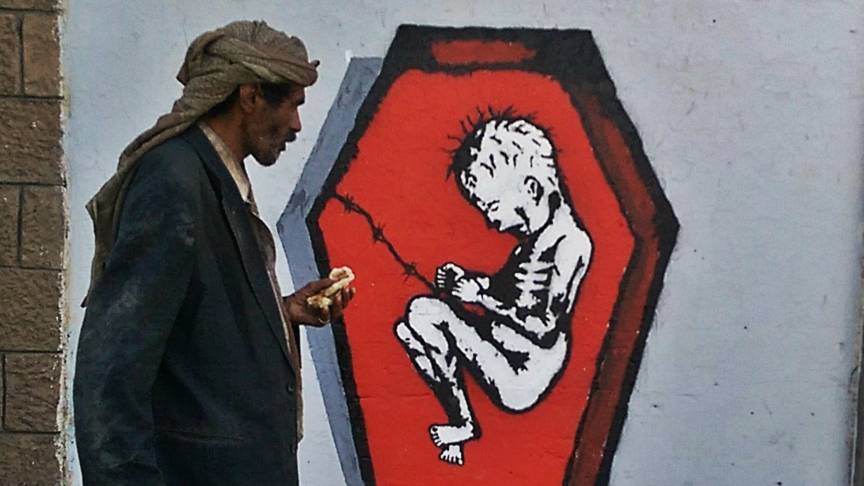
His graffiti metaphorically depicts the ugliness of war, like a malnourished child locked in a blood-red coffin or a small girl about to pick up a flower sticking from a landmine that’s about to explode.

However, instead of speaking about his own art, he told RT of the effort he’s been making along other Yemeni artists to promote art and unite Yemeni people under its aegis. Subay and others have been gathering in the capital, Sanaa, every year since the conflict began, painting illustrations of war on what was left of the city’s streets after bombings. And they have been joined by ordinary people of all ages, who wanted to paint their war, too.

“Art is not confined to the boundaries of one social class, not only artists create it. In modern conditions art can be practiced by everyone – children, youths and adults. Every [year] we invite people, they go out to the streets and make their artwork, each in their own colors. There is no social order, all is done voluntarily and without fanaticism.”

“[…] This is the art of the Yemeni streets. That’s what we do,” he says, describing the initiative launched in an effort to highlight the impact the Yemeni conflict is having on the population. He points out that the initiative has now become a tradition, calling it a “Yemeni phenomenon.”

“This Yemeni phenomenon is recognized worldwide. Articles are published about it, scientific universities are studying it as a social phenomenon – that of bringing people together in drawing,” Subay tells RT. The media has been so enthralled by his activities lately, he even got a nickname: the Banksy of Yemen, or Arab Banksy.

The original Banksy is the brush name of an anonymous British artist who’s also gained fame with his murals and paintings on sharp social and political issues. Among his best -known recent artworks are murals set among ruins of the Gaza war and ‘Steve Jobs the son of Syrian migrant’ picture in the Calais refugee camp.

READ MORE: Child malnutrition at ‘all-time high’ in Yemen, UNICEF claims in alarming report

Saudi Arabia began bombing Yemen in support of exiled President Abdrabbuh Mansour Hadi at the end of March 2015, after Houthi rebels loyal to former President Ali Abdullah Saleh, backed by Iran, took over Sanaa. According to the latest UN data, the death toll in the Yemeni conflict has now surpassed 10,000 people, and almost 40,000 more have been wounded. Some 14 million civilians are in need of food aid and some 462,000 children are suffering acute malnutrition.

Report Link>>

Continue reading “‘Nobody taking responsibility for Yemen war’ – Arab Banksy to RT”

Yemen: Art, love, bombs and bans\By Dorian Geiger

Aljazeera

Yemen: Art, love, bombs and bans

Yemen’s most prolific street artist copes with Donald Trump’s immigration ban.

Subay’s artistic campaigns invite everyday Yemenis to pick up a paint brush or can of spray paint and participate in his art [Al Jazeera]

by

Dorian Geiger is a Canadian journalist, award-winning filmmaker, and a social video producer at Al Jazeera English.

They call him the Banksy of Yemen. ButMurad Subay, a 29-year-old street artist based in the capital Sanaa, shrugs off such comparisons.

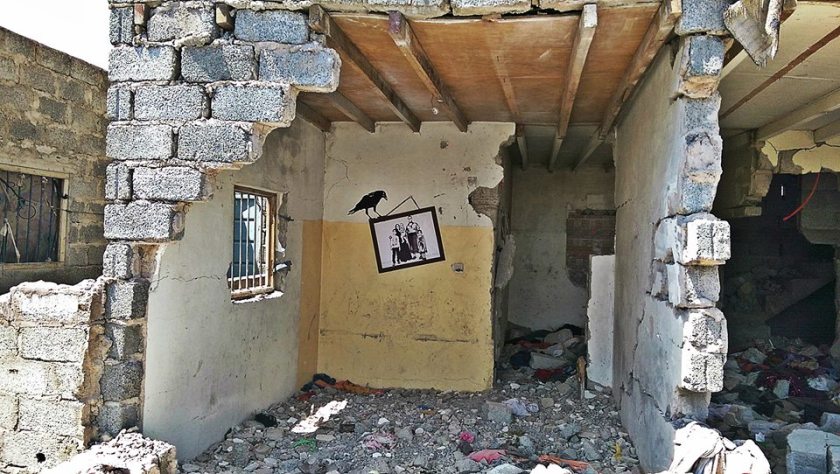
Subay has transformed the streets of an active war zone into his own vibrant gallery. His canvases are often the ruins of war – crumbling, abandoned houses with gaping holes caused by mortar explosions.

“It is three letters only: W-A-R,” said Subay of his work, which continually shines a light on Yemen’s horrific humanitarian situation.

“It’s just to show the ugliness of war – this is what happens by war. This is my way to to protest against the injustice of this war and for peace.”

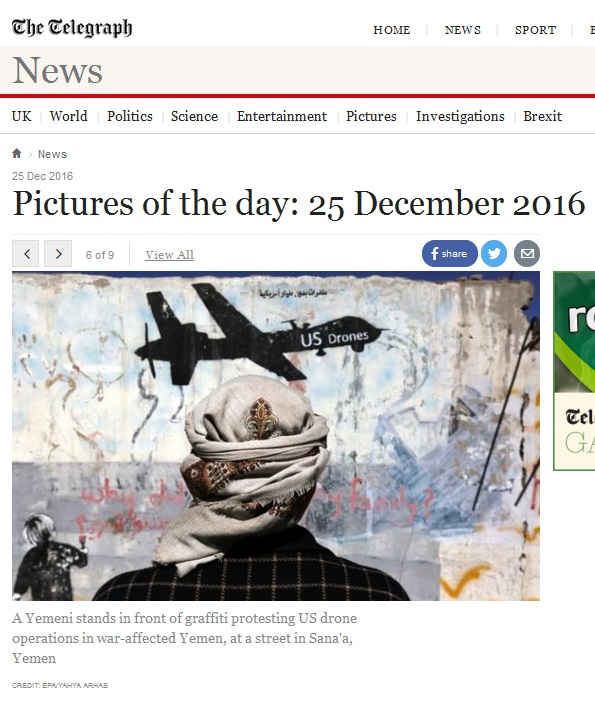
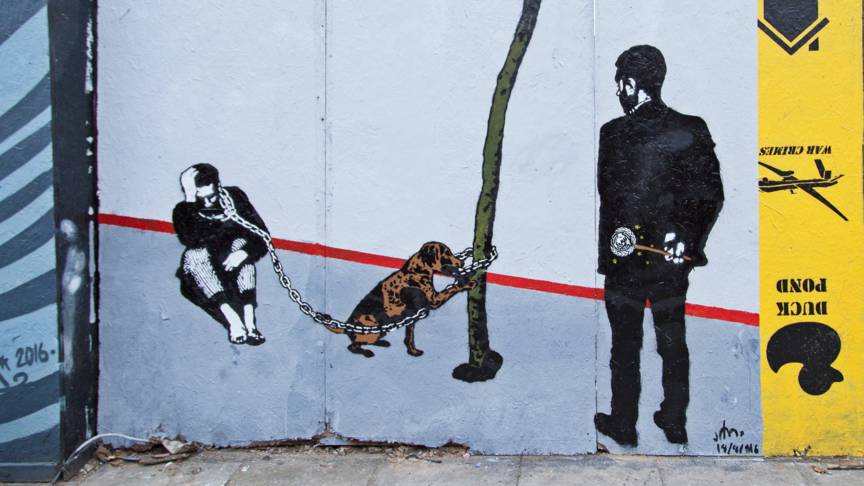
Subay’s work also focuses on Yemen’s dire economic situation, political corruption, disappeared persons, and US drone strikes.

‘It’s just to show the ugliness of war – this is what happens by war. This is my way to to protest against the injustice of this war and for peace’ [Photo courtesy of Murad Subay]

Yemen’s revolution, which unfolded on streets across the country on the heels of the Arab Spring just over six years ago, largely inspired his brand of artistic activism. Subay was there with the people, protesting in the streets of Sanaa. Those blissful but fleeting moments were short-lived, as the revolution would soon turn into a full-blown civil war.

“Yemenis were united in every part of Yemen,” said Subay. “It was a great moment. We loved it. When the revolution came, it never stops and it will continue.”

Unlike many street artists, who often work in the shadows, Subay’s work is a collaborative effort. Subay’s artistic campaigns invite everyday Yemenis to pick up a paintbrush or a can of spray paint and participate in his art. It’s an artistic approach he says is for the people, by the people.

“It’s a voice of [the people],” he described. “I’m a Yemeni. When I discuss something, I first [ask] what people should care about, what they are afraid of, and what [are] the issues that concern them? People are longing to end this war.”

His open-sourced style of art is what led him to his wife Hadil Almowafak. Almowafak, then in high school, had learned of one of Subay’s campaigns on social media. It was 2012, shortly after Yemen’s revolution and the ousting of former president Ali Abdullah Saleh.

She was mixing colours when Subay first approached her.

The happy couple are now separated and do not know when they will see each other again [Photo courtesy of Murad Subay]

“When we arrived we saw people painting on the walls,” she recalled. “Everyone was there. That was something new. People in the streets were standing by watching or [were] taking the brush and started painting. He wants to make the whole society part of his work.”

From then on, Almowafak was hooked – on both Subay and his art.

“Even if I had school, many times I would skip school just to go paint with them,” she added.

Three years later, in October 2015, the pair celebrated their wedding. By that time, civil war had broken out in Yemen.

Today, Houthi rebels and loyalists to former president Saleh are still engaged in a bloody battle against the current government of Abd-Rabbu Mansour Hadi. A Saudi Arabian-led coalition – aligned with Hadi, and supported by the US – bombs the country routinely. It’s a fertile breeding ground for al-Qaeda, which the US frequently targets with drone strikes, and there’s an ISIL presence, too. But more often than not it seems, it is everyday Yemenis who pay the cost, often with their lives.

Just last week, a botched Navy Seals raid targeting al-Qaeda killed roughly 30 people, many of them civilians and some of them children, in President Donald Trump’s first attempt at military intervention in the country.

Subay’s work also focuses on Yemen’s dire economic situation, political corruption, disappeared people and US drone strikes [Photo courtesy of Murad Subay]

Tens of thousands have died in the fighting, many of them regular citizens. Hospitals and schools and have been bombed to bits, starvation is rampant and UNICEF has reported that a child dies every 10 minutes.

“Every day you hear of civilians being killed,” said Almowafak, now 21.

“When you hear air strikes, especially if it’s nearby, the whole house will be shaking. At night, you don’t know where they’re going to hit, especially [if] you’ve been hearing they’re targeting civilians. You’re always in this uncertainty. You don’t know if you’re going to be next, if your neighbour’s going to be next. It was insane. They will be firing at each other. The shelling, you’ve got mortars, you’ve got snipers killing people. It’s just crazy.”

Then, last year, the couple received life-changing news: Almowafak had been accepted to Stanford University in California, where she is currently studying. Conditions in Yemen had deteriorated at such a swift and deadly pace that it was impossible for Almowafak to pursue a serious education at home.

The acceptance offer from such a prominent US university was a life-preserver amid a sea of death and destruction. It was a way out and a bridge to achieving her dreams. Almowafak had dreamed of coming to America since she was a child.

But under Trump’s immigration banthat prohibits citizens of seven Muslim-majority countries, including Yemen, from entering the US for 90 days, Almowafak’s academic future has been cast into doubt.

Subay has transformed the streets of an active warzone into his own vibrant gallery [Photo courtesy of Murad Subay]

“It’s really unfair,” said Almowafak, who wants to be a human rights lawyer.

Although a federal judge in Seattle has temporarily blocked the ban, it is unclear if this will stick.

“I am disappointed to see America take this road. I do feel like I’m trapped, like when I was in Yemen and the airport was closed and people wouldn’t be able to travel. I felt trapped there, as well, but at least there was war. The war was unfair to us. But here in US, in the land of freedom, and this happens, I just couldn’t believe it.”

The US only granted her a 12-month visa for her studies, as opposed to a four-year permit, which Almowafak would need to continue studying. If the block on Trump’s ban doesn’t hold, Almowafak will probably be forced to abandon her studies and return to Yemen indefinitely.

“You’re at Stanford, that’s a good place to be trapped in,” said Almowafak. “It’s like it’s a golden cage. I can’t visit my husband. He cannot come here, as well. I cannot visit my family. I can’t study abroad. I came here to study and I cannot do that and in a year I won’t be able to if the ban continues. I’m holding on to hope because I don’t want to think about what’s going to happen next.”

Almowafak had planned to return to Yemen this summer to be with Subay, but now those plans are in jeopardy.

“The first time [I heard about the ban], I thought it was a joke actually,” said Subay. “[The US] is the country of opportunities, the country of democracy and in the 21st century, you ban people according to their race, their religion for their nationality? This is stupidity. This law is racist. It’s unbelievable. [It’s] like putting honest, innocent people in a prison.”

Though the odds are stacked against them, Subay refuses to believe that his wife must give up on her dreams.

“She’s been following this chance to have a scholarship for two years. I know, I was there every step,” he said.

“Our country is what they call the third world. Our chances [are] not a lot. It sometimes comes once. So such a chance, to prove yourself in such a respectable university, it is really important and [precious] so she must and she will stay there to continue her studies. She is very brilliant.”

Article link>>

Continue reading “Yemen: Art, love, bombs and bans\By Dorian Geiger”

Ripped apart: Yemeni couple fearful after Muslim ban\ On “Aljazeera English”


Ripped apart: Yemeni couple fearful after Muslim ban

A young Yemeni artist shares his experience of being banned from visiting his wife, who studies in the US.
Murad Subay says the US Muslim ban is unjustified and feels certain the world will not be silent towards it [Courtesy of Murad Subay]
By: &

Prior to US President Donald Trump’s recent Muslim ban, Murad Subay, a Yemeni artist, never had to worry about being able to see his wife, Hadil, who studies in the US on a scholarship.

Following the recent executive order, which placed a travel ban on seven Muslim-majority countries including Yemen, seeing his wife again has become a distant dream.

Subay cannot travel to visit her and fears that if Hadil returns home, she will not be allowed back in the US. What was once a valuable opportunity for Hadil to study political science at Stanford University in California has now turned into a nightmare.

Subay is stuck in a war-ravaged country while his wife lives in a place where foreign Muslims are eyed with suspicion.

Here is Subay’s account of how the Muslim ban changed his life for ever.

READ MORE: Trump’s Muslim ban – This could never happen in America

My wife scored 94.5 percent in her high school final examination. Last year, she went to the US to complete her bachelors and masters.

I am astonished at how a country known for defending democracy is implementing such orders.

Today, she cannot return to her country whenever she likes so long as this decision stays in effect. This will negatively affect her studies and our life.

This ban is absolutely upsetting.

Hadil and I were planning to meet every summer. She can either come to Yemen or I can travel to see her in the US.

That was our plan.

However, with Trump’s Muslim ban in place, entering the US is impossible. Even if she decides to come to Yemen, she may not be able to return to the States.

This is a racist and unreasonable decision.

Now our families are worried about our future. We do not know what lies in store for us. We do not know if this ban will persist or be repealed.

Whatever the difficulties will be, Hadil is going to pursue her studies until 2020 as long as she is permitted to continue. However, the worrying matter is that she must leave America every year to another country where she can renew her visa in any American embassy. She cannot renew the visa in America.

READ MORE: Trump’s Muslim ban ‘will rip our family apart’

We will do our best to support her to complete her studies in America or elsewhere. In Yemen, the education system is weak and it is unfortunately being destroyed.

Hadil is ambitious and hardworking, and I will not let her down.

She got a scholarship to the US last year, and I was happy that she would be able to receive quality education there. We did not know time would change in America.

There is no justification for banning Muslims from entering the US. All those refugees or immigrants belonging to the seven banned countries including Yemen have not committed any terrorist acts. This is a politically motivated decision, and it intends to show off power and strictness.

Americans themselves will resist this racist decision. It is unreasonable for this unfair decision to succeed.

The majority of the countries targeted by this order are fragile. This is a big problem. We are living in the 21st century. I am astonished at how a country known for defending democracy is implementing such orders. This is an individual deed.

The protests against this decision are ongoing. I hope they will continue.

It would be impossible that the beacon of democracy and freedom blocks people from travelling on racist and religious grounds. Millions of people should not pay the price for terrorist acts carried out by some individuals.

This decision dishonours America.

The consequences of this decision are grave, and I do not think the world will let it pass unopposed. I believe the principles of democracy in America will not be easily abandoned.

As told to Khalid Al-Karimi and Mohammed Al-Sameai. 

Source: Al Jazeera News

Article link>>

ட்ரம்பின் தடை தொடர்பில் யேமனியர்கள் அதிருப்தி\ On “Athavan News”

ட்ரம்பின் தடை தொடர்பில் யேமனியர்கள் அதிருப்தி

athavan-news

குறித்த தடை தொடர்பில் கருத்து தெரிவித்த யேமனின் புகழ்பெற்ற ஓவியர் முராட் சப்பே (Murad Subay), “இந்த தடை காரணமாக அமெரிக்காவில் உள்ள எனது மனைவியை சந்திக்க இயலாத நிலைமை தோன்றியுள்ளது. எனது மனைவி தற்போது அமெரிக்காவில் கல்வி கற்று வருகின்றார். குறித்த தடை அகற்றப்படும் வரை என்னால் அவரை சந்திக்க இயலாது. இந்த தடைக்கு அமெரிக்கர்கள் எதிர்ப்பு தெரிவிக்க வேண்டும்” என தெரிவித்தார்.

Video Link>>

Yemen conflict all but ignored by the West\ On “DW”

dw

Yemen conflict all but ignored by the West

Atrocities are being committed against an innocent Yemeni population on a scale as serious as Syria and Iraq. But why doesn’t this story get as much media attention as those conflicts? Gouri Sharma reports.

When the UN children’s rights organization UNICEF recently released a report stating that at least one child dies every 10 minutes in Yemen, the expectation was that the news would be picked up by international news outlets. But barring a few exceptions, including Al Jazeera and DW, the news was not carried by much of the global media prominently, and some not at all.


In its report, the humanitarian organization estimated that more than 400,000 Yemeni children are at risk of starvation, and a further 2.2 million are in need of urgent care. How could it be that statistics this alarming, the result of a war involving regional superpowers with the backing of the US and UK, does not make headline news?

But people close to the story say this example is just a reflection of how the war in Yemen is covered by the global media.

Yemen and the western media

It’s not that the conflict isn’t covered, but when it is, news outlets tend to focus on the ‘Sunni-majority Saudi Arabia versus the Shia Iran proxy war’ narrative which overlooks the country’s deepening humanitarian crisis.

Yemen, a country of 24 million people, has endured political strife for decades, but the situation worsened in March 2015 when a Saudi-led coalition began airstrikes with the aim of reinstating President Abdrabbuh Mansour Hadi, who had been ousted by the Houthi rebel group. The Houthis are said to be backed by Saudi Arabia’s regional political foe, Iran.

Since the bombing began, the UN estimates that more than 10,000 innocent people have been killed, 69 percent of the country is in need of humanitarian assistance, and three million people have been forced to flee their homes.

Wie die Medien über den Krieg im Yemen berichten (Murad Subay) Although atrocities are committed on a daily basis, the conflict in Yemen seems to have dropped off the radar

It’s a complex political situation and those closest to it – the local journalists – have been forced to stop telling the story because of the dangers they’ve been facing. The Committee to Protect Journalists, a New York-based press freedom watchdog, has recorded the deaths of at least six journalists caught in the crossfire since the start of the Saudi campaign. In its latest report, the Yemeni Journalist Syndicate said that more than 100 press violations were committed in the first six months of 2016, including 10 cases of attempted murder, 24 abductions and disappearances, and 12 cases of assaults on journalists and their offices. The situation for foreign journalists isn’t any better, amid reports that those who get access can be subject to harassment and kidnappings.

Afrah Nasser, an independent Yemeni journalist who is based in Sweden, told DW: “When western news outlets cover Yemen it’s often ‘parachute journalism.’ This is mainly because it’s been hard to access Yemen and if you want to get in you have to get permission from the Saudis and the Houthis. For foreign journalists, it’s become hell to enter or leave the country and a trip that used to take a few hours might now take days or even weeks.”

But Iraq and Syria, which has ranked as the world’s most dangerous place for journalists for at least two years in a row, are considered more difficult for journalists to report from than Yemen, yet both countries receive much more media coverage.

Syria, Iraq more ‘newsworthy’

Yemeni activists and journalists point to one other major factor as to why the country is kept lower down on news agendas. Many of the people attempting to get to Europe are from Syria and Iraq so western news audiences are more affected by the what’s happening in those countries than what’s happening in Yemen – news editors may not deem the war newsworthy enough for their audiences.

Watch video 05:27

Yemen’s forgotten war

“There isn’t a direct or immediate threat coming to western countries from Yemen,” Baraa Shiban, a London-based Yemeni human rights activist, tells DW. “There are no ‘waves’ of Yemeni refugees crossing the Mediterranean because it’s too far and if there are refugees they remain few in numbers. This is also related to the threat western countries feel they are facing. Dealing with the ‘Islamic State’ (IS) tops the list for western politicians. IS has claimed attacks inside Europe and such attacks could happen again. Al-Qaeda in the Arabian Peninsula has been busy hitting inside Yemen – recently killing soldiers in Aden – but it’s limited in its ability to hit in Europe or the US.”

Coverage could also be affected by who is involved in Yemen – and who isn’t. “Any journalist or researcher who tries to dig deeper into the situation will see it’s a local conflict, especially when we talk about specific places like Taiz, a city in the south which has been living under siege for the past year and a half by forces loyal to the former president, along with the Houthi rebels who come from the north. If you compare that with the situation in Aleppo, you have Russia, Iran and Hezbollah. That’s a more interesting story with international and regional powers,” says Shiban.

The biggest known player involved in Yemen is Saudi Arabia, who has been carrying out its military campaign with arms brought from the US and Britain. In December, the US announced it would be halting an arms deal worth $350 million to the Kingdom amid concerns of the coalition’s indiscriminate bombing inside the country. But up until that point, President Obama had reportedly sold arms to the tune of $115 billion (107 billion euros) to Riyadh during his eight years in office – more than any US administration in history.

Wie die Medien über den Krieg im Yemen berichten (Murad Subay) Many local observers accuse western media and western governments of double standards when it comes to Yemen

Double standards

The UK, meanwhile, approved 3.3 billion pounds (3.7 billion euros) worth of arms to the Kingdom in the first 12 months of its bombardment of Yemen. So it may not make for good business sense for the corporate media in the US and the British mainstream media to cover a war and the negative impact it’s having on civilian life when their governments are making huge profits from it.

“If there is one country in the world that has the most gross double-standards, it’s the UK. As long as the Saudis are their ally, they can overlook any of atrocities committed by their friend. Yemenis’ blood means nothing when Saudi’s cash is on the table and if you’re a foreign journalist, some big media outlets won’t buy your story because they don’t want to annoy the Saudis,” says Nasser.

But amidst all the reasoning, the facts remain. Atrocities are still being committed against innocent people on a daily basis and a humanitarian crisis is worsening as millions of people lack basic food and water supplies.

Murad Subay, an internationally renowned Yemeni street artist who has been using his art to call for peace, says that the situation in Syria should serve as a warning. “What happened in Syria is an example of where the world ignored the crisis until it turned into catastrophic war. We as citizens of the world have a responsibility to pressure countries to stop engaging in Yemen’s war and to stop selling the arms that fuel it. People suffering in faraway places doesn’t make the rest of the world immune from it. People everywhere should care because it is the right thing to do, because what’s happening is wrong and inhumane.”

Read More>>

Continue reading “Yemen conflict all but ignored by the West\ On “DW””

‘Banksy’ van Jemen: met graffiti wil ik kogelgaten in muren verdoezelen

untitled

‘Banksy’ van Jemen: met graffiti wil ik kogelgaten in muren verdoezelen

Zondag, 10:00
Murad Subay
Geschreven door
Carmen Dorlo

redacteur NOS Online

Als je op straat loopt in Sanaa, de hoofdstad van Jemen, kun je niet om de kunstwerken van de ‘Banksy van Jemen’ heen. De gebouwen zijn misschien kapot door alle bombardementen, maar ze zijn niet lelijk: op de gevels staan nog de graffitikunstwerken van Murad Subay.

“Toen in 2011 de oorlog begon, brak dat vele harten”, vertelt Murad aan de NOS. “Maar niet alleen harten gingen kapot, ook huizen en straten. Op dat moment besloot ik de straat op te gaan en graffitikunst te gaan maken. Ik wilde het lelijke van de oorlog verdoezelen. De kogelgaten in de muur laten verdwijnen. Dat lukte me door de graffiti.”

In Jemen woedt al jaren een burgeroorlog. De NOS heeft contact met inwoners van het land, om een beeld te krijgen van de situatie in het land. Zij vertellen hun verhaal via WhatsApp, e-mail en Skype. Deze week spreken we met Murad Subay. Eerdere verhalen kwamen van Abdullah uit al-Mukalla, Fadia uit Taiz en Layla uit Sanaa.

Muhajed, Fadia en Murad in Jemen NOS

Sommige werken van Murad zijn puur artistiek, andere hebben een politieke lading. De artiest nodigt inwoners van Sanaa ook uit om te helpen bij de kunstwerken. “Zo kunnen de mensen hun stem laten horen en hun mening geven over de oorlog. Kunst is niet alleen entertainment, het kan voor zoveel meer dingen worden gebruikt. Kunst geeft een stem en zorgt voor communicatie, zeker als het zo duidelijk op straat te zien is.”

Tekenen

De 29-jarige Murad woont met zijn ouders, drie zussen en vier broers in een huis in Sanaa. Hij heeft Engels gestudeerd en haalde in 2012 zijn diploma.

“Ik begon met tekenen toen ik 13 was. Mijn ouders moedigden me aan en daardoor kon ik mezelf veel dingen leren. In 2012 maakte ik mijn eerste graffitiwerk en dat resulteerde in een campagne waardoor ik werken in heel Sanaa mocht maken.”

Dirty Legacy: graffitikunst van Murad Subay Murad Subay

De oorlog heeft veel veranderd, gaat hij verder. “Dat heeft zoveel effect op me. Op iedereen.” Murad noemt het tekort aan basisbenodigdheden als elektriciteit en water, en de economische gevolgen van de oorlog.

“Deze dingen hebben veel effect op mij persoonlijk, maar ook op mijn werk. Het is niet meer mogelijk om vrij te reizen in Jemen. Het is soms ook veel te gevaarlijk op straat om de werken te maken.”

De laatste tijd wordt het steeds moeilijker om onze mening te mogen uiten door middel van kunst.

Murad Subay

Murad zorgt altijd dat hij goedkeuring krijgt van de autoriteiten om graffiti te spuiten, maar ook dat gaat nu lastig. “De laatste tijd wordt het steeds moeilijker om onze mening te uiten door middel van kunst. Ook al heb ik toestemming, vrij graffiti spuiten wordt nauwelijks nog toegelaten.”

Death by Hunger and Disease: graffitikunst van Murad Subay Murad Subay

Murad heeft inmiddels zoveel roem in Jemen verworven, dat hij ook wel de ‘Banksy van Jemen’ wordt genoemd. “Banksy is een grote artiest, een genie. Mijn werk lijkt op dat van hem omdat we dezelfde techniek gebruiken. Maar de manier waarop we werken, is anders”, legt Murad uit.

“Ik wil zoveel mogelijk mensen betrekken bij mijn kunst. Als ik een kunstwerk maak en er lopen mensen langs, dan nodig ik ze altijd uit om me te helpen en hun mening te geven. Zo kunnen we een politieke discussie op gang brengen, op een niet-gewelddadige manier.”

Ik hoop dat het nieuwe jaar echt een nieuw jaar wordt. Het afgelopen jaar was zo vermoeiend.

Murad Subay

Na vijf jaar als graffiti-kunstenaar wacht Murad nog steeds op het hoogtepunt. “Ik hoop ook dat ik nog niet mijn mooiste werk heb gemaakt. Ik ben pas op het begin van mijn reis.”

Voor 2017 heeft hij maar één wens: “dat het écht een nieuw jaar wordt.” “Het afgelopen jaar heeft de wereld enorm vermoeid. We zijn er allemaal klaar mee.”

Read More>>


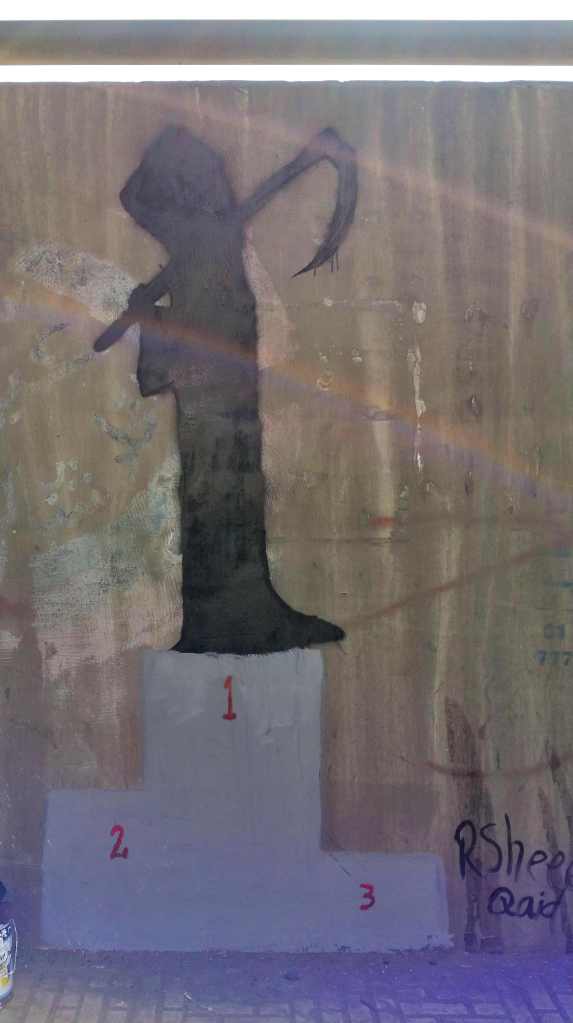
Mural by: Rshid Qaid “The first” Ruins campaign


العالم يتسابق للصدارة في الجمال ويتسابقوا هنا في صدارة القبح.

“الاول” جدارية الفنان: رشيد قائد، ضمن #حملة_حطام، في نشاطها الحادي عشر حول قضية “الإغتيالات”، على جدار جسر مذبح، 29 ديسمبر 2016.
World racing to the forefront of the beauty and here they are racing for the top of ugliness.

“The first” mural by the artist: Rsheed Qaid, #Ruins_Campaign, in its 11th activity about “Assassinations”. On Mathbah bridge’s wall, Dec.29,2016.

imag0293

Mural by: Thiyazen alalawi “Red Memories” Ruins campaign.


القتلة يدونوا التاريخ بالدم.

“ذكريات حمراء”، عنوان جدارية الفنان: ذي يزن العلوي، ضمن #حملة_حطام” في نشاطها الحادي عشر، عن قضية “الإغتيالات”. على جدار جسر مذبح، 29 ديسمبر 2016.

Criminals do write the Yemeni history with blood.

“Red Memories”, a mural by the artist: ذي يزن العلوي, #Ruins_Campaign, in its 11th activity about “Assassinations”. On Mathbah bridge wall, Dec.29, 2016

new-doc-4_1