Tag: peace

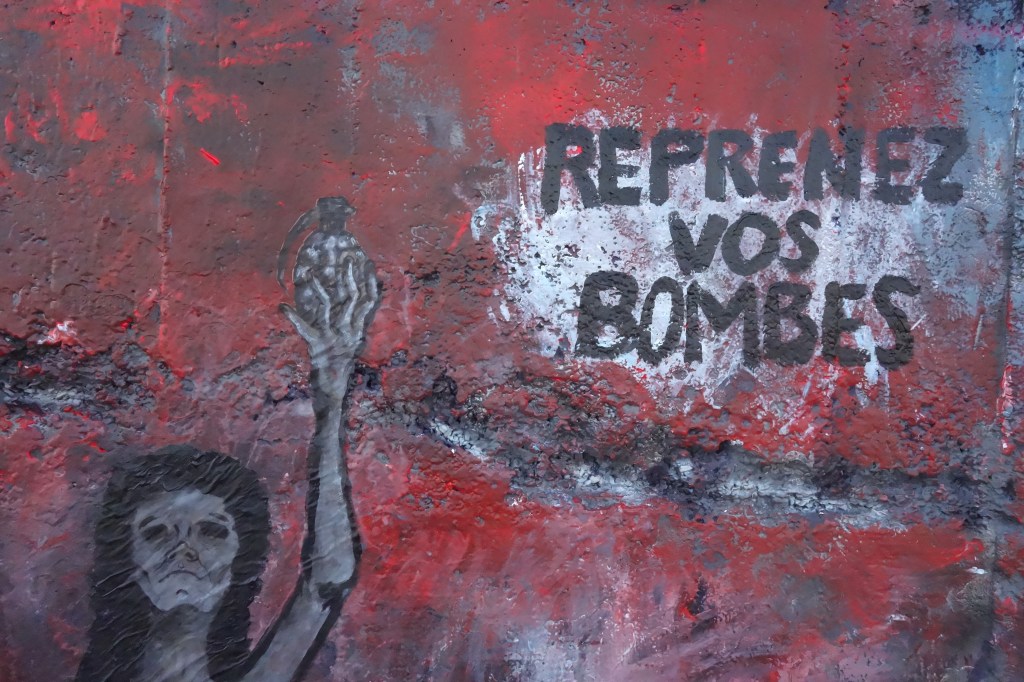
“Take your Bombs Back” خذوا قنابلكم
“أرجعوا قنابلكم”
الحرب مازالت مستمرة في اليمن, وأطرافها يتجاهلو كوارثها على الناس, وعالم يشاهد ويستفيد منها.
على جدار خرسانات اسمنتية على إحدى الشواطى في مدينة مرسيليا, و يبدو انها من بقايا الحرب العالمية الثانية كما شرح لي أحد الأصدقاء, قمت برسمت هذه الجدارية.
مرسيليا, فرنسا. يوليو 2020
“Take your bombs back”
War is still going on in Yemen, and the parties ignore its disasters on the people, in other hand a world keep watching and benefits from its continuity.
On the wall of concrete on a beach in Marseille, and it seems that it is a relic of the Second World War, as a friend explained to me, I drew this mural.
Marseille, France. July 2020




Share this:

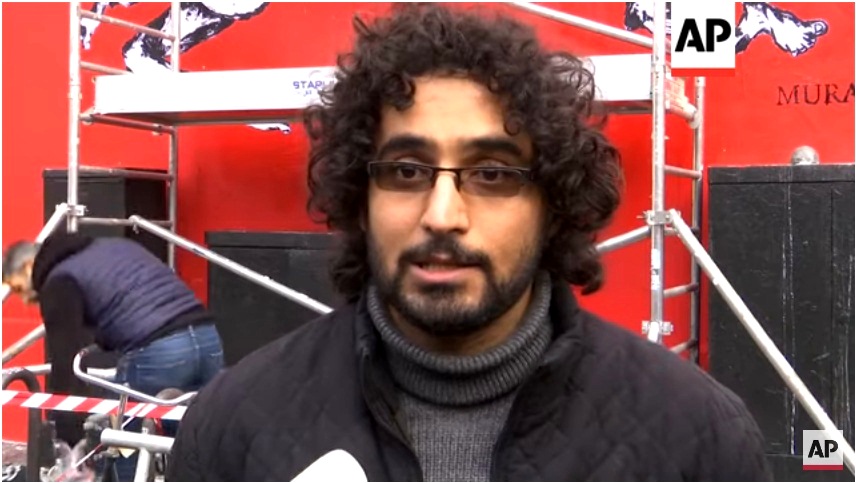
Yemeni artist makes Paris mural about conflict| Video report by “AP”
(22 Nov 2019) LEAD IN: As the war in Yemen continues, a new mural in the center of Paris sends a message about the country’s tragedy. STORY-LINE: Yemeni artist Murad Subay is doing the finishing touches on his artwork. This is not just a mural in the center of Paris, it is a political statement. “This space that you see now is called ‘The last dance of the dead,'” he says. “It’s inspired from real stories of people died in the war. I tried to convey how the war affects the people in a country like Yemen,” he explains. The painting is part of the artist’s ongoing campaign against the war in his home country. “It’s been forgotten for many years and the war destroyed what the people tried to build during the last seven decades,” he continues. Yemen’s bloody war, which has been fought to a stalemate, has led to one of the world’s worst humanitarian crisis. Civilians have suffered the most in the conflict, which has killed over 100,000 people, destroyed Yemen’s infrastructure, displaced millions, and pushed the country’s 30 million people to the brink of famine. The piece is also a statement about the role of the French weapons industry. “They can play a better role in Yemen and instead of selling weapons only so for me I believe, yes I know that the relations between states are not based on emotions, only benefits (profits) but I hope, that at least, because there is people who die,” he adds. Murad’s website says that his art work is an artisitc collaboration with the following eight French organizations: Amnesty, Oxfam, SumOfUs, Action Contre La Faim, Care, Act, Medicine du Monde, and Crisis in Action. “We have regular meetings with the Presidency, the Ministry for Foreign Affairs, the Ministry for the Armed Forces to keep defending our cause and systematically, the answer that we get is that France has received guarantees from the countries that bought the weapons that these weapons are not being used against Yemeni civilians and that these weapons are not being used for offensive but only defensive operations,” explains Fanny Petitbon, the advocacy manager for Care. “But these arguments don’t hold against the succession of revelations that there is a very high risk of seeing these weapons being used against civilians and that maintenance contracts still exist and are upheld by France’s arms industry. So we’re asking where these guarantees are,” she continues. Near the mural is a poster where passers-by can sign their name in opposition to the sale of French weapons to Yemen. The mural will be shown for at least a full week.
Share this:
مراد سبيع يوثق وجوه الحرب اليمنية/ على قناة فرنسا 24
في هذا العدد من برنامج “ثقافة” تستضيف ليانا صالح الفنان مراد سبيع الملقب بـ”بانكسي” اليمن. وكان مراد سبيع أول من أدخل فن الغرافيتي إلى جدران الشوارع في اليمن من خلال حملات فنية توثق وتنتقد ما يعيشه اليمن من أحداث قتل وعنف راح ضحيتها الآلاف من اليمنيين.
Share this:
“Yemen”
“اليمن”
من مجموعة “وجوه الحرب”, والتي انجزت منها مجموعة من الجداريات التي رسمتهن منذ عام 2017 في كل من مدينة الحديدة، صنعاء, لندن وباريس.
هذا العمل عزيز علي, ربما لإنه اكثر ما يعبر عن الوضع الذي يعيشه اليمن وناسه.
“Yemen”
From the “Faces of War” collection, which I painted a series of a murals since 2017 between Al-Hodeidah, Sana’a, London and Paris.
This work is dear to me, perhaps because it expresses the situation in which Yemen and its people live.
Acrylic on Canvas
105×150 cm

Share this:

“Last dance of the Dead” collection, No. 18
من مجموعة “رقصة الموتى الأخيرة”
“Last dance of the Dead” collection, No. 18
Acrylic on Canvas
130×110 cm
France 2019

Share this:

MURAD SUBAY « Construire des ponts sur les murs »\ Sur “LA CHRONIQUE” Amnesty
« Construire des ponts sur les murs »
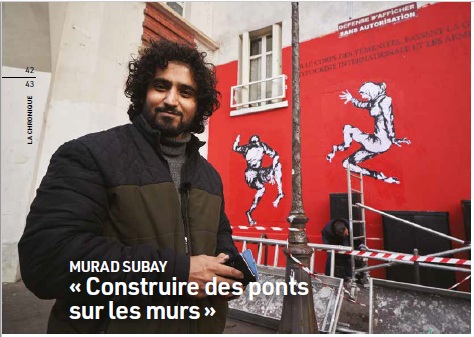
Les murs sont ses toiles. À force d’exercer
dans un pays en guerre, Murad Subay
est devenu un artiste « engagé », mais le
Yéménite reste avant tout un pacifiste. Il
ne manie qu’une sorte de bombe, celle
d’où jaillit la peinture. En juillet dernier,
à Londres, il dénonce à coup de tags ce
monde « plein d’armes et de sang » qui fait le bonheur
des marchands. En août, à Paris, il peint pour soutenir
les réfugiés ; en novembre, toujours à Paris, il cible les
ventes d’armes françaises qui font des ravages dans
son pays ; et en décembre à Marseille, il représente, à
la Cité des arts de la rue, un portrait de femme torturée
intitulé Le paradis des prisons de la milice au Yémen.
Depuis l’été 2019, Subay, 32 ans, vit en France,
accueilli pour dix-huit mois en résidence à l’École
supérieure d’art d’Aix-en-Provence, grâce au Fond de
protection des artistes (Artist Protection Fund). Il n’a
pas demandé le statut de réfugié. En exil temporaire,
il reste attaché à son pays malgré l’indifférence générale.
« Le Yémen est un terrain de batailles pour les
puissances étrangères qui tirent profit de la guerre »,
constate-t-il. Et le peuple trinque : ce pays qui vit
la pire crise humanitaire dans le monde a connu la
famine, ainsi que la plus grosse épidémie de choléra
de l’ère moderne. Trois quarts des 28 millions d’habitants
ont besoin d’une aide internationale.
Share this:

“LAST DANCE OF THE DEAD” NO.16
من مجموعة “رقصة الموتى الأخيرة”
“Last dance of the Dead” collection, No. 16
Acrylic on Canvas
160×120 cm
France 2020

Share this:

Oblation قربان
“قربان”
جعلونا قرابين بإسم الله.
لوحتي ضمن مجموعة “رقصة الموتى الأخيرة”
إكريلك على قماش
“Oblation”
In the name of God, they sacrificed us.
My work as part of “Last Dance of the Dead” collection, No. 12
Acrylic on Canvas
160×120 cm

Share this:

“LAST DANCE OF THE DEAD” NO.10
من مجموعة “رقصة الموتى الأخيرة”
“Last dance of the Dead” collection
Acrylic on Canvas
130×110 cm
France 2019


 Murad Subay