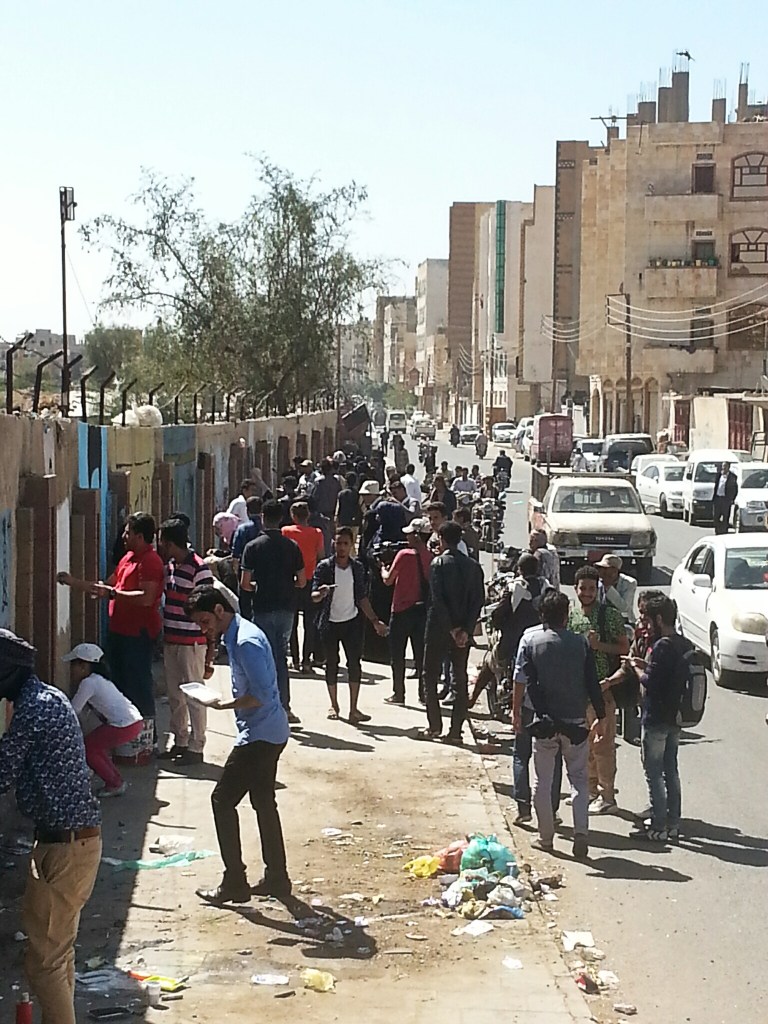
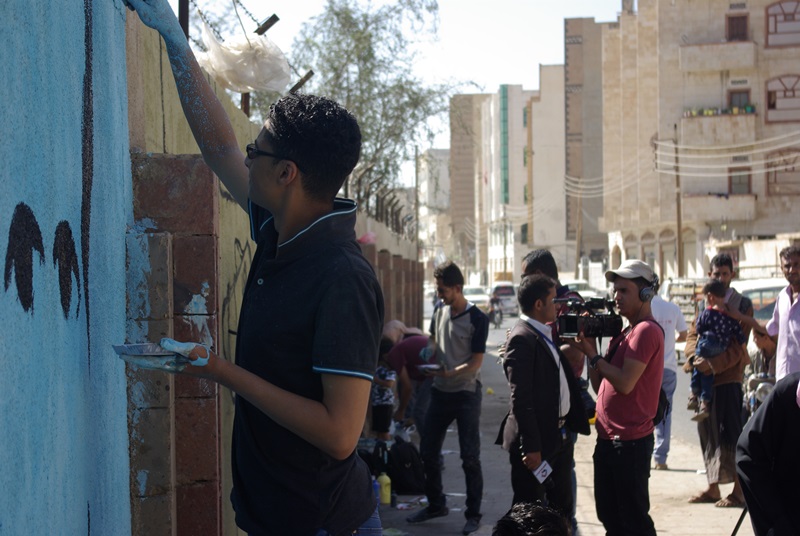
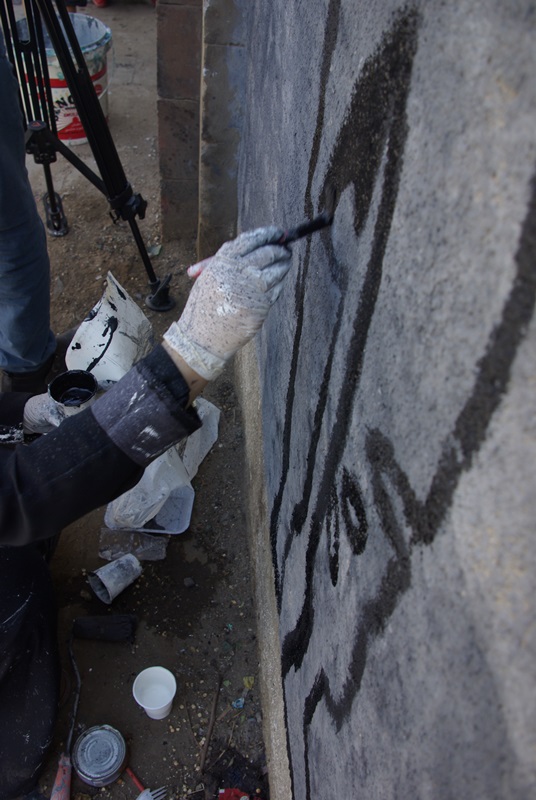
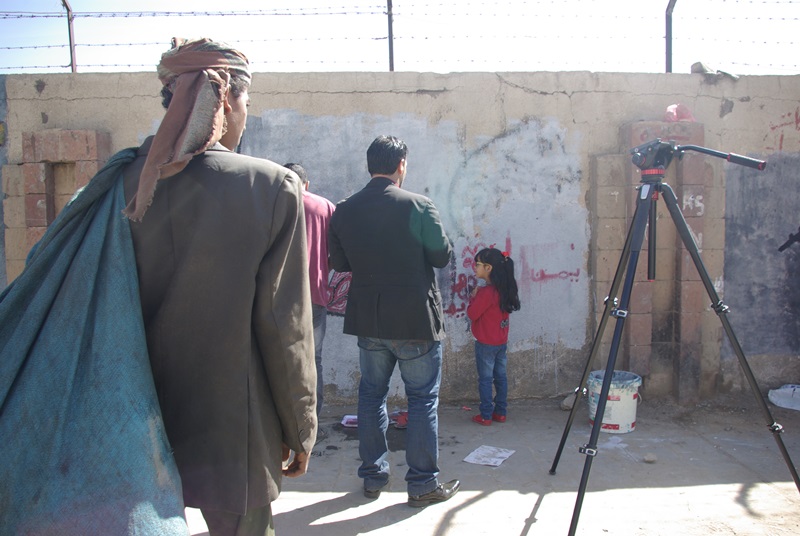
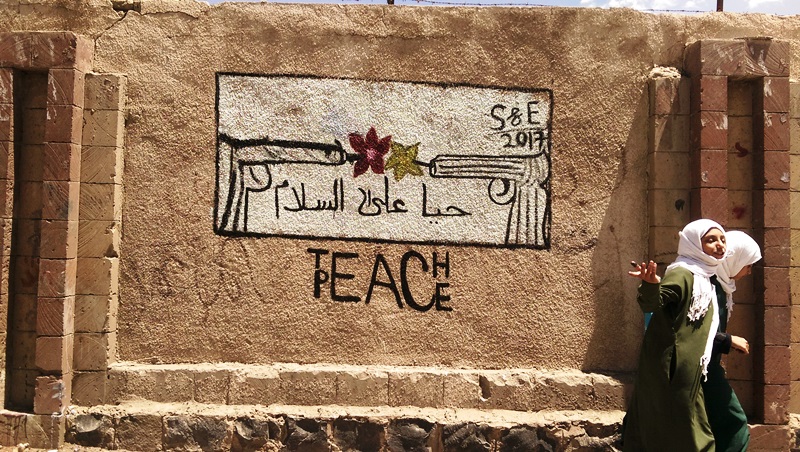
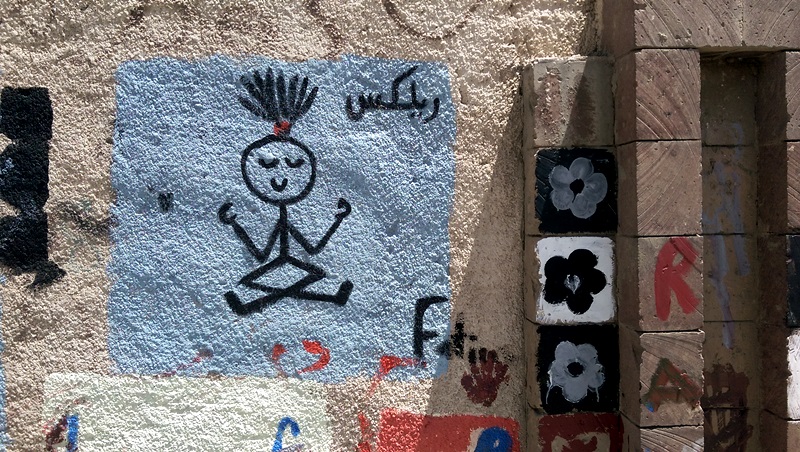
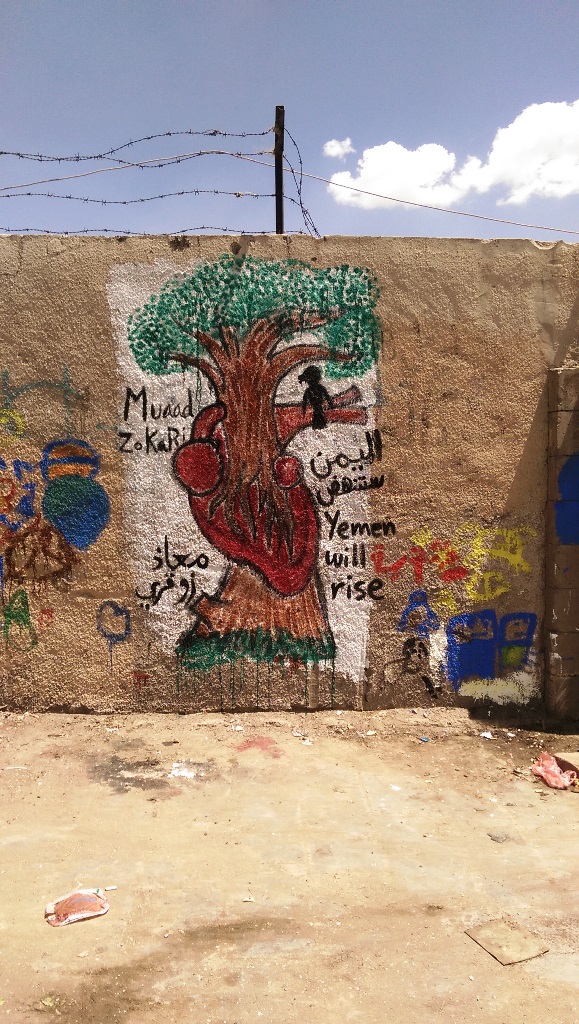
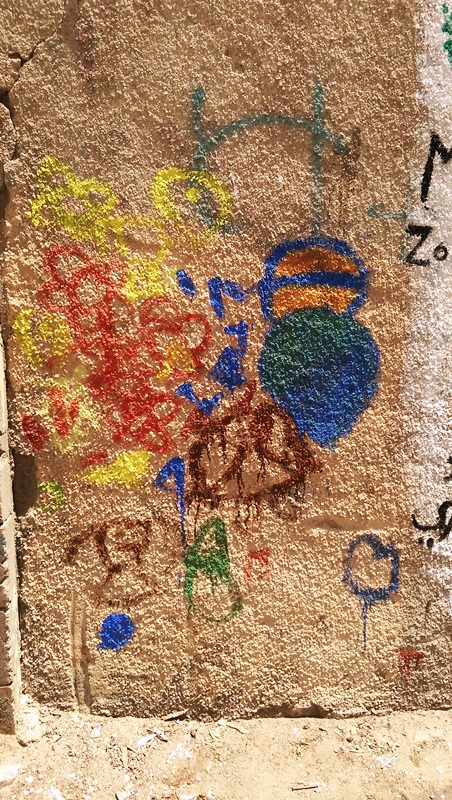
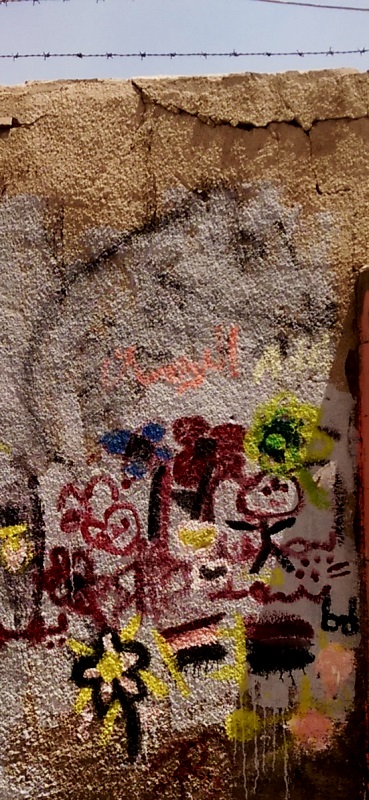
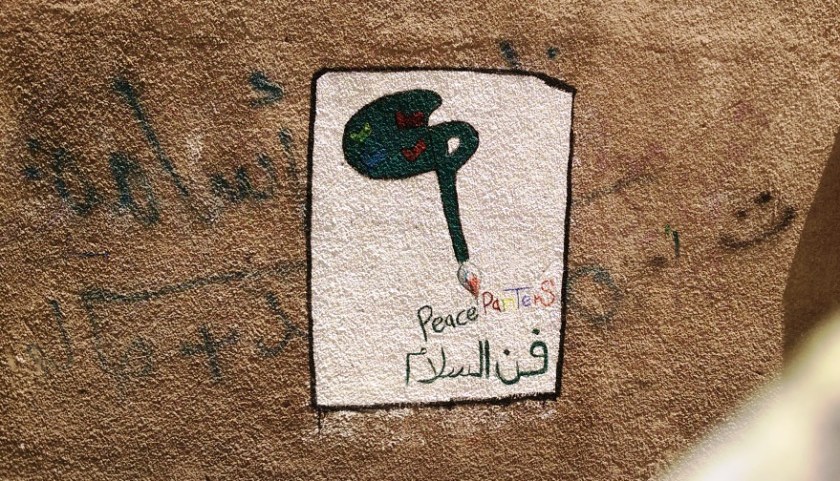
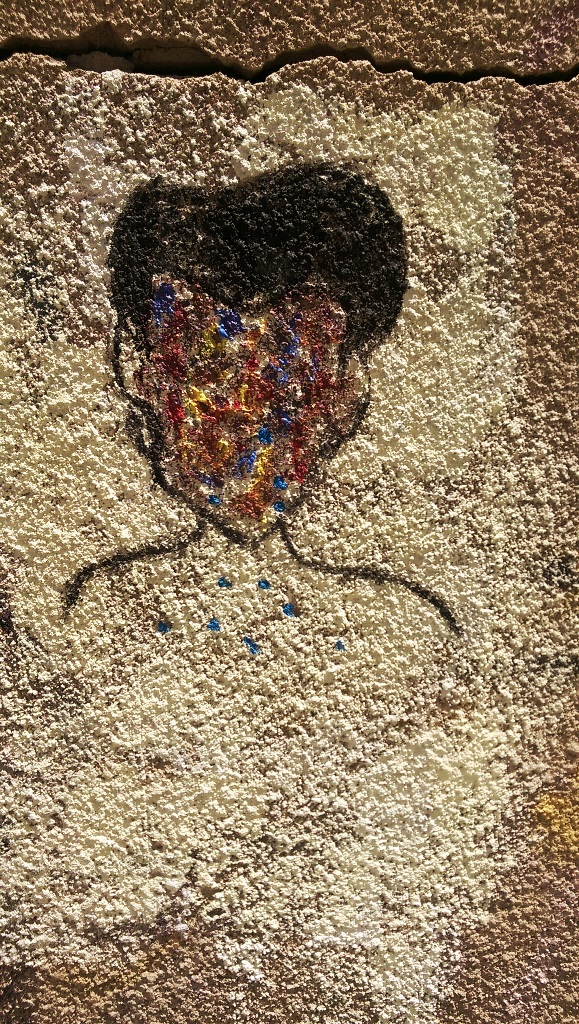
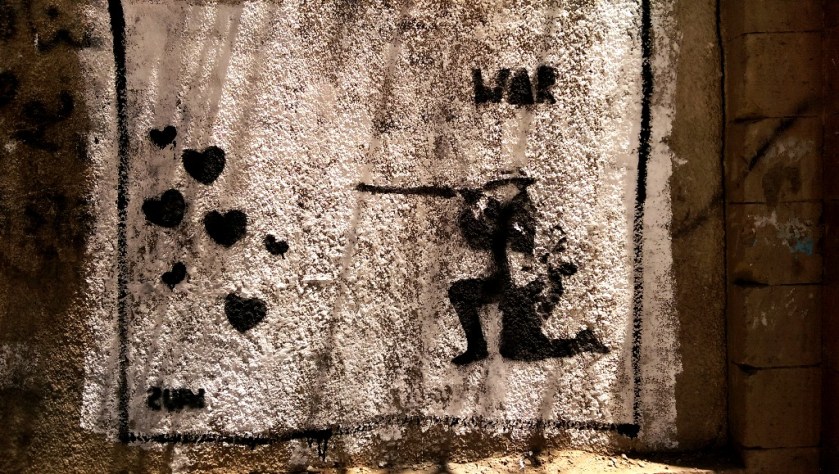
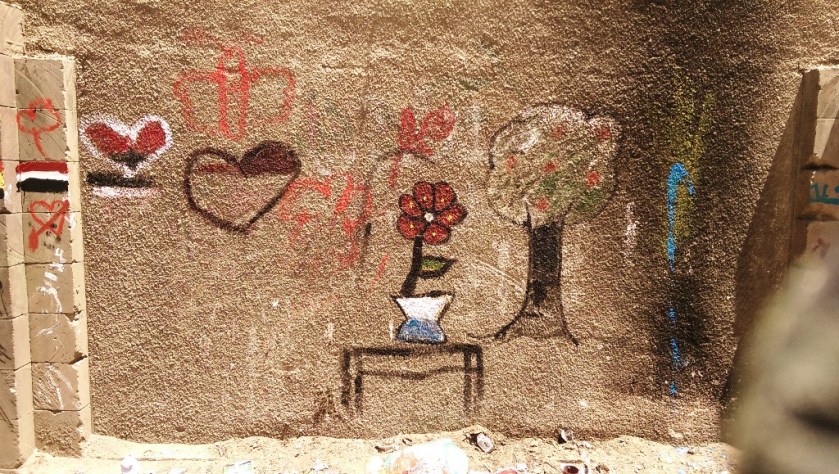
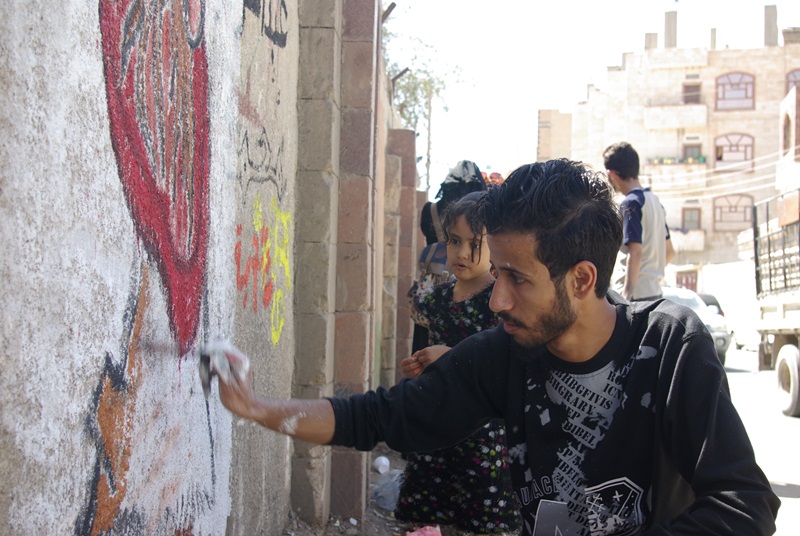
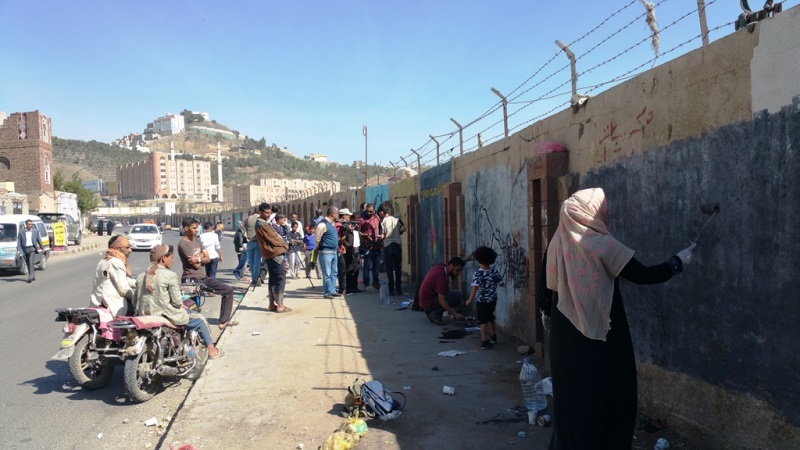
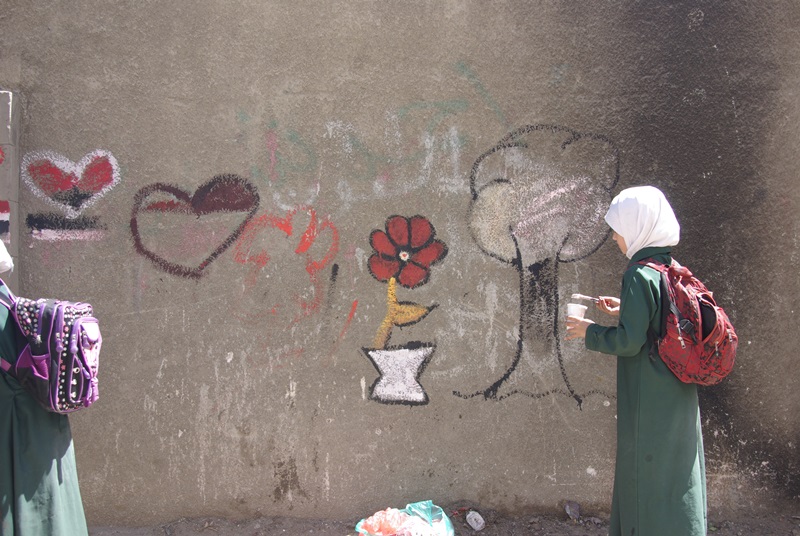
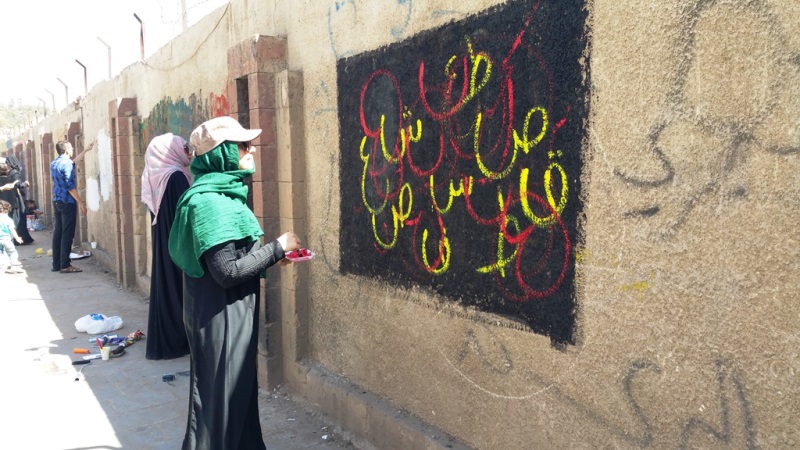
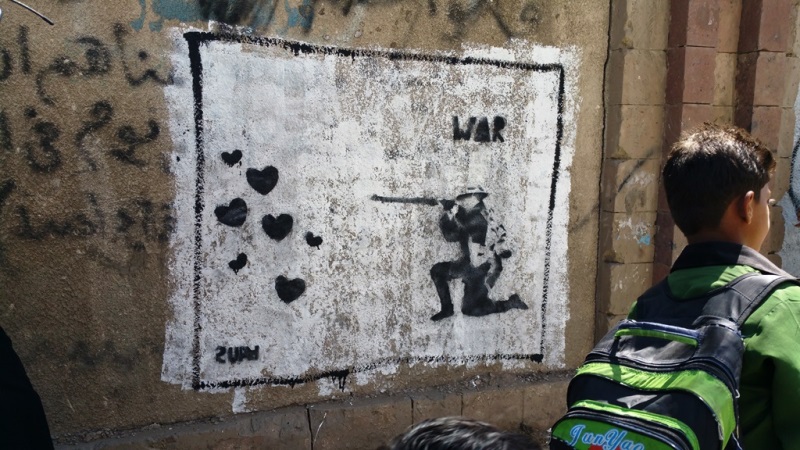
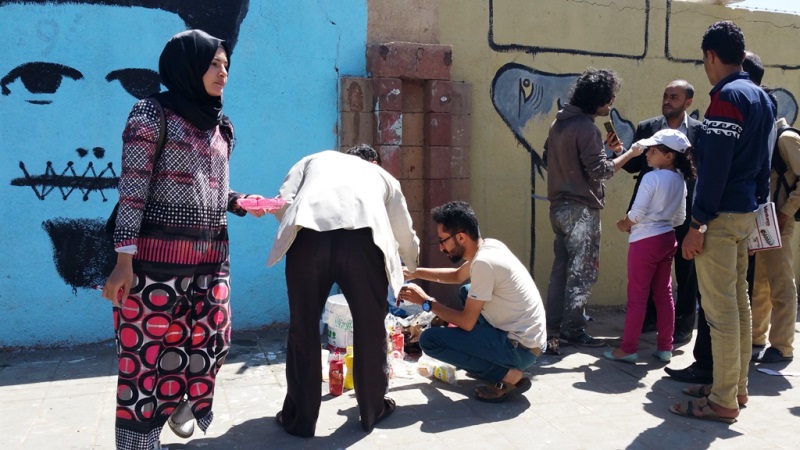
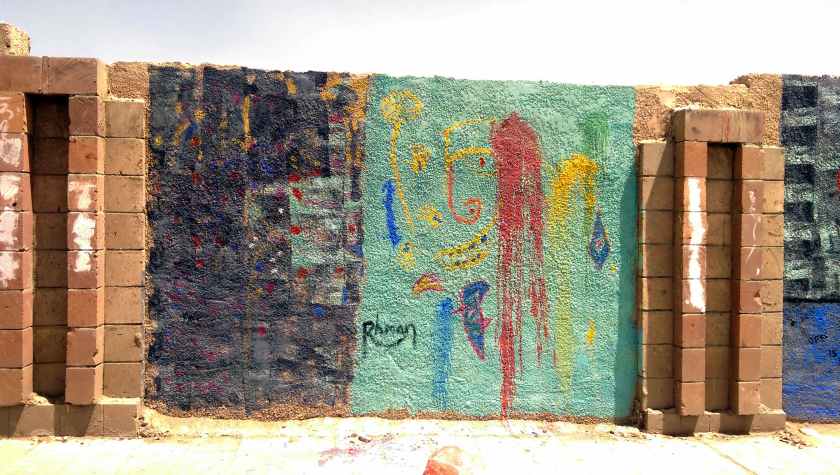
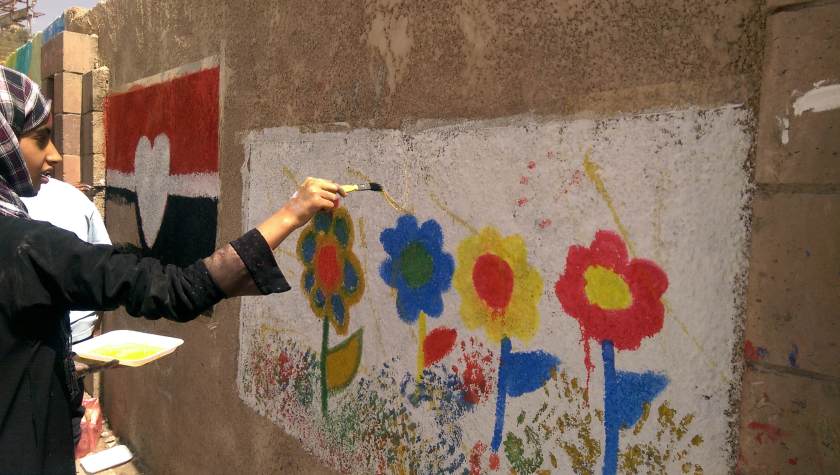
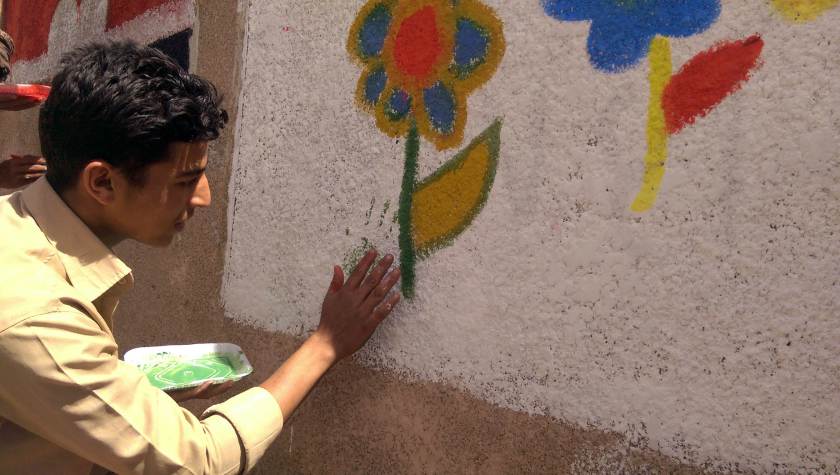
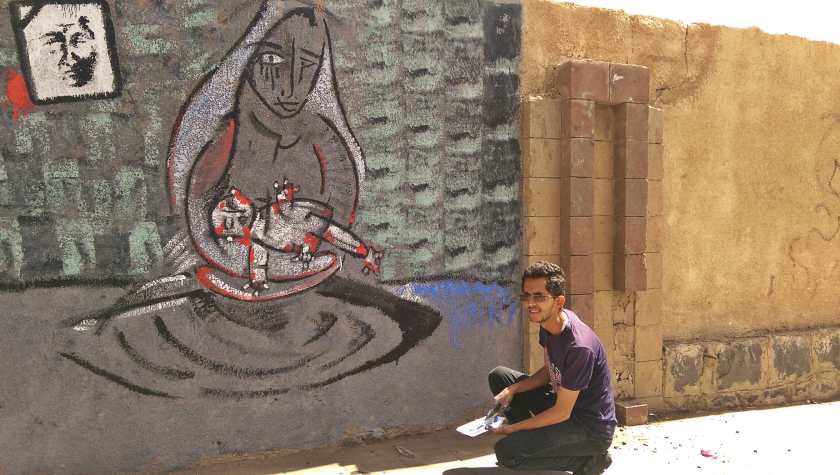
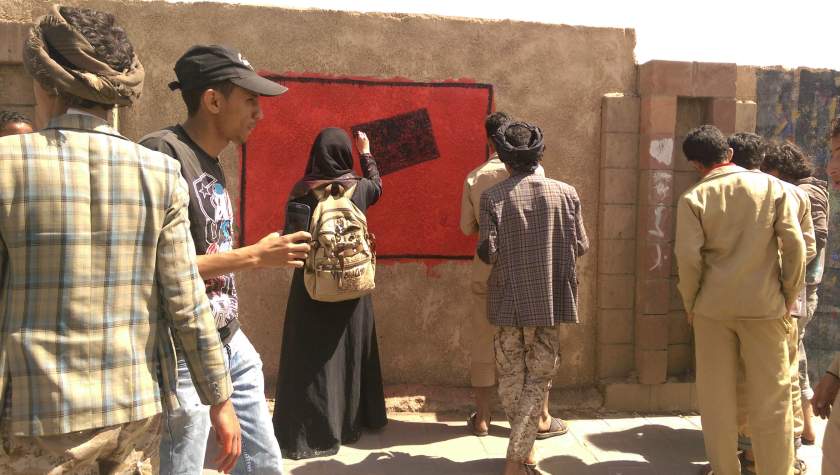
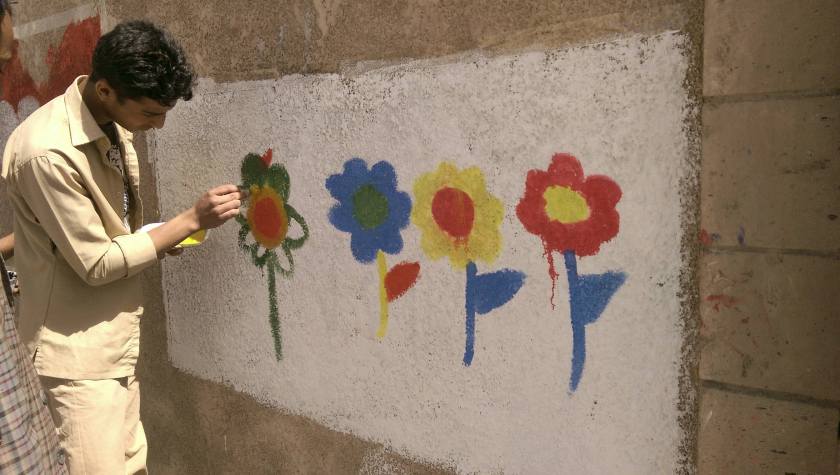
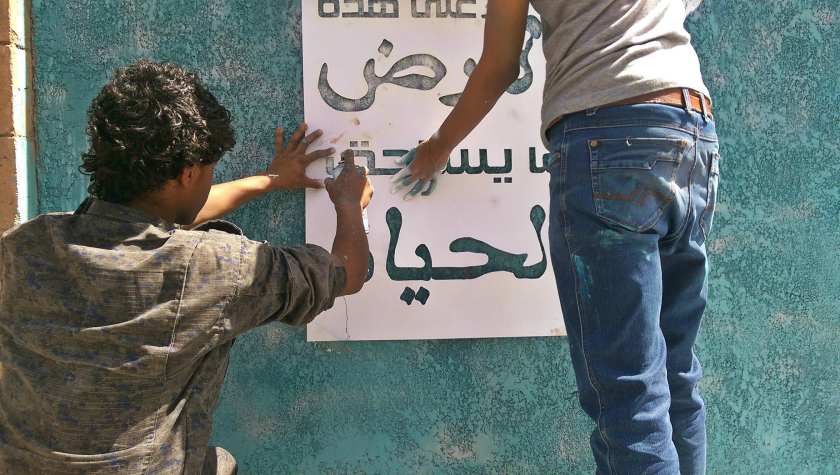
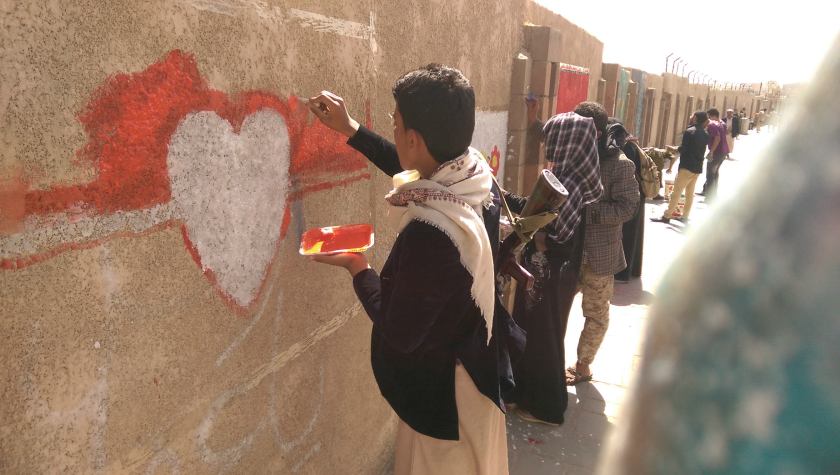
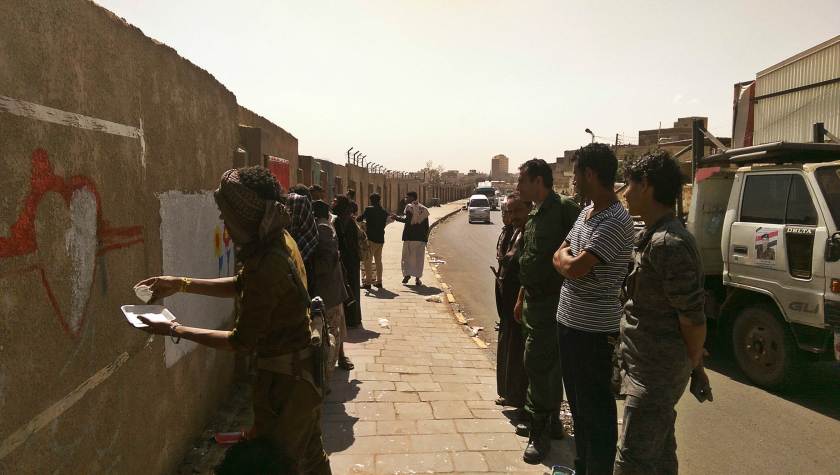
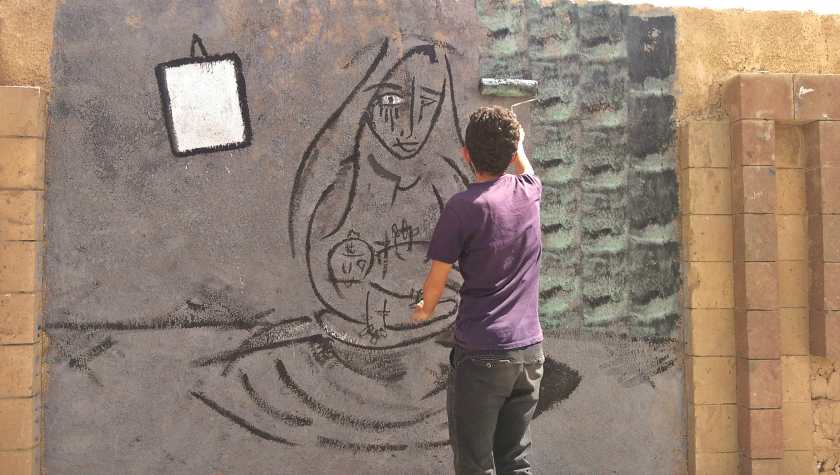
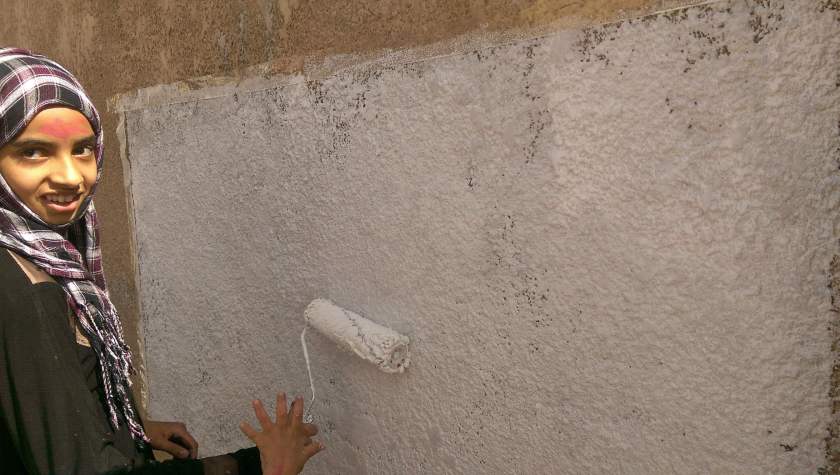
Photos of the murals of the annual event “Open Day of Art” March 15, 2017

خذوا جولة بسيطة في هذا الألبوم لتشاهدوا ما عبر به اليمنيون أطفال وكبار في هذا المعرض المفتوح. لقد رسموا لأجل الحياة. كان هناك العديد ممن لم يستطيعوا المشاركة على الرغم من رغبتهم بالرسم وذلك بسبب عدم كفاية الألوان والأدوات بسبب المشاركة الواسعة، لكن هذا لم يمنعهم من وضع بعض اللمسات الجميلة.
هناك من علق عن سعادته برؤية الناس تستخدم الألوان بدل السلاح.
لقد سئم هذا الشعب كل هذا الدمار والحروب.

صور جداريات المشاركين والمشاركات بالرسم في الحدث السنوي “اليوم المفتوح للفن”، على جدار سور جامعة صنعاء الجديدة الجنوبي، في الشارع المتفرع من شارع الرباط بالقرب من قسم شرطة 14 أكتوبر.
15 مارس 2017
ــــــــــــــ

Feel free to take a small tour in this album about what Yemenis children and youngs done and expressed in this open exhibiton.. They have painted for life. It is unfortunate that the colors and tools were not sufficient. There have been many were not able to participate in spite of their desire because of the inadequacy of colors and tools dut to the wide participated, but this did not stop them from putting some lovely touches.
Someone commented and expressed his delight to see people use the colors instead of weapons.
The people are exhausted of all this destruction and war.

Photos for the murals painted by participants in the annual event #Open_Day_of_Art, on the southern wall of the new Sanaa University, branching from Rabat street near the police station October 14th street.
March 15, 2017

“اليوم المفتوح للفن” “Open Day of Art”, March 15, 2017

هكذا كان وأنتهى هذا اليوم، بهؤلاء اليمنيين الرائعين والرائعات وآخرين لم تستطع عدسة الكاميرا شملهم. أنتهى بعد أن ترك كل منهم جزء من أرواحهم الجميلة على الجدران.
شكرا جزيلاً لكل من ساهم في صنع هذا اليوم، سواء بالرسم أو الحضور. كان يوم مميز بحضوركم جميعا.
صوره من فعالية الحدث السنوي “اليوم المفتوح للفن”, الذي أقيم على بالرسم على سور جامعة صنعاء الجديده، الجهة الجنوبية، 15 مارس 2017.

تصوير الصديق: نادر الموفق، ذي يزن العلوي، نجيب سبيع .

This is how the day ended! With the wonderful presence and participation of people coming from across different backgrounds, ages, and genders. The day ended after each one of them left a piece of their beautiful souls on the walls. Thank you for everyone who contributed to the success of this event, whether by showing up, painting, or showing moral support. You made this day special!
A photo from the event “Open Day of Art”, in Sana’a, Yemen, March 15, 2017
The photo was taken by photographer: Nader Al-Mowafak, Thiyazen Alalawi, Najeeb Subay.


?
?
?

?
?
?
?
?

?
?
?
?
?

?
?
?

?

?
?

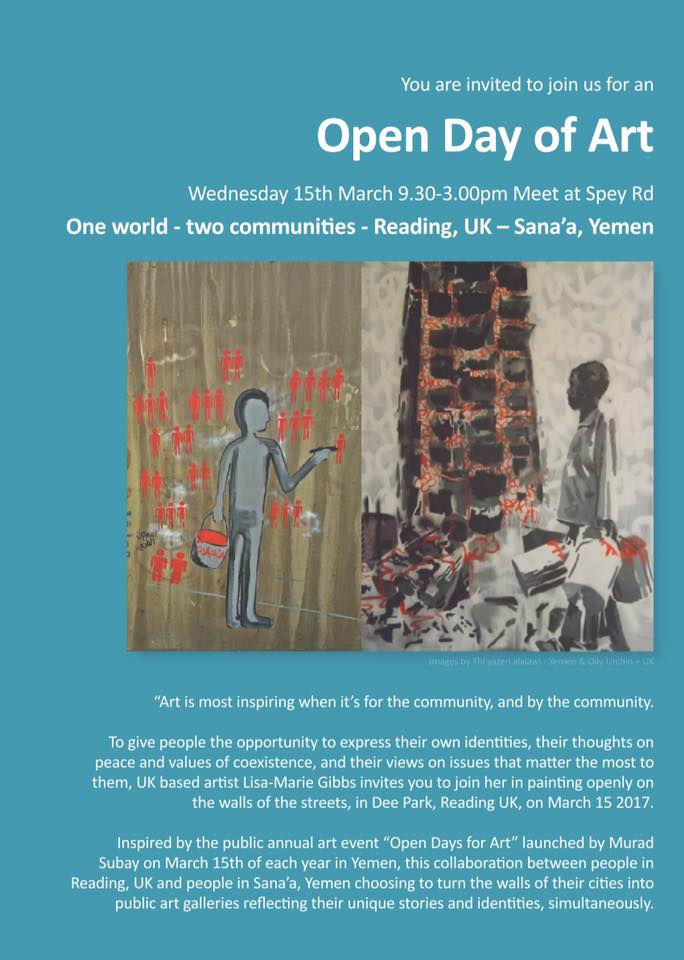
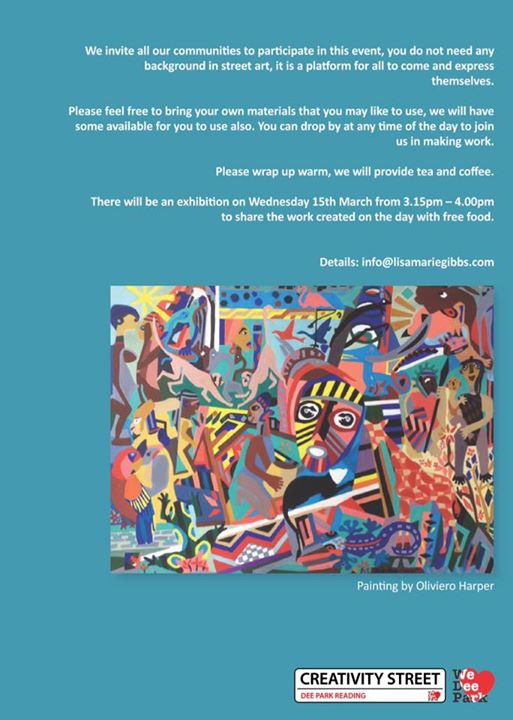
Invitation for the annual event “Open Day of Art” Reading, UK\ The Artist: Lisa-Mari Gibbs

Invitation for the annual event “Open Day of Art”
Reading, UK\ The Artist: Lisa-Mari Gibbs
 
For all my friends residing in UK, especially those who are close to the place of event, brilliant artist Lisa-Mary Gibbs invites you to revive the event “Open Day of Art” by painting on the walls of the streets, in Dee Park, Reading, UK, on March 15, 2017, at 9:30am. For more information, please refer to the invitation below. You are all invited to this artistic event.
إلى الأصدقاء والصديقات في بريطانيا، من هم قريبين من مكان الحدث، تدعوكم الفنانة الرائعة ليزا-ماري جيبز، للإنضمام إليها في صنع الحدث “اليوم المفتوح للفن” وذلك بالرسم على جدران الشارع في مدينة ريدنج، بريطانيا ، في الساعة ال9:30 من صباح يوم الأربعاء، 15 مارس 2017. تجدون الدعوة بالأسفل مع المزيد من المعلومات حول الحدث. أنتم مدعوين جميعا لهذا الحدث الفني.

“Open Day of Art” March 15, 2017

“Open Day of Art”
——————-
At the time when wars and borders divide people, art reunites them from across different continents and cultures.
Open Day of Art is an annual event by the people and for the people. It is a day of art that seeks to give people the opportunity to express their different identities, their hopes for peace and values of coexistence, and their continued rejection of violence and war. To this end, we are pleased to invite you to participate in making this day by painting on the southern wall of Sana’a University, the venue off Rabat Street in front of “October 14” police station, Sana’a, Yemen, on March 15, 2017. In reviving this event, artists and people of Reading, Britain will be joining us this year in a collaboration organized by the brilliant British artist Lisa-Marie Gibbs. The event will forge a cross-border link between people in Britain and people in Yemen who are choosing to convert the walls of their cities into public art exhibitions open to all and reflecting their unique stories and different identities, simultaneously.
This invitation is open to everyone from across different cultural backgrounds, experiences, ages and races. Participation in this event is not limited to those who have a background in arts. Rather this event is an open platform for everyone to express themselves through art. Please bring your own colors and painting tools if you have them, and if you don’t have a background in arts then we will have enough colors to share with everyone.

دعوة للمشاركة بالرسم في الحدث السنوي “اليوم المفتوح للفن”، 15 مارس 2017

“اليــوم المفتــوح للـــفن”
ـــــــــــــــــــــــــــــــــ
في الوقت الذي تفرق فيه الحروب والحدود الناس، يأتي الفن ليجمعهم، عابراً للقارات، وللثقافات المختلفة.
اليوم المفتوح للفن هو حدث سنوي من الناس وإلى الناس. هو يوم من الفن يسعى إلى إعطاء الناس الفرصة للتعبير عن هوياتهم المختلفة، وعن آمالهم حول السلام وقيم التعايش، وعن استمرارهم في رفض العنف والحرب. تحقيقاً لهذه الغاية، يسرنا دعوتكم للمشاركة في صنع هذا اليوم بالرسم على الجدار الجنوبي للجامعة الجديدة، في الشارع المتفرع من شارع الرباط، امام قسم شرطة 14 اكتوبر، صنعاء، اليمن، في ال 15 من مارس 2017.
سينضم إلينا هذا العام في إحياء هذا الحدث فنانون وأناس في مدينة ريدنج في بريطانيا، بتنظيم من الفنانة البريطانية القديرة ليزا-ماري جيبز. وسيخلق هذا الحدث صلة عابرة للحدود بين الناس في بريطانيا والناس في اليمن، والذين يختاروا تحويل بعض جدران مدنهم لمعارض فنية مفتوحة للجميع، تعكس قصصهم الفريدة وهوياتهم المختلفة، في الزمن نفسه. هذه الدعوة مفتوحة للجميع من مختلف الثقافات والخلفيات والتجارب والاعمار والأجناس، وهي ليست حصر على الملمين بالفن. بل أن هذا الحدث منصة للجميع للتعبير عن أنفسهم عبر الفن.
من يمتلك ألوان وعدة رسم خاصة به فليحضرها، ومن لا توجد لديه خلفية في الفن، فلدينا ما يكفي من الألوان لنتشاركها مع الجميع.

‘Nobody taking responsibility for Yemen war’ – Arab Banksy to RT

rt

‘Nobody taking responsibility for Yemen war’ – Arab Banksy to RT

rt2

With the Yemeni conflict showing no signs of easing, RT spoke to a graffiti artist who’s been capturing the horrors and hardships with his brush and paint. He believes that, even amidst unrelenting war, art can bring people together.

“Yemen was dragged into a catastrophic war, and ordinary civilians are paying a high cost for it, and they will be paying it for decades,”Murad Subay, whose work recently started catching the attention of mainstream media, told RT. Subay, who not only creates graffiti himself, but also organizes mass workshops, says he is using his artwork to draw attention to the dire conditions in Yemen.

“There’s no responsibility, no sympathy with the difficulties Yemeni people are facing there.”


“It’s a catastrophic war, and no one is taking responsibility for it. We hope that the voice of reason will be heard, and the war will be stopped, so that we can overcome the consequences of this catastrophe,” he says.

READ MORE: UN ‘estimates’ death toll in Yemen war surpassed 10,000

Subay, who is already an award-winning artist, seems genuinely uninterested in pursuing glory and fame for the sake of it. He daubs the walls of ruined Yemeni houses with haunting images of war and starving children, and tents for the displaced with pictures of barbed wire or dream-homes, traveling across Yemen despite the dangers – all of it “for the sake of peace.”

His graffiti metaphorically depicts the ugliness of war, like a malnourished child locked in a blood-red coffin or a small girl about to pick up a flower sticking from a landmine that’s about to explode.

However, instead of speaking about his own art, he told RT of the effort he’s been making along other Yemeni artists to promote art and unite Yemeni people under its aegis. Subay and others have been gathering in the capital, Sanaa, every year since the conflict began, painting illustrations of war on what was left of the city’s streets after bombings. And they have been joined by ordinary people of all ages, who wanted to paint their war, too.

“Art is not confined to the boundaries of one social class, not only artists create it. In modern conditions art can be practiced by everyone – children, youths and adults. Every [year] we invite people, they go out to the streets and make their artwork, each in their own colors. There is no social order, all is done voluntarily and without fanaticism.”

“[…] This is the art of the Yemeni streets. That’s what we do,” he says, describing the initiative launched in an effort to highlight the impact the Yemeni conflict is having on the population. He points out that the initiative has now become a tradition, calling it a “Yemeni phenomenon.”

“This Yemeni phenomenon is recognized worldwide. Articles are published about it, scientific universities are studying it as a social phenomenon – that of bringing people together in drawing,” Subay tells RT. The media has been so enthralled by his activities lately, he even got a nickname: the Banksy of Yemen, or Arab Banksy.

The original Banksy is the brush name of an anonymous British artist who’s also gained fame with his murals and paintings on sharp social and political issues. Among his best -known recent artworks are murals set among ruins of the Gaza war and ‘Steve Jobs the son of Syrian migrant’ picture in the Calais refugee camp.

READ MORE: Child malnutrition at ‘all-time high’ in Yemen, UNICEF claims in alarming report

Saudi Arabia began bombing Yemen in support of exiled President Abdrabbuh Mansour Hadi at the end of March 2015, after Houthi rebels loyal to former President Ali Abdullah Saleh, backed by Iran, took over Sanaa. According to the latest UN data, the death toll in the Yemeni conflict has now surpassed 10,000 people, and almost 40,000 more have been wounded. Some 14 million civilians are in need of food aid and some 462,000 children are suffering acute malnutrition.

Report Link>>

Continue reading “‘Nobody taking responsibility for Yemen war’ – Arab Banksy to RT”

صور من فعالية اليوم للرسم المفتوح على جدران الشارع، 15 مارس 2016، أمام قسم شرطة 14 اكتوبر، شارع الرباط، صنعاء.

للراغبين بالإنضمام إلى الفعالية، سنستمر بالرسم ليومي 16 و17 مارس 2016 في نفس المنطقة. يبدأ الرسم من الساعة التاسعة صباحاً.

شكر خاص لجميع من جعل هذا اليوم جميلاً ومليئاً بالألوان والإبتسامات.

تصوير: هديل الموفق

These pictures were taken from today’s event “Open Days for Art”, March 15 2016, where people painted on the walls of the street, in front of 14 October police station, Ribat Street, Sana’a.

For those who wish to join us in painting, the event will go on for another two days, 16 and 17 of March 2016, in the same area. We’ll begin painting at 9:00 AM.

Special thanks to everyone who made this day a beautiful one and full of colors and smiles.

Photos by: Hadeel Almowafak

15 March 2016/31 15 March 2016/38 15 March 2016/37 15 March 2016/36 15 March 2016/35 15 March 2016/34 15 March 2016/29 15 March 2016/30 15 March 2016/32 15 March 2016/33 15 March 2016/27 15 March 2016/26 15 March 2016/25 15 March 2016/24 15 March 2016/19 15 March 2016/20 15 March 2016/21 15 March 2016/22 15 March 2016/23 15 March 2016/18 15 March 2016/17 15 March 2016/16 15 March 2016/15 15 March 2016/14 15 March 2016/9 15 March 2016/10 15 March 2016/11 15 March 2016/12 15 March 2016/13 15 March 2016/8 15 March 2016/7 15 March 2016/6 15 March 2016/5 15 March 2016/4 15 March 2016/1 15 March 2016/2 15 March 2016/3

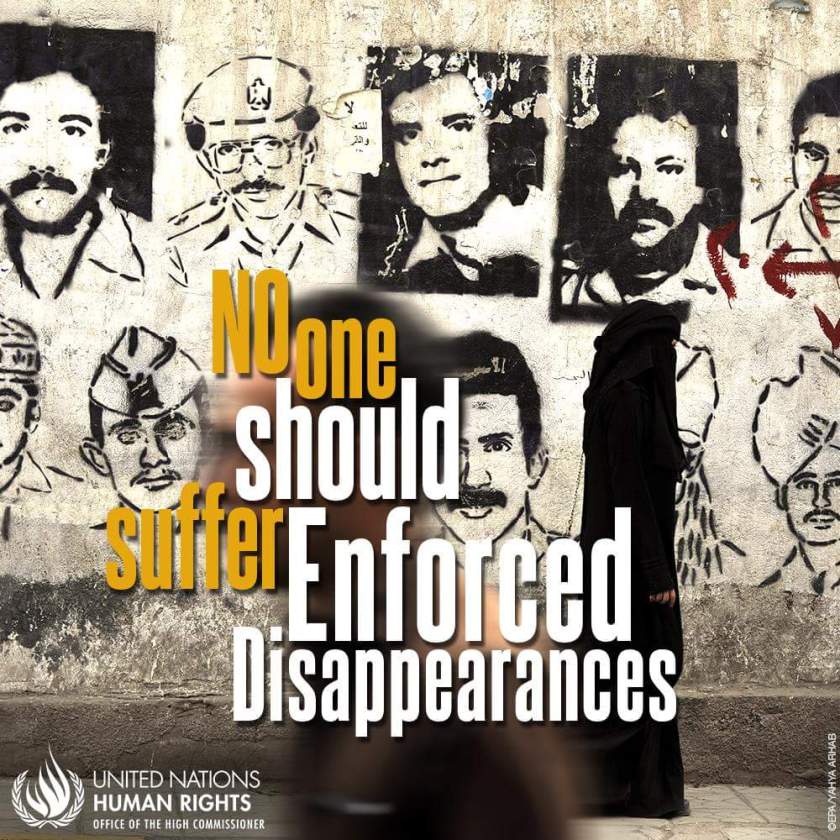
“NO one should suffer Enforced Disappearance”\ UNHRC


“NO one should suffer Enforced Disappearance”
UNHRC

“لا يجب ان يعاني أحد من الإختفاء القسري”
UNHRC

Like>>

16797304_1673455459337921_5686516261965759582_o

Yemen: Art, love, bombs and bans\By Dorian Geiger

Aljazeera

Yemen: Art, love, bombs and bans

Yemen’s most prolific street artist copes with Donald Trump’s immigration ban.

Subay’s artistic campaigns invite everyday Yemenis to pick up a paint brush or can of spray paint and participate in his art [Al Jazeera]

by

Dorian Geiger is a Canadian journalist, award-winning filmmaker, and a social video producer at Al Jazeera English.

They call him the Banksy of Yemen. ButMurad Subay, a 29-year-old street artist based in the capital Sanaa, shrugs off such comparisons.

Subay has transformed the streets of an active war zone into his own vibrant gallery. His canvases are often the ruins of war – crumbling, abandoned houses with gaping holes caused by mortar explosions.

“It is three letters only: W-A-R,” said Subay of his work, which continually shines a light on Yemen’s horrific humanitarian situation.

“It’s just to show the ugliness of war – this is what happens by war. This is my way to to protest against the injustice of this war and for peace.”

Subay’s work also focuses on Yemen’s dire economic situation, political corruption, disappeared persons, and US drone strikes.

‘It’s just to show the ugliness of war – this is what happens by war. This is my way to to protest against the injustice of this war and for peace’ [Photo courtesy of Murad Subay]

Yemen’s revolution, which unfolded on streets across the country on the heels of the Arab Spring just over six years ago, largely inspired his brand of artistic activism. Subay was there with the people, protesting in the streets of Sanaa. Those blissful but fleeting moments were short-lived, as the revolution would soon turn into a full-blown civil war.

“Yemenis were united in every part of Yemen,” said Subay. “It was a great moment. We loved it. When the revolution came, it never stops and it will continue.”

Unlike many street artists, who often work in the shadows, Subay’s work is a collaborative effort. Subay’s artistic campaigns invite everyday Yemenis to pick up a paintbrush or a can of spray paint and participate in his art. It’s an artistic approach he says is for the people, by the people.

“It’s a voice of [the people],” he described. “I’m a Yemeni. When I discuss something, I first [ask] what people should care about, what they are afraid of, and what [are] the issues that concern them? People are longing to end this war.”

His open-sourced style of art is what led him to his wife Hadil Almowafak. Almowafak, then in high school, had learned of one of Subay’s campaigns on social media. It was 2012, shortly after Yemen’s revolution and the ousting of former president Ali Abdullah Saleh.

She was mixing colours when Subay first approached her.

The happy couple are now separated and do not know when they will see each other again [Photo courtesy of Murad Subay]

“When we arrived we saw people painting on the walls,” she recalled. “Everyone was there. That was something new. People in the streets were standing by watching or [were] taking the brush and started painting. He wants to make the whole society part of his work.”

From then on, Almowafak was hooked – on both Subay and his art.

“Even if I had school, many times I would skip school just to go paint with them,” she added.

Three years later, in October 2015, the pair celebrated their wedding. By that time, civil war had broken out in Yemen.

Today, Houthi rebels and loyalists to former president Saleh are still engaged in a bloody battle against the current government of Abd-Rabbu Mansour Hadi. A Saudi Arabian-led coalition – aligned with Hadi, and supported by the US – bombs the country routinely. It’s a fertile breeding ground for al-Qaeda, which the US frequently targets with drone strikes, and there’s an ISIL presence, too. But more often than not it seems, it is everyday Yemenis who pay the cost, often with their lives.

Just last week, a botched Navy Seals raid targeting al-Qaeda killed roughly 30 people, many of them civilians and some of them children, in President Donald Trump’s first attempt at military intervention in the country.

Subay’s work also focuses on Yemen’s dire economic situation, political corruption, disappeared people and US drone strikes [Photo courtesy of Murad Subay]

Tens of thousands have died in the fighting, many of them regular citizens. Hospitals and schools and have been bombed to bits, starvation is rampant and UNICEF has reported that a child dies every 10 minutes.

“Every day you hear of civilians being killed,” said Almowafak, now 21.

“When you hear air strikes, especially if it’s nearby, the whole house will be shaking. At night, you don’t know where they’re going to hit, especially [if] you’ve been hearing they’re targeting civilians. You’re always in this uncertainty. You don’t know if you’re going to be next, if your neighbour’s going to be next. It was insane. They will be firing at each other. The shelling, you’ve got mortars, you’ve got snipers killing people. It’s just crazy.”

Then, last year, the couple received life-changing news: Almowafak had been accepted to Stanford University in California, where she is currently studying. Conditions in Yemen had deteriorated at such a swift and deadly pace that it was impossible for Almowafak to pursue a serious education at home.

The acceptance offer from such a prominent US university was a life-preserver amid a sea of death and destruction. It was a way out and a bridge to achieving her dreams. Almowafak had dreamed of coming to America since she was a child.

But under Trump’s immigration banthat prohibits citizens of seven Muslim-majority countries, including Yemen, from entering the US for 90 days, Almowafak’s academic future has been cast into doubt.

Subay has transformed the streets of an active warzone into his own vibrant gallery [Photo courtesy of Murad Subay]

“It’s really unfair,” said Almowafak, who wants to be a human rights lawyer.

Although a federal judge in Seattle has temporarily blocked the ban, it is unclear if this will stick.

“I am disappointed to see America take this road. I do feel like I’m trapped, like when I was in Yemen and the airport was closed and people wouldn’t be able to travel. I felt trapped there, as well, but at least there was war. The war was unfair to us. But here in US, in the land of freedom, and this happens, I just couldn’t believe it.”

The US only granted her a 12-month visa for her studies, as opposed to a four-year permit, which Almowafak would need to continue studying. If the block on Trump’s ban doesn’t hold, Almowafak will probably be forced to abandon her studies and return to Yemen indefinitely.

“You’re at Stanford, that’s a good place to be trapped in,” said Almowafak. “It’s like it’s a golden cage. I can’t visit my husband. He cannot come here, as well. I cannot visit my family. I can’t study abroad. I came here to study and I cannot do that and in a year I won’t be able to if the ban continues. I’m holding on to hope because I don’t want to think about what’s going to happen next.”

Almowafak had planned to return to Yemen this summer to be with Subay, but now those plans are in jeopardy.

“The first time [I heard about the ban], I thought it was a joke actually,” said Subay. “[The US] is the country of opportunities, the country of democracy and in the 21st century, you ban people according to their race, their religion for their nationality? This is stupidity. This law is racist. It’s unbelievable. [It’s] like putting honest, innocent people in a prison.”

Though the odds are stacked against them, Subay refuses to believe that his wife must give up on her dreams.

“She’s been following this chance to have a scholarship for two years. I know, I was there every step,” he said.

“Our country is what they call the third world. Our chances [are] not a lot. It sometimes comes once. So such a chance, to prove yourself in such a respectable university, it is really important and [precious] so she must and she will stay there to continue her studies. She is very brilliant.”

Article link>>

Continue reading “Yemen: Art, love, bombs and bans\By Dorian Geiger”

اليمن: “أطفال المقابر”/جريدة “السفير”

  • اليمن: “أطفال المقابر”

غرافيتي للفنان مراد سبيع (مخيم ضروان – اليمن)

10-02-2017

على الجهة اليسرى من الطريق الممتدة المتجهة لمحافظة “عمران”، تضطجع مئات من مخيمات النازحين الذين أجبرتهم الحرب على النزوح أو دمرت منازلهم.
عندما وصلنا أنا والأصدقاء إلى مخيم “ضروان”، استقبلنا النازحون هناك بلطف تام ومطلب هو الأهم، ألا وهو مدرسة لتعليم أطفالهم الذين منعوا من التعلم في المدارس الموجودة في المنطقة لعدم توفر مقاعد دراسية لهم، بحسب قولهم.
الأطفال وأهاليهم من النازحين يعانون الأمرين في مخيمات مُهمَلة لا توفر أبسط الخدمات مثل الحمامات. من المؤسف أنّ هذا ما يعاني منه جميع النازحين في جميع المخيمات التي صنعتها وما زالت تصنعها الحرب الدائرة في اليمن.
جداريتي، ضمن #حملة_حطام، عن النازحين، في مخيم ضروان للنازحين، 6 فبراير 2017.

من صفحة رسام الغرافيتي اليمني مراد سبيع – Murad Subay (عن فايسبوك)

رابط المقال>>

Continue reading “اليمن: “أطفال المقابر”/جريدة “السفير””