“Children of Rubble” Cover photo of the German Magazine “IZ3W”


صورة جداريتي “أطفال الركام” والتي رسمتها ضمن مجموعة “وجوه الحرب”, غلاف لمجلة “اي زد ثري دبليو” الألمانية. والتي ستنشر غدا في ألمانيا.

My mural “Children of Rubble”, “Faces of War” street art collection, as a cover photo of the German Magazine “iz3w”. It will be available tomorrow in German.

Link>>

سرقة أعمالي من قبل جهة موجهة سياسيا Artistic Theft by Politically-Oriented Party

فوجئت قبل يومين بإن فكرتي لإحدى المشاريع قد جرى تنفيذها من قبل مؤسسة “الشعب” في صنعاء، هذا وقد قمت بمشاركة فكرة المشروع مع منظمتين دوليتين لأجل تنفيذ هذا العمل منذ سنتين تقريبا، وعلما بأن المشروع مازال قائم.

لكن لا أعرف كيف تم تسريب فكرة المشروع إلى جهة تخدم أحد الأطراف السياسية، وليس بمقدرتي الإجابة عن هكذا سؤال بما إن أعمالي تبقى طيّ الكتمان إلى ان ترى النور على أرض الواقع.

سرقة وتسريب فكرة فنية هدفها إنساني بحت وتحويلها للترويج ولخدمة طرف سياسي لهو أمر مخزي ومحزن، وهي إهانة بذات الوقت لكل الفنانين المشاركين في المعرض.

 إضافة أنه ذكر في مواقع إسبانية أنه تم استخدام بعض من أعمالي في المعرض، وإن صح هـذا الأمر، فهو لأمر آخر مخجل بحق القائمين على المعرض، ولهو عمل دنيء أن يتم استخدام أعمالي دون الرجوع إليّ.

 منذ بداية رسمي على الجدران عقب ثورة ٢٠١١، تجنبت استخدام أو تجنيد أعمالي والحملات التي أطلقتها للترويج او دعم أي طرف سياسي مهما كان، وسأظل أعمل هكذا، فلا يليق بالفن دعم أي مكينة حرب أو فكرة أو سلطة قمعية.

I was surprised two days ago to find one of my ideas for a project implemented by “Sha’ab” organization in Sana’a, Yemen. I shared the idea of the project with two international organizations almost two years ago, and the project is still on-going.

I’m still not sure how the project’s idea was leaked to an organization serving one of the political parties in Yemen, and I can’t answer such question since my work is usually kept secret until it is implemented.

Stealing an artistic idea whose purpose is purely humane and turning it into a propaganda promoting and serving the interests of a certain political party is shameful and sad. It’s also an insult to all the artists who participated in the exhibition.

In addition, it was mentioned in Spanish websites that some of my work was used in the exhibition. If this is true, then it is another shameful thing for the exhibition owners. It is a despicable act to use the work of an artist without asking their permission.

Ever since I started painting on the streets after the 2011 revolution, I have avoided using or recruiting my work and campaigns to promote or support any political party, and I will continue to do so. It is inappropriate and disgraceful for art to support any war machine, repressive idea or repressive authority.

Link1>>

Link2>>

Link3>>

Link4>>

The Art of War: Using Art to Promote Peace in Yemen\ On “Inside Arabia”

The Art of War: Using Art to Promote Peace in Yemen

As combative as it is dangerous, painter Murad Subay weaponizes his art to quell tensions in the ever-escalating war in Yemen.

Photo courtesy: Murad Subay

As combative as it is dangerous, painter Murad Subay weaponizes his art to quell tensions in the ever-escalating war in Yemen.

In Yemen, the post-Arab Spring transition that started in 2012 has been accompanied by political failure and violence. Artists have taken to the streets of Yemen’s capital, Sanaa, and numerous other Yemeni provinces in an effort to disseminate messages of peace through outdoor exhibitions of their works.


Yemeni artist Murad Subay’s artwork combats attempts to undermine the freedom of the Yemeni people, eliminate their civilization, and threaten their political and human rights. Since 2012, Subay has launched numerous political art campaigns, including  “Color the Wall of Your Street,” a protest of the ongoing civil war. Subay recounted how he was inspired to paint bullet holes as an “indirect call for peace.” These vibrant bursts of color serve as messages of hope, life, and tolerance.

Similarly, Subay worked on the “The Walls Remember Their Faces” campaign, to remember the victims of enforced disappearance. The memorial, which was on display from September 8, 2012, to April 4, 2013, featured 102 photos of the victims, along with their names, the date of disappearance, and the last place that they were seen written in both Arabic and English.

Of his activism, Subay has said that participating in the 2011 revolution against Saleh encouraged him to become more politically aware and “to do something against political crime.”

In a recorded interview, Subay discussed twelve major political challenges facing Yemen: “sectarianism, employment, poverty, kidnapping, destruction, civil wars, terrorism, corruption, child recruitment, arms proliferation, and the American drones strikes in Yemen.” His “12-hour” campaign ran from July 4, 2013, to June 24, 2014, and featured 38 murals depicting these topics dispersed throughout Sanaa. Interestingly, the exhibition coincided with the National Dialogue Conference, from March 18, 2013, to January 24, 2014. While there was no comment from conference attendees, the Yemeni people have responded positively. Subay believes that the public’s response to the campaigns “is a sign of people’s longing for peace and life.”

On March 26, 2015, the first day of the Saudi-Emirati coalition’s military intervention in Yemen, the coalition targeted a residential neighborhood in Bani Hawat, destroying 14 houses, killing 25 civilians, including 6 children, and injuring 40 others, according to Amnesty International. This was the first attack targeting the capital Sanaa.

The site of this crime was the starting point for Subay’s third campaign, entitled “Ruins,” which began on May 18, 2015. The campaign focused on the areas destroyed by the warring parties by “drawing on walls of residential neighborhoods, houses, schools, tents of displaced people, living rooms, [and] drawing in cities and rural areas,” he explained.

Subay humanizes the victims of the war through his murals. In “Family,” he documented a war crime on the remnants of a bedroom wall at the site where a whole family was killed; the father and one of his children were the only survivors. On July 12, 2015, a coalition aircraft targeted a marginalized neighborhood in Sanaa, killing 23 civilians from one family, including women and 14 children under the age of 16, Human Rights Watch reported.

Subay offers “life testimonies in a country long ravaged by civil wars.” Although he has faced dangerous situations such as being arrested by the Houthis during his campaigns, he commented: “I was ignoring this in order to continue because reporting these violations may further strengthen the restrictions imposed by the conflicting parties, but what I hope for is the continuation of work and [art] campaigns.”

War has exacerbated the tragedy of Hodeidah, a city engulfed in the hardships of war, hunger, and disease. Here, Subay launched a campaign entitled “The Faces of War” on November 21, 2017. He said, “[T]he aim of this campaign is to draw the local and international communities’ attention  to this stricken city, where war has multiplied the suffering of its forgotten population.”

Subay has a strong belief that “the continuation of art and painting in Yemen is evidence of the people’s attachment to life, as well as an important outlet for freedoms, including freedom of opinion and expression.” He added, “The artworks carried out in Yemen during this stage included clear criticism of the political process of all parties and warnings from young people who are not affiliated with any party or political or ideological group.”

The  Umberto Veronesi Foundation awarded Subay the Art for Peace Award during the Sixth International Peace Conference in Milan on November 14, 2014.

Many artists, such as Thou Yazan Al Alawi, Saba Jallas, and Haifa Subay (Murad’s sister) have responded to Subay’s calls to action.

Haifa Subay worked on two separate campaigns. The first one on August 17, 2017, entitled “#Silent_Victims”, focused mainly on women and children as a strong representation of civilians. The second one, a call for peace, entitled “#Dove_Campaign,” began on August 9, 2018. Both campaigns are ongoing.

In the “Silent Victims” murals, Haifa wanted to share Yemen’s tragedies with the world. “I loved to show the world something that we miss and demand,” she said, referring to the suffering civilians as “silent victims of the war,” without means of expression, or political or religious power.

In her new campaign, “The Peace Dove,” Haifa endeavored to be simpler, clearer and more direct in her call for peace. “Participation in the campaign does not require drawing on the street, but using the hashtag, taking a picture with the drawing, and publishing it on social media.” It is also straightforward and easy to understand, taking into account the educational level of all social classes. The social media campaign is “not restricted by political orientation; its goal is purely humanitarian,” Haifa confirmed to Inside Arabia.

Haifa will launch another peaceful social media campaign as a continuation of The Peace Dove on September 20, 2018. It was originally supposed to be launched on the International Day of Peace on September 21, but that day “marks the Houthis’ entry to Sanaa and the crimes they committed there — that’s why it was moved ahead by one day,” said Haifa.

When Jallas, an artist living in Saudi Arabia at the time a coalition airstrike targeted Razzaq al-Sannani School, saw pictures of the aftermath, she found that they reminded her of the “scenes of Israeli shelling and destruction on the Gaza Strip.” She told Inside Arabia that the scenes of devastation that were broadcast throughout the country affected her so profoundly that she lost her zeal for life and felt frustrated and desperate for change.

Jallas started drawing as a form of therapy, and one of her most well-known works depicts a mother holding her child and wearing the Yemeni flag as a scarf. The mother is smiling to the world while the flag burns.

She worked on 40 images in the “Smoke” group over the span of three years. In 2017, she returned to Yemen and became involved with humanitarian work. Today, she sells her artwork and uses the proceeds to support the most impoverished populations in Yemen. “My goal is to restore hope and promote tolerance and love because [the poor]  were targeted by the war, and people are very desperate,” she said.

Continue reading “The Art of War: Using Art to Promote Peace in Yemen\ On “Inside Arabia””

Get to know Yemeni Street Artist Murad Subay\ Interview with “Doug Gillen” On FifthWallTV


Get to know Yemeni Street Artist Murad Subay


September 3, 2018
Fifth Wall create and enhance projects based around art, culture and social movements.

Murad Subay isn’t your average street artist. For the last seven years, he’s been changing the facade of war torn buildings in the heart of Yemen.

Today, regular air strikes attack markets, funerals and school buses, lack of access to clean drinking water has caused the world’s biggest outbreak of cholera and blocked access to vital food supplies have caused nationwide famine. Despite this, Murad Subay creates his artwork with a smile on his face and resillience in his demeanor.

In this week’s video, I’m in conversation with Murad discussing how art empowers communities, what it’s like making street art surrounded by armed militias and the what like is like in the heart of a revolution.

– Doug

Link>>

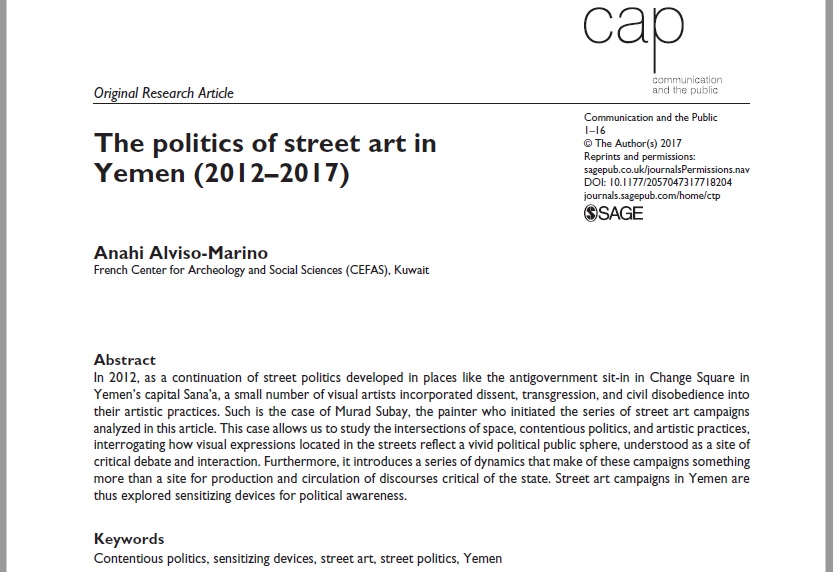
The politcs of street art in Yemen (2012-2017)\ An academic article by researcher: Anahi Alviso Marino

This abstract is taken from the research ..


“Abstract

In 2012, as a continuation of street politics developed in places like the antigovernment sit-in in Change Square in Yemen’s capital Sana’a, a small number of visual artists incorporated dissent, transgression, and civil disobedience into their artistic practices. Such is the case of Murad Subay, the painter who initiated the series of street art campaigns analyzed in this article. This case allows us to study the intersections of space, contentious politics, and artistic practices, interrogating how visual expressions located in the streets reflect a vivid political public sphere, understood as a site of critical debate and interaction. Furthermore, it introduces a series of dynamics that make of these campaigns something more than a site for production and circulation of discourses critical of the state. Street art campaigns in Yemen are thus explored sensitizing devices for political awareness. ”

PDF: CAP-the politics of street art in Yemen (2012-2017) 2 copie

Link: http://journals.sagepub.com/doi/abs/10.1177/2057047317718204

Les “visages de la guerre”, le projet qui dit “merde” à la guerre au Yémen

Les “visages de la guerre”, le projet qui dit “merde” à la guerre au Yémen

Crimes de guerre, disparitions forcées, épidémies : le Yémen vit depuis 5 ans dans le chaos. Un artiste-peintre de la capitale, Murad Subay, dénonce l’horreur du conflit en décorant les murs du pays avec des graffitis. Son projet s’appelle « les visages de la guerre ».

A Yemeni artist fights the war his way, by using colours\ On “The Arab Weekly”

A Yemeni artist fights the war his way, by using colours

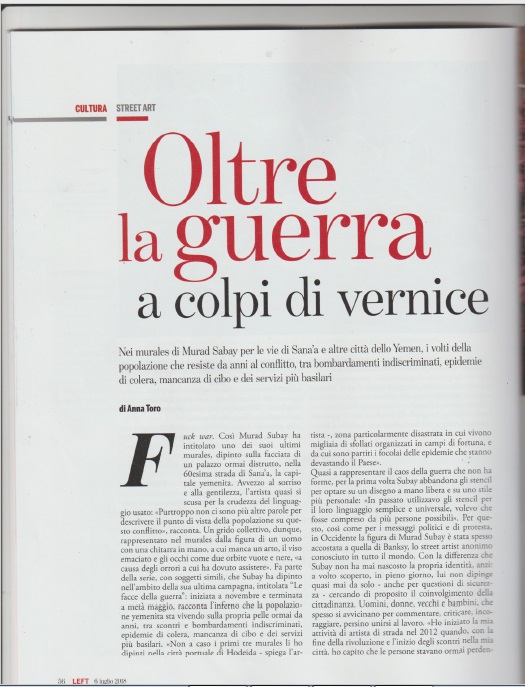
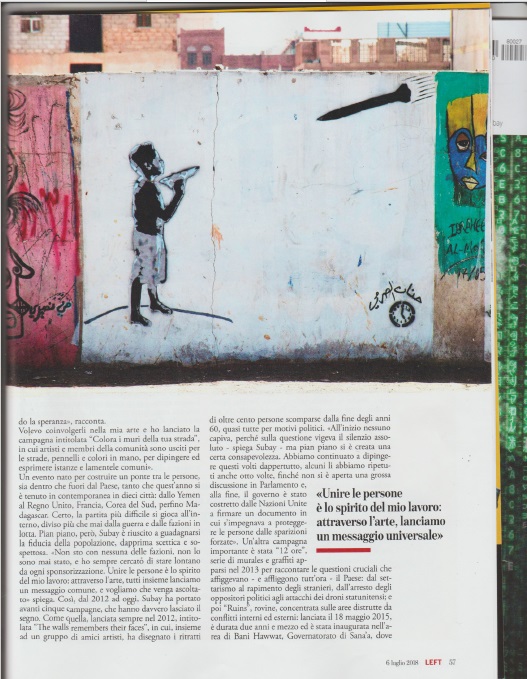
Through murals and graffiti, Subay has dealt with many important issues facing Yemen, especially sectarianism.
Sunday 29/07/2018
Fighting with a brush. A Murad Subay mural in Yemen.        (Al Arab)
Fighting with a brush. A Murad Subay mural in Yemen. (Al Arab)

SANA’A – A few years ago, street artist Murad Subay emerged as one of the best in his field in Yemen. Subay uses graffiti to reflect on the tragedy in Yemen and, since the beginning of the war three years ago, the 31-year-old artist has organised street art campaigns to express to the world his country’s pain.

The various parties in the Yemeni conflict have tried to silence opposing voices in Yemen. Subay, however, could not quiet the artist inside him. He explained that he “uses graffiti to express the artist’s opinion about Yemeni affairs, especially during these tough times of war.”


“We try, through art, to depict our conditions during the war and at the same time give a concrete form to the role of art in the current conflict,” he said.
“If art cannot be present to speak for the people during war conditions, when should it appear then?”

“The symbolic significance of having art present during the current conditions, especially graffiti, lies in its being very close to people. They can actually touch it and they can see it on their way to work or to school and during their other errands,” he said.
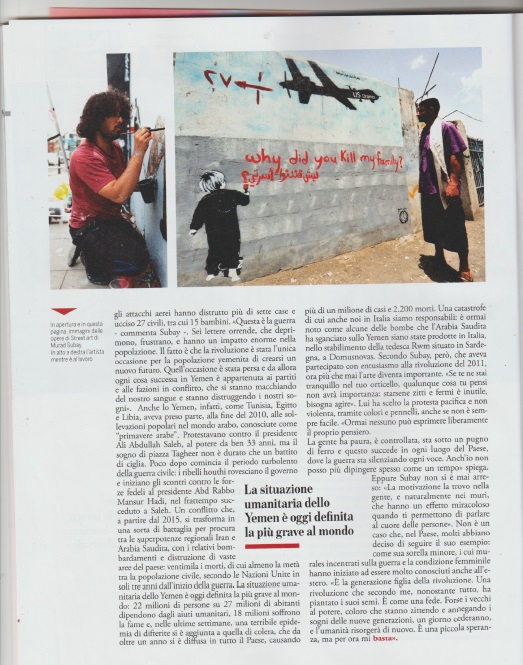
Through murals and graffiti, Subay has dealt with many important issues facing Yemen, especially sectarianism. In May 2015, he began his fifth art campaign, which he called “Ruins.” People and other artists were invited to take part in the campaigns. Most of the street art campaigns started by Subay, either inside or outside Yemen, focused on peace for Yemen.

Subay has expanded his artistic activities and campaigns to other cities in Yemen. The artist and his friends are active in Sana’a, Aden, Taiz, Ma’rib, Ibb and Hodeidah. Artist friends of Subay’s in Seoul, Paris and Madagascar have taken part in the campaigns.

Subay said that, last November, he initiated a murals campaign in Hodeidah that he called “Faces of the War” because, as he put it, “the city was systematically being left neglected and its inhabitants left in hunger, poverty and disease.”

Subay completed other murals in Sana’a this year. They address the effects of war on people’s lives. Subay insisted that his main message through his art is that warfare is not just machine guns and explosives. It touches people in many other ways.

“I wanted to depict war in the way it affects people,” Subay explained. The horror of war is apparent in his murals through the subjects’ hollow eyes or bones showing through their skin or their emaciated faces.

Subay said he is deeply saddened whenever the subject of the effects of the war on his life and that of the Yemenis is brought up. “The war makes us lose our dreams, our hopes, our life and our soul as well,” he said.
Subay decried the absence of tolerance for the differences of opinion and lack of freedom of expression. “I practise my art in a context full of fear. Each party dominating a region in Yemen believes only in its voice,” Subay explained.

He said he plans to continue depicting people’s concerns and hopes through art campaigns across Yemen. He said he was happy to see that “young people have started to come out of their homes and paint about their concerns.”

“People have started using peaceful and artistic means to talk about their problems and this is great. It is a sign that the Yemenis are indeed people with deep civilisational roots,” Subay said.

Continue reading “A Yemeni artist fights the war his way, by using colours\ On “The Arab Weekly””

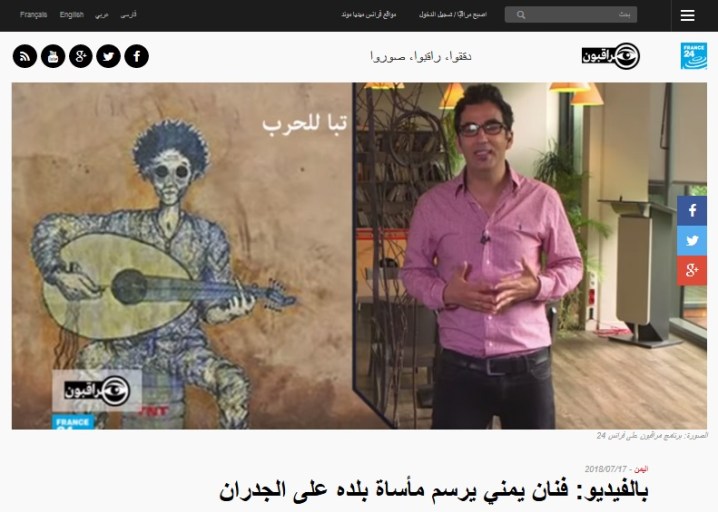
The murals denouncing the horrors of war in Yemen\ Video Report on “France 24”


“Faces of war” on The Obsdervers at “France 24”.

Video Link>>

بالفيديو: فنان يمني يرسم مأساة بلده على الجدران/على قناة “فرانسا 24”

بالفيديو: فنان يمني يرسم مأساة بلده على الجدران

قتلى وجرحى واختفاءات قسرية ومجاعة وأوبئة…الفنان التشكيلي اليمني مراد سبيع رسم جداريات في عدة مدن يمنية يروي من خلالها قصص معاناة اليمنيين في زمن الحرب. شاهدوا!

رابط الفيديوا..

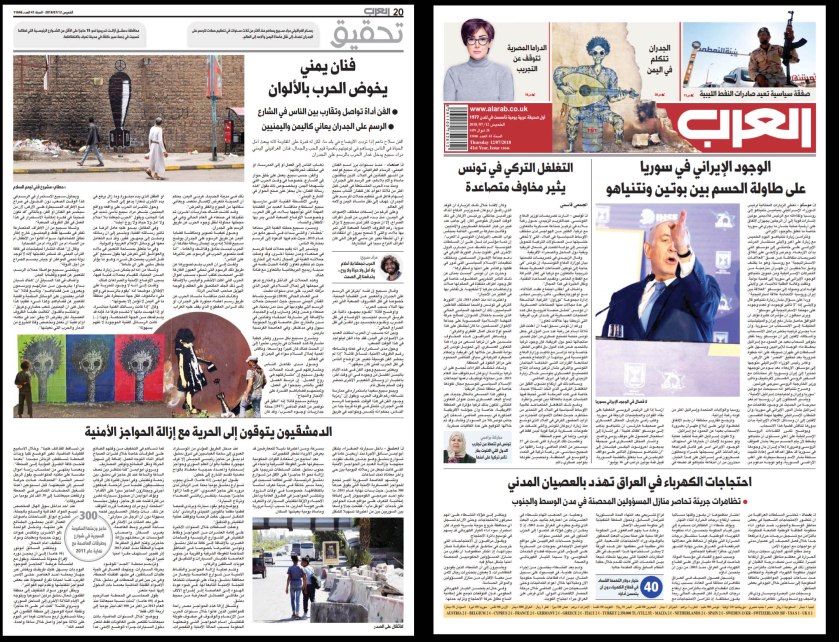
فنان يمني يخوض الحرب بالألوان/ جريدة “العرب”

فنان يمني يخوض الحرب بالألوان

رسام الغرافيتي مراد سبيع يساهم منذ أكثر من ثلاث سنوات في تنظيم حملات للرسم على الجدران تهدف إلى نقل مأساة اليمن وآلامه إلى العالم.
الخميس 2018/07/12
“حطام” مشروع فني ليعم السلام

الفن سلاح ناعم إذا تردت الأوضاع في بلد ما، لكن له قدرة على المقاومة لأنه يبعث أمل الحياة في الناس ويساهم في توعيتهم بأهمية قيم الحب والجمال، فنان الغرافيتي اليمني مراد سبيع يدخل غمار الحرب بالرسم على الجدران.

صنعاء- منذ سنوات برز اسم الفنان اليمني، الرسام الغرافيتي، مراد سبيع كواحد من أشهر الفنانين في البلاد، الذين يناقشون مأساة وآلام بلادهم، عبر الرسم على الجدران.

ومنذ بدء الحرب المشتعلة في اليمن، قبل أكثر من ثلاثة أعوام، كان للفنان الشاب سبيع إسهام فاعل في تنظيم حملات للرسم على الجدران، تهدف إلى نقل مأساة اليمن وآلامه إلى العالم.

وعلى الرغم من إسكات مختلف الأصوات في اليمن، منذ بدء الحرب من قبل أطراف الصراع، إلا أن صوت الفن لدى سبيع لا يزال مدويا، رغم الظروف الأمنية الصعبة التي تمر بها بلاده، والتي لا تسمح ببروز أي انتقادات أو أي أنشطة تعبر عن مآسي الوطن التي كان أطراف النزاع سببا في انتشارها.

وقال سبيع إن فنه “يتركز في الرسم على الجدران والتعبير عن القضايا اليمنية، خصوصا في ظل الظروف الصعبة التي تمر بها البلاد بسبب الحرب”. وأوضح قائلا “نقوم بجهود ذاتية عن طريق الرسم، لتجسيد الأوضاع في ظل الحرب، ونقوم بتجسيد دور للفن في ظل الصراع الحالي”. وبين أنه بسبب أن الحرب أسكتت العديد من الأصوات في اليمن، فقد جاء الفن ليتواجد في هذا الوقت الصعب.

وحول مدى استمراره في عمله ونشاطه رغم الظروف الأمنية، تساءل قائلا “إذا لم يحضر الفن كوسيلة تعبير عن أوضاع الناس في ظل الحرب، فمتى كان سيظهر؟”. ويعتبر سبيع وجود الفن في هذه الأيام باليمن أفضل من وجوده في أي وقت آخر، باعتبار أن وسائل التعبير الأخرى تحضر وقت السلم بشكل تام.


ويبدو سبيع سعيدا باستمراره في ممارسة نشاطه رغم ظروف الحرب، ويقول إن “رمزية وجود الفن في هذا الوقت، خصوصا الرسم على الجدران، تتمثل في كونه قريبا جدا من الناس، بحكم أنه يُلمس ويتواجد في طريق ذهاب الناس إلى العمل أو إلى المدرسة، أو في مختلف تحركاتهم”.

مراد سبيع: الحرب تجعلنا بلا أحلام  ولا أمل ولا حياة ولا روح..وتدفعنا إلى الصمت
مراد سبيع: الحرب تجعلنا بلا أحلام  ولا أمل ولا حياة ولا روح..وتدفعنا إلى الصمت

والفن، حسب سبيع، يعمل على خلق حوار في الشارع، خصوصا في وقت الحرب التي يشهدها اليمن، وبخصوص ذلك يقول “هذه رسالة الفنان، بأن يحفز على صنع الحوار في الشارع اليمني”.

وفي الأنشطة الفنية التي مارسها سبيع استطاع مناقشة العديد من القضايا المهمة التي تواجهها بلاده، في ظل الحرب، وخصوصا الأوضاع الصعبة التي يمر بها الأطفال والنساء. ويسرد سبيع حملته الفنية التي سماها “حُطام”، والتي بدأت في شهر مايو من عام 2015، حيث تتم فيها الدعوة إلى الرسم بمشاركة الناس.

ويشير إلى أنه يقيم حملات فنية للرسم في صنعاء ومدن يمنية أخرى، وقد وصلت حملاته الفنية في المجال ذاته إلى الخارج، حيث تم تنظيم تعاون لإقامة الحدث نفسه في مدينة ريديج البريطانية بالتعاون مع فنانة هناك. وهذه الحملات في الداخل والخارج تدعو في مجملها إلى إحلال السلام في اليمن الذي مزقته الحرب، على مدى سنوات مضت.

في العام الحالي (2018) توسع نشاط الفنان اليمني سبيع، حيث أصبحت حملات الرسم التي يقوم بها في ست مدن يمنية، هي صنعاء وعدن وتعز ومأرب وإب والحديدة، بالإضافة إلى مشاركة أصدقاء وفنانين في مدن بالخارج، مثل عاصمة كوريا الجنوبية سيول وفي مدغشقر، وفي العاصمة الفرنسية باريس.

ويشرح سبيع بكل سرور وفخر كيفية مشاركة هذه الحملات في باريس، مشيرا إلى أن الحدث هناك كان كبيرا وواسعا، وناقش أهمية إحلال السلام سواء في اليمن أو في العالم.

وحول مدى تفاعل الناس ومشاركتهم في هذه الحملات، يقول سبيع إن “مشاركتهم هي روح العمل… إن تربط العمل الفني بالناس ينجحوا في العمل، وتمنحهم قضاياهم القدرة على الإنجاز والنجاح”.

ويتابع سبيع قائلا إنه “أطلق في نوفمبر من العام الماضي (2017) حملة جداريات ‘وجوه الحرب’، وقد كان ذلك في مدينة الحديدة، غربي اليمن، بحكم أن المدينة تتعرض لإهمال متعمد، ويعاني سكانها من الجوع والفقر والمرض”.

وقد كانت هناك جداريات أخرى، تم تنفيذها في صنعاء في العام الحالي وهي في مجملها محاولة لنقل وجوه الحرب عن طريق الرسم على الجدران. وحول كيفية تصوير ومناقشة قضايا اليمن عن طريق الرسوم على الجدران يوضح سبيع قائلا إنه يريد إيصال رسالة مفادها أن الحرب ليست بنادق وقذائف وألغاما… “أنا قمت بتصوير الحرب في الرسوم، عبر تأثيرها على الناس”.

ولفت إلى أن الحرب يتم تصويرها عن طريق تلك الرسوم التي تحكي العيون الفارغة التي أصبحت كثقب أسود بسبب أهوال الحرب التي أكلت الأخضر واليابس، بالإضافة إلى ذلك الجلد الملتصق على العظم، والوجه الهزيل صاحب الملابس الرثة.

وكذلك تمت مناقشة مأساة الحرب عن طريق رسم أعضاء مبتورة على الجدران، أو ذلك الرأس المقطوع الذي يقف عليه الغراب، أو الطفل الذي يده مبتورة وما زال يرفع في يده الأخرى شعارا يدعو إلى السلام. وحول تأثيرات الحرب على واقعه وواقع اليمنيين، يشعر مراد سبيع بأسى شديد في هذا الجانب، ويقول “الحرب تجعلنا بلا أحلام ولا أمل ولا حياة ولا روح أيضا”.

وفي المقابل، يبدو عليه عامل الرضا عن تأثير رسائله الفنية، ويشير إلى أن رسائله وصلت إلى جمهور غفير، وقد تم التعامل معها في وسائل الإعلام العربية والدولية. وفي ما يتعلق بمساحة التعبير في بلاده والعوائق التي تعرض لها يقول سبيع “في ظل الحرب يصمت كل شيء، وهو ما يؤثر بشكل سلبي على أي نشاط”.

الرسم على الجدران يعاني كاليمن واليمنيين

وشكا من أنه لم يتمكن من زيارة بعض المدن اليمنية، للقيام بحملات فنية فيها، بسبب الأوضاع الأمنية والصراعات هناك. ولفت إلى أنه لا وجود للحرية على الإطلاق، موضحا أنه “يقوم بالرسم في واقع مليء بالخوف، فكل جهة مسيطرة على منطقة ما في اليمن لا تؤمن إلا بصوتها”.

وقال “إذا كانت رسالتك الفنية مباشرة، أو إذا فُهمت بأنها لا تخدم طرفا ما، فإنه قد يتم قمعك من الجهة المتحكمة، ولهذا (…) كانت الرسائل الفنية الموجودة لا تفهم بسهولة”.

ويحاول سبيع الاستمرار في الرسم في هذا الوقت الصعب، دون الدخول في صراع مع الأطراف المسيطرة على الأرض، لأن من سيخسر هو الفنان أو الفن، وبالتالي “قد نكون ضحينا في فكرة إمكانية الاستمرار في هذا العمل في ظل الظروف الصعبة”.

وشكا سبيع من أن الأطراف المتصارعة تفكر في نفسها فقط، واليمنيون خارج إطار نطاق اهتماماتها، سواء أكانوا من الأطفال أم من النساء أم من الأبرياء أم من الضحايا. وقال إن” هناك انتشارا لميليشيات في كافة التراب اليمني، قد تستمر تغذيتها لأنه لا توجد دولة تحمي المواطن أو جيش يحسم الصراع من أجل الدولة”.

ويتمنى سبيع مواصلة حملات الرسم، للتعبير عن هموم وقضايا اليمن. وأضاف في هذا السياق أن “هناك شبان بدأوا يخرجون من منازلهم ويرسمون ويعبرون عن قضاياهم”. وتابع قائلا “بدأ الناس يعتمدون على الوسائل السلمية والفنية للتعبير عن قضاياهم، وهذا شيء عظيم؛ هذا دليل على أن اليمنيين شعب حضاري وعريق”.

واختتم بالقول “تكالبت علينا الظروف العصيبة، لكن يفترض ألا يبقى أحد في مكانه؛ لزام علينا أن نعمل ونخصص وقتا للخروج من الدمار والحرب التي نعيشها”.

رابط المقال..

Continue reading “فنان يمني يخوض الحرب بالألوان/ جريدة “العرب””