The politcs of street art in Yemen (2012-2017)\ An academic article by researcher: Anahi Alviso Marino

This abstract is taken from the research ..


“Abstract

In 2012, as a continuation of street politics developed in places like the antigovernment sit-in in Change Square in Yemen’s capital Sana’a, a small number of visual artists incorporated dissent, transgression, and civil disobedience into their artistic practices. Such is the case of Murad Subay, the painter who initiated the series of street art campaigns analyzed in this article. This case allows us to study the intersections of space, contentious politics, and artistic practices, interrogating how visual expressions located in the streets reflect a vivid political public sphere, understood as a site of critical debate and interaction. Furthermore, it introduces a series of dynamics that make of these campaigns something more than a site for production and circulation of discourses critical of the state. Street art campaigns in Yemen are thus explored sensitizing devices for political awareness. ”

PDF: CAP-the politics of street art in Yemen (2012-2017) 2 copie

Link: http://journals.sagepub.com/doi/abs/10.1177/2057047317718204

Les “visages de la guerre”, le projet qui dit “merde” à la guerre au Yémen

Les “visages de la guerre”, le projet qui dit “merde” à la guerre au Yémen

Crimes de guerre, disparitions forcées, épidémies : le Yémen vit depuis 5 ans dans le chaos. Un artiste-peintre de la capitale, Murad Subay, dénonce l’horreur du conflit en décorant les murs du pays avec des graffitis. Son projet s’appelle « les visages de la guerre ».

A Yemeni artist fights the war his way, by using colours\ On “The Arab Weekly”

A Yemeni artist fights the war his way, by using colours

Through murals and graffiti, Subay has dealt with many important issues facing Yemen, especially sectarianism.
Sunday 29/07/2018
Fighting with a brush. A Murad Subay mural in Yemen.        (Al Arab)
Fighting with a brush. A Murad Subay mural in Yemen. (Al Arab)

SANA’A – A few years ago, street artist Murad Subay emerged as one of the best in his field in Yemen. Subay uses graffiti to reflect on the tragedy in Yemen and, since the beginning of the war three years ago, the 31-year-old artist has organised street art campaigns to express to the world his country’s pain.

The various parties in the Yemeni conflict have tried to silence opposing voices in Yemen. Subay, however, could not quiet the artist inside him. He explained that he “uses graffiti to express the artist’s opinion about Yemeni affairs, especially during these tough times of war.”


“We try, through art, to depict our conditions during the war and at the same time give a concrete form to the role of art in the current conflict,” he said.

“If art cannot be present to speak for the people during war conditions, when should it appear then?”

“The symbolic significance of having art present during the current conditions, especially graffiti, lies in its being very close to people. They can actually touch it and they can see it on their way to work or to school and during their other errands,” he said.

Through murals and graffiti, Subay has dealt with many important issues facing Yemen, especially sectarianism. In May 2015, he began his fifth art campaign, which he called “Ruins.” People and other artists were invited to take part in the campaigns. Most of the street art campaigns started by Subay, either inside or outside Yemen, focused on peace for Yemen.

Subay has expanded his artistic activities and campaigns to other cities in Yemen. The artist and his friends are active in Sana’a, Aden, Taiz, Ma’rib, Ibb and Hodeidah. Artist friends of Subay’s in Seoul, Paris and Madagascar have taken part in the campaigns.

Subay said that, last November, he initiated a murals campaign in Hodeidah that he called “Faces of the War” because, as he put it, “the city was systematically being left neglected and its inhabitants left in hunger, poverty and disease.”

Subay completed other murals in Sana’a this year. They address the effects of war on people’s lives. Subay insisted that his main message through his art is that warfare is not just machine guns and explosives. It touches people in many other ways.

“I wanted to depict war in the way it affects people,” Subay explained. The horror of war is apparent in his murals through the subjects’ hollow eyes or bones showing through their skin or their emaciated faces.

Subay said he is deeply saddened whenever the subject of the effects of the war on his life and that of the Yemenis is brought up. “The war makes us lose our dreams, our hopes, our life and our soul as well,” he said.

Subay decried the absence of tolerance for the differences of opinion and lack of freedom of expression. “I practise my art in a context full of fear. Each party dominating a region in Yemen believes only in its voice,” Subay explained.

He said he plans to continue depicting people’s concerns and hopes through art campaigns across Yemen. He said he was happy to see that “young people have started to come out of their homes and paint about their concerns.”

“People have started using peaceful and artistic means to talk about their problems and this is great. It is a sign that the Yemenis are indeed people with deep civilisational roots,” Subay said.

Continue reading “A Yemeni artist fights the war his way, by using colours\ On “The Arab Weekly””

The murals denouncing the horrors of war in Yemen\ Video Report on “France 24”


“Faces of war” on The Obsdervers at “France 24”.

Video Link>>

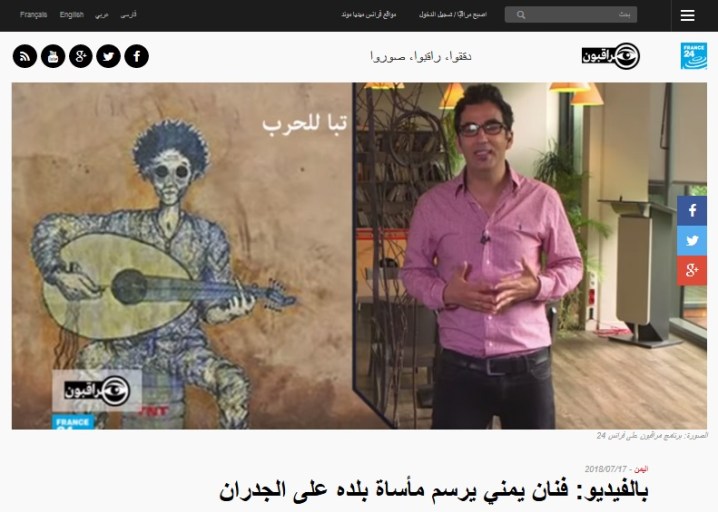
بالفيديو: فنان يمني يرسم مأساة بلده على الجدران/على قناة “فرانسا 24”

بالفيديو: فنان يمني يرسم مأساة بلده على الجدران

قتلى وجرحى واختفاءات قسرية ومجاعة وأوبئة…الفنان التشكيلي اليمني مراد سبيع رسم جداريات في عدة مدن يمنية يروي من خلالها قصص معاناة اليمنيين في زمن الحرب. شاهدوا!

رابط الفيديوا..

“ستاري نايت” على جدران صنعاء لدعم السلام/هدير ناجي، على موقع كايروا لينس

“ستاري نايت” على جدران صنعاء لدعم السلام

معرض صور وشرح لـ “هدير ناجي” على موقع “كايروا لينس” عن الحدث السنوي “اليوم المفتوح للفن” والذي أقيم في مدينة صنعاء ومدن أخرى داخل وخارج اليمن، 15 مارس 2018.

الرابط..


وجوه يمنية يمكنها الابتسام للجداريات/ بقلم: علي سالم، على جريدة الحياة

وجوه يمنية يمكنها الابتسام للجداريات

النسخة: الورقية – دوليالإثنين، ١٩ مارس/ آذار ٢٠١٨ (٠٠:٠٠ – بتوقيت غرينتش)
آخر تحديث: الإثنين، ١٩ مارس/ آذار ٢٠١٨ (٠٠:٠٠ – بتوقيت غرينتش)صنعاء – علي سالم 

عدا اللون والوجوه والجدران لم يتبق شيء ليقال عن حرب اليمن الموبوءة بالغموض واليأس والألغاز لدرجة أن بعضهم وصفها ساخراً بأنها «شكل من أشكال حوار الحضارات والدموقراطة التي بشر بها قادة الغرب عقب أحداث 11 أيلول (سبتمبر) 2011».

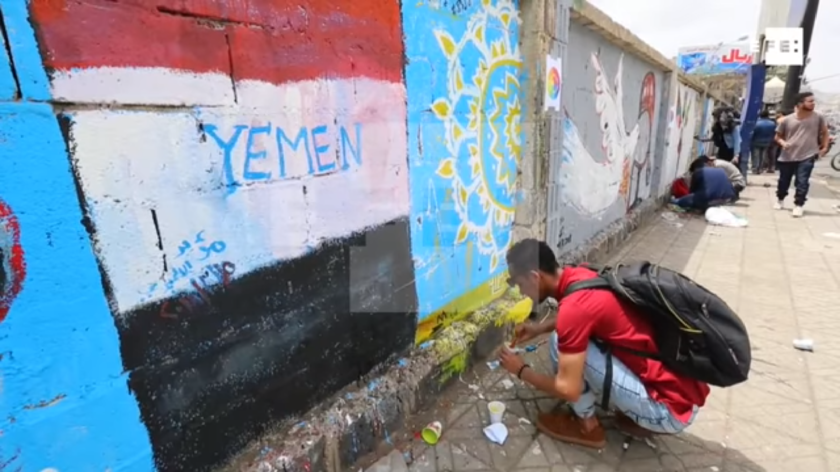
وسط صنعاء المهمومة بالبحث عن لقمة العيش والغاز المنزلي والماء والكهرباء والرواتب، تبتسم وجوه شبان من الجنسين بينهم أطفال وحولهم مارة، وسائقو دراجات فضوليون يتفرجون على أعمال يوم مفتوح للرسم دعا إليه الخميس الماضي رسام الغرافيتي الشاب مراد سبيع.

فلئن فرقت الحرب الناس ومزقت اوصال المجتمع اليمني يبقى الرسم رسالة سلام وتعايش وفق ما يقول سبيع لـ «الحياة»، موضحاً أن «الألوان واللوحات لاتملك القدرة على وقف الحرب واطعام الجوعى، لكنها ربما منحتهم أملا وعبرت عن توقهم للسلام».


مجرد لطخات من اللونين الرمادي والأحمر. هذه هي حال اليمن كما عبرت عنها رسمة للشاب صادق غانم. وفيما استخدم مشاركون الورود والعلم الوطني والطيور للتعبير عن أفكارهم، رسم ذو يزن العلوي كائناً خرافياً يلتهم الزهر والغبار وحمامة السلام، مجسداً بذلك فكرة الحرب بماهي ثقب أسود يلتهم كل شيء.

لكن حرب اليمن التي يقدمها الإعلام ليست هي تلك الحرب التي تأكل بصمت وهدوء حياة أكثر من 20 مليون يمني لا يعرفون كيف سيحصلون على وجبتهم التالية وفق منظمة الأمم المتحدة التي يتهمها يمنيون بالصمت إزاء ضرب أطراف الصراع مصادر حياة المدنيين ومنها رواتب نحو مليون موظف حكومي يعملون في المناطق الواقعة تحت سيطرة الميليشيات الانقلابية.

فبعد أكثر من ثلاث سنوات «لا هي حرب ولا هي سلام أقفلت جميع الأبواب ولم يتبق أمامنا سوى هذا»، يقول محمد بشير (23 سنة) وهو يشير بيده إلى رسوم اليوم المفتوح.

يتحدر بشير من محافظة تعز(265 كم) التي يقول إنه اضطر إلى مغادرتها بسبب القتال الذي نشب عقب اجتياح ميليشيات الحوثيين (حركة أنصارالله) والقوات العسكرية الموالية لحزب الرئيس السابق علي عبدالله صالح المدينة ربيع 2015.

يذكر بشير لـ «الحياة» أنه أوقف دراسته الجامعية للسنة الثالثة ويعمل حاليا في محل لبيع عصير قصب السكر بعد أن دمر القتال المحل التجاري الذي يملكه والده في حي حوض الاشراف، في مدينة تعز التي وأن تحررت جزئياً إلا أنها ما زالت محاصرة من الحوثيين.

والوضع في تعز واحد من النماذج التي يستدل بها القائلون بأن ما يحصل في اليمن مجرد لعبة تستهدف المدنيين الذين خرجوا إلى الشوارع للمطالبة بإسقاط نظام علي عبدالله صالح.

وكان صالح الذي حكم البلاد 33 عاماً حصل على حصانة من المحاكمة بموجب خطة سلام رعتها الأمم المتحدة، لكنه مالبث أن استدار ليقود مع الحوثيين انقلابا مسلحاً ليعاود «الراقص على رؤوس الثعابين» كما شاع وصفه, ليقتل نهاية العام الماضي على يد حلفائه الحوثيين, بعد أن حققوا هدفهم بالسلطة.

منذ انطلاقة الربيع العربي في 2011 وعلى مدى سنوات الحرب اللاحقة, ظل فن الغرافيتي حاضرا، خصوصا في صنعاء التي حوصرت صيف 2014 من قبل القبائل المحيطة بها بدعوى اسقاط الجرعة (التسمية الشعبية لقرار رفع اسعار المشتقات النفطية) ليتضح لاحقا أن الهدف كان اسقاط الدولة اليمنية وتهيئة نخب حاكمة جديدة تحت ستار الحرب.

ويبقى المؤلم للجياع هو أن «ما يسمى حربا صارت سوقاً للنهب والثراء غير المشروع لأمراء الحرب», وفق ما يقول أحد العابرين، مؤكداً لـ «الحياة» أن مقتل شخص في تظاهرة تجوب شوارع صنعاء للمطالبة بلقمةعيشها أنبل من الشخططة (الرسم) على الجدران. فالرسم عمل الجبناء»، على حد قوله.

وبصرف النظر عن تعدد وجهات النظر بشأن الوسيلة الناجعة للمقاومة، تبقى رسوم الشارع المعلم الوحيد تقريبا لوجود حياة مدنية في عاصمة مدججة بالسلاح و «الزوامل»، وهي أناشيد قبائلية حربية تمجد القتال.

«أن ترسم في صنعاء التي طهرها الحوثيون من وسائل معارضة معناه أنك موجود. فالرسم في هذا الوقت الصعب هو مقاومة لأجل الحياة», يقول سبيع متمسكاً بسبل المقاومة السلمية. ولكن، وبينما كان المشاركون في اليوم المفتوح منشغلين بالرسم وصلت الى المكان سيارة من دون لوحات على متنها مسلحان بلباس مدني ظلا لنحو 10 دقائق يراقبان ما يحصل ثم ذهبا في حال سبيلهما مطمئنين ربما أو غير مدركين تقريباً دلالات الرسم وحيله وأساليبه.

Continue reading “وجوه يمنية يمكنها الابتسام للجداريات/ بقلم: علي سالم، على جريدة الحياة”

Decenas de artistas y activistas yemeníes se unen por la paz y la tolerancia/AGENCIA EFE

Vedio on the annual event “Open Day of Art” March 15, 2018, in Sana’a.

On “EFE” Spanish Agency

Link>>

مراد سبيع والفن في زمن الحرب/ بقلم الكاتب غمدان اليوسفي

مراد سبيع والفن في زمن الحرب


الثلاثاء، 23 يناير 2018 ( 06:31 – بتوقيت UTC )

مراد سبيع فنان شاب اكتسح فنه جدران المدن اليمنية بإثارة قضايا مسكوت عنها، كان أبرزها ملف المخفيين قسرياً أثناء حكم الرئيس اليمني السابق علي عبدالله صالح.

المخفيون قسراً وقبل أن يبدأ سبيع في رسم وجوههم على الجدران اليمنية لم يكن أحداً يسمع بهذه القضية، ويقول “كان هناك مجتمع مغيب، ومنهم أسر المخفيين أنفسهم، حيث كانوا ممنوعين من الحديث عن ذويهم من المخفيين والمفقودين منذ ثمانينات وتسعينيات القرن الماضي”.

في عام 2012 نظم مراد سبيع مع رفاقه حملة لرسم وجوه المخفيين بعد أن جمعوا قائمة تضم 102 لأشخاص تم اخفائهم قسرياً منهم؛ قادة سياسيين وعسكريين وموظفين مدنيين وشخصيات اجتماعية، وبدأ مع مجموعة من رفاقه رسم صور هؤلاء على جدران أربع مدن يمنية كبرى واستمرت تلك الحملة لسبعة أشهر.

ويرى سبيع أن تلك الحملة حركت المياه الراكدة في هذا الملف، ونبهت الناس إلى أن الفن يمكن أن يكون له دور في تحريك القضايا، “كان الملف شائكا لكن كانت المؤشرات تقول إنه قد لامس جرحا يجب علاجه، وبدأ نقاش الملف في مجلس النواب، وبدأت الأمم المتحدة في التواصل مع الحكومة اليمنية لتصادق على اتفاقية حماية الناس من الإخفاء القسري وحتى الآن لم يتم المصادقة من قبل البرلمان على تلك الاتفاقية.”

الفن والحرب

يعتقد سبيع أن “وجود الفن في وقت الحرب أهم بألف مرة من حضوره في السلم، لأن الحرب هي ميدان لا يعلوا فيه غير صوت الرصاص، وهنا يجب أن نكافح لأجل إيصال صوت الحياة أيضا ، فصوت الحياة هو الباقي، ومهما كانت أصوات الحياة خافتة أثناء الحرب، فيجب أن لا نيأس.. صحيح أن الفن لا يطعم الناس ولا يقيهم الموت، لكنه يصنع شيئا من الأمل لديهم بأن الحياة تستمر برغم كل الآلام”.

حملة لون “جدار شارعك” كانت أول حملة رسم على الجدران في آذار (مارس) 2012  في اليمن، واستمرت لمدة ثلاثة أشهر، أهمية الفكرة كانت بأنها “ساهمت في ظهور أفكار للرسم في عدد من مدن اليمن، وهي حملة لونية فنية لأجل الفن، كانت السياسية حاضرة فيه لكنها في الظل” وفق ما يؤكده سبيع.

توالت الحملات الفنية التي أطلقها سبيع بصحبة عدد من رفاقه حيث أطلقوا حملة رسم بعنوان “12 ساعة”، استمرت من منتصف عام 2013 حتى منتصف عام 2014 وناقشت 12 قضية من قضايا المجتمع اليمني بينها حمل السلاح والطائفية والاختطاف والطائرات دون طيار، والفقر، والحروب الأهلية، والخيانة، وتجنيد الأطفال، وغيرها.

منحوتة ألمقة

منحوتة (ألمقة)

أطلق الفنان سبيع مشروع “منحوتات الفجر” بداية عام 2016 وأنجز منحوتة واحدة في شارع الجزائر وسط العاصمة صنعاء، وهي منحوتة (ألمقة) وهو رمز يمني قديم منذ حضارات السبئيين.

يشرح مراد سبب اختياره لـ (المقة) كمنحوتة قائلا “قبل 3 آلاف عام كانت القبائل تبحث عن صيغة تجمعهم تحت ظل فكرة واحدة، وهي بمثابة الدولة حينها، فقاموا بجمع الرموز الدينية الخاصة بكل قبيلة واختزالها في رمز واحد أطلقوا عليه اسم (ألمقة) وهو رمز لتوحيد اليمنيين منذ الأزل”.

حصد سبيع العديد من الجوائز العالمية، كان آخرها جائزة “مؤشر الرقابة على حرية التعبير” عن فئة الفنون التي تمنحها منظمة “أندكس أون” البريطانية سنوياً، لمدافعين عن حرية التعبير على مستوى العالم، وقبلها جائرة “الفن من أجل السلام” من مؤسسة “فيرونيزي” الإيطالية.


رابط المقال..

Meet Yemen’s street artist: ‘We want peace’

Meet Yemen’s street artist: ‘We want peace’

#Culture

With ending war his motivation and the street his canvas, one Yemeni artist is using street art to campaign for peace in Yemen

Often described as the ‘Arab Banksy,’ Murad Subay says he is using street art to promote peace in his war-torn country
Gouri Sharma's picture

SANAA – Murad Subay sees the devastated streets and bombed buildings in Yemen’s war as something more than just ruins: he sees canvases onto which he can tell stories through art.

The award-winning 30-year-old street artist’s aim is to spread a message of peace during Yemen’s current crisis – and his work is having a major impact in Yemen and abroad.

“Street art has never really been a part of Yemeni culture, but after seven years of war, it is becoming more normal,” he tells Middle East Eye.

An image from Subay’s ‘12 Hours’ campaign launched in 2013, about recruiting child soldiers in Yemen (Photo courtesy of Murad Subay)

Since the start of the revolution in 2011, which has now escalated into a full-scale war between the Houthi rebels and Saudi-backed government forces, Subay has been drawing murals around the country in a bid to raise awareness of the impact the war is having on Yemen’s civilian population.

“I’m not working for any side or for my own power,” he says. “I am against the war. We only hear about explosions or the voices of hatred, and doing art in times of war means we want peace.”

Highlighting the harsh realities of today’s war-torn Yemen, Subay’s murals adorn burnt-out buildings and walls across some of the country’s biggest cities including the capital Sanaa, the southwestern city of Taiz, and the coastal city of Hodeida.

His depictions tackle issues such as the forced disappearances of civilians, the current cholera epidemic, and the ongoing misery inflicted by both sides on innocent civilians.

Experts say his work is having a powerful impact on Yemeni society. Dr Anahi Alviso Marino, a Paris-based political scientist, has done extensive research on street art in Yemen and the role Subay has been playing.

This image is from Subay’s project called ‘The walls remember their faces’ – murals depicting the many people who have disappeared in Yemen (Photo courtesy of Murad Subay)

She told MEE: “On the artistic level, it’s the first time there are public exhibitions on the street [with] such amazing participation from the public.

“His campaign on the forced disappearances, for example, pushed the issue onto the political agenda. It also helped to find and locate some of the people who had gone missing. People were found because of the images he had stencilled,” she adds.

People were found because of the images he had stencilled

-Dr Anahi Alviso Marino,  political scientist

According to a 2017 report from Human Rights Watch (HRW), dozens of people have been forcibly disappeared.

Subay says that the role of street art is more important in times of war than during times of harmony.

“During times of peace, everything existed but today people are losing their voices, their lives, their hope,” he says. “When you walk down a street in Yemen today, you will only see disappointment on people’s faces. They don’t believe in any side of this war. They just want to eat and have access to clean water. But there is cholera and diphtheria, and a million people facing hunger and malnutrition.”

An image from Subay’s ‘12 Hours’ campaign depicting the US-led drone attacks in Yemen (Photo courtesy of Murad Subay)

Already one of the poorest countries in the Arab world, the humanitarian situation for Yemen’s 28 million population has only worsened since the escalation of the war.

The United Nations says that Yemen is the world’s worst humanitarian crisis, with eight million people “on the brink of famine and a failing health system”.

According to the World Health Organisation (WHO), the cholera epidemic in the country has become the largest and fastest-spreading outbreak of the disease in modern history.

At the end of 2017, a million cases were expected, with at least 600,000 of that figure likely to be children, according to the WHO.

The organisation has also reported that nearly 500 people have been infected with diphtheria, a preventable disease that was thought to have been eradicated.

Childhood dreams

Subay was born in the city of Dhamar in the southwest and moved to Sanaa when he was six years old.

From an early age, he started showing an interest in art and he grew up reading books about famous European painters like Pablo Picasso, Vincent Van Gogh and Henri Matisse.

With the encouragement of his family, Subay began painting and teaching himself art skills at home.

Yet with formal art courses only available in Aden and Hodeida and not in the capital, Subay went on to study English literature at Sanaa University.

In 2011, the uprising against Ali Abdullah Saleh’s government inspired Subay to take his art to the streets.

“I wasn’t ever thinking that I would do street art. I didn’t really know that it existed,” he says.

Subay joined thousands of protesters at Tagheer Square in Sanaa, chanting for “human rights and justice.”

Today people are losing their voices, their lives, their hope

– Murad Subay, street artist

“When it looked like the revolution was going to fail, people grew frustrated, especially those who had been dreaming of a better life. I was also frustrated and that’s when I began drawing on the streets of Sanaa,” he says.

A year later, he launched his first street art campaign called “Colour the Walls of Your Street,” inviting people through social media to participate in an event to paint over the effects of the shelling and bullets on walls. Many people from his community – the young, the old, artists, non-artists, came together for the event, painting a variety of images from flowers to designs, to non-descript objects.

‘Mortar Rose’ is an image from Murad Subay’s ‘Ruins’ campaign (Photo courtesy of Murad Subay)

Since then, he has initiated four more campaigns, including “Ruins,” a project encouraging locals to paint on what is left of destroyed walls.

It was launched in 2015, in the Bani Hawwat area of Sanaa, where air strikes destroyed more than seven houses and killed 27 civilians, including 15 children, according to Subay’s campaign.

The UN says the prolonged war has already claimed the lives of more than 5,000 civilians in less than three years. Due to the dangers, Subay has often found himself caught in the crossfire with authorities.

“I once went to Taiz during a time when it was being heavily bombarded by air strikes and mortar shells,” he recalls. “I had just finished painting some water murals when we were caught.”

“The authorities kept us for around an hour, and only released us on the condition that we would return to Sanaa. Another time, when we went drawing in a dangerous part of Sanaa, we were kept in a cow pen made of mud for around one hour [as well].”

To lessen any possible risks with authorities, Subay seeks permission to paint on buildings from their owners.

“It isn’t necessarily illegal to do street art, but given the dangerous times we live in, I always get permission from people who own the buildings that I draw on,” he explains.

“Initially, Yemenis, who are sceptical of most things because of the war, weren’t sure about what I was doing. So I’ve had to do my best to show that I’m independent and that I want to express what this means for our people.”

Politics is not just impacting his professional life – his personal life is also under pressure from Yemen’s current situation.

Subay’s wife Hadil, 23, is currently on a scholarship studying international law at Stanford University in California. But US President Donald Trump’s travel ban, which was announced in January 2017, has kept the couple apart.

“It’s been one year since I’ve seen my wife. She is scared to leave the US in case they don’t let her back in, and I’m not allowed to visit her,” he says.

It’s been one year since I’ve seen my wife

-Murad Subay, street artist

His artwork has attracted global attention, as he is often called the pioneer of the street art scene in Yemen and the “Arab Banksy”.

Yet Marino says that this description does not completely reflect Subay’s work. She explains that Banksy is much more of a solo artist, while Murad’s work is more of a collaborative effort that brings the community together.

In 2016, Murad Subay received the Freedom of Expression Arts Award from the London-based Index on Censorship organisation (Photo courtesy of Index on Censorship)

Subay has won at least five international awards, including the Freedom of Expression Award in 2016 from the prestigious London-based Index on Censorship organisation, which he travelled to London to pick up.

He has drawn a mural in London reflecting how the international community is ignoring the human rights violations and atrocities taking place in Yemen. But because of the war, Subay says that he has missed at least 15 opportunities to speak about or showcase his work.

In March 2017, he collaborated with UK-based artist Lisa-Mari Gibbs on the anniversary of the first “Colour the Walls of Your Street” campaign.

Both artists hosted an “open day of art” simultaneously in Sanaa and Reading, a city in the UK.

During the day, groups in the two countries were given the opportunity to express themselves through art, with the overarching theme of promoting peace.

People don’t believe in any side of this war. They just want to eat and have access to clean water. But there is cholera and diphtheria, and a million people facing hunger and malnutrition

– Murad Subay, street artist

Almost one year later, Subay is keen to see the event grow.

“Last year a bridge was built between Yemen and the UK. This year I’m working on building new bridges with places like Milan, New York and South Korea to see if artists in those countries would like to participate in the ‘open day for art’,” Subay says.

With restricted access for foreign journalists and local journalists facing pressure on the ground in Yemen, international news outlets are struggling to tell the story of the dire humanitarian situation in the country.

Subay says that his murals and the small street art scene that is developing in the country could have an impact on getting their stories out.

‘The Family Photo’ image drawn in a destroyed building highlights the loss of innocent lives in Yemen’s war (Photo courtesy of Najeeb Subay)

Dr Anahi adds: “By speaking with a visual language, he is attracting this sort of attention. He says he wants to spread a message of political and social content and it is working.”

For Subay, however, his main concern is his fellow Yemenis.

“Street art has never really been a part of Yemeni culture, but after seven years of war, it is becoming more normal,” he says. “What is art in the streets going to do to help? It’s not going to feed people, but it is work to feed people; it’s work to give them hope, to give them a voice.”

Article Link..