Artist Murad Subay worries about the future for Yemen’s children\ Article by: Ryan McChrystal


index2

Artist Murad Subay worries about the future for Yemen’s children

By Ryan McChrystal / 22 September 2016
ruins1

Credit: Ruins campaign. Bani Waleed, September 2016

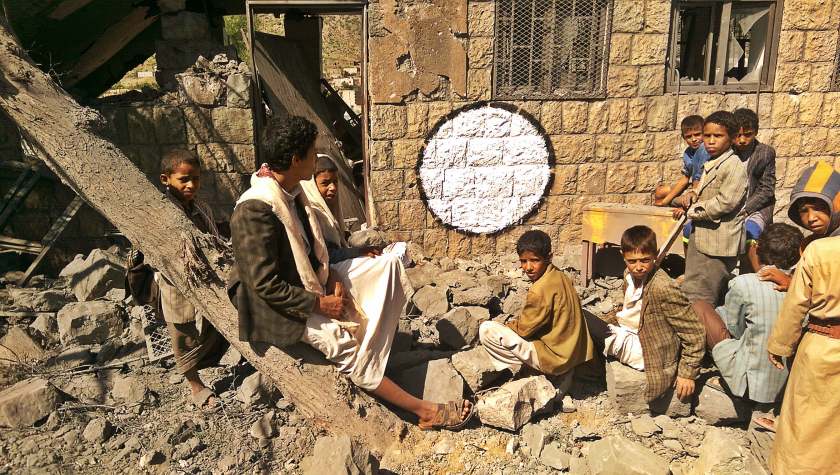
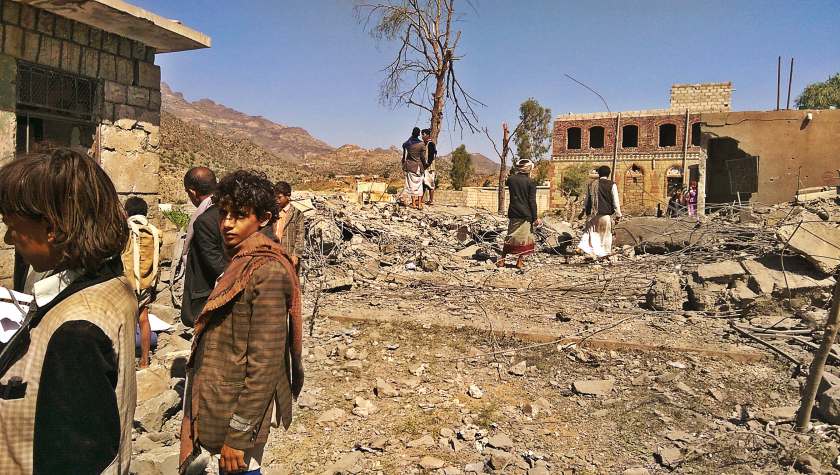
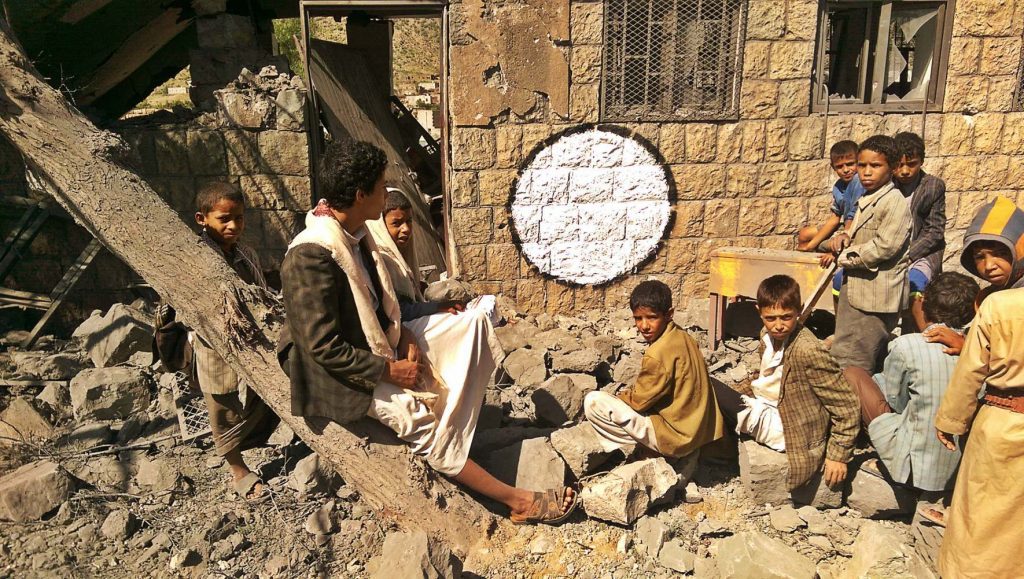
On 3 September 2016, a group of Houthi rebels convened a meeting at al-Najah School in the al-Haima district of Bani Waleed, a local witness told Murad Subay, street artist and winner of the 2016 Index on Censorship award for arts, that the men entered the school without permission.

“We are not with any of the warring parties – we are caught in the middle,” the witness said.

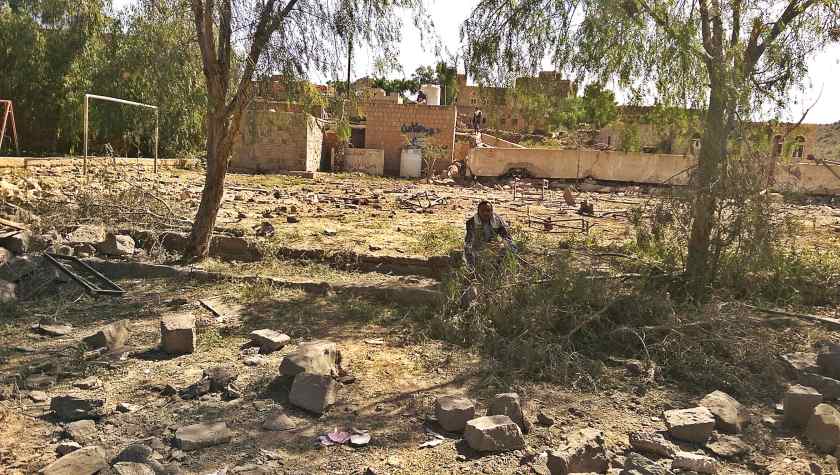
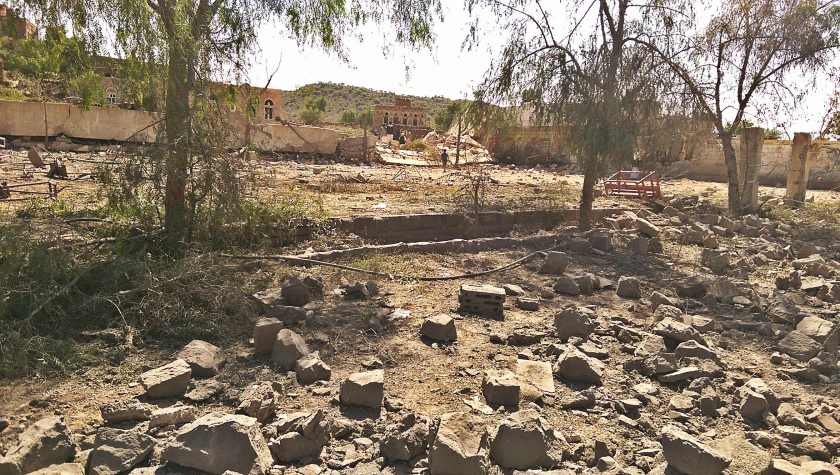
Soon after, the school was destroyed in an airstrike carried out by the Saudi Arabian-led military coalition, killing one disabled student and adding 1,200 to the more than 3.4 million already forced out of education in the country as over 3,600 schools have been forced to close in the course of the war.

“Can you imagine? These are the soldiers of the wars to come,” Subay told Index. “Without education, these children could become tomorrow’s fighters and tools in the hands of extremists.”

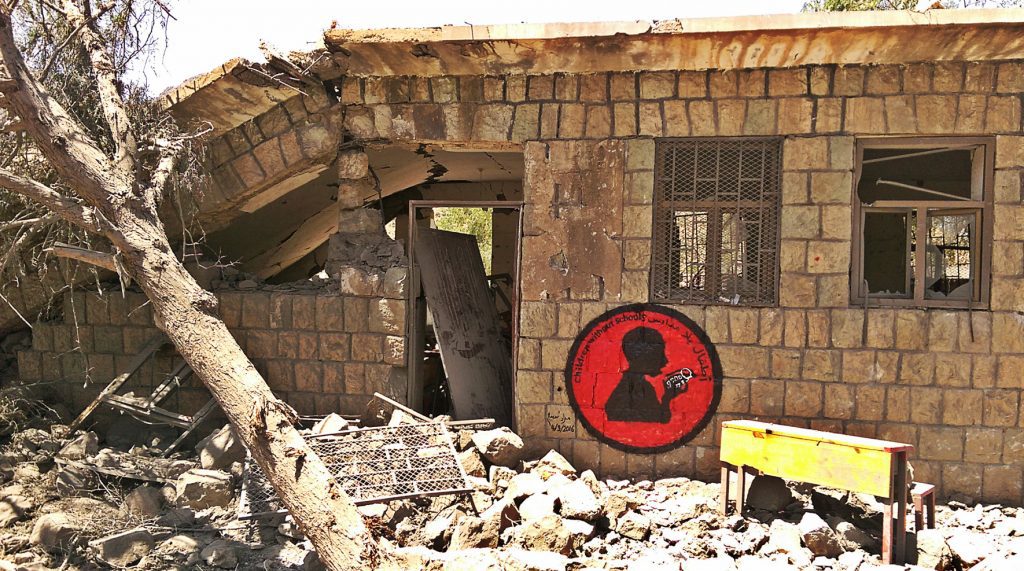
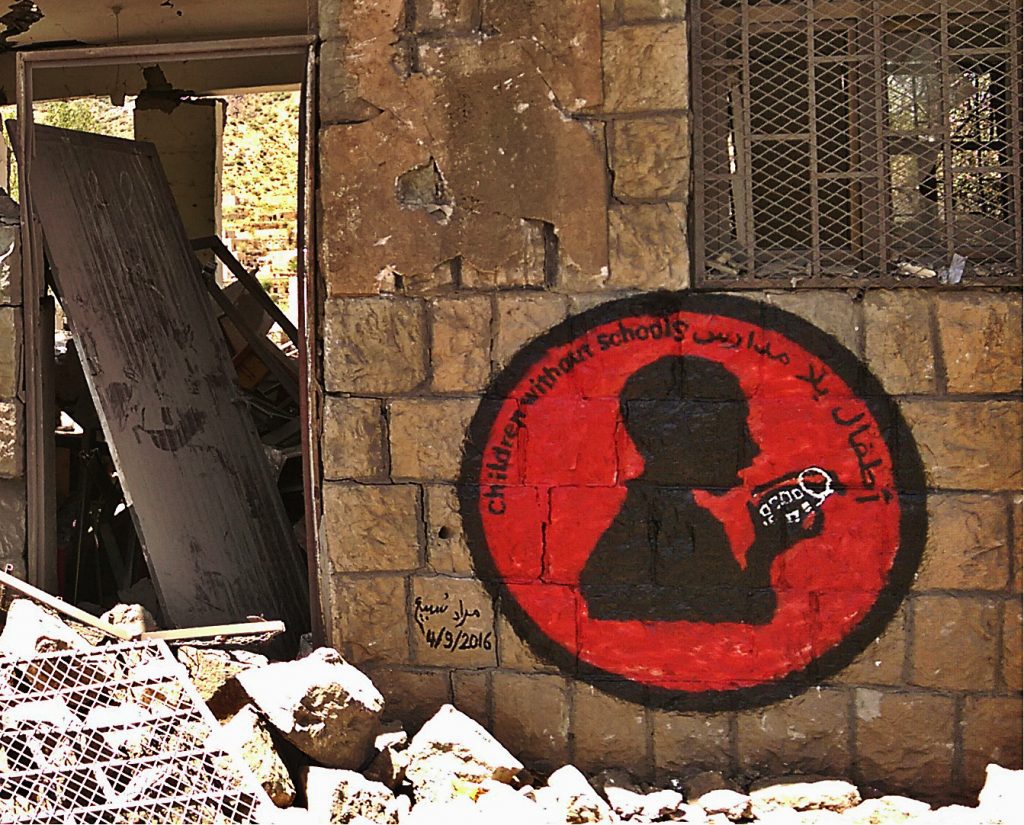
At dawn on 4 September Subay travelled to Bani Waleed to create a mural on what remained of al-Najah.
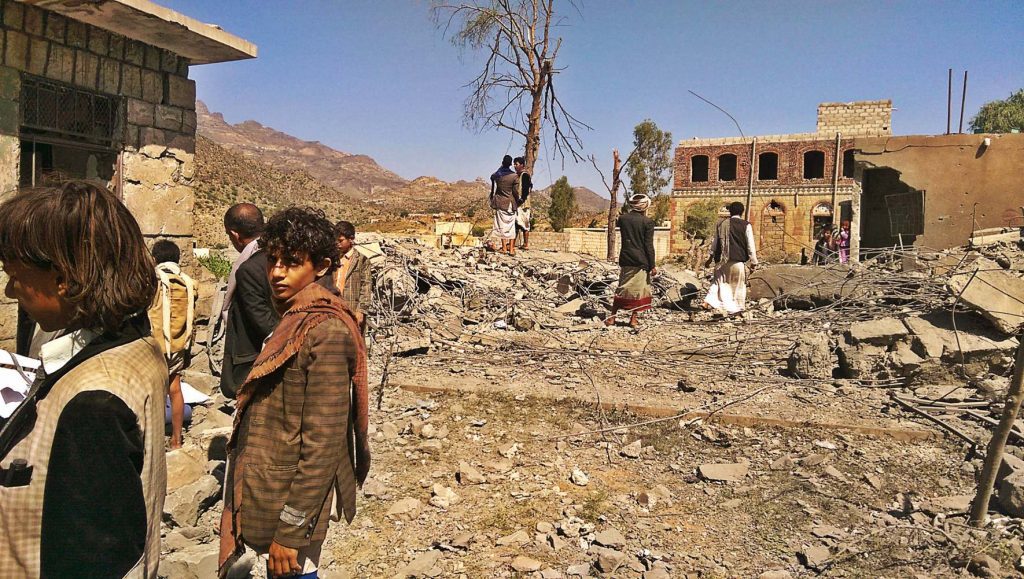
Credit: Ruins campaign. Bani Waleed, September 2016

“When we got there I asked some of the students what they were going to do now that their school was destroyed and some told me they will go to Sanaa while others said they will travel to surrounding villages,” Subay said. “But it will be much more difficult for the 400 girls who attended the school because traditions in Yemen mean they will not be able to travel alone, making it impossible for them to go to other villages to study.”


2016 Freedom of Expression Fellow Murad Subay

Murad Subay is the 2016 Index on Censorship Freedom of Expression Arts Award-winner and fellow. His practice involves Yemenis in creating murals that protest the country’s civil war. Read more about Subay’s work.


Destroying schools isn’t a big deal for the warring parties, the artist added. “Some of the children of those leaders who shout ‘death to America’ are studying at the best universities in the world, including in the USA, while each bombed school in Yemen – especially big ones like al-Haima – will take years to rebuild.”

The situation is made even more difficult in a time of war when resources and building materials are almost impossible to come by. “Even if the West stopped supplying weapons to Saudi Arabia today and patted themselves on the back saying ‘we are doing good’, Saudi Arabia already has enough to wage wars for another 150 years if it wants.”

If there is any hope for peace to prevail and schools, hospitals and other buildings belonging to the people are to be rebuilt, countries like Britain and America should take a step further and tell Saudi Arabia “to show restraint”, Subay said.

“While Saudi Arabia is doing the majority of the destruction, all sides of the war in Yemen must take responsibility.”
ruins3

Credit: Ruins campaign. Bani Waleed, September 2016
ruins4

Credit: Ruins campaign. Bani Waleed, September 2016
ruins2

Credit: Ruins campaign. Bani Waleed, September 2016

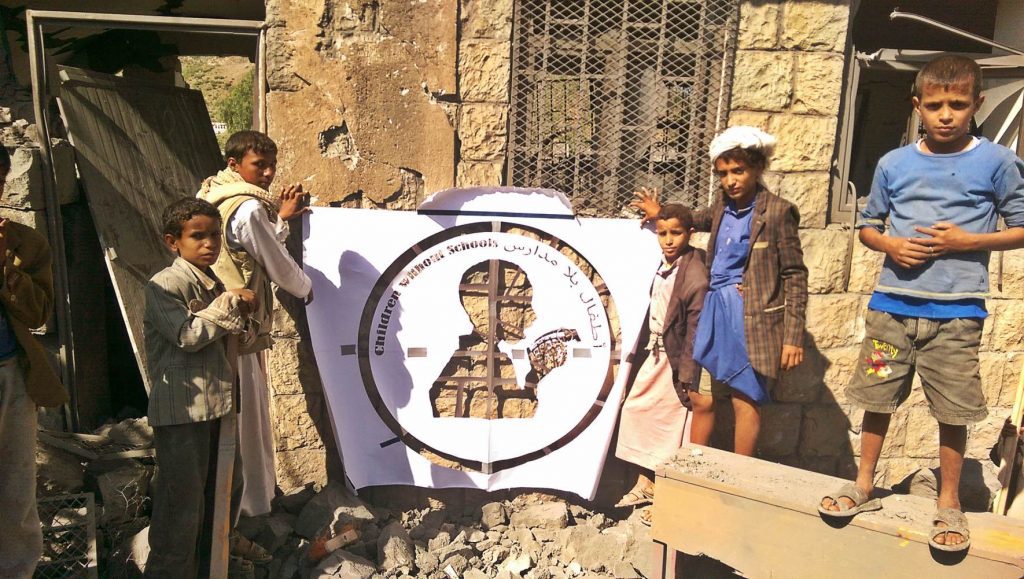
The mural completed on 4 September depicts a child holding a hand grenade in place of a book, with the words “Children without schools” painted in English and Arabic.

When painting with fellow artists from the Ruins campaign – set up in May 2015 in collaboration with fellow artist Thi Yazen to paint on the walls of buildings damaged by the war – on 25 August,  the group were arrested and interrogated by a local militia.

“They asked us to sign a letter with our fingerprints promising that we would not return again without permission,” Subay explains. “I actually did have permission from a local tribal leader but they wouldn’t listen.”

The artists were told if they returned they would be punished.

“My friends were very afraid and some of them said even with permission they would not return,” Subay said. “It was a strange situation for them.”

Subway himself isn’t put off and is already looking forward the next Ruins campaign, wherever that may be.


The last time he spoke with Index, Ruins had just completed a series of murals in front of the Central Bank of Yemen to represent the country’s economic collapse. Soon after the murals were finished, Houthi rebels defaced two out of the three works of art, writing “Samidoon” (صامدون), meaning “steadfast”, which is one of their slogans.

Assessing the situation in Yemen and the many different sides of the conflict, Subay said: “It is very difficult. Every night we hear airstrikes here and there, but we go on with our lives.”

“But any day when I can paint is a good one.”

Nominations are now open for 2017 Index on Censorship Freedom of Expression Awards and will remain open until 3 October. You can make yours here.

Link..

Art@Home فن في البيت

إعلان: فن في البيت

الأعزاء والعزيزات جميعا،
يسعدني أن أعلن لكم عن انطلاق مبادرتي (فن في البيت).
تهدف المبادرة إلى اتاحة الفرصة لوصول الأعمال الفنية التي تدعو إلى السلام والتعايش ونبذ التطرف إلى بيوت اليمنيين من مختلف فئات المجتمع، فلربما يستطيع الفن المساهمة في تحقيق التعايش والأمن والسلم الأهلي خاصة في وقت الحرب والاحتقان والشدائد الإنسانية  التي نمر بها جميعا.

كما يسعدني أن أقدم لكم الإصدار رقم (1) لـ فن في البيت، واليكم التفاصيل.
الإصدار (1):
– اسم الإصدار: أطفال بدون مدارس، من حملة حطام (2015)
– التقنية: ستنسل على ورق مقوى 1200جم، ألوان بخاخ واكليريك.
– الحجم: 30سم × 30سم.
– عدد النسخ: 100 نسخة
– الأصلية: شغل يدوي فقط، يوجد عليها توقيعي في الزاوية اليسرى، وفي الزاوية اليمنى رقم الإصدار.
– (1/100). بالإضافة، تفاصيل الإصدار مكتوبة بخط يدي باللغتين العربية والانجليزية خلف اللوحة.
– السعر الوحدة: (10$).

للذين يرغبون في المشاركة، أرجو منهم/منهن التواصل معي على:
– ايميل: muradsubay7@gmail.com
– الموقع: http://www.muradsubay.com

Announcement: Art@Home

Dear all,
I am truly pleased to inform you about the launching of Art@Home initiative. The objective of this initiative is to have artwork, which call for peace, access to Yemeni houses from various social groups. I believe that artwork for peace may restore the social coherence of Yemeni society especially in this time of war and difficulties.
I am, also, please to introduce the Edition No. (1) of Art@Home to you. Please see details as follows;
Edition (1):
– Name: Children without Schools, from Ruins Campaign (2015).
– Technique: stencil on cardboard 1200g, spray paint and acrylic.
– Size: 30cm X 30cm.
– No. of copies: (100).

  • Originality: handmade, signed by Murad Subay on the left corner and number of edition is handwriting on the right corner. In addition, details of edition is handwritten in Arabic and English on the back.
  • Unit Price: ($10).

If you are interested in participating in Art@Home Initiative, please contact me on:
– Email: muradsunbay7@gmail.com
– Website: http://www.muradsubay.com

Art at Home 1
Art at Home

Photo on “BBC world” of the 5th mural, 12 Hours campaign.

screenshot_2016-09-13-21-20-28_1


Link..

النشاط التاسع من حملة “حُطام” The 9th activity of “Ruins” Campaign.

صور للنشاط التاسع ضمن حملة “حُطام” حول ما يتعرض له التعليم وأدواته من تجريف. رسمت الجدارية في 4 سبتمبر 2016، على ما تبقى من جدار مدرسة “النجاح”، قرية “بني وليد” مديرية “الحيمة الخارجية” واللتي تقع على بعد مسافة 72 كيلومتر تقريبا غرب العاصمة صنعاء.

جزيل الشكر لأبناء قرية “بني وليد” لترحيبهم بالعمل ولمساعدتهم في إنجازه ولحسن كرمهم.

Pictures of the 9th activity in “Ruins” campaign, about the exposure of education and its tools to deterioration. I painted the mural on September 4,2016 on the wall on what is left of the walls of “al-Najah School” located in Bani Waleed village, al-Haima district, 72 Kilometers west of the capital Sana’a.

Many thanks to the people of “Bani Walid” village welcoming the idea of painting onthe school, for helping me out for painting the mural and for their kind generosity

IMAG4143 IMAG4148 IMAG4153 IMAG4155 IMAG4157 IMAG4159 IMAG4161 IMAG4243 IMAG4133 IMAG4216

“Children without schools”Seal, my new mural in the 9th activity of “Ruins” campaign.

English text follow:

بينما يستعد الأطفال حول العالم للعودة إلى المدارس، يستقبل الأطفال اليمنيين العام الدراسي الجديد دون كتب، أو معلمين، او حتى مدارس.
بسبب الصراعات الإقليمية والداخلية في اليمن، أغلقت قرابة 3600 مدرسة وحرم من التعليم قرابة 1,8 مليون طفل يمني، فأصبح عدد الأطفال المحرومين من المدارس 3,4 مليون طفل حسب إحصاءات الأمم المتحدة.
ما يتعرض له التعليم وأدواته من تجريف هو قضية محورية كانت عنوان لحملة “حُطام” في نشاطها التاسع في تاريخ 4 سبتمبر 2016، للرسم على ما تبقى من جداران مدرسة “النجاح”، والتي تقع في قرية “بني وليد”، مديرية “الحيمة الخارجية”، وتبعد عن العاصمة صنعاء قرابة 72 كيلو متر.
تم استهداف مدرسة النجاح يوم أمس من قبل مقاتلات قوات التحالف، بعد أن كان قد زارها وفد من جماعة الحوثيين حسب كلام شهود العيان وطلاب المدرسة. لم تكن المدرسة أو أهل القرية تابعين لأي طرف نزاع، ولم يكن لهم أي ذنب فيما حدث. حوالي 1200 طالب، من ضمنهم 400 طالبة، حرموا من التعليم قبل بدء السنة الدراسية. كانت آثار خيبة الأمل واضحة عند الطلاب وعند أهل القرية عندما التقيت بهم، فهم يعلمون جيداَ كم أخذ من الوقت حتى تم بناء وتجهيز هذه المدرسة في قريتهم لتسع هذا الكم من الطلاب، ويعلمون أيضا أنه لن يعاد ترميم المدرسة في أي وقت قريب، بل قد يستغرق الامر سنين تبعاً لانتهاء الحرب.
مع ذلك، أبدى الطلاب حماسا كبيرا للدراسة ومواصلة تعليمهم بغض النظر عمّا حدث. بعضهم أخبرني بأنه لم يتبق لهم سوى سنة فقط لإنهاء تعليمهم، ولكنهم بإصرار شديد ينوون الذهاب إلى صنعاء أو إلى قرى أخرى لإكمال تعليمهم.
ما يقلقني هو العدد الهائل من الطلاب الذين لن يتمكنوا من السفر إلى قرى أخرى أو إلى العاصمة لإكمال تعليمهم بسبب الوضع المادي الصعب الذي يعاني منه الإنسان اليمني في هذه الأوقات. ومن هؤلاء، الفتيات اللاتي لن يكن بمقدورهن الذهاب إلى مدارس في قرى مجاورة بسبب بعد المسافة وبالتأكيد لن يتمكنّ من السفر أيضاَ.
مئات آلاف الأطفال اليمنيين يواجهون نفس المصير، بدون تعليم، سيكون الأطفال هم مقاتليّ الغد وأدوات بأيدي الجماعات المتطرفة.
اعتذر عن سوء جودة الصور، فلم أكن أحمل معي حينها سوى الكاميرا الخاصة بتلفوني، ولم يتمكن الأصدقاء من الحضور بسبب بعد المكان وسوء الأوضاع الأمنية.
ملاحظة: في الـ 25 أغسطس 2016، ذهبنا للرسم عن التعليم ضمن حملة حطام أنا وأصدقائي، أحمد فؤاد، ذي يزن العلوي، محسن الشهاري. أردنا الرسم على ما تبقى من جداران مدرسة “الخير” الواقعة في قرية “الشرفة”، عزلة “حظران”، مديرية “بني حشيش”. كنت قد نسقت مسبقا مع نقيب القرية ورحب بفكرة الرسم على جدار المدرسة، إلا اننا وفي النقطة الأمنية الأخيرة المطلة على قرية الشرفة استوقفنا من قبل مسلحين تابعة للحوثيين وتم اقتيادنا للمركز الأمني التابع لهم وتم حجزنا لحوالي نصف ساعة. بعدها تم التحقيق معنا والزامنا بتعهدات بعدم العودة للمنطقة إلا بإذن مسبق منهم. الإذن الذي حاولت بعدها ان احصل عليه ولكن دون جدوى.

While most children around the world are preparing to return to schools, Yemeni children welcomes the new school year without books, teachers or even schools.
Due to regional and internal in Yemen, nearly 3,600 schools were closed and nearly 1.8 million children were deprived from education, bringing the number of children without schools in Yemen to 3.4 million children, according to UN statistics.
The exposure of education and its tools to deterioration is a core issue, and is the title of the ninth activity of “Ruins” campaign. I painted my mural in September 4, 2016, on what is left of the walls of “al-Najah School” located in Bani Waleed village, al-Haima district, 72 Kilometers west of the capital Sana’a.
The school was targeted yesterday September 3, 2016, by Saudi-led coalition fighter jets after a delegation of Houthis visited the school, according to eyewitnesses and school students. Neither were the school or the village inhabitants affiliated to any conflict party nor did they have any guilt in what happened. About 1,200 student, including 400 female students, were deprived from education before the beginning of the school year. The disappointment was clear on the faces of the students and village residents when I met them. They were well aware of how much time did it take to have a school constructed and equipped to accommodate this many students in their village, and they were also well aware that the school will not be renovated any time soon, rather it may take years depending on the war end.
However, the students showed great enthusiasm to continue their education regardless of what happened. Some of them told me that they had only one year left for them to finish their high school, but still intended to go to Sana’a or other villages to finish their education.
What worries me is the sheer number of students who would be unable to travel to other villages or to the capital Sana’a to continue their education because of the difficult financial situation of their families. Among these are the girls who would not be able to attend schools in near-by villages because of the large distance, and they certainly would not be able to travel to Sana’a as well.
Hundred thousands of Yemeni children face the same fate, without education, the children of today will be tomorrow’s fighters and tools in the hands of extremists groups.
I apologize for the poor quality of the images, I had only the camera of my phone, and my friends were not able to accompany me due to the far distance of the place and the poor security conditions.
Note: In August 25, 2016, My friends and I traveled to paint about education in “Ruins” campaign, my friends were: Ahmed Fuad, Thi Yazan al-Alawy and Muhsen al-Shahary. We were planning on painting on the walls of a school called “al-Khair School” located in “al-Sharafa Village” in Bani Hushaysh area. I had already coordinated with the head of the village and he welcomed the idea of painting on the walls, however, when we encountered the last security checkpoint, a group of Houthi fighters stopped us and detained us in a security center run by them for half an hour. They investigated us and made us write a pledge not to return to the same area unless with a permission from them. Permission that I had worked hard to get, but to no avail.


IMAG4233 IMAG4234

The Affect of the Drone Strike: Subay’s 12 Hours and the Environmental Resistance of Street Art\ Research by: Kate Hoyt

A research entitled “The Affect of the Drone Strike: Subay’s 12 Hours and the Environmental Resistance of Street Art”, made by Kate Drazner Hoyt in 2015. The research is published on Academia website at:

https://www.academia.edu/22825488/The_Affect_of_the_Drone_Strike_Subays_12_Hours_and_the_Environmental_Resistance_of_Street_Art

PDF\ The_Affect_of_the_Drone_Strike_Subays_12

Nghệ sỹ Yemen vẽ tranh đường phố phản đối xung đột\ On the Vietnami website “NEWS 360”

news 360

Nghệ sỹ Yemen vẽ tranh đường phố phản đối xung đột

Các bức tranh đường phố xuất hiện tại nhiều khu vực xung đột để tưởng nhớ những người vô tội thiệt mạng tại Yemen.

Vào ngày đầu tiên Saudi Arabia can thiệp vào cuộc nội chiến Yemen (tháng 3/2015), các máy bay chiến đấu của liên quân do nước này dẫn đầu đã ném bom một khu nhà ở ngoại ô thủ đô Sanaa.

Một tổ chức nhân quyền Yemen cho biết, vụ không kích vào khu vực Bani Hawat vào ngày 26/3/2015 của Saudi Arabia đã giết chết 27 thường dân, trong đó có 15 trẻ em.

Chỉ sau đó vài tuần, nghệ sỹ Yemen Murad Subay, các bạn bè của ông và nhiều trẻ em địa phương đã vẽ 27 bông hoa trên các bức tường tại Bani Hawat, trong đó 15 bông chỉ có một chiếc lá tượng trưng cho những đứa trẻ đã thiệt mạng. Đây là hoạt động mở đầu của chiến dịch nghệ thuật đường phố mới nhất của Subay có tên gọi “Tàn tích”.

“Họ (các bên tham chiến) đã phá hủy tất cả mọi thứ”, ông Subay nói với tờ The WorldPost. “Vậy chúng tôi có thể làm gì? Chúng tôi không giữ im lặng, đã thực hiện hoạt động để tưởng nhớ những người vô tội đã bị giết chết và nêu bật lên cái giá của cuộc chiến này”.

Trong năm qua, Subay và nghệ sĩ đồng nghiệp Thi Yazen đã đi đến những nơi mà chiến tranh đã tàn phá các ngôi nhà và khiến dân thường thiệt mạng để vẽ lên đó những bưc tranh để phản đối cuộc nội chiến hiện tại ở Yemen.

Trước đó, tháng 3/2012, Subay đã phát động chiến dịch nghệ thuật đường phố đầu tiên của mình, “tô màu các bức tường trên đường phố của bạn.” Ông và bạn bè của mình đã đến nhiều khu vực nơi bị kiểm soát bởi các phe phái khác nhau và biến những khu vực này trở thành các bức tranh đầy màu sắc.

Trên phương tiện truyền thông xã hội, Subay kêu gọi mọi người đến giúp đỡ chiến dịch của ông. Sau đó một tuần, hàng chục người bắt đầu tham gia và nhiều bức tranh đã bắt đầu xuất hiện trên các bức tường của nhiều thành phố.

“Điều này giống như một sự phản đối bằng màu sắc,” Subay nói. “Chúng tôi vẽ các bức tranh trên nền một cuộc chiến xấu xí để thể hiện rằng có những lựa chọn khác thay vì đi đến chiến tranh và sử dụng vũ khí.”

“Sử dụng bút vẽ là điều tốt đẹp hơn là sử dụng súng đạn”, ông Subay cho biết.

Cuộc đàm phán hòa bình về Yemen do Liên Hợp Quốc thúc đẩy đã diễn ra ngày 21/4. Các đại diện của chính phủ Yemen cho biết họ không kì vọng nhiều vào vòng đám phán này trong khi người dân Yemen đã kêu gọi các nhà lãnh đạo trên phương tiện truyền thông xã hội rằng “Đừng kết thúc mà không có hòa bình”.

Ít nhất 6.200 người đã thiệt mạng kể từ khi liên quân do Saudi Arabia dẫn đầu tấn công lực lượng Houthi và nhóm ủng hộ cựu Tổng thống Yemen Ali Abdullah Saleh.

Link..

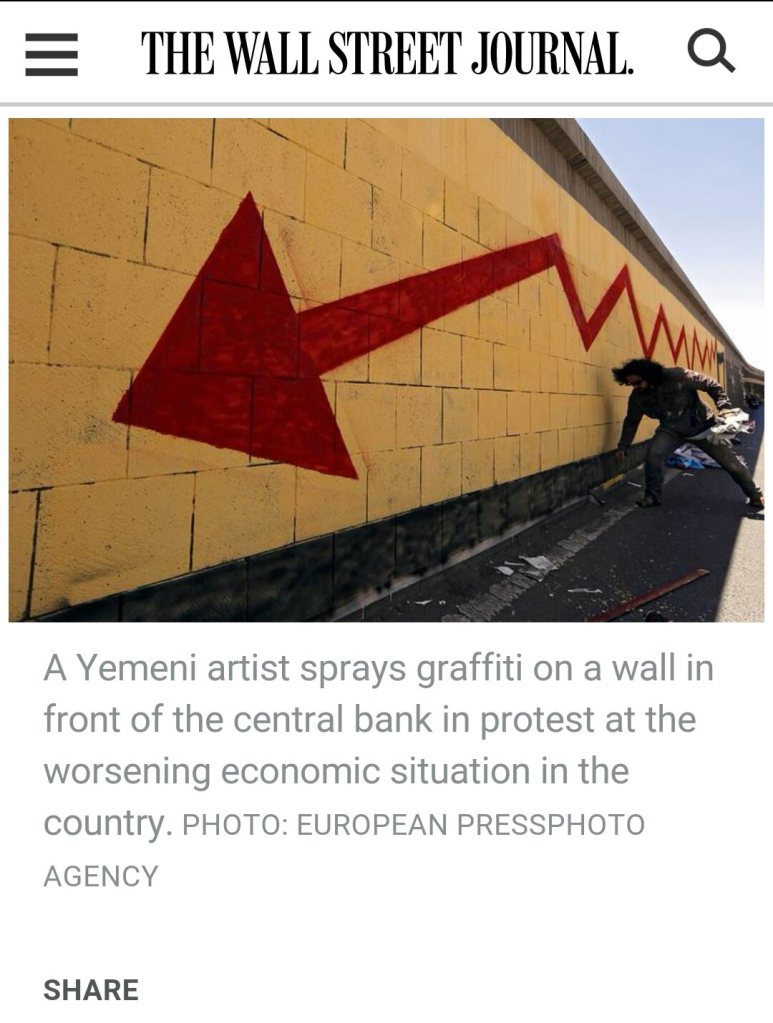
The Wall Street Journal\ Photo of the “Saw” mural, Ruins Campaign.

A Yemeni artist sprays graffiti on a wall in front of the central bank in protest at the worsening economic situation in the country.PHOTO: EUROPEAN PRESSPHOTO AGENCY

the wall street journal

An interview with me on BBC Radio in their based in London on “The Cultural Frontline” program. April 2016

BBC

 The Cultural Frontline

An interview with me on BBC Radio in their based in London on “The Cultural Frontline” program, titled by “Identity and Adversity”. I talked in six minutes (20-26), about the street art campaigns and the situation in Yemen. April 2016.

Program link..

BBC identity and Adversity000

Yemen: It’s the economy, stupid!\ IRIN News

Irin

Yemen: It’s the economy, stupid!

By Mohammed Ali Kalfood

IRIN Contributor

Additional reporting by Annie Slemrod, Middle East Editor

Something peculiar is afoot in Yemen: the usually arcane topics of monetary policy and central banking have become part of everyday chatter, even street art.

Since a Saudi Arabian-led coalition began airstrikes in March 2015 in a bid to oust Houthi rebels from power, some 6,500 people have been killed, and those official numbers are likely far too low.

But what is less reported is how the war has also devastated Yemen’s economy. Most of the country’s exports came from oil and gas, and those industries are simply not functioning.

Last month, a mural appeared on a wall in front of the country’s central bank – seen as a rare neutral and stable institution in Yemen’s fractious conflict. The jagged red line reflected the wild fluctuations of the faltering Yemeni rial.

The artist, Murad Subay, called his work “The Saw”, a reflection of how the economic situation is sawing his country apart. He was inspired to take out his brushes by headlines that the central bank is the last hope for his country’s faltering economy.

“People are devastated because of the currency fluctuation,” Subay told IRIN by email. Prices have shot up while wages have stagnated, he said, and “many people can’t afford to live under this economic situation; they can’t afford to purchase food and basic services”.

Last pillar of stability

For the past few months, commentators have been warning that Yemen’s central bank is in serious trouble.

It is perhaps surprising it has survived this long – after all the country has been ravaged by a war that has become too complex to fit into two sides: it includes multiple local conflicts and allegiances that are tough to untangle.

Related: Why does no one care about Yemen?

The central bank sets official exchange rates for imports of flour and grain. It had also, until recently anyway, managed to keep paying government employees like soldiers, teachers, and doctors – no matter their loyalty or location.

But how long it can prop up a country on the brink of complete economic meltdown is unclear.

Marwa al-Nasaa, resident representative for the International Monetary Fund in Yemen, told IRIN that “the Yemeni economy and rial are obviously in dire straits”.

“After 15 months of intense conflict, the central bank’s reserves, understandably, are running low,” she explained in an email. If foreign reserves become more depleted and the bank can’t prevent the rial from falling further, “it would hit the average Yemeni hard, and the very poor would likely suffer most”.

While there are unconfirmed reports that the Houthis have raided the bank’s reserves, under the hand of respected governor Mohammed Bin Humam, it has done it’s best to keep the currency stable, altering the official exchange rate to combat black market trading.

“Over the last 15 months, by all indications, the central bank tried to deal as neutrally as possible with a very difficult economic, social, and security situation in Yemen,” said al-Nasaa.

“But its ability to maintain foreign exchange support for the most basic imports, service sovereign debt obligations, and pay public sector wages is becoming more and more circumscribed.”

Back on the ground

While all this sounds rather academic, it’s not.

Hisham al-Omeisy, an analyst based in Sana’a, pointed out out that what the bank does – or doesn’t do – has a direct impact on everyday life and everyone knows it.

“It affects us directly with pricing, with getting gas… A lot of people don’t have money to begin with,” he explained to IRIN, so any shift in prices can feel drastic.

One impact of the crisis in the banking system has meant that traders seeking to import goods into Yemen – including food – have been unable to acquire credit.

That means food imports are down, and prices are up. In the capital, a 50-kg sack of flour goes for 7,500 rial, compared to 5000 rial a few months ago. In areas like Taiz, prices are significantly higher still.

And it’s hard to buy pricey food without a regular salary.

As of September 2015, the General Union for Yemeni Workers’ Syndicates estimated that three million people had lost their jobs due to the war.Those who still have employment, like the always-in-demand taxi drivers of Sana’a, find it hard to keep going when fuel is in short supply and expensive.

“It’s really hard to make money for your children to survive while you [also] need to feed your car with fuel to keep working,” said cab driver Ahmed Shamsan, a father of three.

The situation is deteriorating fast. Earlier this month, the bank reportedly stopped paying some government salaries, at least for the time being.

And it could yet get worse.

“If basic imports such as grains, fuels, medicines, and fuel are constrained further, this would quickly spill over into the daily lives of people that are on the edge already,” warned al-Nasaa.

Failing infrastructure

Among the sectors hit hardest by the economic crisis is health, an area that was already in a bad way.

Recently returned from Yemen, Karine Kleijer of the medical charity Médecins Sans Frontières has witnessed the country’s healthcare system come grinding to a worrying halt.

“You see that – slowly – programmes like vaccinations and things that should work are no longer functioning because [clinics and hospitals] are just running out of supplies,” she told IRIN.

If public doctors and nurses are unpaid it would represent a really dangerous situation, Kleijer said, as the majority of private clinics have already shuttered and locals are depending solely on publicly-funded healthcare.

“Our biggest concern is the health system is going backwards rapidly. We are at the end of our [tether],” Kleijer added.

Who can help?

Back in 2012, Saudi Arabia stepped in to help Yemen’s economy with a $1 billion deposit in the bank.

“No economic situation improves during wartime… the war needs to stop first”

But as a belligerent in the conflict, further financial support now seems an unlikely prospect, although there are reports that they have demanded the bank move to Riyadh or Aden, which had been a stronghold for Saudi-aligned forces.

Al-Nasaa said the IMF can’t “simply intervene to defend the rial”.

Instead, she said, “it could support a programme designed by the Yemeni authorities, where the authorities would be able to assume and implement programme commitments”.

The IMF does offer concessional lending to low-income countries with urgent needs.

“The IMF has closely engaged with Yemen in the past,” she said, “and it certainly stands ready to help again once conditions would allow [it] to do so”.

Peace, not cash

Everyone, and that includes al-Nasaa, says the best way to shore up Yemen’s economy is peace.

“The best that could happen is that the conflict parties find a way to a durable peace agreement, and all stakeholders could work together to stabilise and reconstruct Yemen,” she said.

But talks in Kuwait appear to be headed nowhere quickly.

Subay, the muralist, is concerned for his country, even if the bank gets help.

“I don’t think that this crisis can be solved by some kind of resolution on paper. No economic situation improves during wartime… the war needs to stop first.”

(TOP PHOTO: Murad Subay’s “The Saw” in Sana’a. Murad Subay/IRIN)