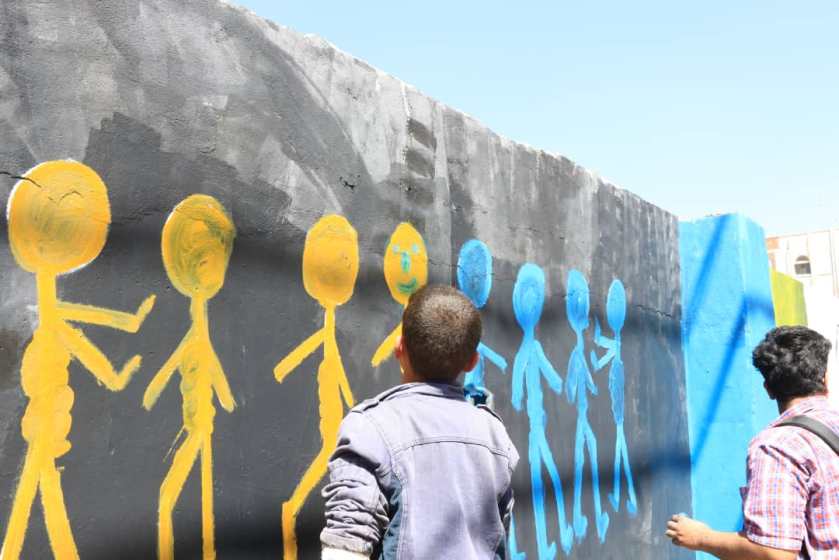
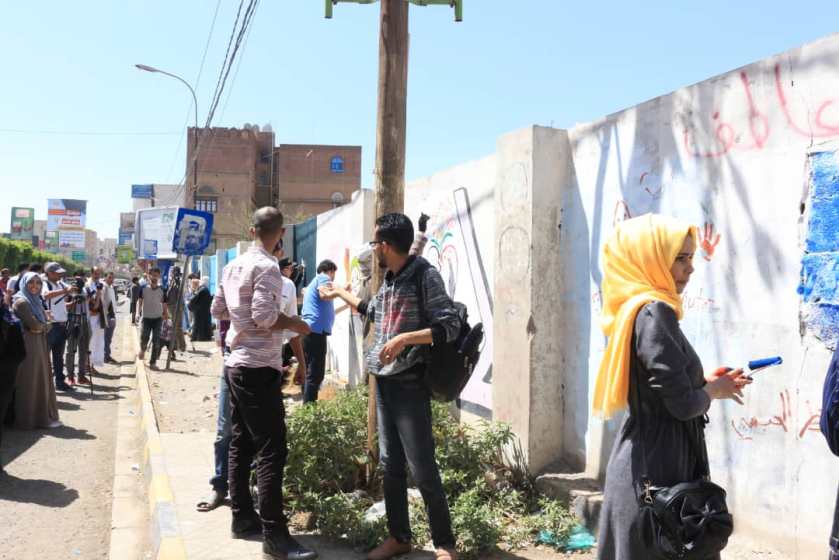
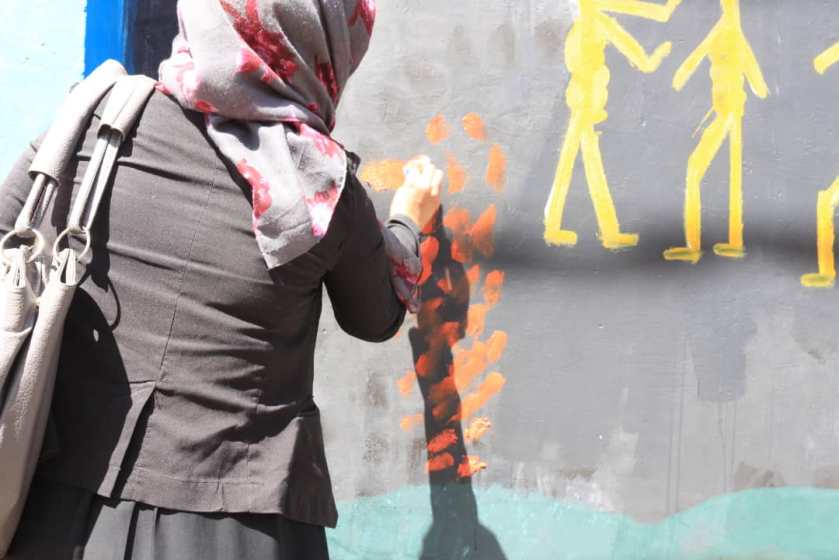
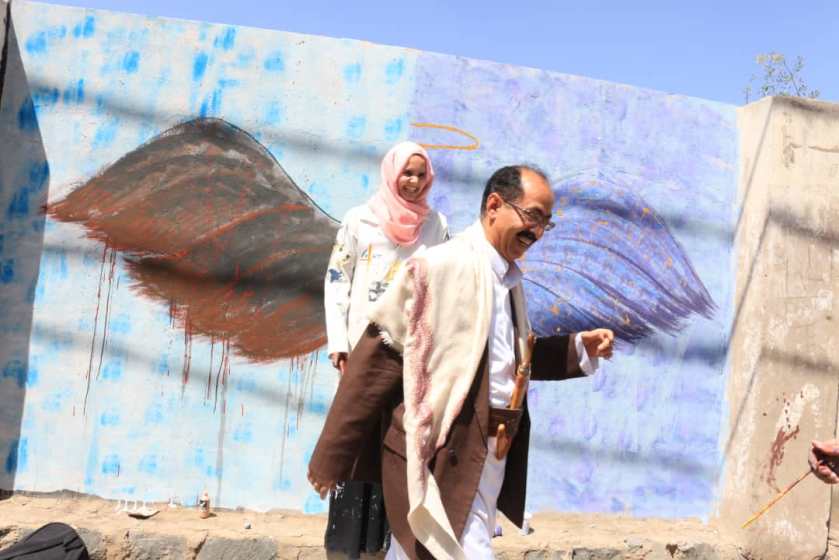
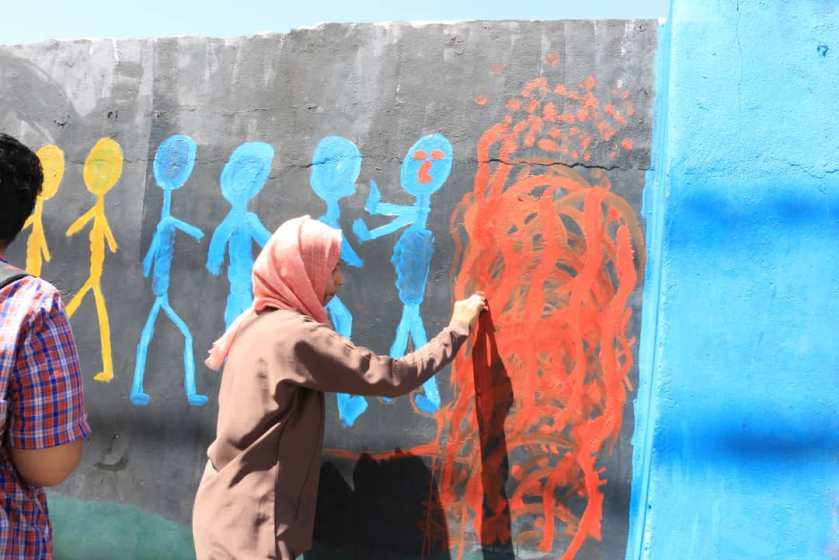
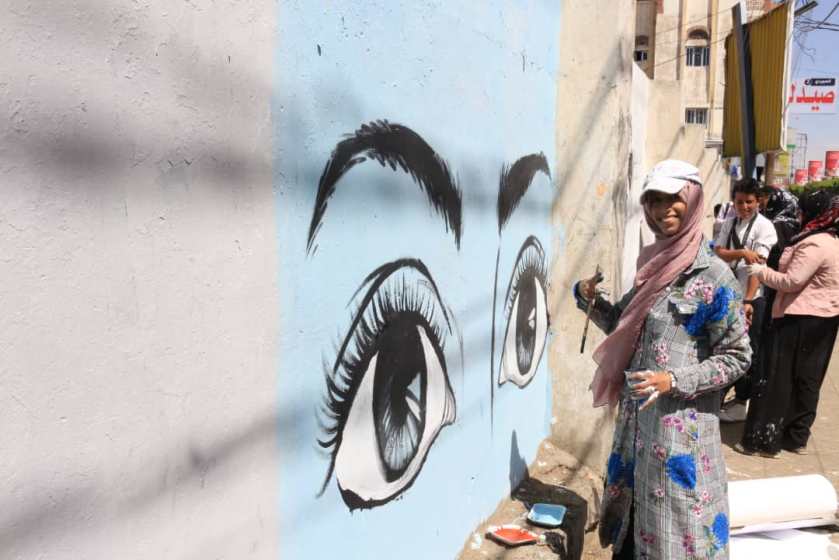
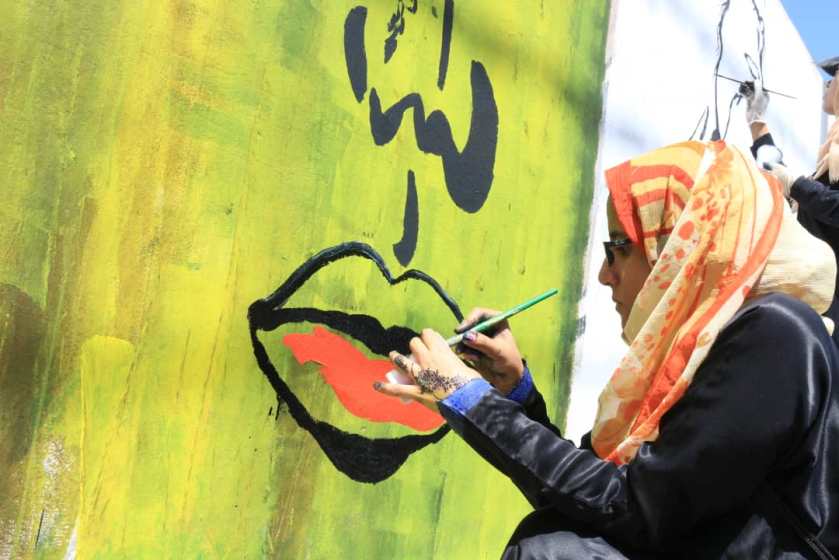
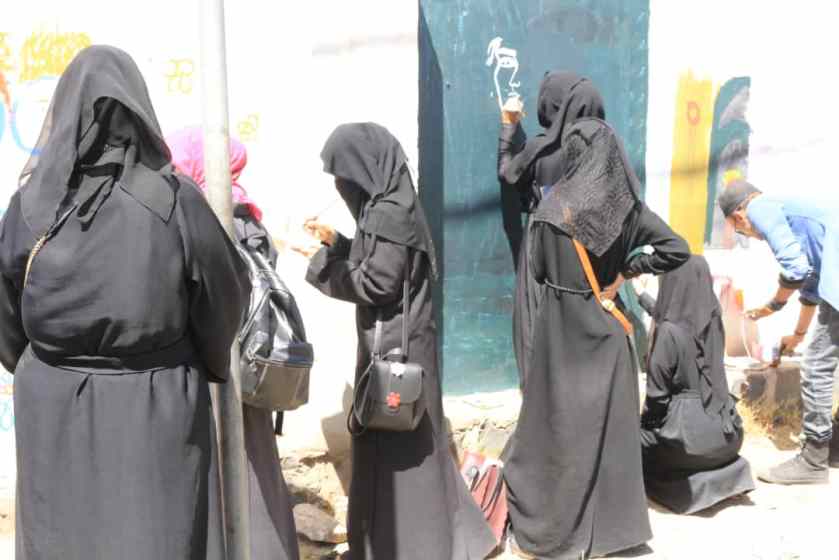
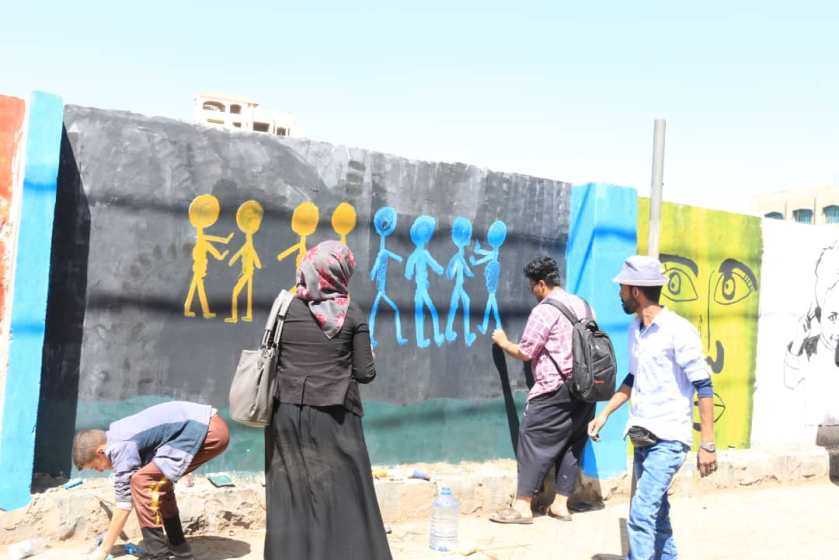
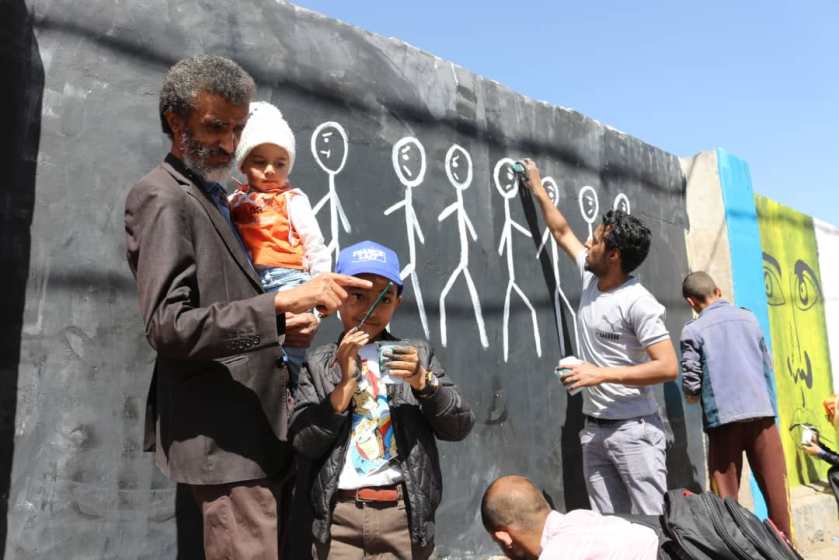
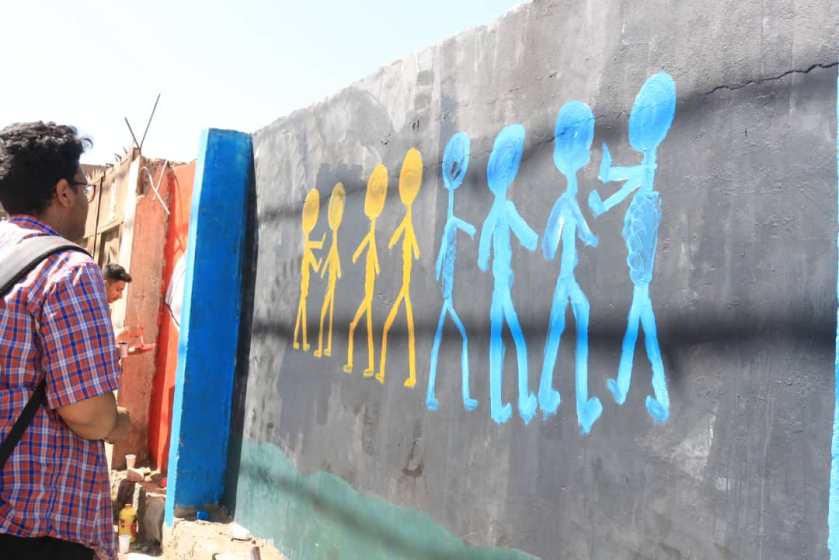
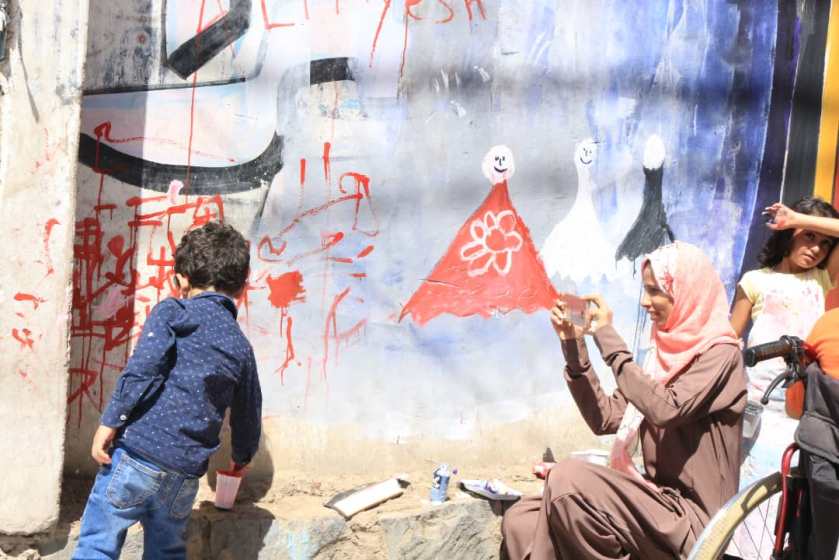
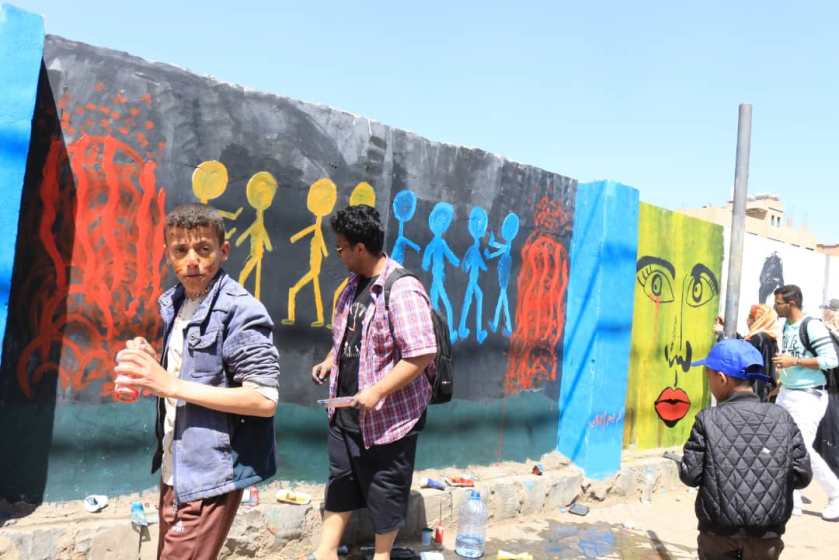
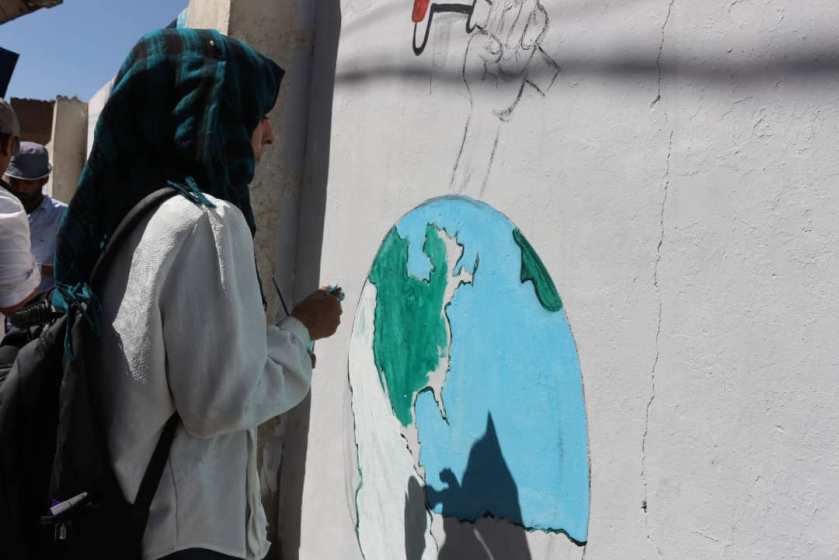
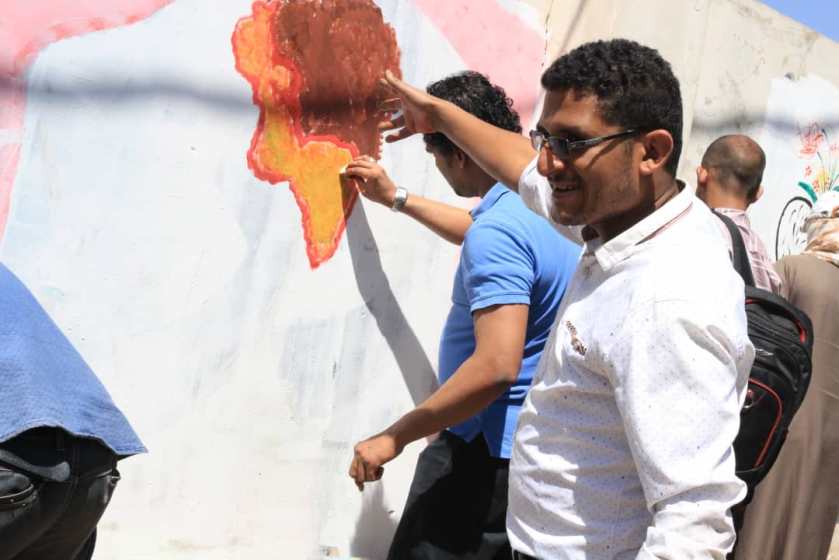
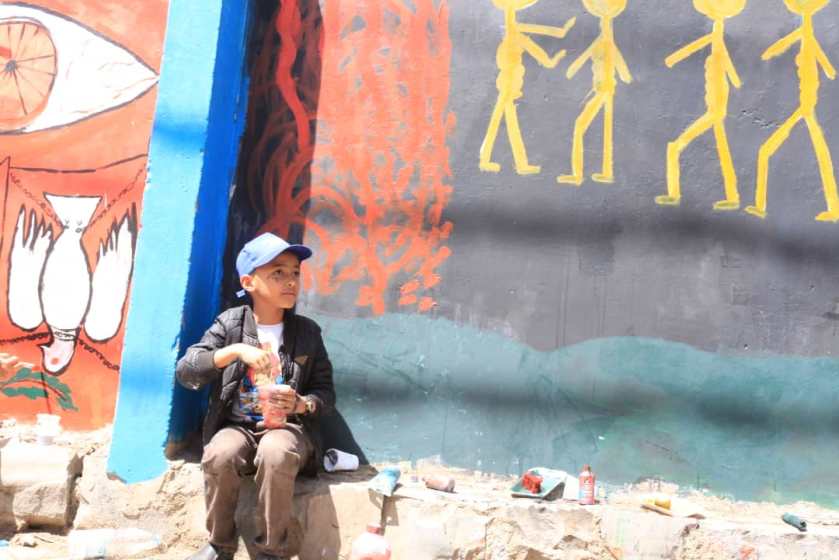
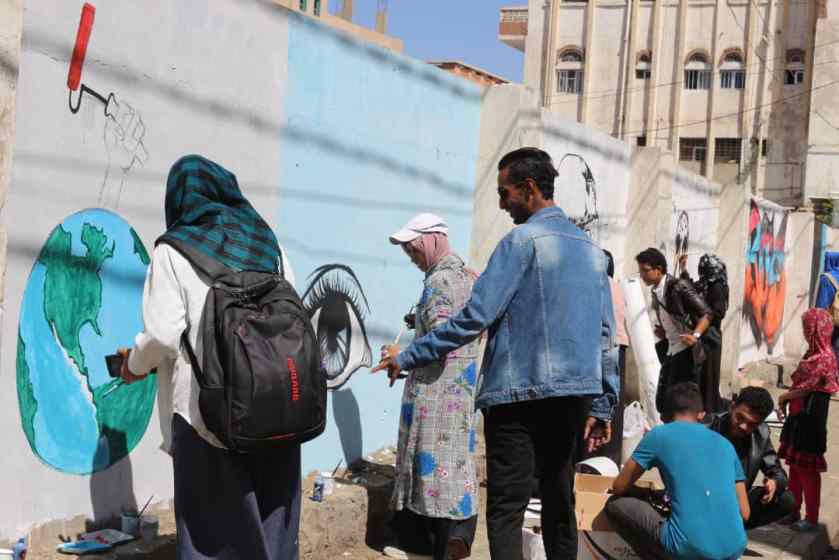
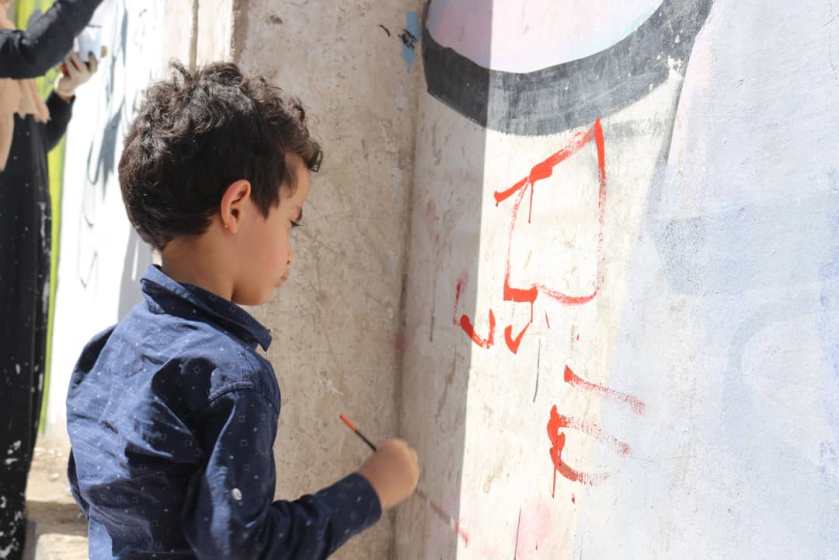
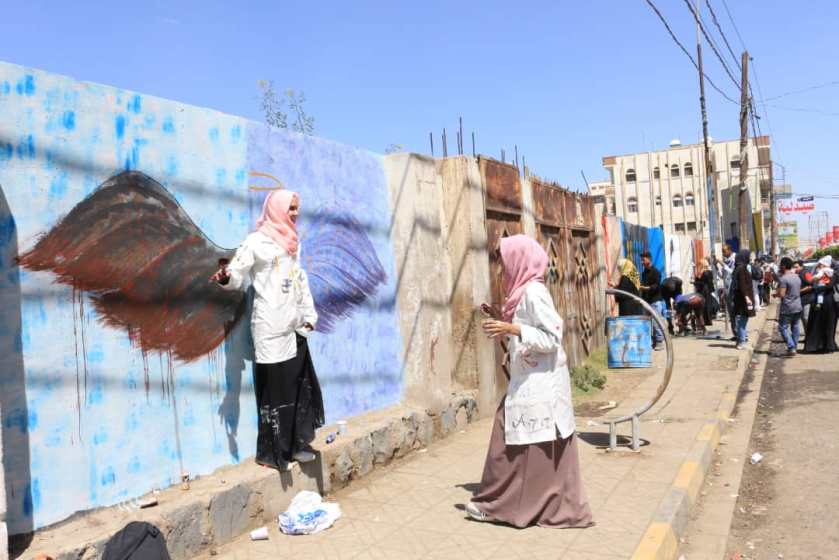
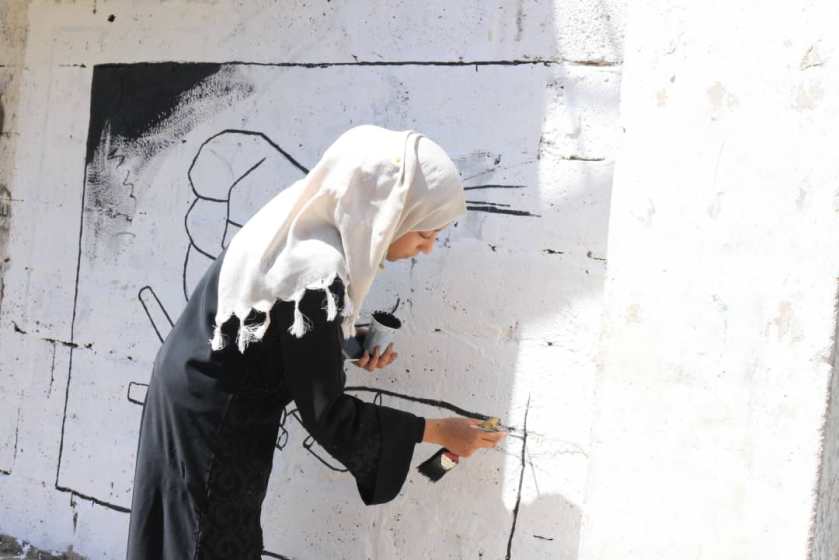
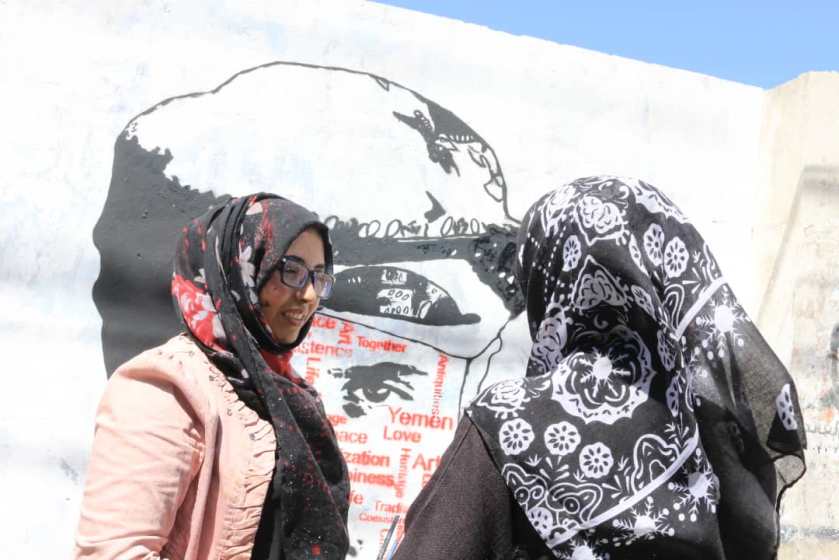
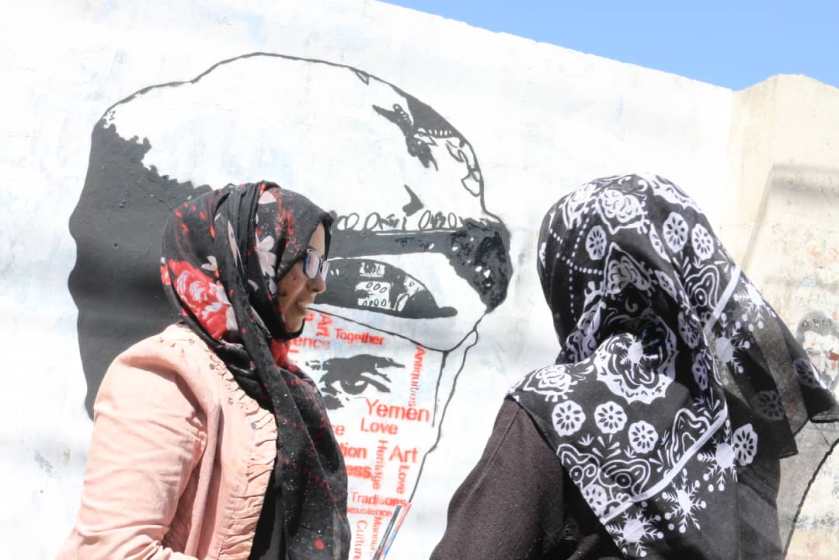
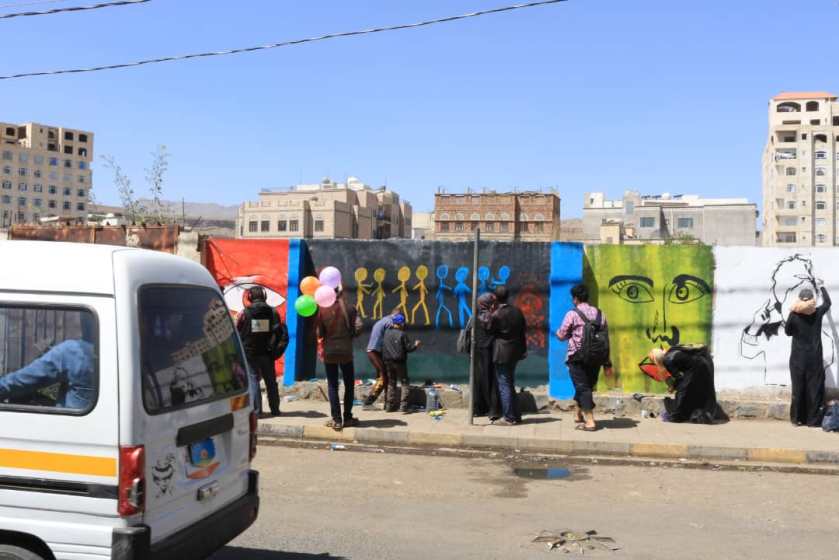
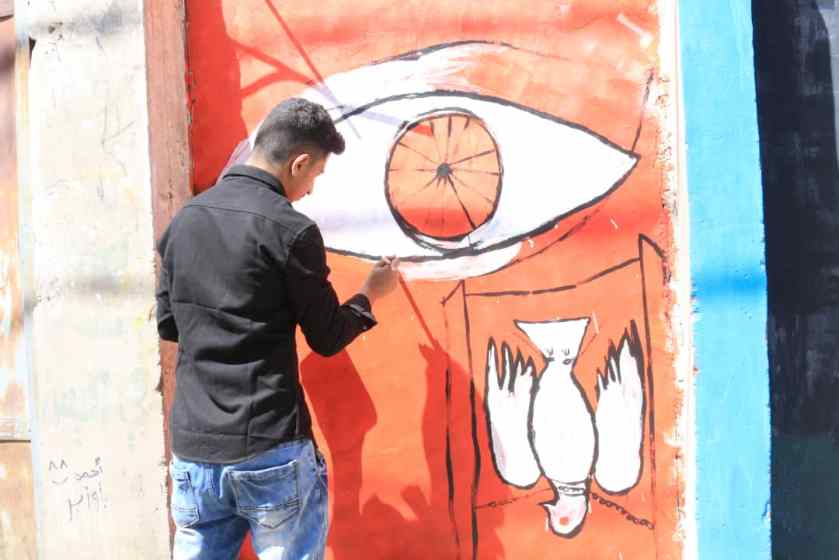
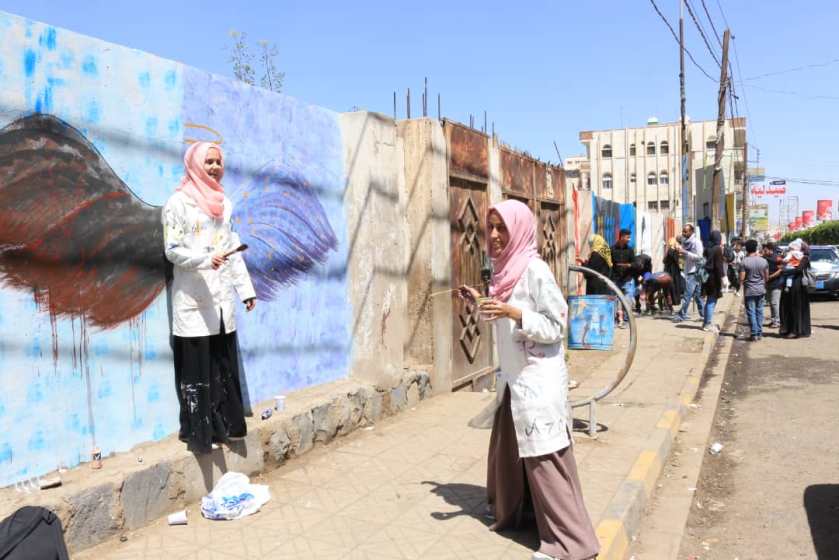
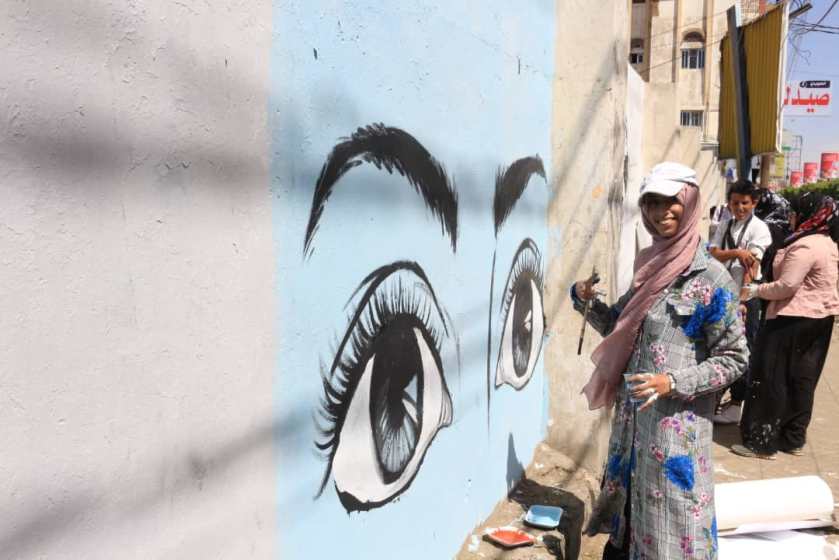
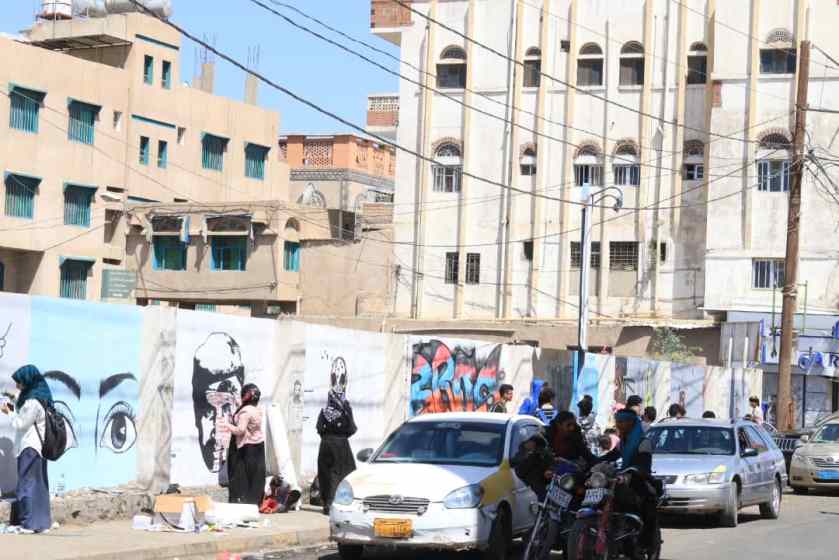
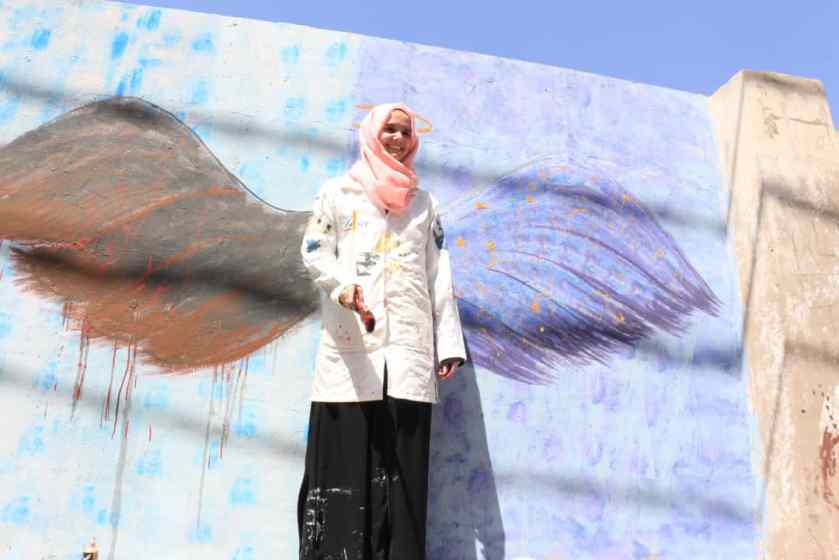
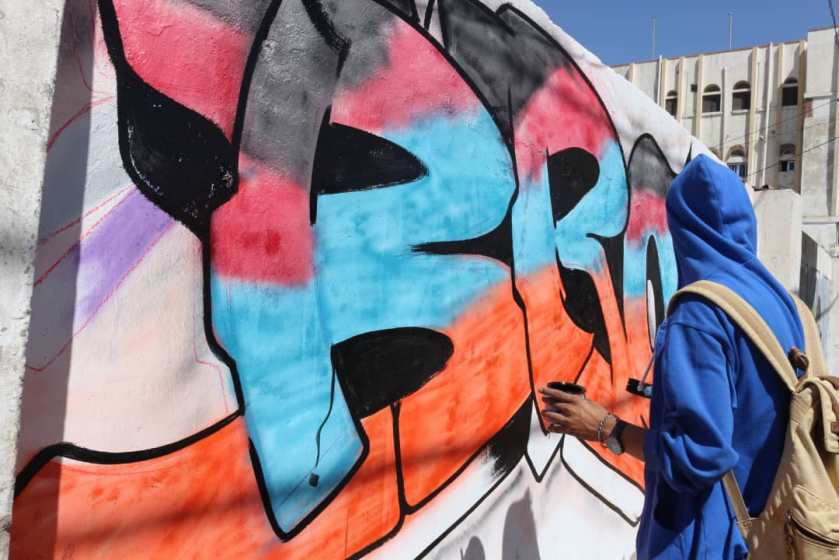
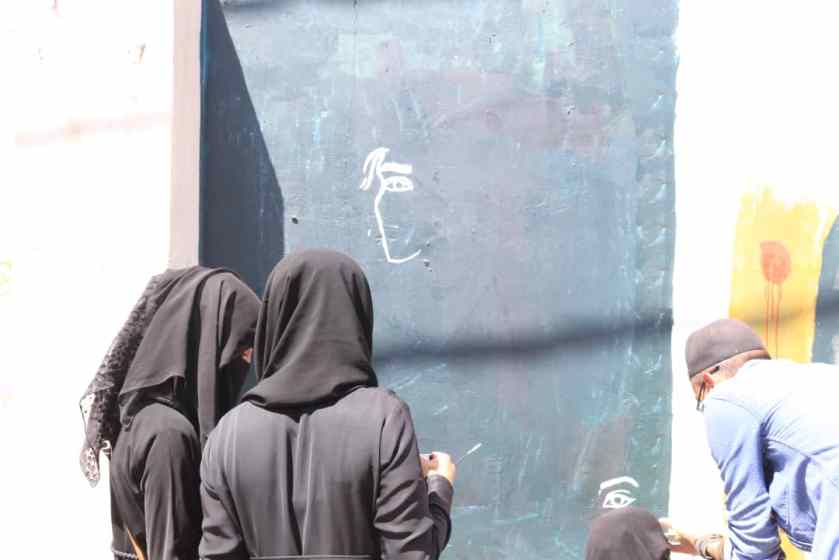
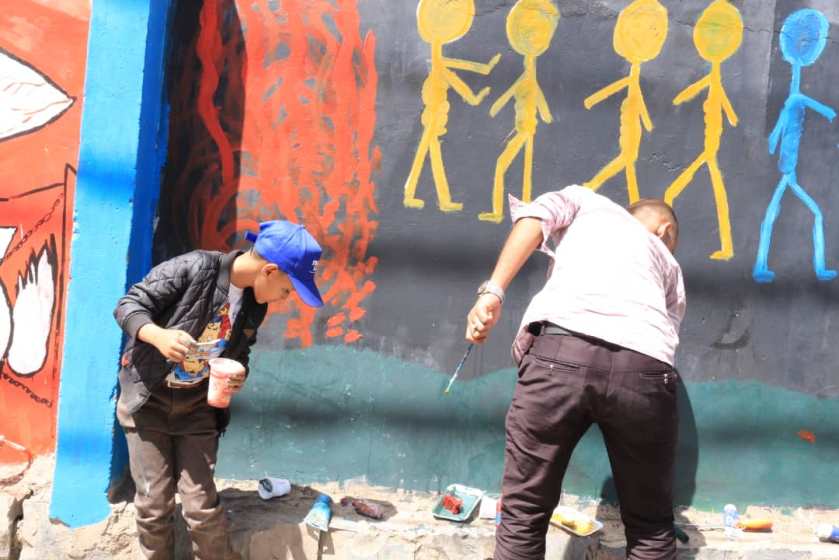
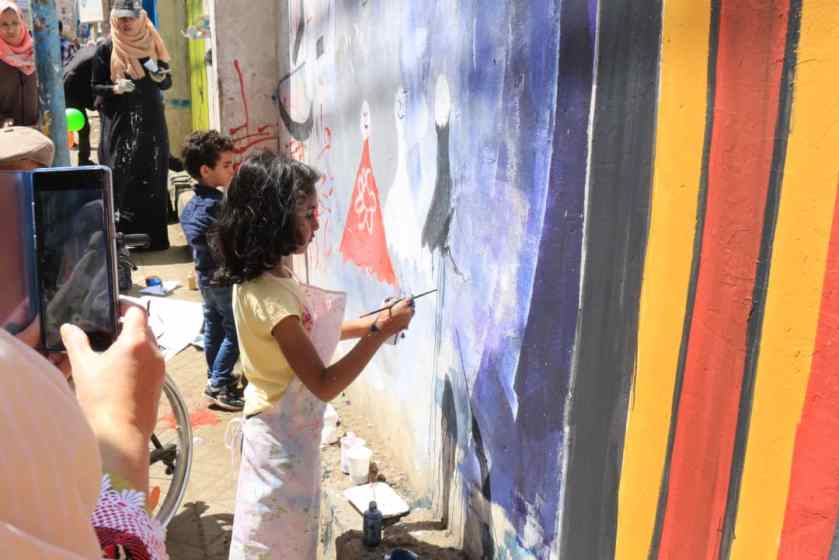
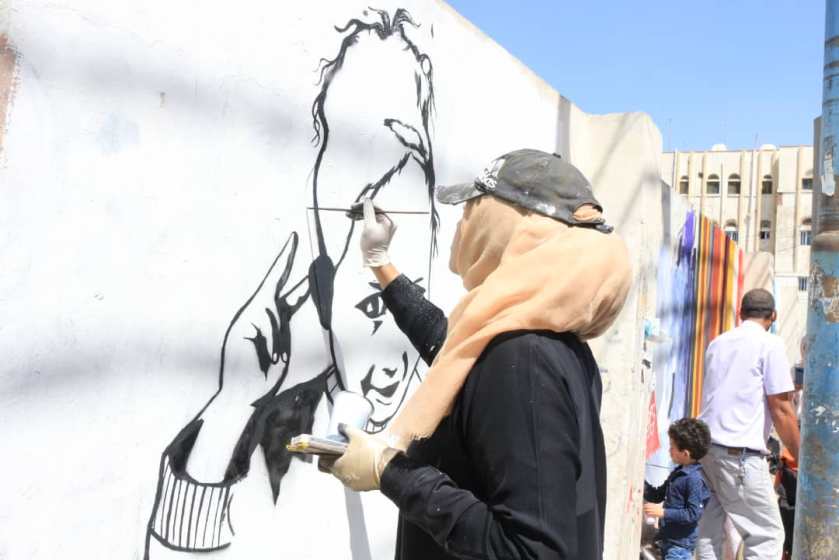
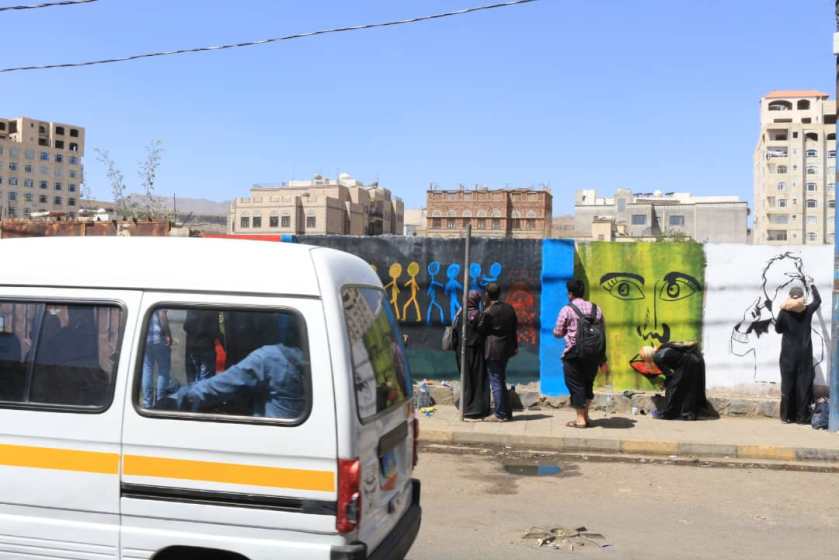
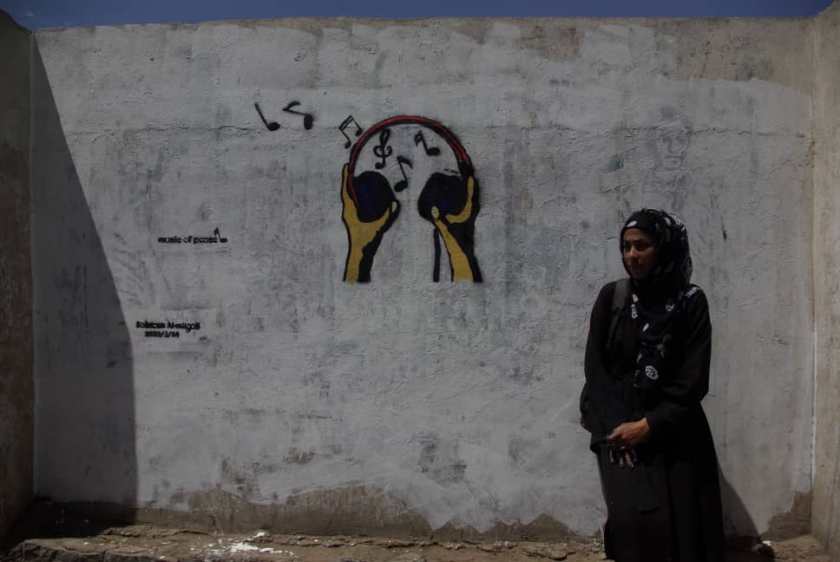
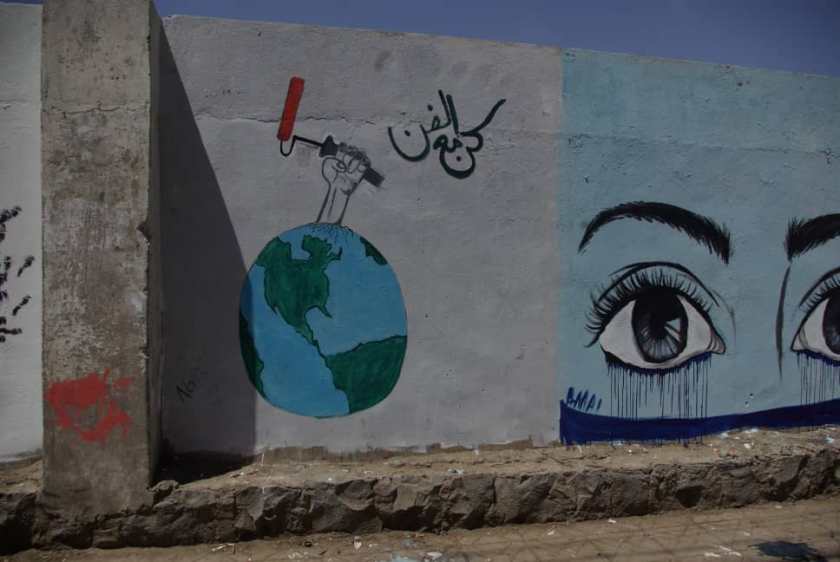
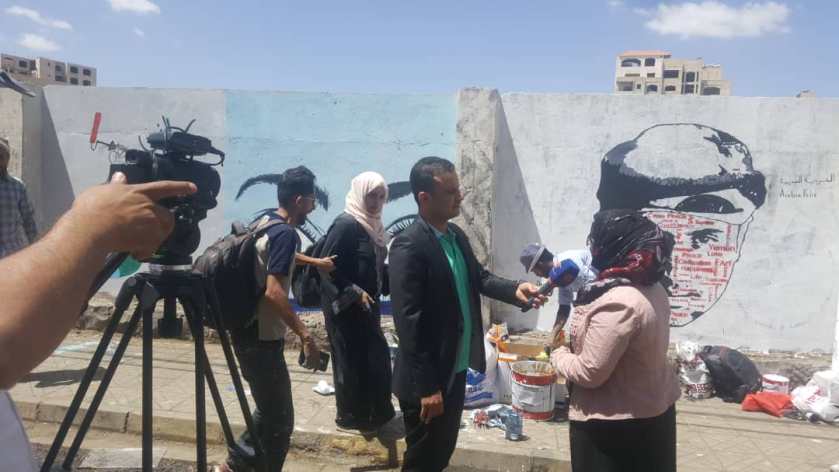
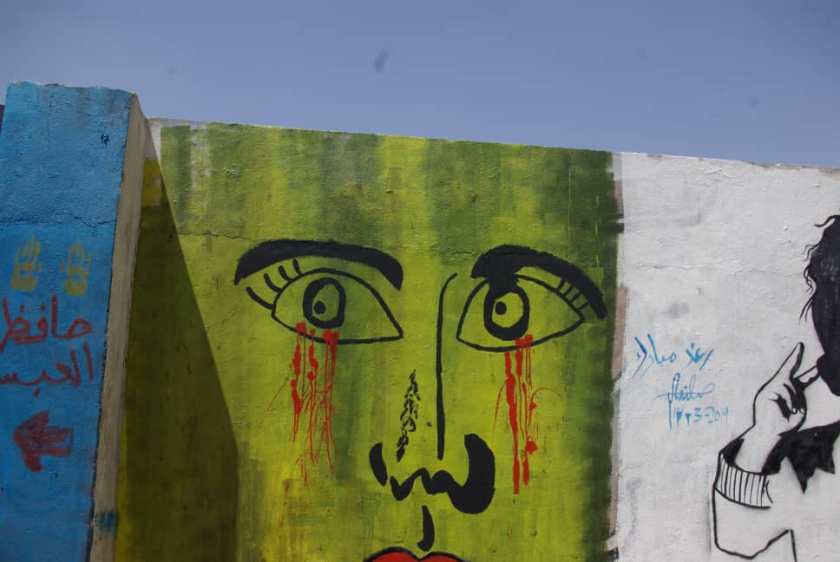
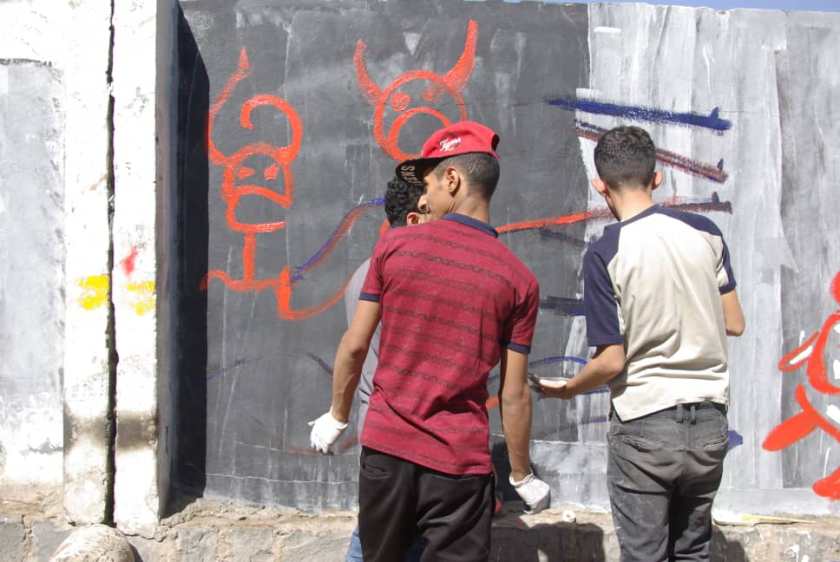
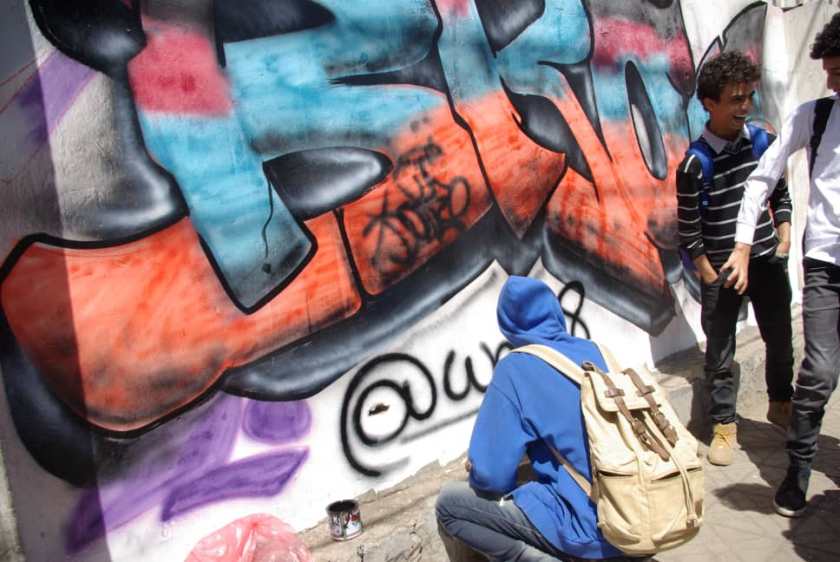
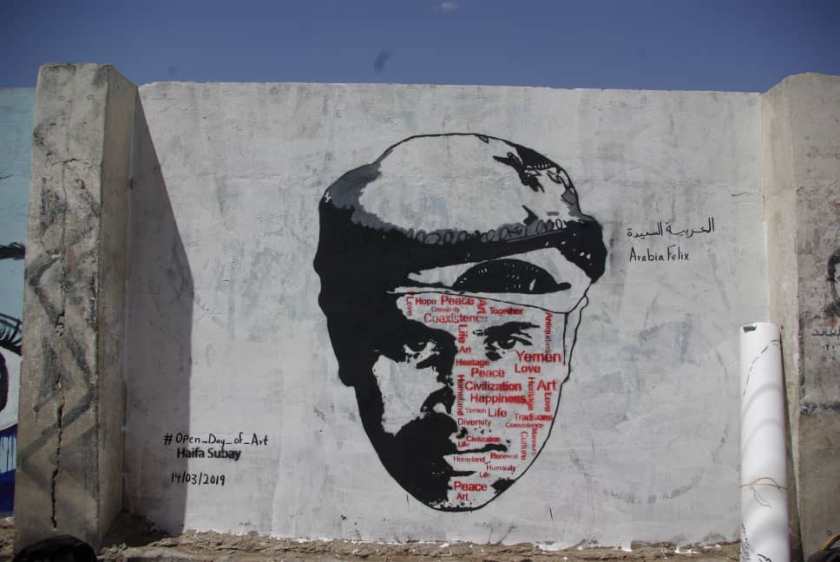
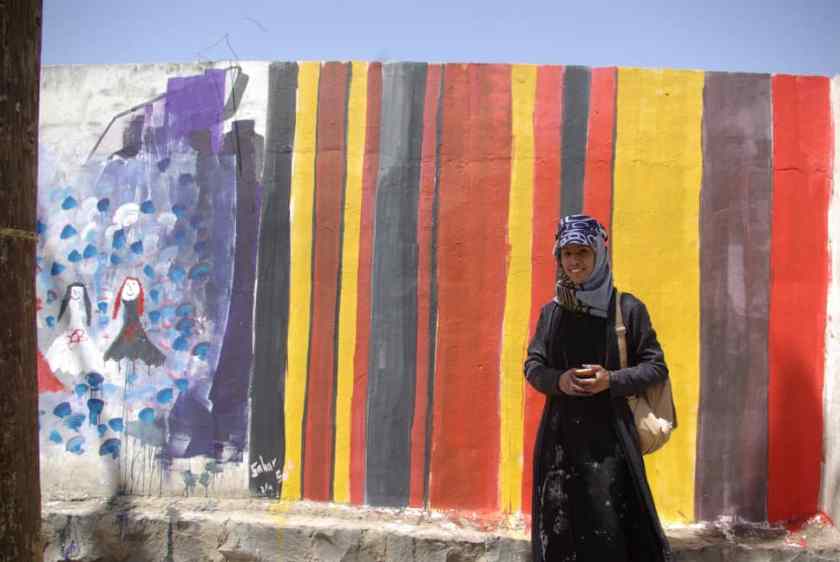
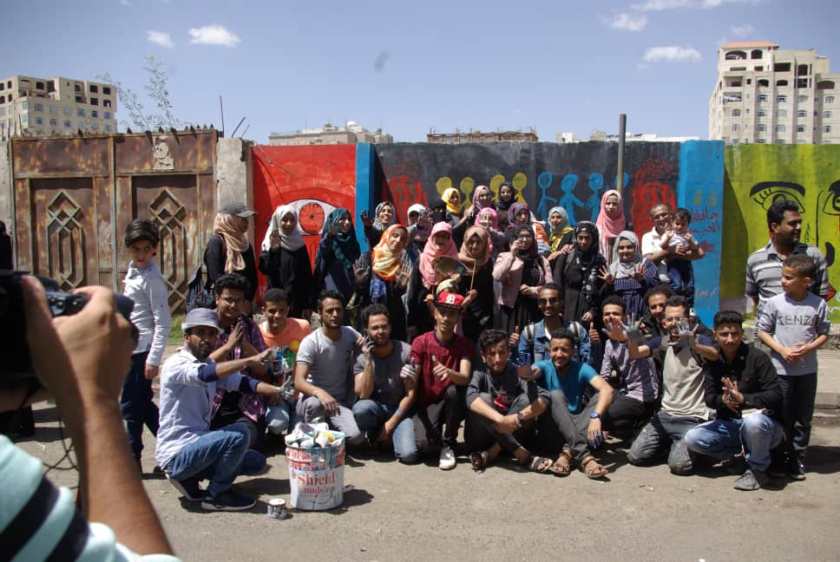
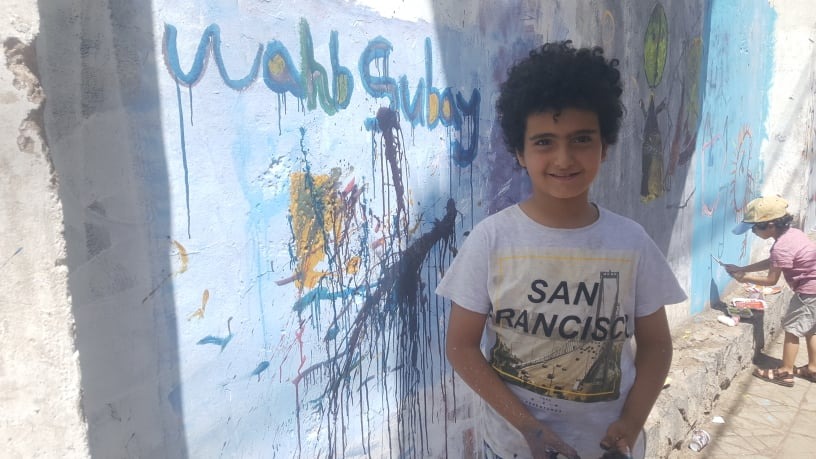
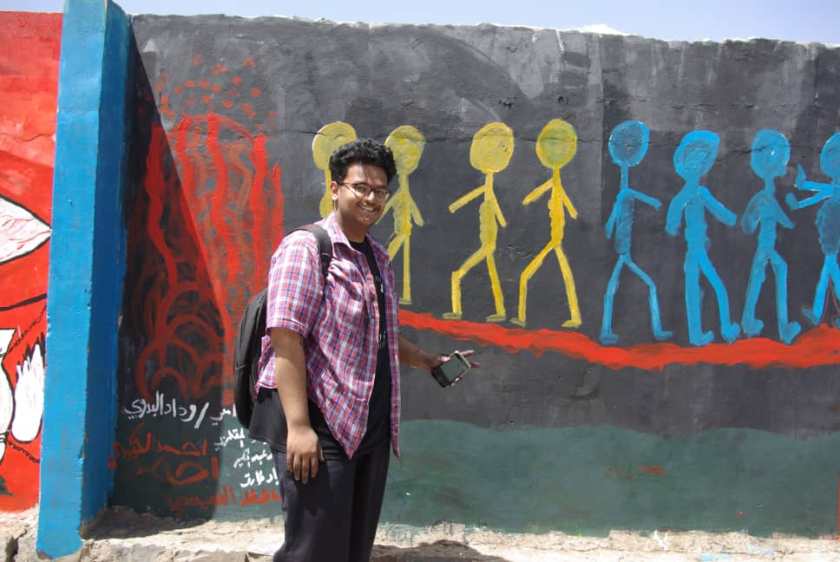
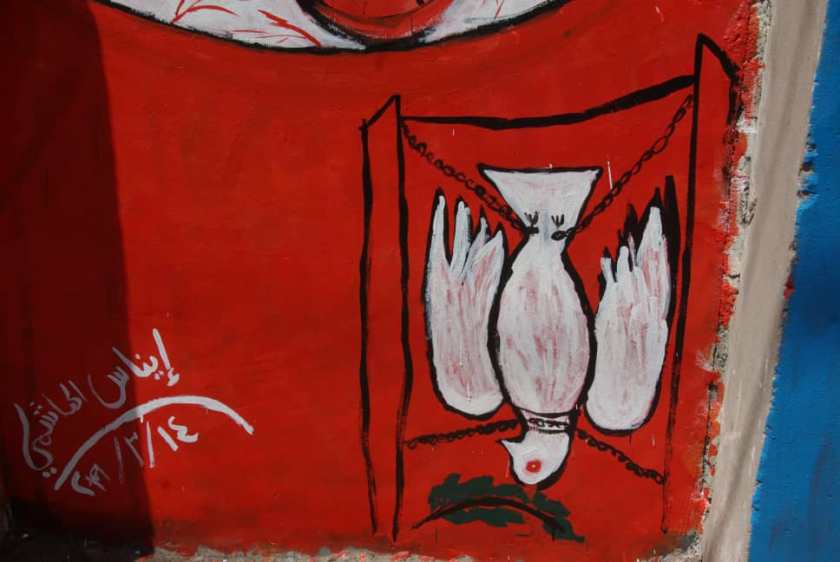
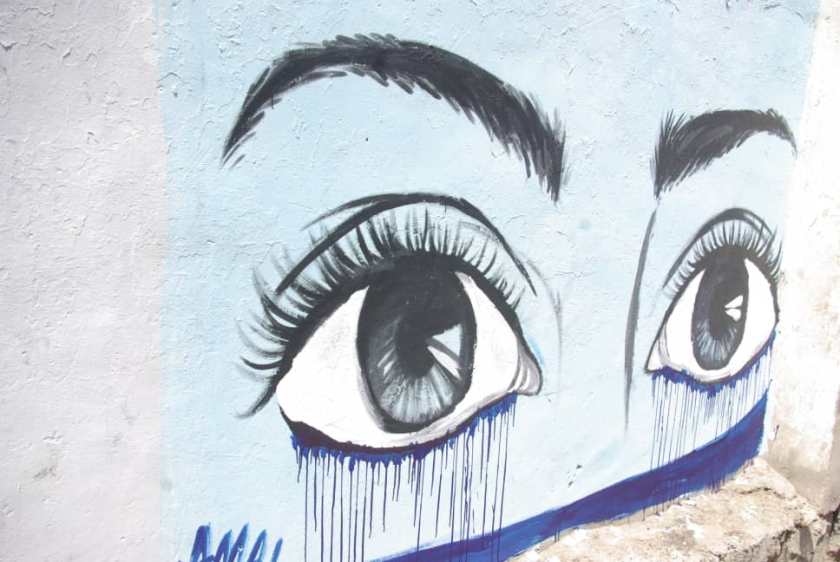
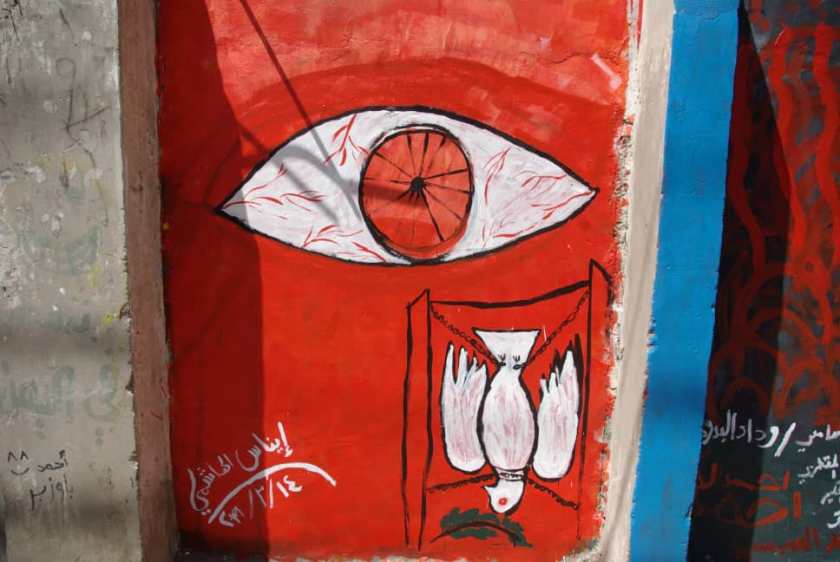
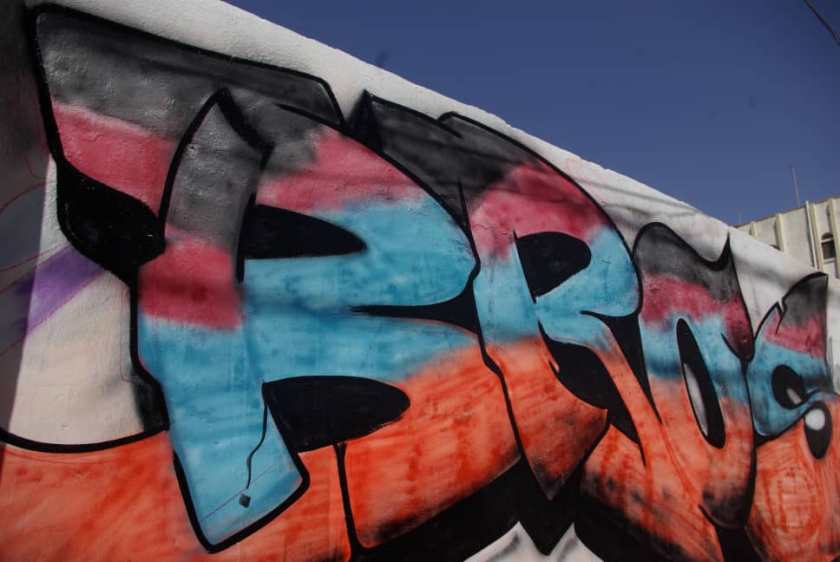
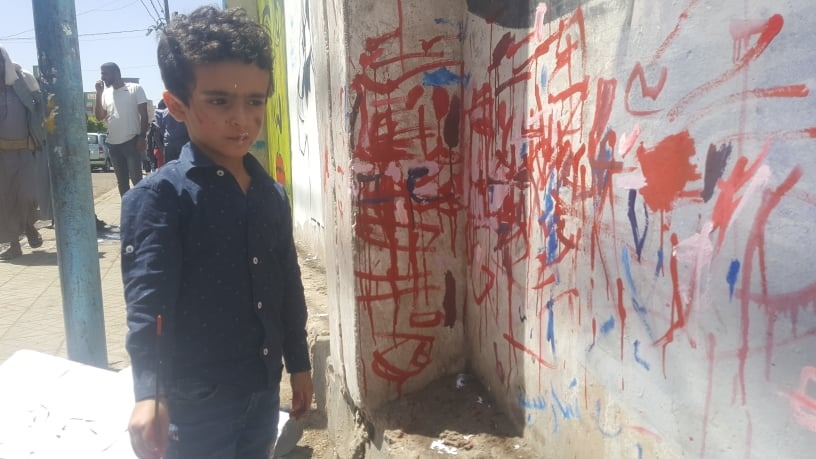
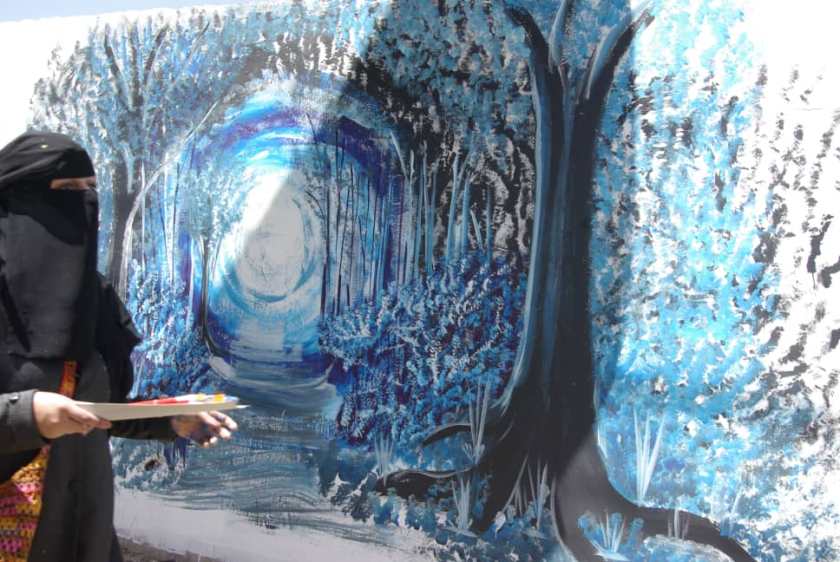
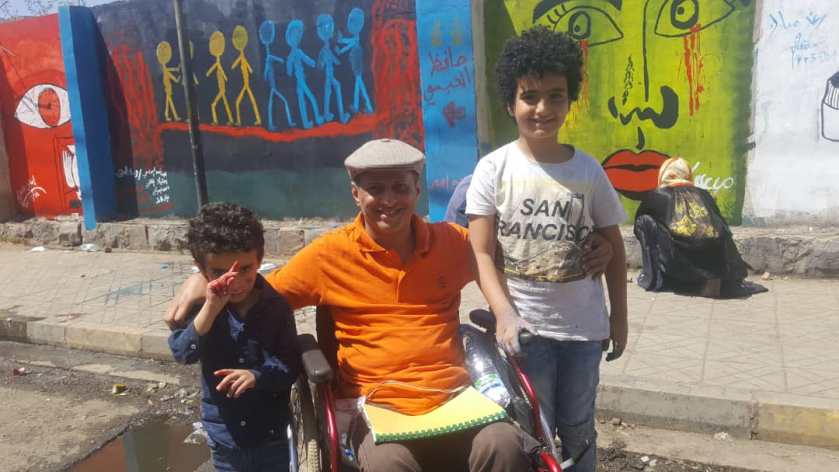
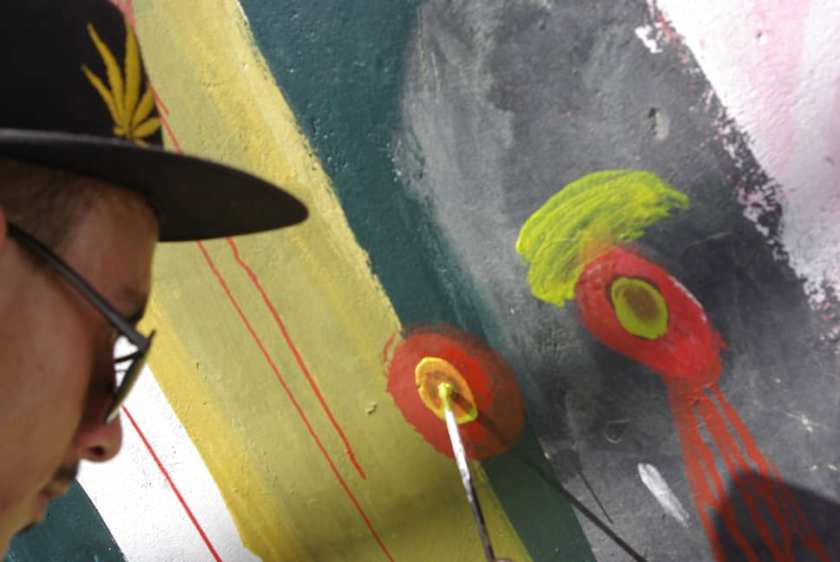
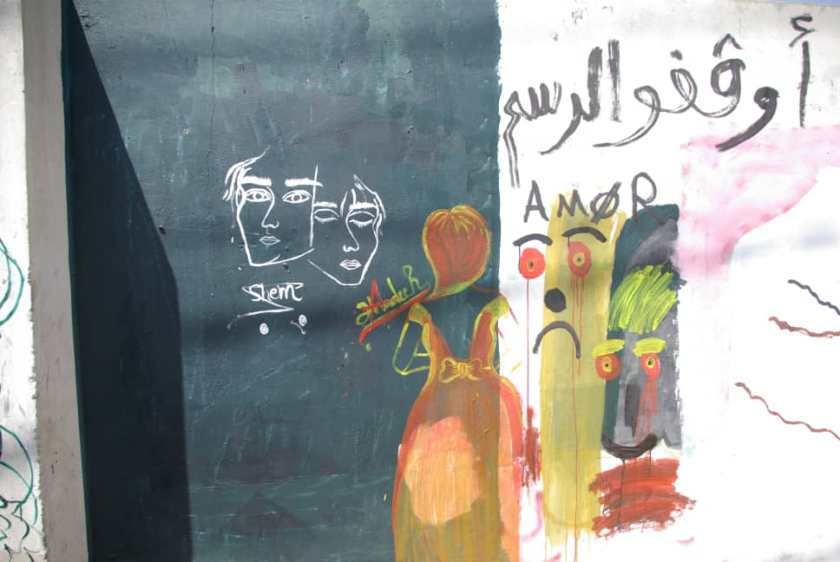
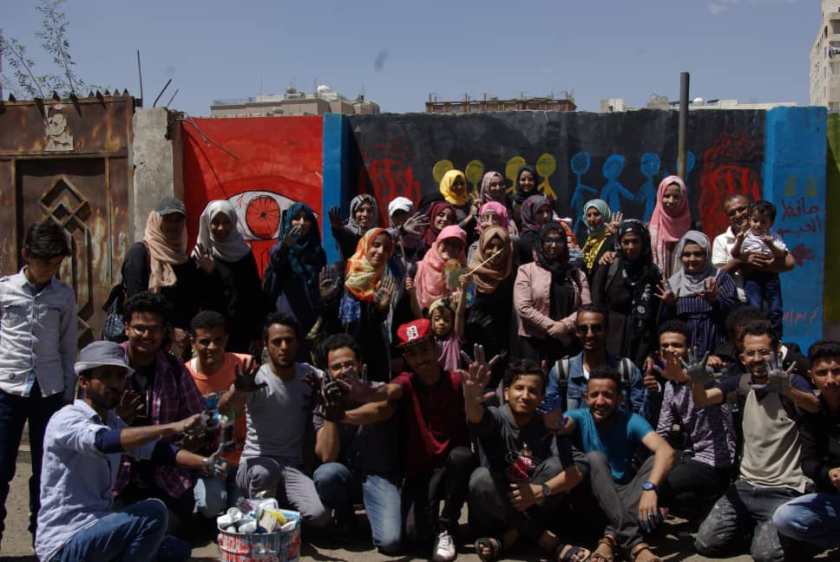
ألبوم صور من الحدث السنوي #اليوم_المفتوح_للفن, والذي أقامه الفنانه “هيفاء سبيع، صامد السامعي وذي يزن العلوي” بمشاركة العديد من الأصدقاء والصديقات ومن الناس كبار وصغار، في مدينة صنعاء، 14 مارس 2019.
تصوير: طارق الظليمي وهيفاء سبيع
Photo Album from the annual event #Open_Day_Of_Art, that organized by the artist “Haifa Subay, Samed Alsamei and Thiyazen Alalawi” and with the participation of Yemenis from different ages, in Sana’a City, March 14, 2019.
لا أعرف كيف يمكن أن أصف هذه الصورة وغيرها من الصور المبهجة التي ادخلت الفرحة للروح.
خرج اليمنين كبار وصغار في مدن عدة من عدن إلى تعز، وإلى صنعاء و انتانانا ريفوا بمدغشقر وسيخرج أصدقاء لنا في مدن أخرى حول العالم، ليرسموا لأجل الحياة والأمل.
يجب ان ننحني لكم تقديرا على مجهودكم/ن الفاتن لإدخالكم/ن الفرحة لقلوب اليمنيين واليمن على الرغم من الصعوبات التي واجهتموها.
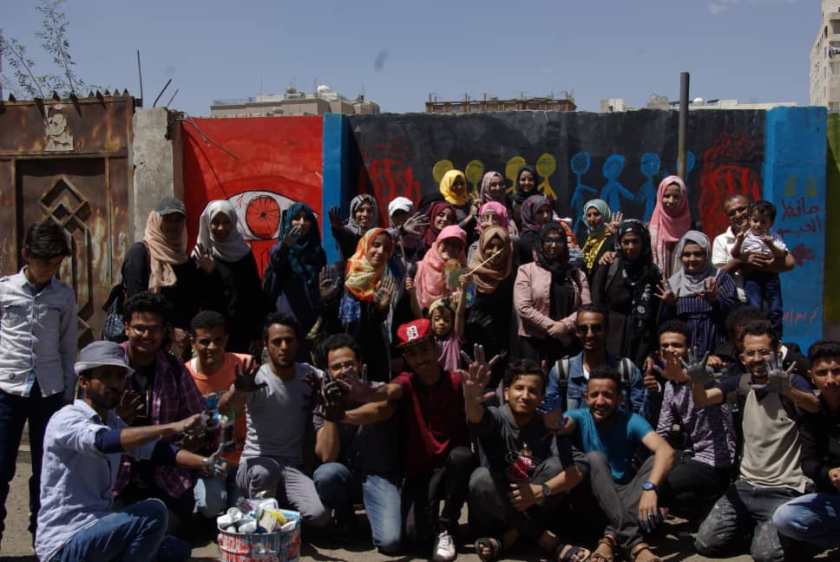
الصوره الجماعيه التقطت في صنعاء اليوم، من الحدث السنوي #اليومالمفتوحللفن.
شكر جزيل لكل من ساهم بإنجاح هذا العمل المتواضع بالأمكانيات والكبير بمن فيه, ولطاقم فريق الحدث في صنعاء “هيفاء سبيع, صامد السامعي وذي يزن العلوي” وللفنانة العزيزة صفاء أحمد في مدينة “انتانا”
تصوير: محمد عبدالله
I do not know how can I describe this picture and other fascinating images that have brought joy to the soul.
Yemenis came out in the cities of Aden to Taiz, to Sanaa and Antanana, and other friends in other cities around the world will join the event too.
paint for life and hope and coexistence.
We all should bow to you for the incredible efforts you done to bring this amazing moments to Yemen and Yemenis despite the difficulties you faced.
Group photo of the event in Sana’a from the annual event #Open_Day_Of_Art.
Special thanks for those who make this happen, and to the event team in Sana’a “Haifa Subay, Samed Alsame and Thiyazen Alalawi” and to the artist “Safa’a Ahmed” in Antana city, Madagascar.
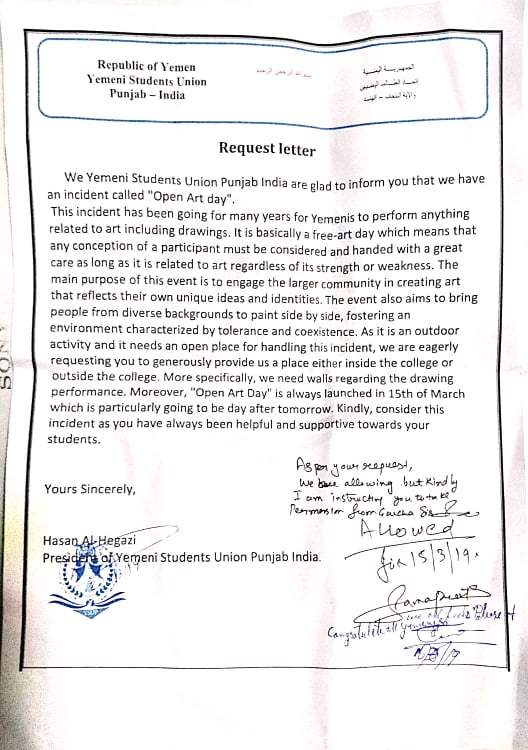
تصريح من جامعة “Bhutta Group of College”, في مدينة “لوديانا” الهندية،لـ “إتحاد طلاب اليمن في البنجاب” وبتنسيق من الصديق العزيز “سلطان القادري” بالرسم على جدرانها. شكرا جزيلا يا سلطان.
A permission from “Bhutta Group of Colleges”, Ludhiana city, India, to “Yemeni Student Union in India”, and this annual event was Coordinated by Sultan Alqadri so that the drawings can be done in the walls of the college. #Open_Day_Of_Art.
يعود الحدث السنوي #اليوم_المفتوح_للفن، هذا العام في 14-17 مارس من هذا العام ويسعدنا مشاركتكم والإنظمام لنا بتغطية الشوارع بفن يعكس تجاربنا، هويتنا، و قيم السلام والتعايش.
تعالو وأحضروا معكم عائلاتكم وأصدقائكم، الجميع من مختلف الأجناس والأعمار مرحب بهم.
لا حاجة للخبرة الفنية.
هذه دعوة عامة
بإمكانكم الانضمام من أي مكان حول العالم من خلال مشاركة إبداعاتكم الفنية على هاشتاق #اليوم_المفتوح_للفن
يقيم الحدث فنانين ومنظمات في كل من المدن التالية:
1/ الفنانة “صفاء أحمد” في مدينتان في مدغشقر
انتاناناريفو
اندازبي
2/ الفنان “سايبو”, تنسيق “ثريا منصر”
فيرونا، إيطاليا
3/ منظمة “العالم المفتوح” و “إتحاد طلاب اليمن”، تنسيق “سهيله البناء & جو إم موون”
Dans sa fresque « Trilogie de la guerre, de la faim et de la maladie », Murad Subay raconte qu’au Yémen, quelle qu’en soit la cause, la mort a toujours le même visage.
YÉMEN: LA GUERRE IGNORÉEDE L’ART DANS LES DÉCOMBRES
Par Cornelia Wegerhoff – Article paru dans le magazine AMNESTY n° 96, Mars 2019
Murad Subay fait de la guerre et de l’oppression ses sujets. Il transforme les ruines de Sanaa en oeuvres d’art. Rencontre au Caire avec le prodige yéménite du street art.
Sur la soixantième rue de Sanaa, la capitale du Yémen, le bâtiment est en ruine. Il n’en reste que des gravats et un pan de mur partiellement calciné par l’incendie d’un tas d’ordures. «La guerre n’y est pour rien», prévient Murad Subay, en montrant la photo sur l’écran de son portable. «Les maisons ont été détruites pour d’autres raisons.» Le jeune homme de 31 ans tient à prévenir toute interprétation erronée. Il ne souhaite pas en «rajouter dans le pathétique», comme il le dit. La situation de son pays est déjà bien assez dramatique. «Je peins souvent sur des ruines, qui symbolisent pour moi les âmes blessées des Yéménites.» C’est une réalité qu’il n’y a nul besoin d’interpréter.
La mort a toujours le même visage
Murad Subay a transformé le mur à moitié écroulé en une oeuvre d’art. Un homme décharné fixe désormais les passant·e·s. Il est assis sur un baril de TNT comme on s’assiérait sur un simple tabouret. Ses orbites sont deux trous noirs et ses cheveux ressemblent à une forêt carbonisée. Ce personnage lugubre joue d’un oud, le luth oriental, dont presque toutes les cordes ont été arrachées. Il lui manque également des doigts et des orteils, son index est tendu en un geste explicite. Le titre de la fresque : «Fuck War» [merde à la guerre].
Murad Subay s’excuse pour ce langage, mais explique que c’est la phrase qui décrit le mieux ce qui trotte dans sa tête ainsi que dans celle de ses compatriotes. «Nous sommes fatigués, vous savez», dit l’artiste. Depuis mars 2015, une coalition militaire conduite par l’Arabie saoudite appuie le gouvernement yéménite dans sa lutte contre l’insurrection des rebelles houthis. Les bombardements orchestrés par Riyad n’ont pas tué que des combattants ennemis, mais aussi de nombreux innocents. Les Nations unies dénombrent plus de 10 000 victimes. Save the Children rapporte qu’au moins 85 000 enfants sont morts de faim au Yémen depuis 2015. De fréquentes épidémies de choléra, de diphtérie et de rougeole font des ravages. Ces chiffres macabres, Murad Subay les a illustrés sur le mur d’une maison dans la ville portuaire d’Hodeida. La fresque intitulée «Trilogie de la guerre, de la faim et de la maladie» montre trois fois le même personnage au regard vide sur des fonds de différentes couleurs. Le message est clair : au Yémen, quelle qu’en soit la cause, la mort a toujours le même visage.
L’artiste est né en 1987 à Dhamar, dans les montagnes du centre du Yémen. Il n’a connu depuis sa jeunesse que le conflit et la guerre. En 1994, peu de temps avant le début de la guerre civile entre les rebelles houthis et le gouvernement d’Ali Abdallah Saleh, alors président, il déménage à Sanaa avec ses parents et ses six frères et soeurs. Il y fait des études de littérature anglaise, tout en s’adonnant à la peinture, qu’il pratique depuis son jeune âge. Il est reconnaissant envers sa famille d’avoir toujours encouragé sa fibre artistique. Ses premières expériences politiques remontent aux manifestations estudiantines de 2008. À l’époque, les agents de sécurité du campus de son université veulent lui couper ses longs cheveux bouclés. Il n’a jamais cédé et raconte avec un rire amer : «À ce moment, nous avons commencé à apprendre à dire “non, non” contre toutes les injustices criantes dans notre pays.»
Peindre les disparu·e·s
Lorsque la révolte des Printemps arabes a atteint Sanaa en 2011, Murad et ses camarades sont descendu·e·s dans la rue. Un an plus tard, le jeune artiste troquait pour la première fois sa toile contre un pan de mur. «Colour the walls of your street» [mets des couleurs sur les murs de ta rue], était la devise de sa première campagne artistique. Murad Subay voulait inciter les jeunes Yéménites à embellir les murs de leurs quartiers abîmés par la guerre par une profusion de couleurs.
«LORSQUE LES FAMILLES ÉTAIENT DANS LA RUE AVEC MOI POUR PEINDRE LE PÈRE, LE FRÈRE ET LE FILS DONT ELLES ÉTAIENT SANS NOUVELLES, DES CONVERSATIONS S’ENGAGEAIENT AVEC LES PASSANTS.»
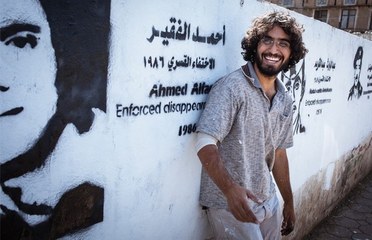
C’est également en 2012 qu’il a donné le coup d’envoi de sa campagne «The walls remember their faces» [les murs se souviennent de leurs visages]. Avec le concours de leurs proches, il a peint les portraits en noir et blanc de plus d’une centaine de personnes victimes de disparitions forcées. «Lorsque les familles étaient dans la rue avec moi pour peindre le père, le frère et le fils dont elles étaient sans nouvelles, des conversations s’engageaient avec les passants.» Jusque-là, leur drame était étouffé sous une chape de silence. Cette action a duré sept mois, durant lesquels Murad Subay a navigué entre Sanaa, Aden, Taizz et Hodeida. Il n’était pas rare que les portraits des disparus soient recouverts de peinture pendant la nuit. «Et là, nous allions un cran plus loin», raconte-t-il, non sans fierté : «Les familles revenaient et peignaient un nouveau portrait, parfois jusqu’à dix fois de suite !»
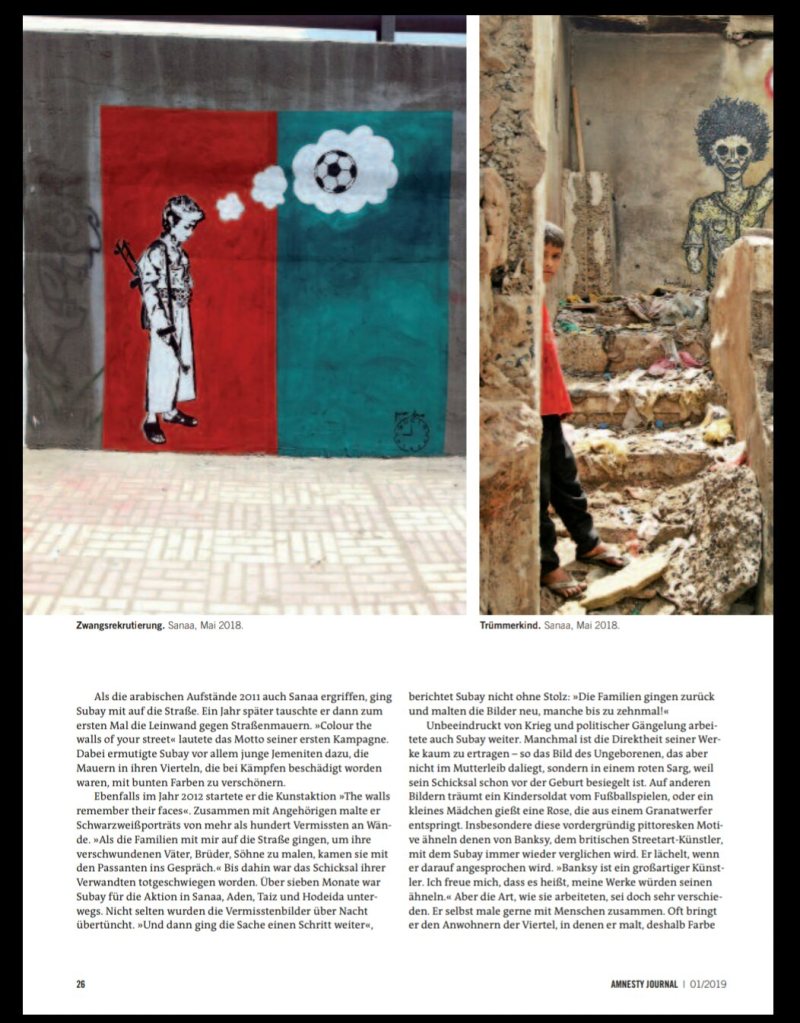
L’artiste poursuit son travail sans se laisser perturber par la guerre et les tentatives de mise au pas de la part des autorités. Ses oeuvres sont parfois insoutenables tant son langage est direct. Telle l’image du foetus, dont l’habitacle n’est pas le ventre de sa mère, mais un cercueil rouge, car son destin est déjà scellé avant sa naissance. Sur d’autres images, un enfant soldat rêve de jouer au football ou une petite fille arrose un rosier qui pousse dans une grenade. Ces thèmes rappellent le travail de l’artiste britannique Banksy, auquel Murad est souvent comparé. Il sourit quand on lui en parle. « Banksy est un artiste génial, cela me fait plaisir qu’on me dise que mes oeuvres ressemblent aux siennes. » Les méthodes de travail des deux artistes sont pourtant très différentes. Le jeune homme aime peindre avec d’autres personnes. Il tend pinceaux et couleurs aux habitant·e·s des quartiers dans lesquels il crée ses oeuvres. En assistant ou en participant à l’exécution des peintures, ils sont peut-être également pour lui une protection.
«EN TEMPS DE GUERRE, L’ART EST ENCORE PLUS CAPITAL QU’EN TEMPS DE PAIX.»
Il a entrepris récemment une nouvelle série d’oeuvres de street art nommée «Faces of War» [visages de la guerre]. Son voeu n’est pas de prendre parti pour l’un ou l’autre des belligérants, précise-t-il. «L’art n’est pas pour ou contre quelque chose ou quelqu’un. Il doit seulement donner à voir à quel point la guerre fait souffrir celles et ceux qui y participent», formule-t-il diplomatiquement. Avant de lâcher : «D’un côté, ils ont occupé la capitale. De l’autre, ils viennent avec des avions et bombardent le pays. J’appartiens au peuple. C’est lui que je soutiens, et personne d’autre.» Au Yémen, de telles affirmations suffisent à s’attirer des ennuis : un simple post sur Facebook peut mener son auteur·e en prison. La plupart des gens préfèrent donc se taire. Ce n’est pas le genre de Murad Subay, comme il le martèle avec détermination. Son projet de street art doit lui permettre d’attirer l’attention sur les injustices perpétrées dans son pays. Pour l’instant, il s’accorde un peu de répit chez son frère au Caire. Mais il a déjà en tête les images qu’il peindra sur les murs, de retour au Yémen : «En temps de guerre, l’art est encore plus capital qu’en temps de paix.»
Children around street art in Yemen (Najeeb Subay)
Yemen’s ongoing war has left millions of people displaced, hungry, and hopeless. The fluid authority of local factions, the lack of news sources, and pervasive illiteracy all work to stifle public discussion within Yemen. But street graffiti, presented in local context, is a way to slip past those obstacles: to promote citizens’ involvement and provide hope. A burgeoning group of artists has developed street campaigns and involved the community in work that visualizes the indomitable spirit of Yemenis. Murad Subay, maybe the most well-known of them, vows to continue to draw graffiti: “This is how I fight in this war.”
AGSIW spoke with Murad about his beginnings in street art, the effects of the war on his art campaigns, and his motivation to persist.
AGSIW: Describe how you became involved in street art. Why does street art appeal to you?
Murad: I have been interested in art since I was young. But, during Yemen’s revolution in 2011, I was tested. I decided to go out in the streets to participate. On the streets, I learned the power of my voice. Although the revolution failed, I knew I had to persist.
What could I do? I don’t believe in taking up arms, so I decided to take my paintbrushes and make public murals. I launched my first campaign, “Color the Walls of Your Street.” Other artists and community members came out to help paint in the streets and express common grievances. After that, I continued to launch campaign after campaign in different parts of Yemen.
Murad Subay’s mural “War Brands.” Yemen has been pounded by airstrikes. Murad’s fifth campaign, “Ruins,” explores the devastation of war. “War Brands” reflects the size and weight of the war on the minds of Yemenis. (Najeeb Subay)
AGSIW: Tell us about your recent art campaigns.
Murad: I just completed my fifth campaign called “Ruins,” which was my biggest campaign, lasting two and a half years. Right after our civil war broke out, I wanted to draw focus to all of the human devastation. No one seemed to care about the civilian casualties, and all the warring sides were only trying to grab as much power as possible. I set out to paint on the walls of destroyed areas to break the silence of the war.
The first painting was near the airport in Sanaa. An airstrike destroyed more than seven homes and killed 27 people, including 15 children. I painted a mural of children hanging up rows of flowers along an exterior wall where the airstrike occurred. Throughout the campaign, I traveled to different parts of Yemen to paint 14 murals. Other artists also contributed to the campaign and painted an additional eight murals.
The campaign ended a few months ago, so that I could develop a new collective called “FOW” [Faces of War]. I launched the first three murals in November of this year in [the port city of] Hodeidah, a very disastrous area where there are several ongoing crises including civilian starvation and a terrible cholera outbreak. These murals show the ugliness of war. I know that art cannot actually cure people or feed people, but it can give a voice and a feeling of hope to people who only know the voice of war. I planned to paint several additional murals, but security officials told me I had to stop until they investigated the existing three.
Murad Subay’s mural “Children of Graves.” As part of “Ruins,” Murad set out to paint on physical spaces affected by the war. “Children of Graves” is in a displacement camp in Amran governorate in western central Yemen. (Najeeb Subay)
AGSIW: How have you helped other young artists get involved?
Murad: The reason I call my art projects “campaigns” is because I do not work on them alone. I have an annual event every March where I organize an open day for street art. Many new young artists [such as Tammam Al-Shebani, Thiyazen Al-Alawi, and Haifa Subay] got their start through one of these campaigns and went on to become important artists in Yemen’s graffiti scene, starting their own art initiatives [such as “Street Caricature,” “Open Book,” and “Silent Victims”]. Last March, I tried to connect Yemeni youth with communities outside of Yemen. In Reading, England, artists participated and, next year, we aim to hold public events in the United States and South Korea.
AGSIW: How has the public reacted to your art?
Murad: Yemenis are inquisitive by nature. Whenever I am painting a mural, people come to look at it and ask me questions. Commonly, people are suspicious and ask, “Who is sponsoring you?”
Back in 2012, I was painting on a particularly hot day. A man came up and asked me lots of questions. He thought I was annoyed with his line of questioning and walked away. He came back with a cold bottle of water and said, “Take it, Oh Artist.”
Another time, a man driving his family stopped his car and asked what I was doing. I told him that I was working with a collective of artists to discuss issues related to civilian casualties. He was so moved that he tried to give me money. I politely declined but he insisted that he wanted to help in some way. He drove off and came back 20 minutes later with buckets of paint.
Older women come up and often say that they are praying for my work. Words can make miracles, so I am energized by all of the different people I meet and their support for me. This is why I continue because we continue to give each other hope. It is hard to describe this feeling of solidarity but it is very strong in Yemen.
Murad Subay’s mural “Trilogy of War, Hunger, and Illness.” As part of Murad’s newest campaign “FOW” (Faces of War), which began in November, Murad painted three freehand murals to show how the war has transformed Yemenis. “Triology of War, Hunger, and Illness” features Yemeni youth with haggard faces and blank eye sockets due to all they have seen. (Najeeb Subay)
AGSIW: Has the ongoing conflict affected your work?
Murad: Two months before Yemen’s most recent outbreak of war, I started a new project on Yemen’s cultural heritage. I tried to shape metal to make public art installations. However, once the war broke out, I could no longer depend on regular access to electricity. I decided I had to go back to painting murals and graffiti. That is when I decided to launch “Ruins.” War was central to this campaign.
War is normal now, and it is very difficult to operate. I have to make sure that my art does not take sides. I was once investigated by security forces while painting in [the southwestern city of] Taiz. Another time, some artists and I were painting on a school destroyed by one of the common airstrikes. We were trying to highlight what the war has done to Yemen’s education. Some armed men detained us and kept us in a barn that was turned into a jail.
In my current campaign, “FOW,” I have refined my style and moved away from stencils, using free-form. War is the absence of order. The central character in “FOW” has no eyes because of what all Yemenis have witnessed from the wretchedness of all sides who continue to fight. Black hollow sockets remain as to witness Yemen’s destruction. In another one of my paintings, the faces of the three children have vanished. Their faces are skin and bone, empty of dreams and hope.
To see more of his artwork and follow his campaigns, visit Murad’s website.
ترعبه الحرب، يرى أنها نالت من جميع اليمنيين، بالإدراك أو دونه، وأن على كل يمني أن يتفقد ما تبقى منه. يقول: الفن لن يوقف الحرب، لكنه يخفف مآسيها.
ولد الفنان الشاب مراد سبيع، في مدينة ذمار اليمنية، درس الأدب الانجليزي في جامعة صنعاء، واختار تحويل جدران الشوارع والمباني المقصوفة إلى معرض فني مفتوح.
سبيع لا يرسم وحده، إنما يحرض كل اليمن لترسم، ولتقف بوجه الحرب التي تمزقها وتفتك بما كان يومًا “اليمن السعيد”.
عشرات الجداريات التي تلتقط ألم شوارع اليمن التي مزقتها الحرب في أكثر من خمس حملات نفذها سبيع ورسمها معه عشرات الفنانين اليمنيين، في خمس حملات أطلقها بعد أحداث الربيع العربي في اليمن عام 2011، وأطلق عليها أسماء: “لون جدران شارعك”، “أسوار يتذكر وجوههم”، “12 ساعة”، “منحوتات الفجر” و”الخراب”.
“وفا” حاورت الفنان مراد سبيع، ضمن سلسلة “ضيف وفا” التي تستضيف مبدعين فلسطينيين وعرب.
*أين تعيش الآن والظروف المحيطة ببيئتك؟
أعيش في مدينة صنعاء، في اليمن، الدولة التي تعيش ظروف صعبة للغاية في هذه المرحلة من تاريخها بسبب الصراعات الداخلية والإقليمية.
*كيف صرت فنانا؟
بدأت بالرسم في عام 2001، عندما كنت في الصف التاسع، ومن ثم واصلت الرسم على اللوحات منذ ذلك الوقت حتى العام 2012، حين قررت الخروج للرسم على جدران الشوارع الممتلئة بثقوب الطلقات النارية والمدافع، ومن ثم اطلقت دعوة للناس للخروج معي والرسم على الجدران. حينها بدأت اولى حملاتي “لون جدار شارعك”.
*ماذا عن جدارياتك؟
أطلقت 5 حملات فنية وبعضها سياسي للرسم على الجدران، رسمت خلالها وأصدقائي الكثير من الجداريات، على الكثير من جدران شوارع العاصمة صنعاء ومدن أخرى مثل تعز وإب والحديدة.
*هل يملك الفنان التأثير في الشارع والجماهير؟
لطالما آمنت بأن الفن باستطاعته إرسال رسائل قوية وواضحة للناس بغض النظر عن اللغة التي يتحدثون بها، فالفن هو لغة عالمية. وخصوصا عندما نتحدث عن فن الشارع او فن الجرافيتي بشكل عام. الرسم على الجدران تتيح الفرصة لنا كفنانين أن نعرض لوحاتنا وافكارنا على مئات آلاف الناس الذين يمرون بجانب هذه الجداريات في الشارع كل يوم، لذلك إن كانت لدينا رسالة، فهي بالتأكيد ستصل إلى فئة كبيرة من الناس عند عرضها في الشارع.
بينما يستعد الأطفال حول العالم للعودة إلى المدارس، يستقبل الأطفال اليمنيين العام الدراسي الجديد دون كتب، أو معلمين، او حتى مدارس.
بسبب الصراعات الإقليمية والداخلية في اليمن، أغلقت قرابة 3600 مدرسة وحرم من التعليم قرابة 1,8 مليون طفل يمني، فأصبح عدد الأطفال المحرومين من المدارس 3,4 مليون طفل حسب إحصاءات الأمم المتحدة.
*ما الذي يصنعه الفن في لحظات الحرب والقتل والدمار؟
السلام والجمال هما جوهرا الفن، ولا اعتقد أنه يوجد فن يدعو إلى العنف أو ما شابه ذلك. لذلك، نحن بحاجة ماسة إلى الفن في كل الأوقات، وخصوصا في أوقات الحرب والصراع، فهو يرفض كل ما تدعو إليه الحرب، ويذكر الناس باستمرار بوجود خيارات بديلة عن اللجوء إلى العنف. الفعاليات الفنية وقت الحروب تخفف عن الناس بعض من معاناتهم وتقدم لهم بديل.
*رسالتك كفنان التي قدمتها لليمن، هذا البلد العريق، هل حافظ الفن على ما تبقى منه أو حاول ذلك؟
أطلقت حملتي الأولى “لون جدار شارعك” لإخراج الناس من حالة الإحباط التي اصابتهم بعد صراعات 2011، ودعوتهم للرسم على الجدران لمدة 3 اشهر، كانوا كبارا ام صغارا، وحفاظا على هذا الهدف، ما زلت اطلق ايام مفتوحة للرسم كل عام، في يوم ذكرى إطلاق حملة “لون جدار شارعك” 15 مارس، ليرسم فيها الناس جميعا ويبتعدوا عن جو الحرب قليلاً. وفي حملاتي الأخرى، رسمت عن قضية الإخفاء القسري، عن الفساد، عن الطائفية، والإرهاب، تجنيد الأطفال،،،، والخ. رسمنا عن كل هذه القضايا آملين أن تصل رسائلنا حتى لشخص واحد.
*ما الذي تحب أن ترسمه من اليمن؟
أرسم العديد من اللوحات الفنية التي ليست لها علاقة بالوضع السياسي للبلد، ولكن عندما يتعلق الأمر بالرسم على الجدران، فأغلب رسوماتي في الوقت الحالي تناقش قضايا سياسية واجتماعية حساسة في البلد.
*كيف يتأثر الفنان بالأوضاع غير المستقرة لبلده، الحروب والجوع والتشريد وغيرها من الأوضاع المأساوية؟
لا يوجد من لا يتأثر بشدة بسوء الأوضاع في بلده، وأعتقد ان كل شخص يعبر عن ذلك بطريقته الخاصة. فالروائي يكتب عن ذلك، والمخرج ينتج افلاما عن ذلك، والرسامون يقومون بالرسم عن ذلك أيضاً، وهكذا. عادة ما يرسم الفنان عما يخالجه من شعور وعما يدور من حوله، وعندما تستحوذ الحرب على كل ذلك، بكل تأكيد سيتأثر فنه بها.
*هل تؤمن بقدرة الرسم على التغيير والتعبير والرفض؟
كما أخبرتك سابقا، “لطالما آمنت بأن الفن باستطاعته إرسال رسائل قوية وواضحة للناس بغض النظر عن اللغة التي يتحدثون بها، فالفن هو لغة عالمية.” الفن باستطاعته التغيير والرفض ايضاً. في الكثير من الأحيان، يناقش فن الشارع القضايا الهامة التي تجري في العالم، يعبر عنها ويرفض الممارسات السيئة، وخصوصا عندما يتعلق الأمر بالسلطات أيًا وأينما كانت. والاحظ أن فن الشارع بدأ بجذب الكثير من الانتباه له في العقود الماضية، وبدأ الفنانون بمناقشة القضايا الحساسة وتوجيه الإنتقادات بحرية أكثر عن طريق فن الشارع.
يشار إلى أن سبيع حصل مؤخرا على جائزة حرية التعبير التابعة لمنظمة “Index on Censorship” «مؤشر الرقابة على حرية التعبير» عن فئة الفنون، والتي تمنحها المنظمة البريطانية سنوياً، لمدافعين عن حرية التعبير على مستوى العالم. وشهادة تقدير من “اليونسكو” في العام 2015، وجائزة الفن من اجل السلام التابعة لمؤسسة “Veronesi” في العام 2014، ودرع الشباب للإبداع من قبل الحزب الاشتراكي اليمني في العام 2014، ودرع الابتكار من قبل منظمة الكونغرس الأمريكي الإسلامي في العام 2013.
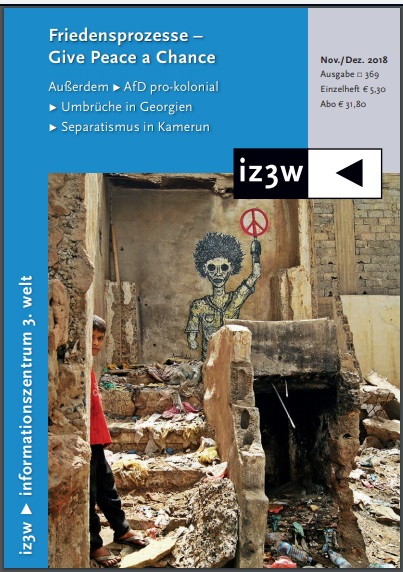
صورة جداريتي “أطفال الركام” والتي رسمتها ضمن مجموعة “وجوه الحرب”, غلاف لمجلة “اي زد ثري دبليو” الألمانية. والتي ستنشر غدا في ألمانيا.
My mural “Children of Rubble”, “Faces of War” street art collection, as a cover photo of the German Magazine “iz3w”. It will be available tomorrow in German.


















































 Murad Subay