On Newsweek, my fifth mural about “Drones”, “12 Hours” Campaign.


My mural about “Treason” in “12 Hours” campaign is republished by “FOREIGN AFFAIRS” Magazine along with other artistic murals from countries sinking in conflicts entitled “War Painting”.
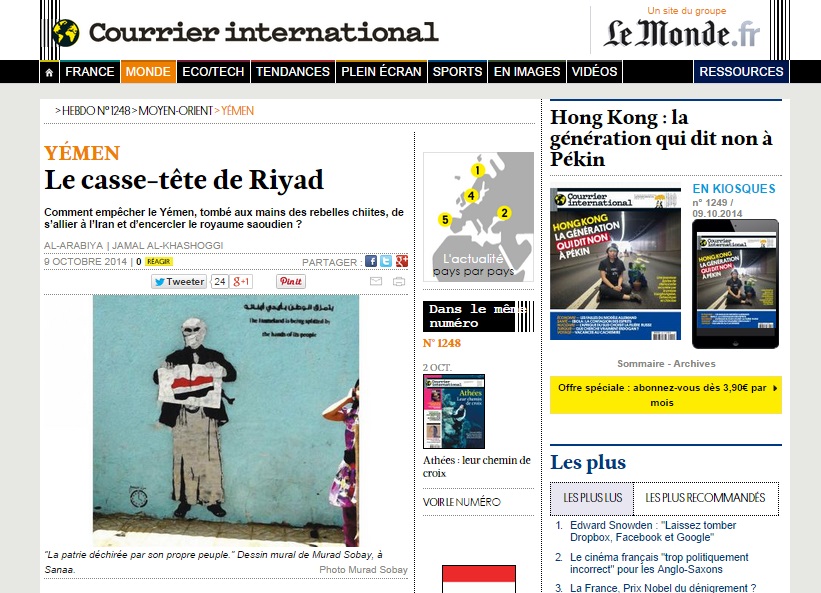
“In Sana’a, Artist and activist Murad Subai puts final touches on his graffiti depicting Saudi, U.S., and Iranian currency banknotes on a wall. His work is part of a graffiti campaign against foreign interference in the internal affairs of Yemen, May 15, 2014.”
ما أشبه اليوم بالأمس حيث تزدهر الخيانة الوطنية أكثر ويتباهى الخونة بخيانتهم، كالطواويس.جداريتي عن “الخيانه الوطنيه” في حملة “12 ساعه” اعادت نشرها مجلة “FOREIGN AFFAIRS” الأمريكيه مع مجموعة من الجداريات الفنيه من بلدان تلتهما الصراعات تحت عنوان “جداريات الحرب”

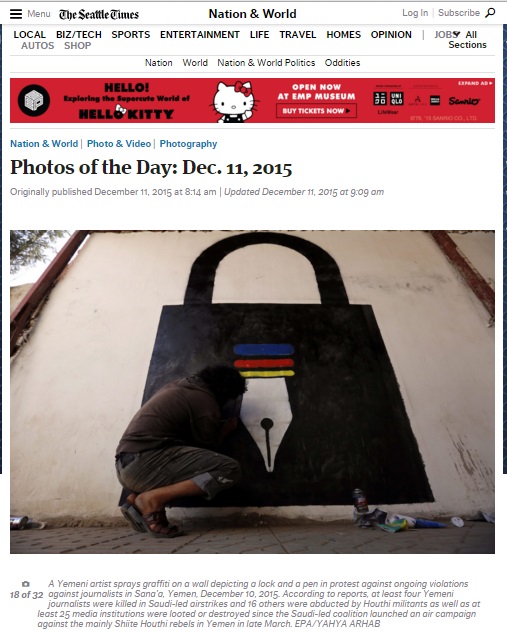
On the American website “The Seattle Times”: Photos of the day.
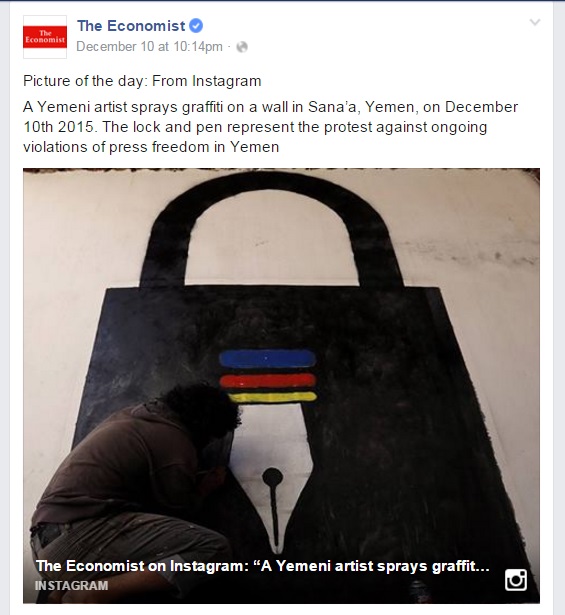
During painting my fifth mural in “Ruins” campaign, on the wall of the Yemeni journalist Syndicate, Dec.10, 2015
من “صور اليوم من حول العالم” على الموقع الأمريكي “The Seattle Times”
الصوره أثناء عملي على جداريتي الخامسه ضمن حملة “حُطام” التي عنت بالحريات، على جدار نقابة الصحفيين اليمنيين، 10 ديسمبر 2015.
تصوير: Yahya Arhab “EPA”


For many, Yemen war is a forgotten one. Nonetheless, aspects of Yemen war are meant not to be forgotten for Yemeni graffiti artist, 28, Murad Subay who believes walls shall represent accounts of warfare. In the wake of Yemen’s 2011 uprising, as he utilized his art to reflect the political and social concerns of that phase, Murad has been regarded as a revolutionary artist-perhaps the first Yemeni political graffiti artist of his kind in Yemen’s contemporary history. Today, determined to continue his artwork, and in light of Yemen war, Murad Subay continues to shed light on the human cost of the war, which could make him to be regarded as a war artist.
As of 16 October, health facilities in Yemen had reported 32,307 casualties (including 5,604 deaths) – an average of 153 injuries or deaths every day, according to a UN report.
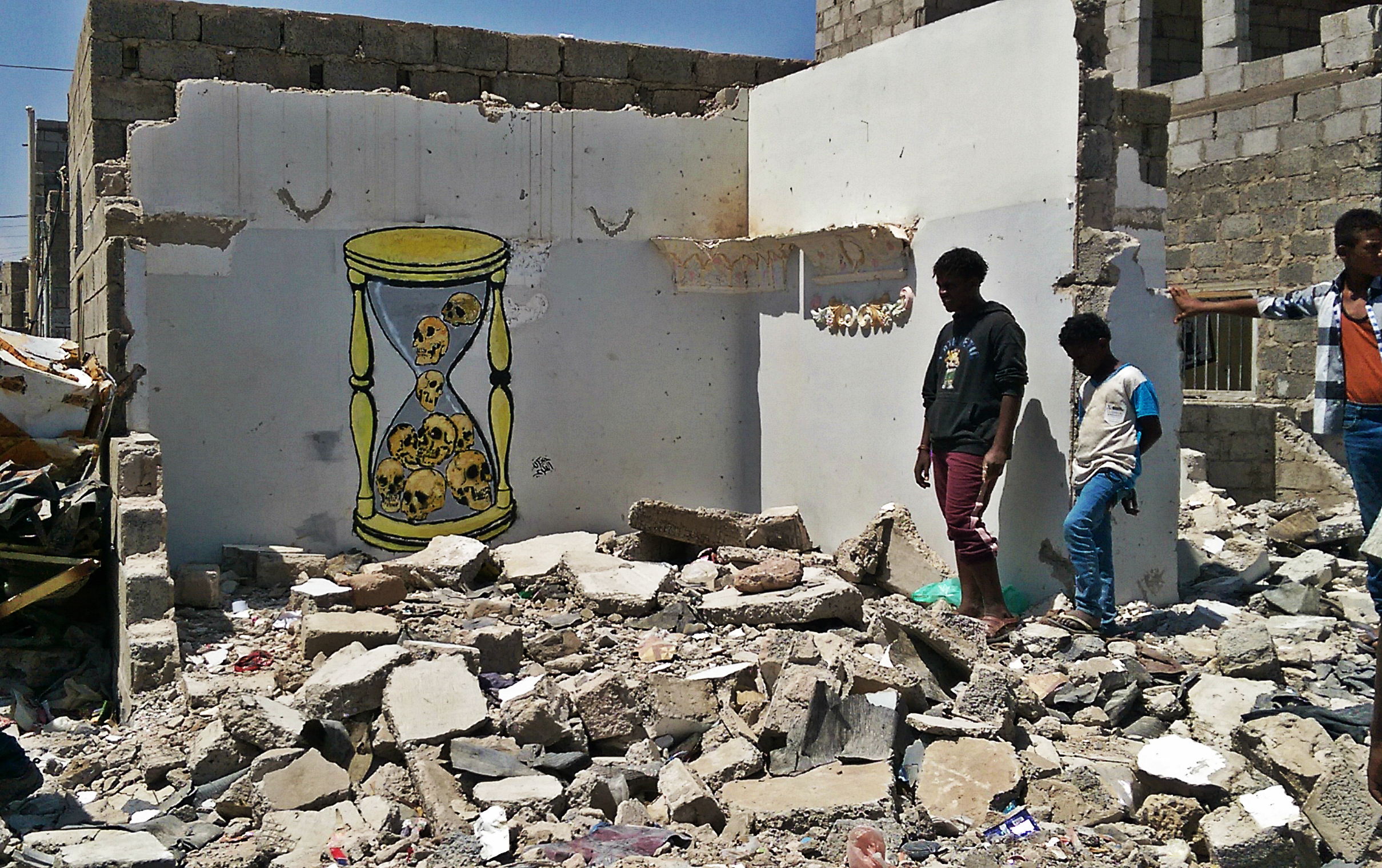
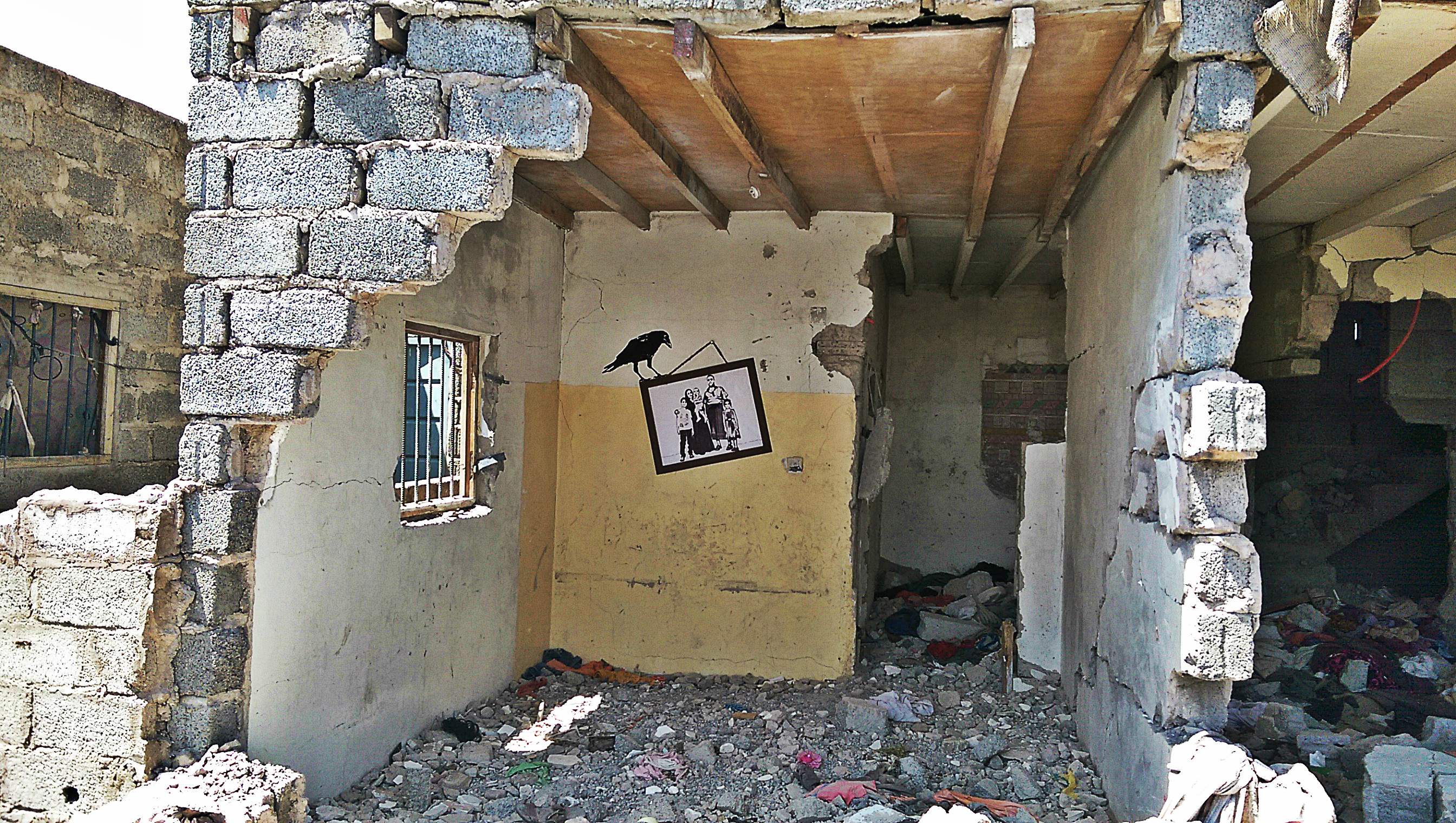
Murad was compelled to create a visual account of that destruction of human lives. ‘Ruins’ is the title of his latest art work intended to depict the impact of the war by commemorating war victims across Yemen. ‘Ruins’ was initiated in May, 2015 in Sana’a, aiming to leave graffiti paintings on what’s left of the destroyed houses by the bombings. One of his outstanding graffiti art is when Murad beautifully commemorated 15 children killed in Bani Hawwat area, in Sana’a, where air strikes destroyed more than seven houses. Murad painted 15 children faces on the wall of what’s left of the destroyed house. Another 27 civilians were killed as well in that attack.
In our email correspondence, Murad told me that he doesn’t want to focus only on his town of residence, Sana’a. He tried to visit the war-torn Taiz city and paint. He managed to paint at Hoban area, then when he tried to paint in further areas in Taiz, he was denied to enter to the heart of the city by one of the warring parties. When I asked who exactly denied him, he prefered not to disclose further information. I expect that is so for his own security. Murad did not let that stop him; he went back to Sana’a and continued painting.
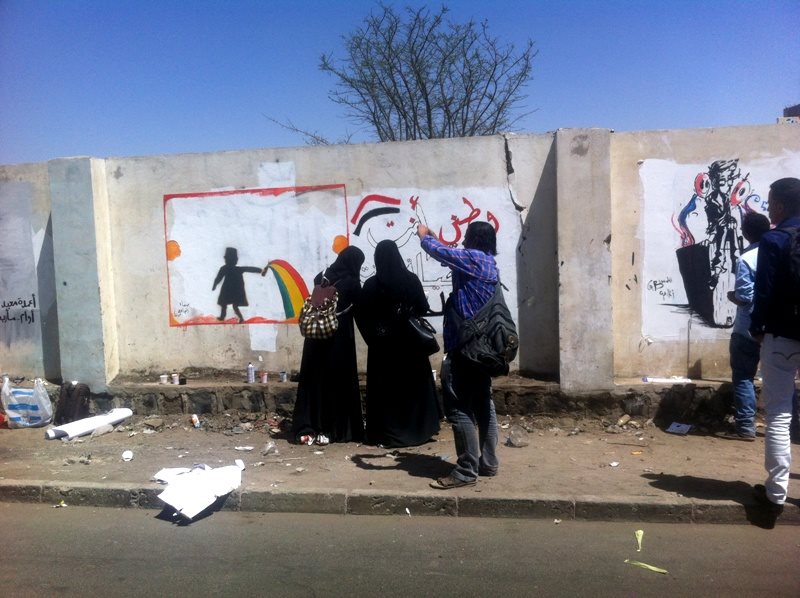
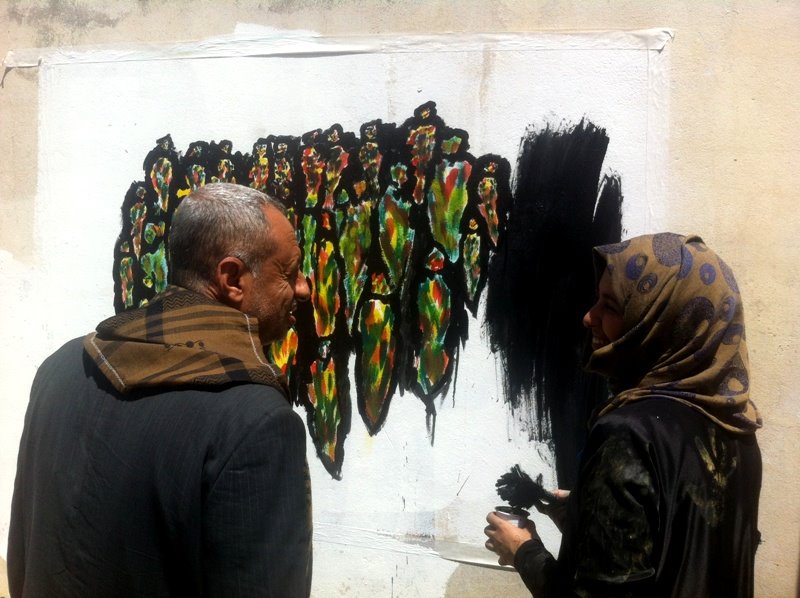
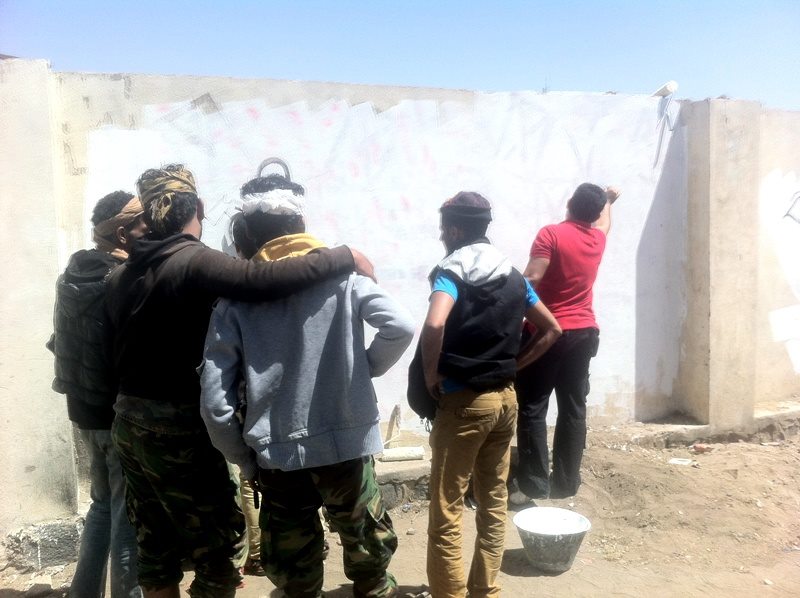
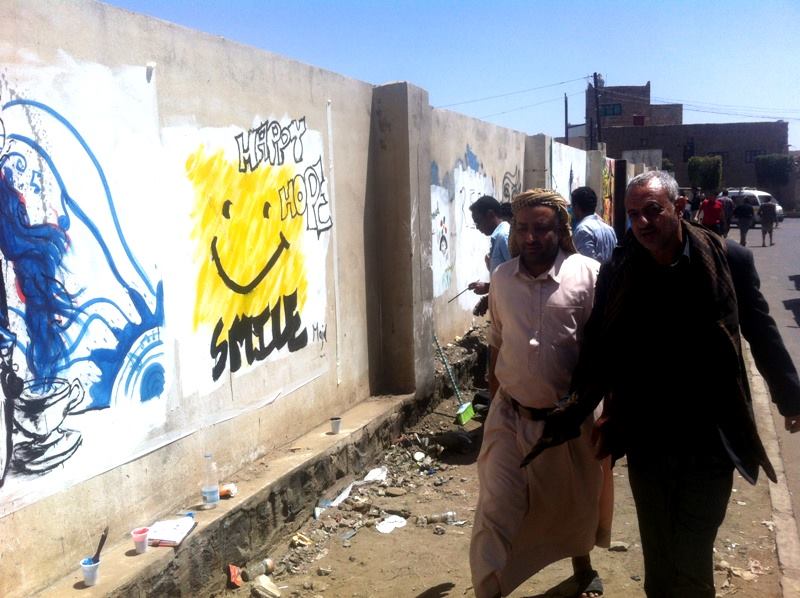
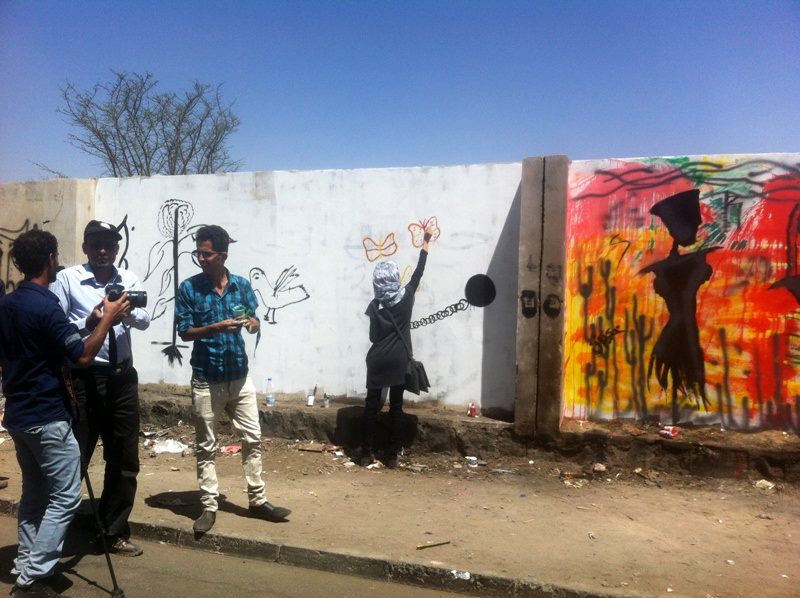
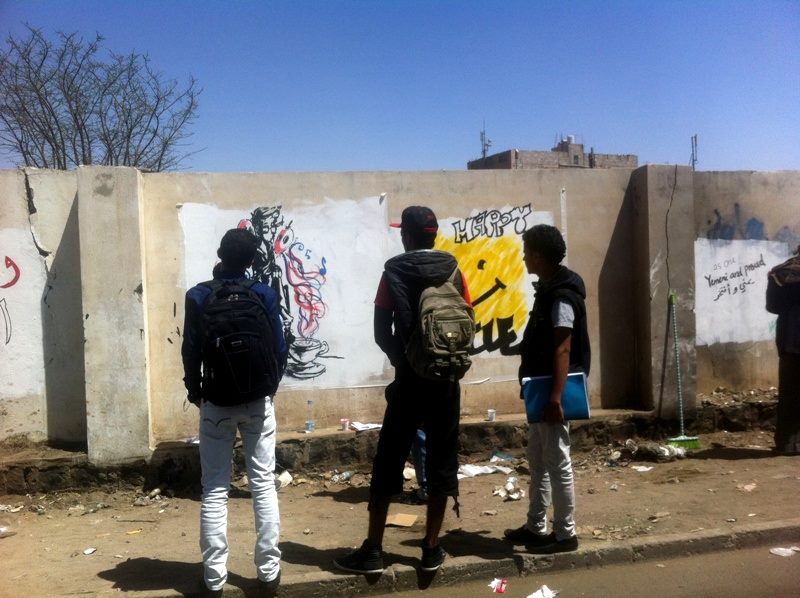
The painting process usually takes place with the help of a number of Murad’s friends and even with the help with strange people who happen to pass by and feel interested in what’s been done. Even though Murad has been occasionally harassed by different officials in power for the work he does, he praises greatly the support he has been getting from the Yemeni society – ‘that’s the main thing that keeps me going since 2012,’ he tells me. Murad believes that the significance of graffiti art lies in its power in reflecting a society’s concerns better than words.
Murad’s experience with graffiti has began since 2011 with his consecutive art campaigns which include; ‘The Walls Remember Their Faces‘, ‘Colour the Walls of Your Street’ and today’s ‘the Ruins’. Nonetheless, Murad is thirsty to dig more into graffiti art and seeks to improve his knowledge about art academically. He hopes to study it further in the near future.
Murad is not just another graffiti artist; who’s being dubbed as ‘The Banksy of Yemen.’ Murad is a rare humanist voice in an extreme polarized political scene in Yemen. It’s been remarkable the audacity his art has in depicting Yemen’s critical political and social issues following Yemen’s 2011 uprising till the ongoing conflict. Given the growing political division among the nation influenced by the multi-layered conflict in Yemen, it’s been hard to find a voice that can reflect the humanism of the situation; speaking about the killing and bloodshed of all sides, regardless of who fired the bullets first. Murad’s art doesn’t only express Yemeni people’s pain but it also revives a sense of humanity that’s suffocated by massive injustices.

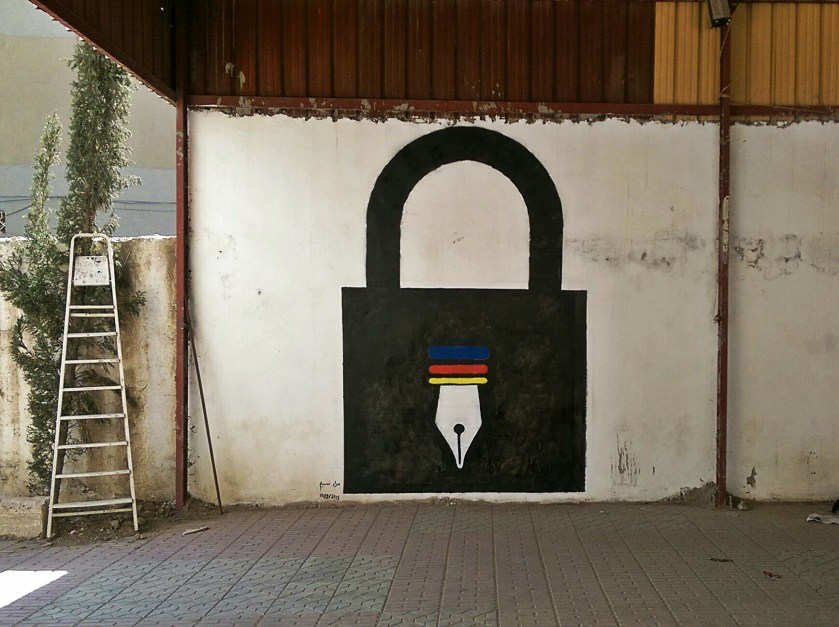
الحريات ضحية كما الإنسان، وبالإمكان إستهدافها وتدميرها كما الأماكن في أوقات الحروب.
جداريتي الخامسه ضمن حملة “حُطام”، على جدار نقابة الصحفيين اليمنيين، 10 ديسمبر 2015.
Freedoms are victims just as humans are, and they can be targeted and destroyed just as places can be at the times of war.
My fifth mural in “Ruins” campaign, on the wall of “The syndicate of Yemeni Journalists”, December 10, 2015.
إستمراراً لحملة “حُطام”، كان النزول الخامس للحملة هذا اليوم، 10 ديسمبر 2015، وذلك بالرسم على جدار “نقابة الصحفيين اليمنيين”، حيث ان الحريات – وخصوصاً الحريات الصحفية – تعرضت ولازالت تتعرض للتدمير الممنهج في اليمن من قبل أطراف الصراع المختلفة.
جدارية الفنان ذي يزن العلوي، ضمن حملة “حُطام”.
In continuation of “Ruins” campaign, we painted today, December 10, 2015, on the walls of “The syndicate of Yemeni Journalists”, where the freedoms – especially the journalistic freedoms – have been subject to significant systematic violations by different conflict parties.
This mural belongs to artist Thi Yazan Al-Alawi, as part of “Ruins” campaign.

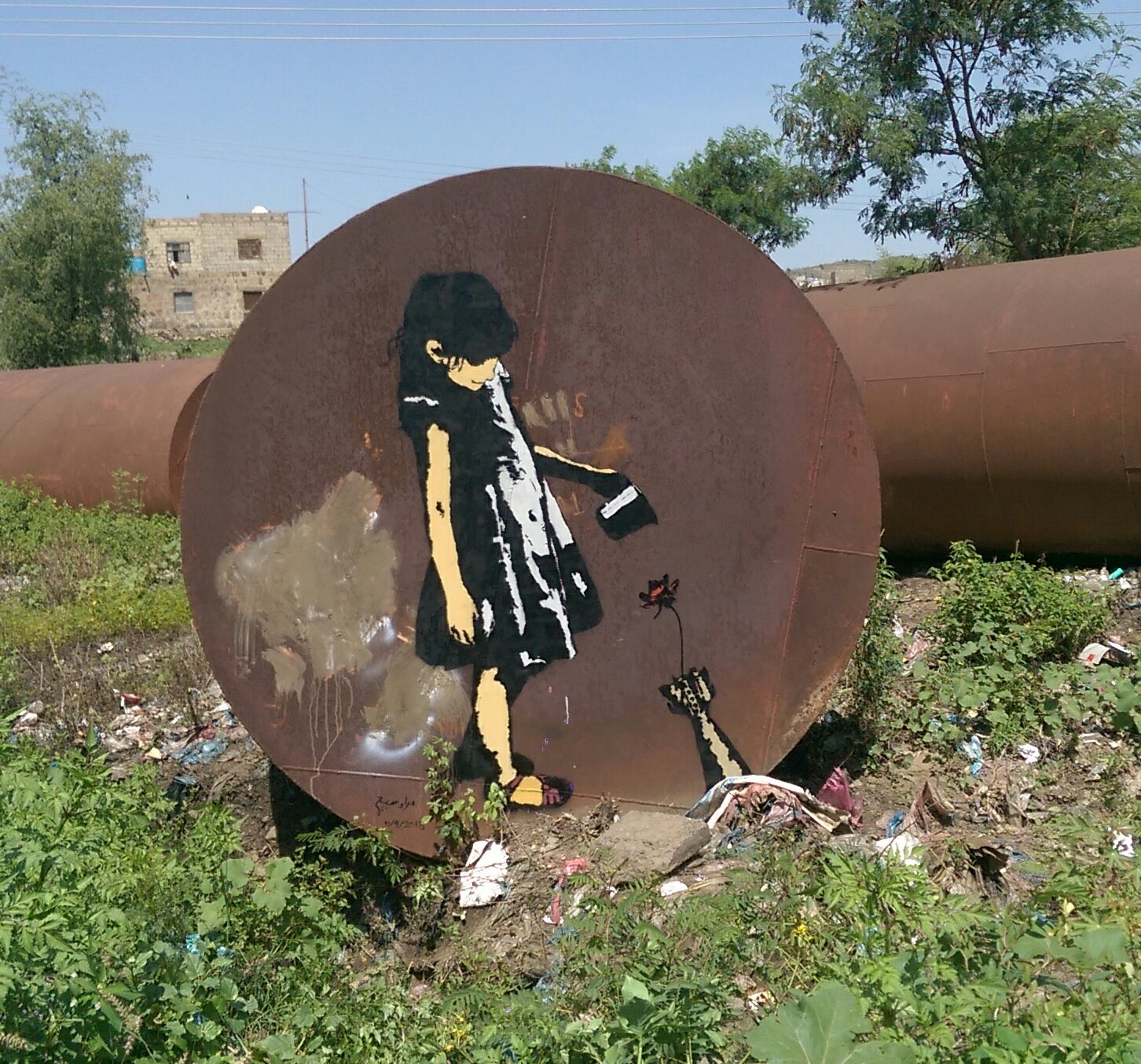
This mural was painted in September 10, 2015, on a water tank in Hawban area, which is located in the border of Taiz city, Yemen. The mural is part of a campaign called “Ruins” in which we paint in the damaged areas due to the conflicts to commemorate the victims of war and to highlight the war crimes in Yemen. I dedicate this mural to the child victims of the armed conflicts in every Yemeni city, hoping that this mindless war will end soon and that peace will prevail in every place in Yemen.
Thanks to my friends who accompanied me on the trip to taiz city and who contributed to the success of this work.
Photo by: Hanan Al-Surmi
——————————
هذه الجداريه رسمت يوم الخميس، 10 سبتمبر 2015، على خزان مهمل وسط أرضية مكشوفة تقع في منطقة الحوبان، على حدود مدينة تعز، اليمن. رسمت هذه الجدارية ضمن حملة “حُطام”، والتي فيها نرسم في المناطق المتضررة من الحرب لإحياء ذكرى ضحايا الحرب وتسليط الضوء على جرائم الحرب في اليمن. أهدي الجدارية للأطفال ضحايا الصراعات المسلحة في كل مدينة يمنية، متمنياً أن يحل السلام على تعز وعدن وصعدة وصنعاء وباقي المدن اليمنية.
شكراً لأصدقائي الذين رافقوني في رحلتي لـ تعز ولكل من ساهم في إنجاح العمل.
![Q&A: Painting tribute to the victims of Yemen's war Subay's artwork frequently attracts the attention - and comments - of passersby [Majd Fuad/Al Jazeera]](https://i0.wp.com/www.aljazeera.com/mritems/imagecache/mbdxxlarge/mritems/Images/2015/6/23/9b7dccfd325b482ea57e5e989bd4374a_18.jpg)
Not many street artists welcome an audience. But Yemeni painter Murad Subay, 27, doesn’t like to work in the dark.
His murals – and their bold proclamations of colour – serve as public gathering points, where strangers come to watch Subay paint while offering comments, critiques, and bottles of juice or water.
Whether the murals bear criticism or colourful celebration, they are never done in secret. For Subay, that is exactly the point.
For over four years, the young artist has used five different art campaigns to construct public spaces where people can denounce social ills and express the community’s frustrations.
In his latest campaign, “Ruins”, each mural serves as both art and remembrance; done in tandem with fellow artist Thi Yazen, the project commemorates the civilian deaths of the ongoing violence in Yemen, where the WHO estimates 2,800 have died since March.
While focus may now be on the country’s politics and the recent failure of the Geneva conference, Subay embarked on Ruins in order to call attention to the worsening humanitarian crisis in Yemen.
To do so, he has taken his tools to the most damaged areas in Sanaa, erecting murals amid the destruction of air strikes in order to “paint” tribute to the conflict’s human cost.
![]() |
| Subay’s mural in the Beni Hawat area [Majd Fuad/Al Jazeera] |
Al Jazeera: You began ‘Ruins’ to commemorate the civilians that have died during the conflict in Yemen. Can you speak a bit more about the vision behind this project?
Murad Subay: My goal was to highlight the direct suffering of people in Yemen, and also to express everyday people’s concerns about this war while commemorating the victims of the violence.
I’m against war in general, and I’m not with any [political] party. The one thing I care about, and the thing all people in Yemen care about, is that the war stop.
I first launched the campaign on May 18, in Beni Hawat. I painted a mural in that area, where civilians were killed, many of them children.
You’ll see in the mural that there are black lines on the flowers – when a person dies in our country, we place black lines over their photo to signify that they’ve died. This is what I did on the mural to commemorate the victims, to remember them. You’ll notice flowers with one leaf, and flowers with two leaves. The ones with two leaves symbolise the adult victims, and the flowers with one leaf commemorate the child victims.
We’re trying to do our best. Our work is humble, I know that, but we try to highlight the damage on the civilians, the children, the elderly, the people who are most affected by the war.
This war is not the people’s struggle. The people’s struggle is just to find something to eat, something to drink, and something to provide shelter.
![]() |
| Subay embarked on the ‘Ruins’ campaign in order to call attention to the worsening humanitarian crisis in Yemen [AP] |
Al Jazeera: Some media outlets have nicknamed you ‘the Banksy of Yemen’, but your murals have an important social element that involves the larger community in a way that Banksy’s work does not. Where does this motivation come from, and how do you go about involving others?
Subay: I first began painting after the 2011 uprising in Yemen with the campaign ‘Colour these Walls’, when we painted murals in what was called the ‘red lines’ between the zones of fighting factions.
At the time, I’d wanted to do something, and was hoping that painting would cheer me up and cheer others up as well. It was a kind of commiserating through colours and art. Others came to colour the walls with us.
Now, involving people in our campaigns has become important for different reasons. Our campaigns have begun to address some political and social issues, so input and direction from people are very important.
It means their voices, and ours, will be heard. It helps show different perspectives and views, and also keeps attention focused on these issues, because people feel they can make a difference when they walk by their own work on the streets.
![]() |
| Subay’s mural in the Faj Attan area, which was struck in April by warplanes [Abdurahman Hussain/Al Jazeera] |
Al Jazeera: What types of social issues does your art aim to tackle?
Subay: We continued the [Colour the Streets] campaign for three months, since mid March 2012 to mid June.
Our second campaign, ‘Make the Walls Remember These Faces’, aimed to remind us of the people who disappeared in Yemen since the late 1960s – kidnapped. We continued it for seven months.
I also have been working on making sculptures, but had to put this project on hold due to the war.
I was only able to make one installation in the street. And then I stopped because there’s no electricity, there are no resources.
![]() |
| The young artist has carried out five different art campaigns in over four years [AP] |
Al Jazeera: At a time when prices are high, food and water supplies are scarce, and it’s estimated that 15 million people are in dire need of health services, what role can art occupy? How must art be reconciled with people’s desires to fulfil other pressing relief needs?
Subay: Art is another way to highlight our concerns as people, and to send messages to local people and to the global audience about what’s happening in Yemen. When people see a mural, they are reminded every time that there were killings there.
Yes, there are a lot of things we need, like water and food, but the presence of art is also very important. We have to find other options [to express ourselves] while in a state of war.
We have to talk, we have to argue, we have to find ways to a middle ground. Continuous fighting will not do anything.
I’m doing my best as an artist. What can I do? Take up arms and go to the street? No. I’d rather paint. That’s what I can do.
Source: Al Jazeera
March 15, 2015
قالت الباحثة الأرجنتينية في علاقة الفن بالسياسة، أناهي الفيسو مارينو، في إحدى مقالاتها: “لقد مثلت الجدران التي رسم عليها الفنان اليمني مراد سبيع ورفاقه امتدادا لساحة التغيير، امتدادا لمشاركة الشارع في السياسة التي بدأت في مطلع العام 2011.”
في مثل هذا اليوم قبل 3 سنوات، عندما بدأت حملتي “لون جدار شارعك”، داعياً اليمنيين واليمنيات لتلوين جدران شوارعنا التي شوهتها رصاصات وقنابل المتحاربين في آنذاك، لم أكن أعلم أنني “اناضل في السياسة”، بل العكس هو الصحيح. لقد كنت أناضل ضد السياسة التي صوبت فوهات بنادقها على جدران شوارعنا وعلى جدران نفسياتنا أيضا. وفي الحقيقة، لم يكن لحملة “لون جدار شارعك” وما تلتها من حملات “الجدران تتذكر وجوههم” و”12 ساعة” أن يكون لها أي علاقة بالسياسة بشكل عام، وبسياسة الشارع على وجه الخصوص، لولا توفر عامل أساس هو مشاركة الناس.
مشاركة الناس هو أمر يصعب التعبير عنه، ولكن يمكنني القول- باختصار، أن مشاركة الناس في حملات الرسم على الجدران هي الوجه المغاير تماما لوجه السياسة التي نشاهدها على قنوات التلفزيون وأوراق الصحف وصفحات الانترنت وملامح شوارع العاصمة والمدن.
مرت ثلاث سنوات على حملة “لون جدار شارعك”، وخلال هذه الثلاث السنوات مرت اليمن بأصعب مراحل التحول السياسي كان آخرها أحداث العنف والتوتر السياسي التي يشهدها اليمن منذ سبتمبر 2014. كابد اليمنيون واليمنيات الكثير من منغصات العيش وعدم الاستقرار والأمن منذ 2011 وإلى اليوم، وقابلوا تلك المنغصات بالتفاؤل حينا وبالتشاؤم والاستسلام حينا آخر. وبالنسبة لي أنا المواطن العادي الذي لا يفهم كثيرا في كثير من الأمور بما في ذلك الرسم، كانت مشاركة الناس في حملات رسم لي وللأصدقاء مثل حملة “كتاب مفتوح” للصديق تمام الشيباني، وحملة “كاريكاتير الشارع” للصديق ذي يزن العلوي، بمثابة المؤشر الدال على مقاومة وتفاؤل اليمنيين واليمنيات في تحقيق حلمهم ببناء دولتهم المدنية.
في يونيو 2014، قبيل دخول اليمن في واحدة من أصعب تغيراتها السياسية وأكثرها عنفا وحدة، انتهت حملة “12 ساعة”. منذ ذلك الوقت، وعلى الرغم من عدم توقف أنشطة المشاركة في الرسم على الجدران، إلا أن الناس قد شغلت بمتابعة تطورات أحداث سبتمبر 2014، وأصبحوا يعيشون تحت قبضة التوجسات والتنبؤ بالمجهول داعيين الله بتسريع الفرج. ووسط هذه الظروف غير المناسبة، صادف اليوم الـ 15 من مارس 2015 أن يكون الذكرى الثالثة لانطلاق حملة “لون جدار شارعك”. في أول الأمر، ترددت باطلاق الدعوة لاحياء الذكرى الثالثة للرسم على الجدران، لقد كنت خائفا من أن الأحداث الأخيرة قد أكلت ما تبقى للناس من مقاومة وتفاؤل، أو هكذا خيل لي.
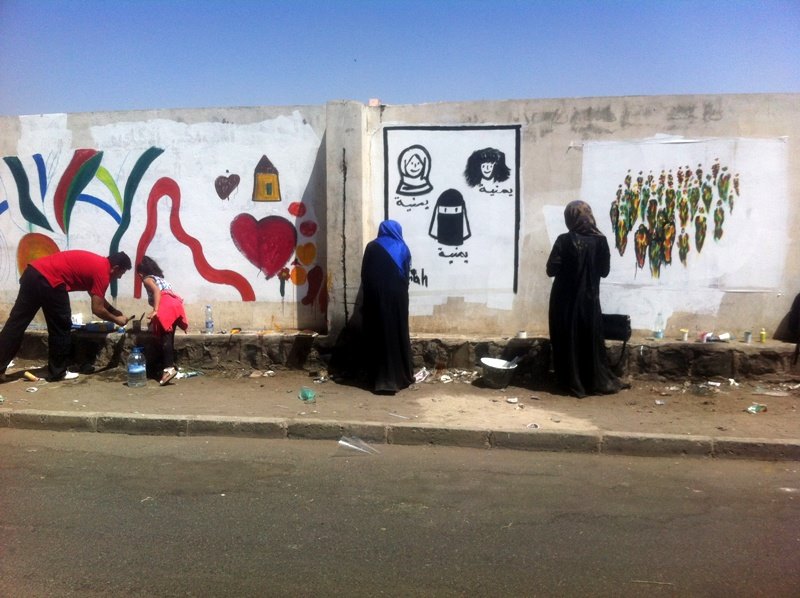
لقد كنت مخطئا، وأعلنت الدعوة للمشاركة بالرسم على الجدران يوم 15 مارس 2015 تحت عنوان “يوم للفن والانسان. وبعد الإعلان عن مكان وموعد الرسم، تقدم الأصدقاء والصديقات الأوائل الصفوف في الموعد ككل مرة عهدتهم فيها منذ ثلاث سنوات. كان معهم آخرون كثر من شباب وشابات وأطفال وطفلات، رجال ونساء وحتى شيوخ. وجوه كثيرة قدمت الى الجدران اليوم لترسم وأخرى لتشارك بالنقاش أو بالمشاهدة. وجوه كثيرة وأيادي أكثر وألوان لا تحصى والجدار كان واحد، جدارك يا بلدي.
نعلم أن عمر صوت الرصاص والقنابل على جدار بلدنا أقصر بكثير من عمر الألوان على نفس الجدار، وأن الوجوه التي قابلته اليوم بالفرشاة كانت أجمل من الوجوه التي قابلته بالرشاش وأن أيادينا التي لمسته كانت أحن وأرحم. ثق يا وطني، أنه وفي كل مرة تحاصرنا جدران أخرى غير جدارك، سنلجأ اليك، سنلجأ اليك ولو مرة في السنة.
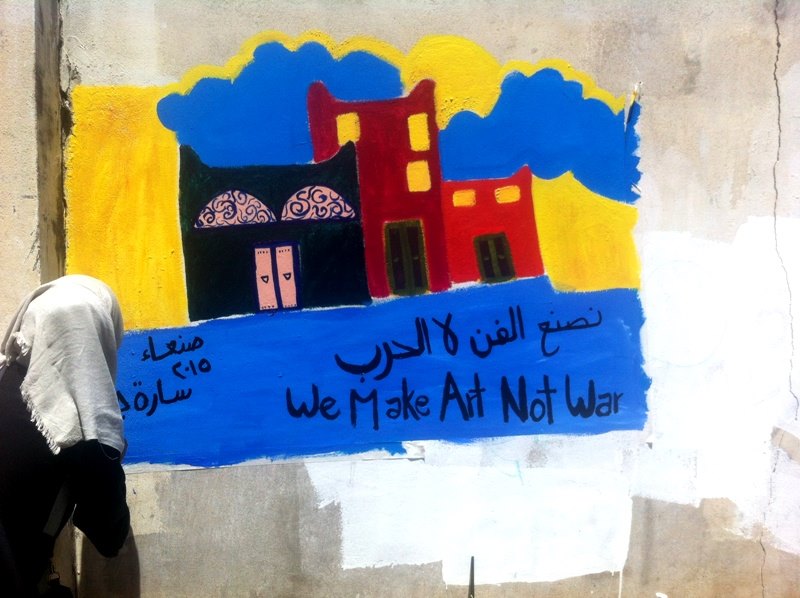
جزيل شكري وفائق تقديري واحترامي لكل من شارك وشاركت في فعالية الرسم على الجدران اليوم. شكر خاص وود خالص للأطفال والطفلات. عشتم جميعا منبعا للفن والانسان.