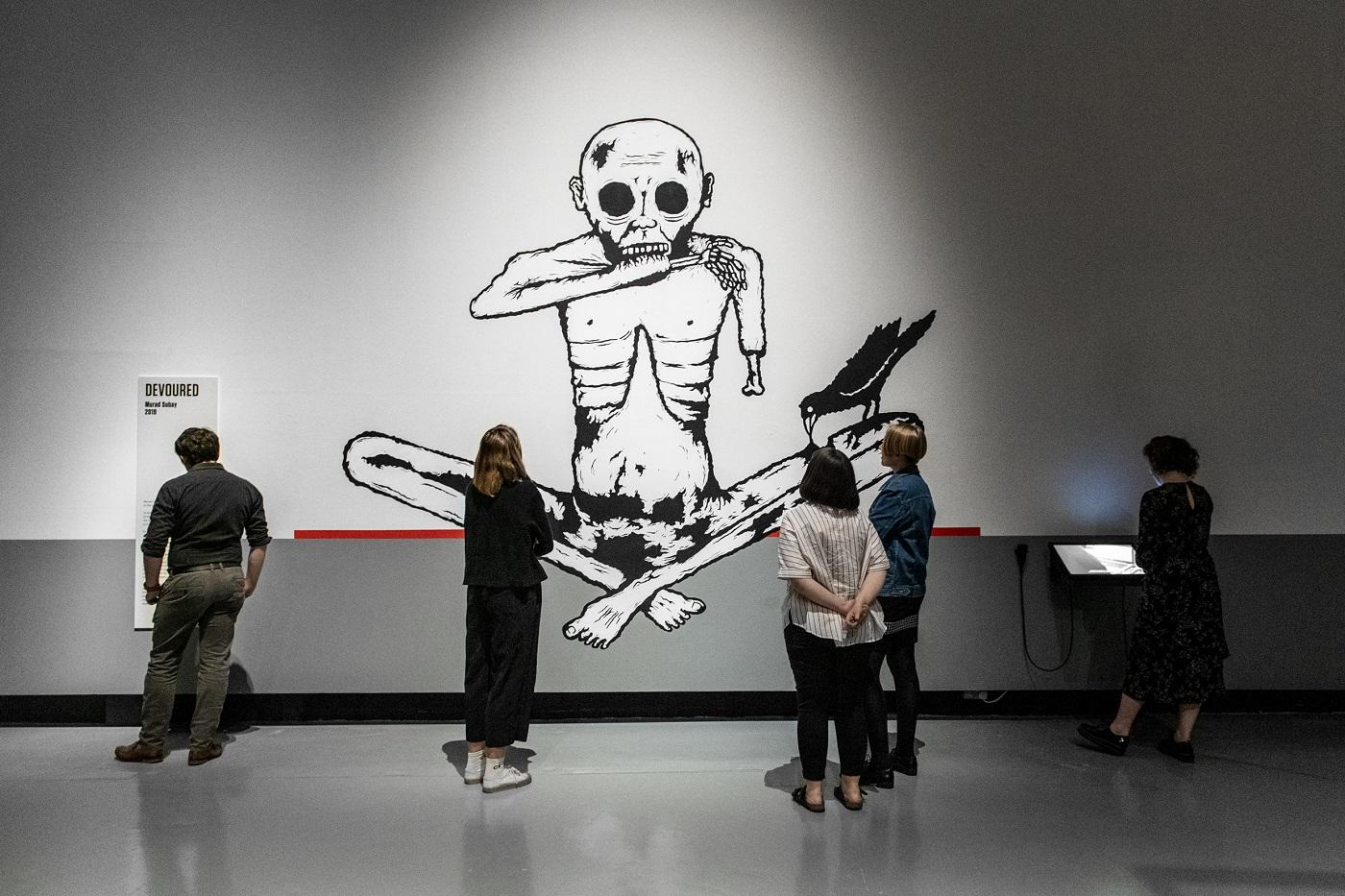
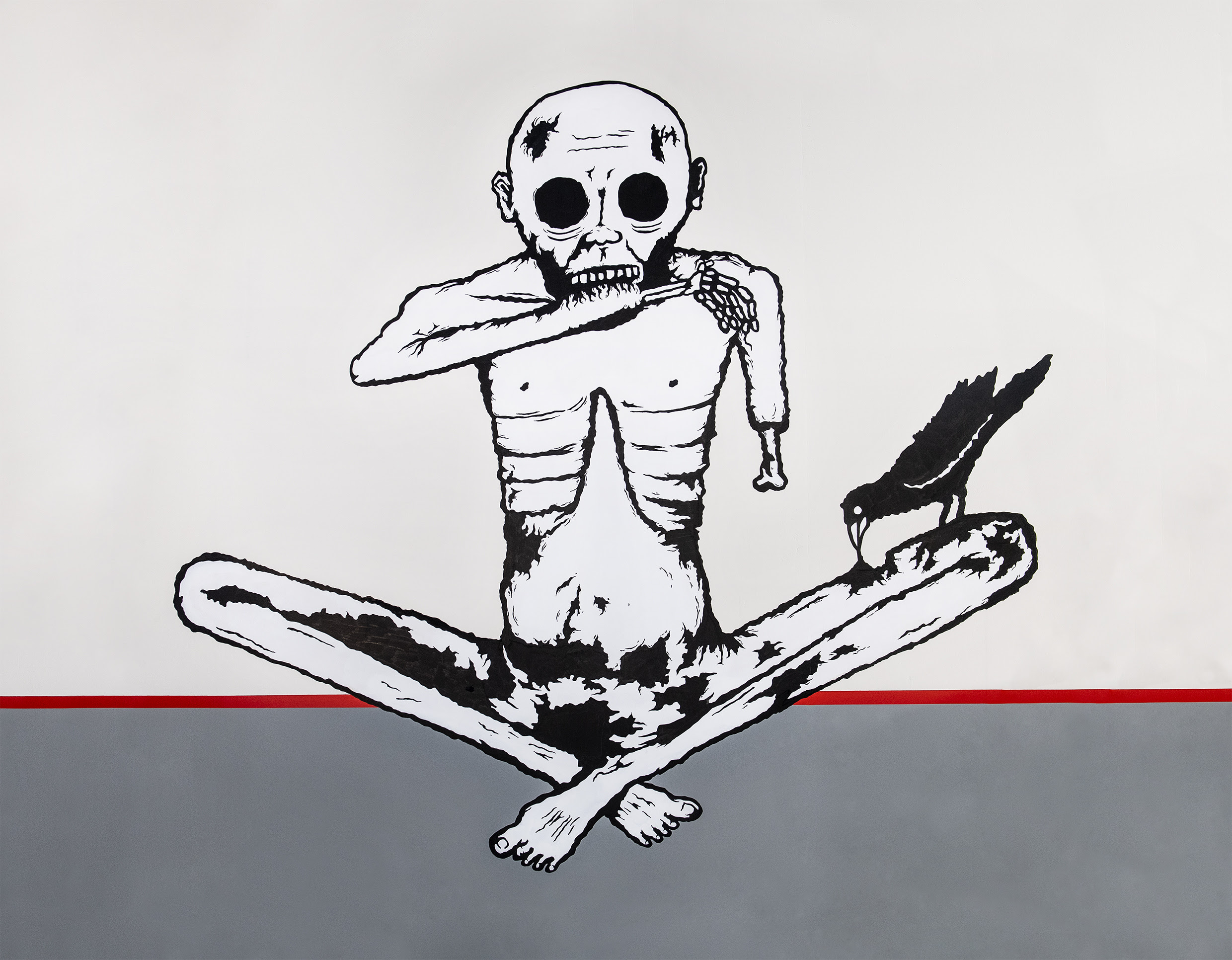
Devoured (2019) is an artwork by Yemeni street artist Murad Subay, commissioned by IWM for Yemen: Inside a Crisis at IWM North. The work metaphorically represents the harsh realities of life for Yemeni people. Murad could not travel to Manchester to install the work so local street artist Jay Staples stepped in to help.
17 July 2019 10:10 UTC | Last update: 1 day 10 hours ago
The conflict in Yemen, now in its fifth year, has been called an “invisible” war. The same could also be said of the country’s art scene: ask an art connoisseur or expert in the Middle Eastern market to name a major modern Yemeni artist and you are likely to draw a blank. “Good Yemeni artists are very few and far between,” said one expert, approached for this piece.
‘There’re so many talents but nobody encourages them’
– Khadija al-Salami, Yemeni film-maker
For many in the art world, there are no established 20th-century Yemeni names, no “modern masters” comparable to the Syrian painter Fateh al-Moudarres, or Iraq’s Jewad Selim, whose best works sell for tens of thousands of dollars at auction years after their deaths. In contrast, Yemeni artists rarely make an international impact.
The country’s art scene, like its governments, has in part been hampered by continuously changing borders and political instability. As unrest has descended into war during the past decade, so international cultural organisations like the British Council closed down the spaces it offered for art exhibitions.
Only a scattering of homegrown institutions, like the Basement Cultural Foundation in Sanaa, have managed to hold on.
“There’re so many talents but nobody encourages them,” says Khadija al-Salami, the Yemeni film producer, director and a cultural attache at its embassy in Paris. “They are self-generating. There is nothing that really encouraged them, just an internal force that leads them to do what they do.”
In Yemen, she said, art is regarded as “something that’s just wasting your time. It’s: ‘What’s wrong with this guy?”
Artists, art clubs and the USSR
But it is wrong to see modern art in Yemen as without any heritage. The scene had its beginnings in Aden’s painting clubs of the 1930s and 1940s, says Anahi Alviso-Marino, a Paris-based academic and the leading specialist on the subject.
“It’s just not part of the official story of art in the region. This quarter of the world is quite invisible. That doesn’t mean that there are no artists or art practices or art history.”
Alviso-Marino, through her research, has documented how artist associations, societies, studios, and later, private galleries emerged during the later 20th century in Taiz, Sanaa, and Aden.
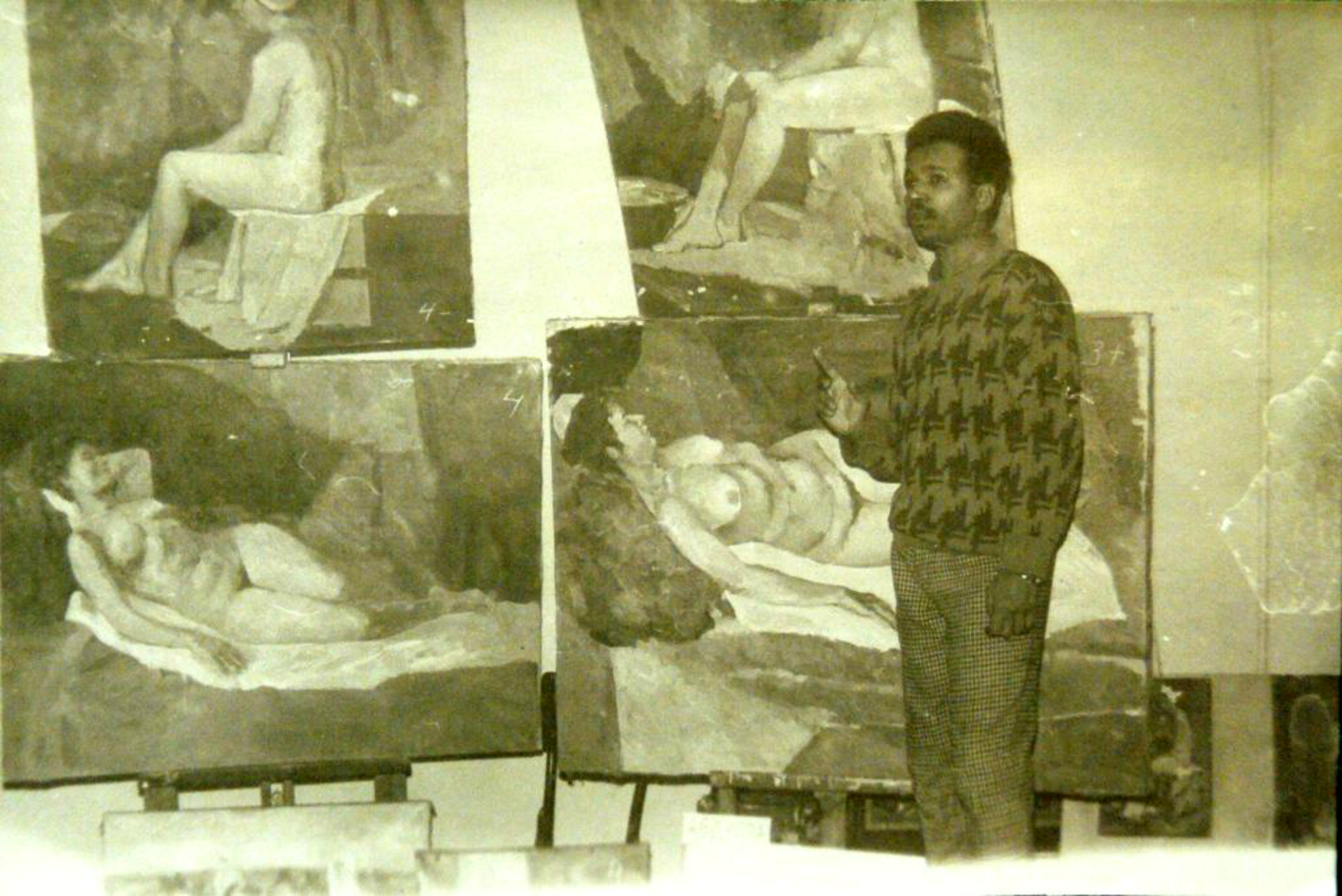
Yemeni artist Abd Allah Ubayd in Kiev in 1988 as part of a cultural exchange with the USSR (Abd Allah Ubayd/Arabian Humanities)
The painter Hashem Ali, for example, who died in 2009, ran his studio in Taiz during the 1970s and 1980s – the city held an exhibition and auction of his art in May 2019 to buy a home for his family.
During the same time the Association of Young Artists was active in Aden while the military museum in Sanaa housed Peace Guardians, a major painting by Abd al-Jabar Nu’man.
During the 1990s, the Yemeni culture and tourism office published a quarterly arts journal and the University of Hodeidah became the country’s first public university to offer a visual arts degree. Later, the Ministry of Culture set up houses of art to take exhibitions and workshops across the country.
Art in Yemen was also open to overseas influence. Alviso-Marino has uncovered how, during the 1970s and 1980s, a scholarship programme took between 50 and 70 Yemeni painters, sculptors and poster artists to the Soviet Union to study fine arts as part of a Cold War cultural programme. Many spent years in Moscow for their master’s degrees, before returning to the Gulf.
The series Borderland, by Alia Ali, formed part of the exhibition On Echoes Of Invisible Hearts at Station, Beirut in April 2019 (Station)
The constraints and horror of the current war have resulted in a fresh wave of Yemeni artists who tend to be young – typically under 35 – and who are wary of being framed only within the context of the conflict.
They do not work in calligraphy or anything that could conventionally be called Islamic, or Middle Eastern art: instead, they often choose photography, film or new media. Many joined the 2011 protests in Sanaa’s Change Square, but do not want to be only defined as the product of just another war-torn country.
The output of this small but determined group, several of whom live and work overseas, has been celebrated across Europe, including exhibitions in Berlin in 2018 and Beirut earlier this year.
In early July the British Museum in London organised a symposium as part of the Shubbak Festival of Contemporary Arab Culture, highlighting the art of four artists (below) of Yemeni origin – a timely barometer of what is happening to the country’s arts.
Visual artist: Salwa Aleryani
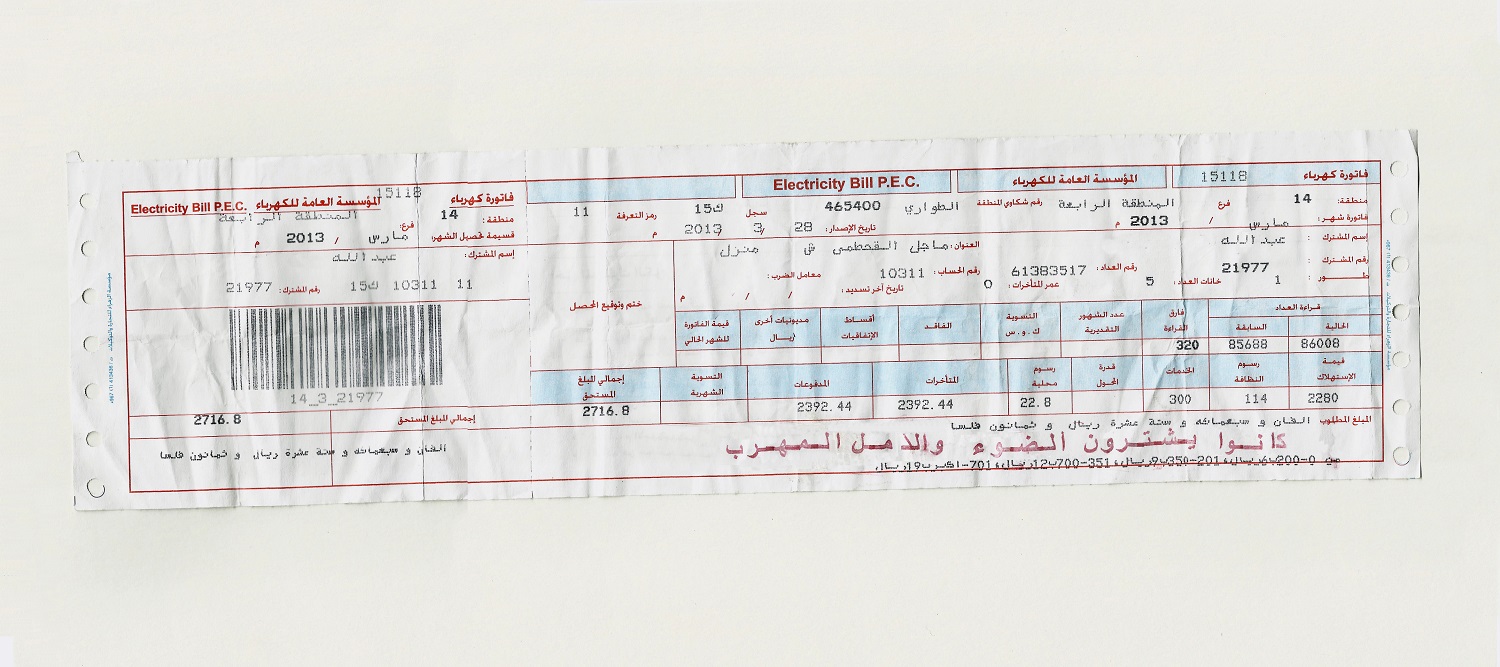
They Purchased Light And Smuggled Hope, from the series ‘Where We Were When The Lights Went Out’ by Salwa Aleryani (Salwa Aleryani)
Salwa Aleryani, like millions of Yemenis, has seen the country’s regular power cuts worsen since 2012. Many of her fellow citizens have protested about the outages that can last up to 12 hours, but Aleryani was also inspired to create art. The electricity stopped flowing, she noticed, but the bills did not; nor even the demands for early payment.
For her project Where We Were When The Lights Went Out, she took utility bills and counter-stamped them with poetic lines in Arabic such as “A moment in the dark does not blind us” or “They purchased light and smuggled hope.” As a work of contemporary art, it is witty and bitterly ironic.
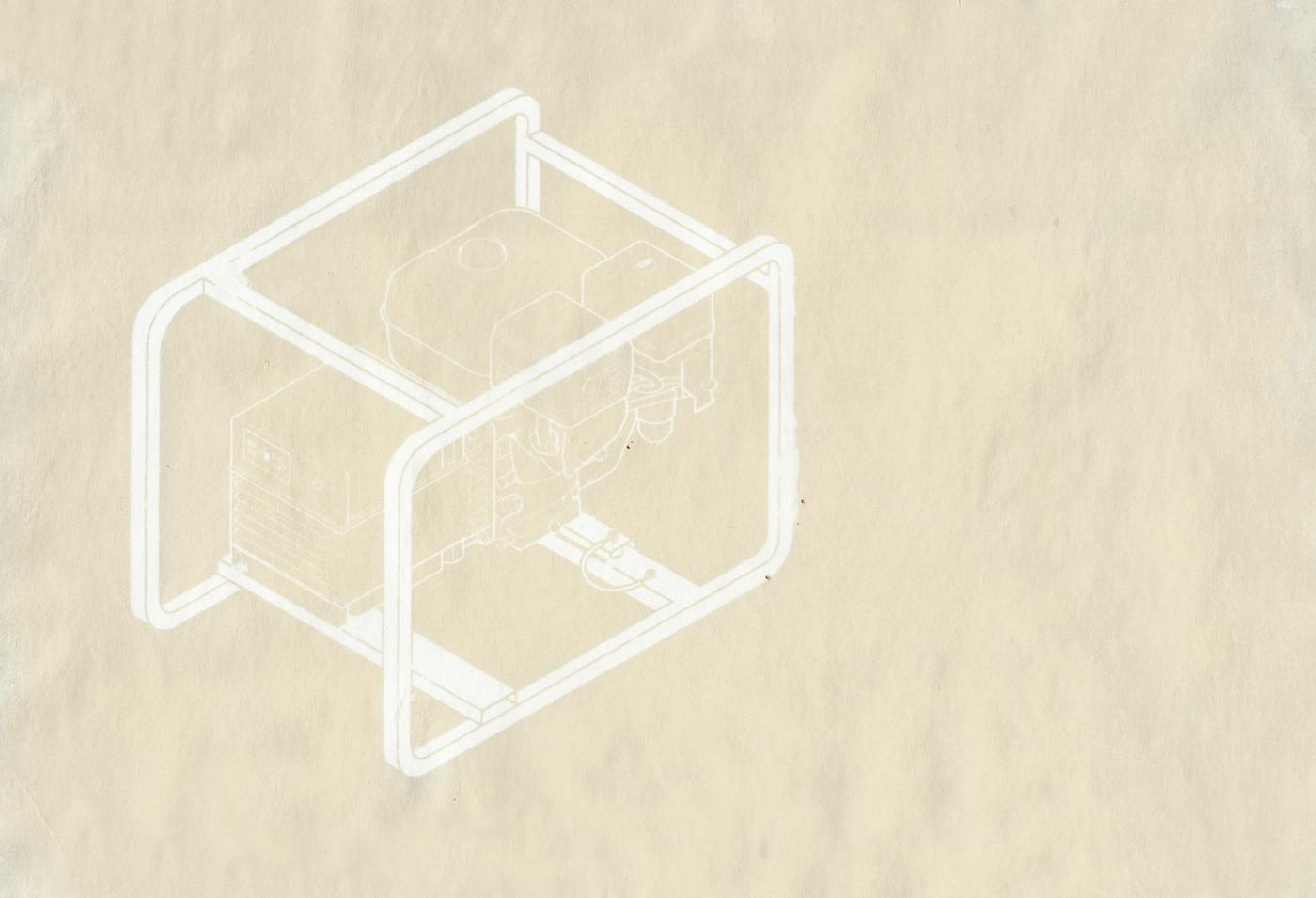
She also took a series of photographs, wryly observing how domestic electricity generators have become part of the furniture in local shops.
Letters To The Sun from the Generator series by Salwa Aleryani (Salwa Aleryani)
Aleryani trained in the United States after winning a prestigious Fullbright Scholarship. She has never displayed her electricity project but this year showed other abstract installations in Vienna, as well as at group shows in Istanbul and Berlin, where she is based.
Photography: Rahman Taha
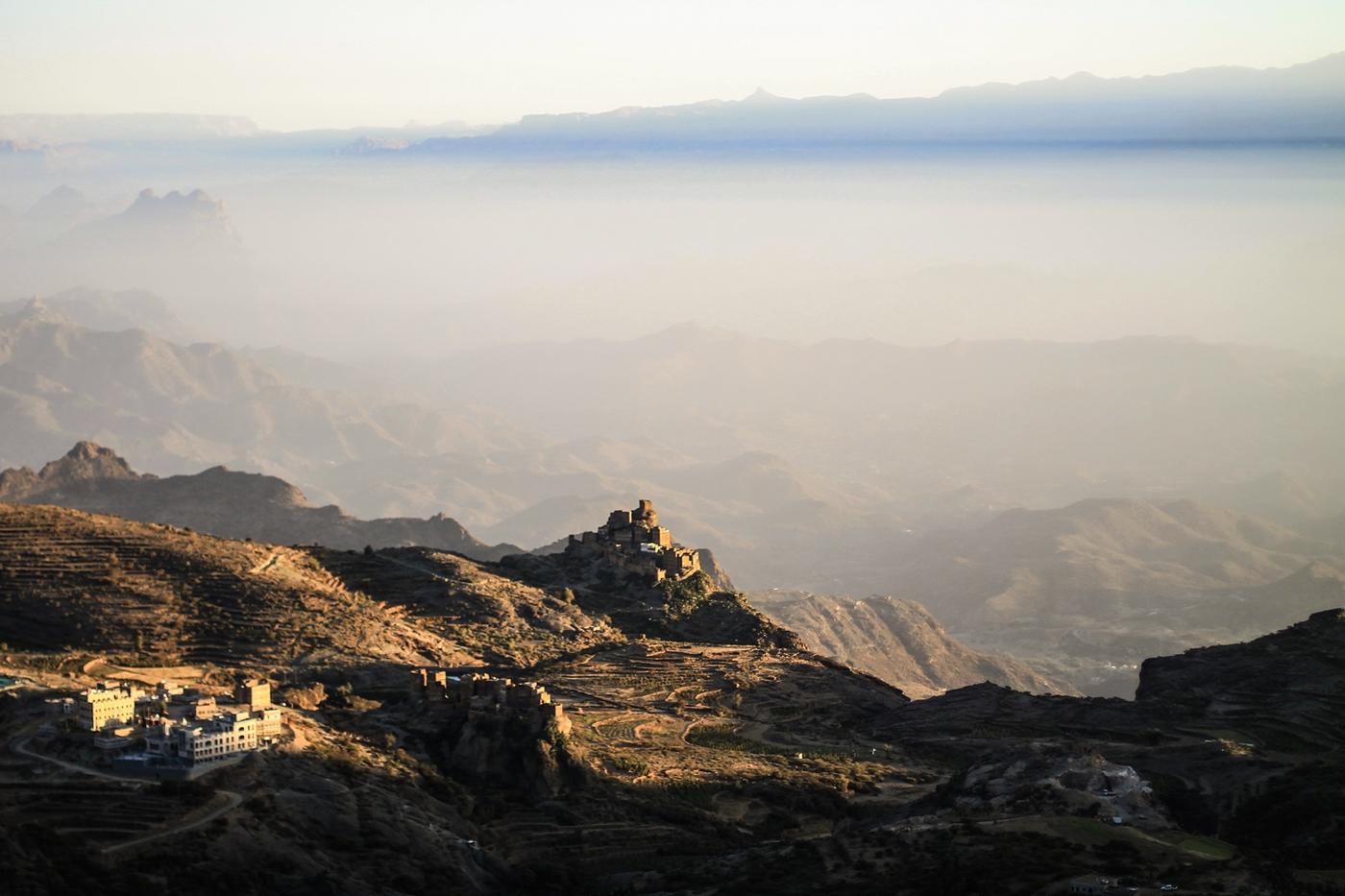
A work from Rahman Taha’s series From Mountains To The Sea, which explores Yemenis’ relationship with the landscape (Rahman Taha)
Rahman Taha, who is based in Sanaa, has had his photography featured in The New Yorker and Forbes. He previously ran an art gallery in the Yemeni capital.
His films include Short Scenes Based On A True Story, an impressionistic view of life in Yemen. “It showed how you can make art in Yemen,” he says. “I tried to make it a commentary.
“I’m trying to understand Yemen the place and the people, and we have too many beautiful things in Yemen, even Yemeni people don’t know about this.”
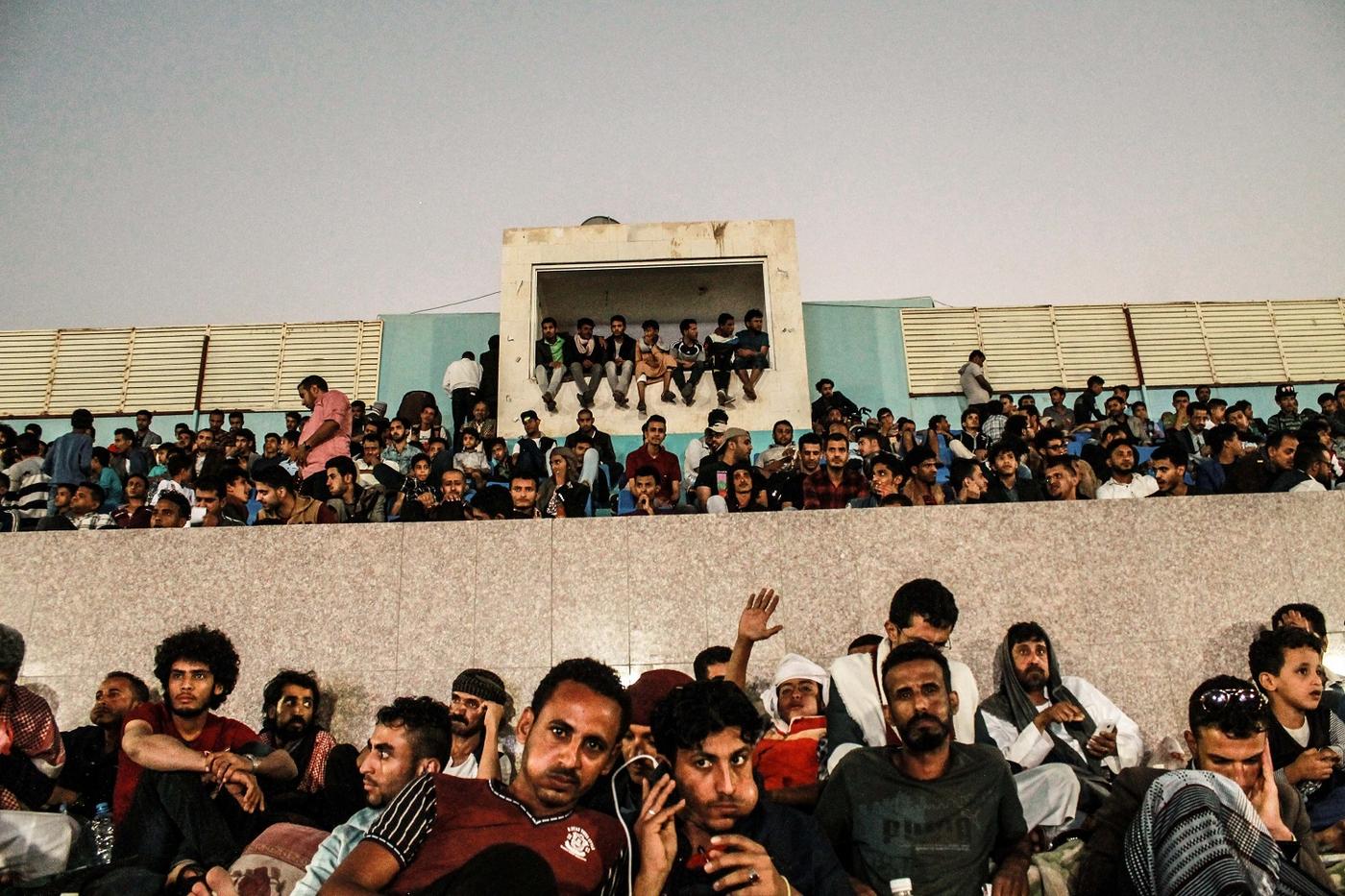
Rahman Taha has also produced work based on Yemenis watching the World Cup in Sanaa (Rahman Taha)
Recent projects include Mr Ali, which explores Yemen through the eyes of a man of nearly 80, who has spent his life working on coffee plantations; and photographs of Yemenis watching the World Cup in Sanaa.
From Mountains To The Sea, another of Taha’s works, reflects on Yemenis’ relationship with land and sea, including how residents migrate from the villages to the cities to secure well-paid work with militias.
In the coming months, he will be based in Cairo, ahead of an exhibition at the city’s much-respected Townhouse Gallery later this year.
“When you are inside the country, you have your own eyes,” he says of working in Yemen. “But when you move to another place, you change your opinion and think in a different way. This is important. The normal moments in life, it’s important too.”
Visual arts: Ibi Ibrahim
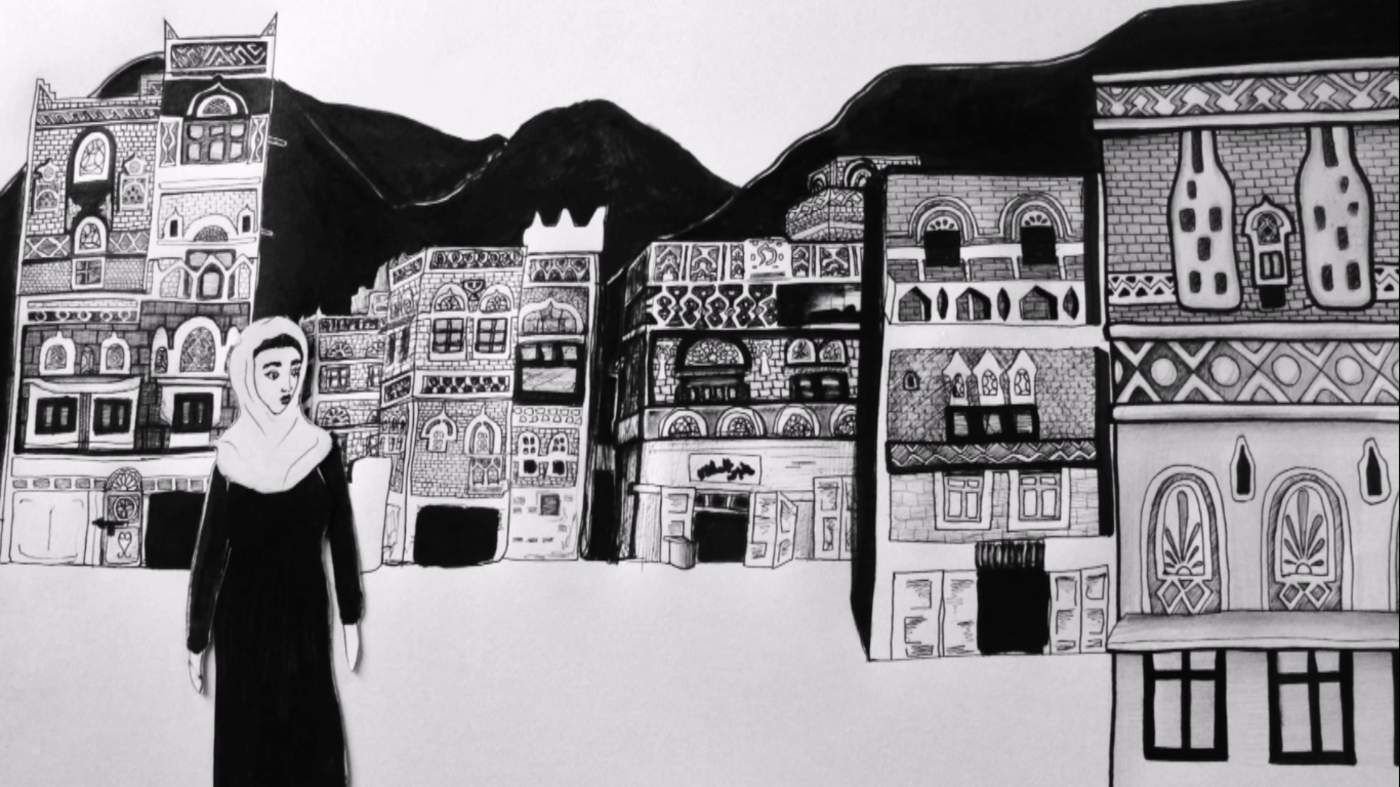
A still from Ibi Ibrahim’s video work Departure with animation by Hosam Omran (Ibi Ibrahim)
Ibi Ibrahim is a visual artist and photographer based in Sanaa, whose wide-ranging work even includes dress design. He is the founder and director of the Romooz Foundation, an NGO which organised the recent exhibitions of contemporary Yemeni work in Berlin and Beirut, as well as more informal presentations in Sanaa.
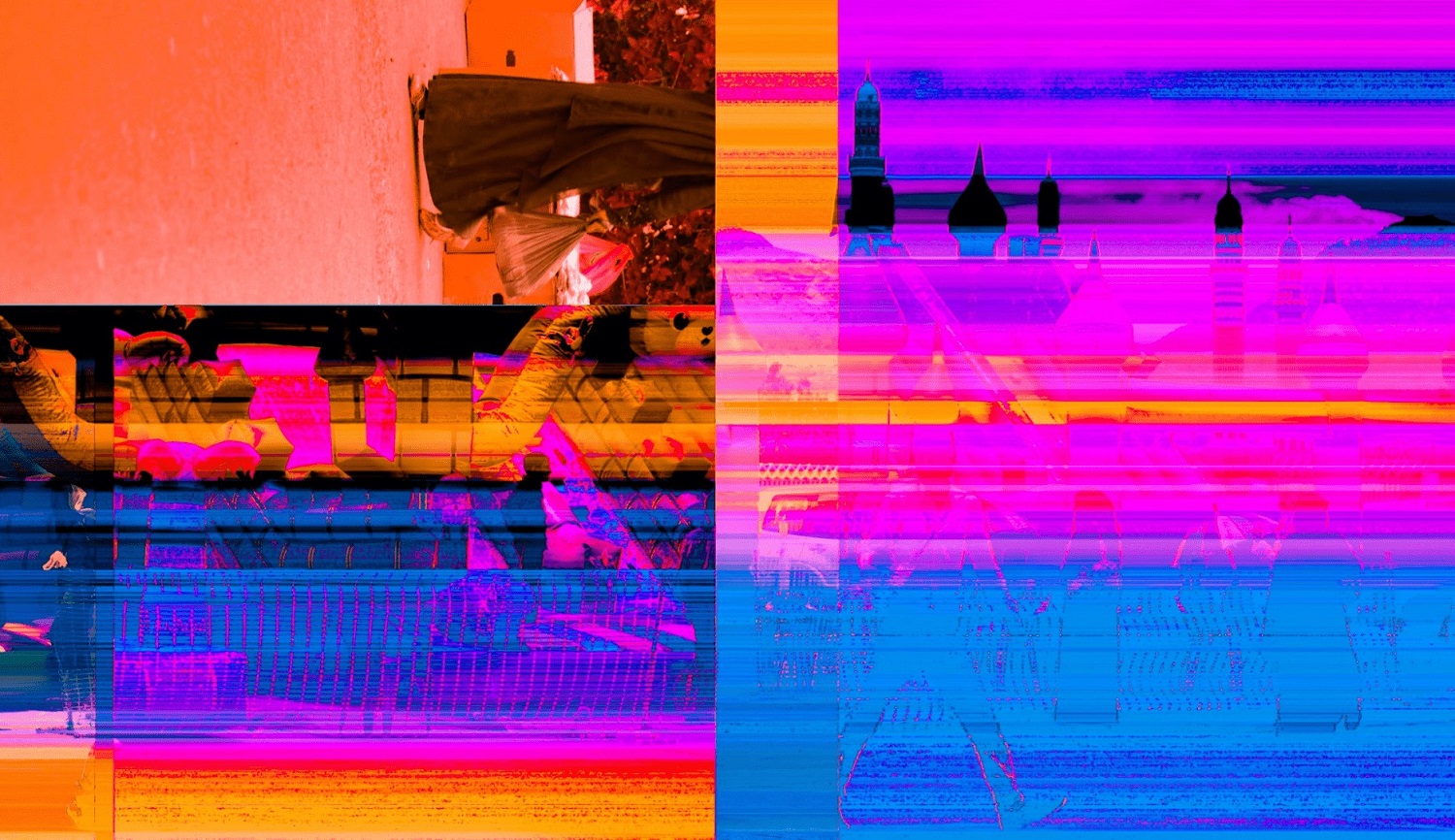
His exhibitions include artists like Arif al-Nomay, whose project The Corrupted Files consists of digital photographs taken in 2014 at Sanaa’s Summer Festival that were accidentally corrupted by his computer. The 60 images, shown as a grid installation, reveal what the catalogue described as “an ominous and eerie view” of the festival from days past.
File 7987 from Arif al-Nomay’s series Corrupted Files (Arif Al Nomay)
Other work at the exhibitions has included collages, installations, neon art, and documentary photography. Artists in Yemen, Ibrahim says, paused only a few months when the conflict started. “When we realised the war was going to continue, we started making art.”
Street art: Murad Subay
Devoured by Murad Subay on display at the Imperial War Museum in Manchester (IWM)
Murad Subay from Sanaa is a self-taught street artist who is currently on a year-long scholarship in France. Although he is labelled by the media as “Yemen’s Banksy”, his work has yet to sell at Banksy prices.
His first campaign, Colour The Walls Of Your Street, ran for three months in Yemen in 2012. Later that year, he created The Walls Remember their Faces, stencilling hundreds of faces across Sanaa and other cities in memory of the victims of “enforced disappearances”.
A portrait from The Walls Remember Their Faces, Murad Subay’s 2012 series across Sanaa (Murad Subay)
“The people are essential for this art scene, which is street art,” he says. “They were there with support, with participation because the unique thing about the street art in Yemen is that people are not the audience. They are participating by painting, by supporting, even by criticising.”
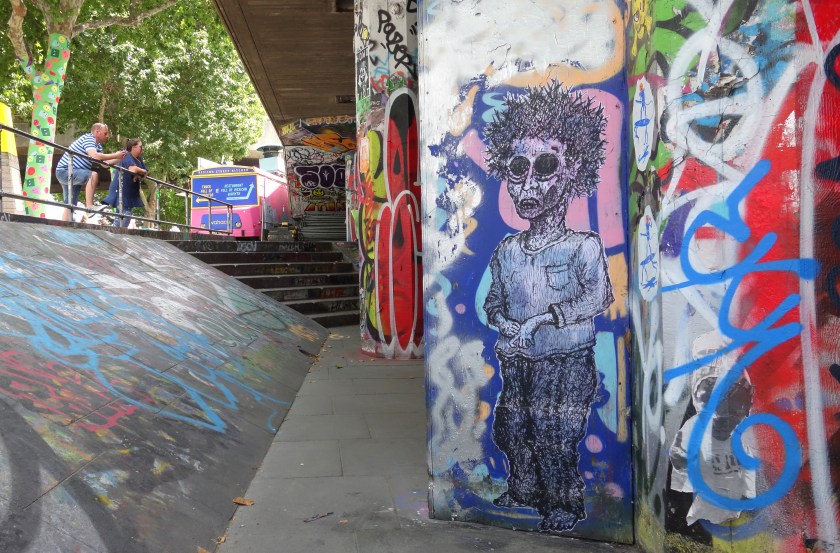
In the UK, Subay’s work is on display at the skateboard park on London’s South Bank as part of a campaign against the arms trade, and at the Imperial War Museum in Manchester, where Devoured, a grim image of a skeletal figure being pecked by a crow, is part of the exhibition Yemen: Inside A Crisis.
جيل بأكمله تم تضييعه منذ بداية إجتياح المدن عام 2014 وحتى الحرب الحالية التي بدأت عام 2015، لقد تم هدر أحلام الشباب والشابات والشعب اليمني الذي تطلع في يوما ما منذ سنوات للحاق بالعالم، ليعيش كباقي الشعوب في حرية وعدل.
جداريتي “الجيل الضائع”, ضمن مجموعة “وجوه الحرب”, على جدار في العاصمة البريطانية “لندن”, 5 يوليو 2019.
شكر خاص للرائع “روب ماكينس” لكل جهوده بذلها في توفير المكان اللازم لي لعمل الجداريات وللصديقة “سميه بخش”
“Lost Generation”
An entire generation has been lost from the beginning of the invasion of the cities in 2014 until the ongoing war that started in 2015. The dreams of the young people and the Yemenis (it is the same for the people in the region), who someday dreamt to live like the rest of the world in freedom and justice.
“The Lost Generation”, part “The Faces of War” street art collection, on a wall in London, July 5, 2019
A special thanks to the wonderful “Robbie Macinnes” who helped me with finding a place to do my murals and to my friend “Sumaya Baksh”.
Arms Corporations around the world deal with weapons as a food commodity, exporting them to all parts of the world with no responsibility, especially those areas in conflicts and catastrophic wars, in which innocent people especially children and women, become the victims of those weapons, and with a participation of the governments of these corporations even by not taking the responsiblitly of this action.
The work model is inspired by “Tomato Sauce” by Andy Warhol. I worked on this poster in 2018, and did not have the opportunity to implement it on the walls.
You can print or publish the poster message by logging in to my site link and downloading it.
Note: I apologize for the poor quality, and I will rework on it with a higher quality when I have the chance.
بوستر”شهية طيبة” تتعامل شركات الأسلحة في جميع أنحاء العالم مع الأسلحة كسلعة غذائية ، وتقوم بتصديرها إلى جميع أنحاء العالم دون أي مسؤولية ، لا سيما تلك التي تعيش في النزاعات والحروب الكارثية ، والتي يصبح فيها الأبرياء ، وخاصة الأطفال والنساء ، ضحايا تلك الأسلحة ،وبمشاركة حكومات هذه الشركات حتى من خلال عدم تحمل مسؤولية هذا العمل.
نموذج العمل مستوحى من عمل “صلصة الطماطم” للفنان العالمي أندي وارهول.عملت على هذا العمل في عام 2018 ، ولم تتح لي الفرصة لتنفيذه على الجدران.
يمكنك طباعة أو نشر رسالة الملصق عن طريق الدخول إلى رابط موقعي وتنزيل الملصق.
ملاحظة: أعتذر عن الجودة الضعيفة للعمل، وسأعيد صياغته بجودة أعلى عندما تتوفرلدي الفرصة.
Manchester street artist, Jay Sharples, working to create a mural version of Murad Subay’s artwork “Devoured (2019)”, commissioned by IWM for Yemen: Inside a Crisis, an exhibition running at IWM north beginning May 2019.Photographed 29th April, 2019.
Ahead of opening the major exhibition Yemen: Inside a Crisis at IWM North on 17 May 2019, Imperial War Museums (IWM) announces its commission of a new artwork by Yemeni street artist Murad Subay. Created especially for IWM, the artist’s latest work, Devoured (2019), will form part of the UK’s first exhibition to address Yemen’s current conflict and humanitarian crisis.
In this commission, Murad Subay responds to the on-going humanitarian crisis in his country, which the UN has described as the “world’s worst”. With the conflict leaving an estimated 80% of the country’s men, women and children in desperate need of assistance, Subay’s artwork explores the realities of living in a war zone.
Examining the inaccessibility of food, water and healthcare, Devoured metaphorically represents the harsh physical and psychological realities faced daily by the Yemeni people, as well as the regional and international experience of the conflict situation. Created using stencils, the artwork depicts a skeletal man, sat cross- legged, devouring what remains of himself. A crow bird perches on the knee of the figure, also devouring the body. The colours used are grey and muted, emphasising a horizontal red line that runs behind the seated figure.
Commenting on Devoured, artist Murad Subay said: “Ordinary people are struggling for survival and are crushed down to the ground. People suffer from hunger and famine, illness and epidemics due to lack of food, water and medicine. They lost everything they had because of war. There is only a red line – a dangerous limit that should never be crossed – which has been surpassed already, exemplifying the lack of hope and uncertain future.”
Louise Skidmore, Head of Contemporary Conflict at IWM and curator of Yemen: Inside a Crisis said: “Responding to themes explored as part of Yemen: Inside a Crisis, Murad Subay’s Devoured is raw and honest. His is a powerful representation of the human suffering in Yemen and it visually reflects how weary the country’s people are after years of living through the on-going crisis. IWM is extremely proud to have commissioned this important work, which provides a unique perspective on the artist’s experience of conflict.”
Yemen: Inside a Crisis is part of IWM’s Conflict Now strand of programming, which features opinions of individuals who have witnessed, experienced and worked in areas of conflict. In addition to Murad Subay’s new commission, the exhibition at IWM North will feature around 50 objects and photographs, many of which have been exclusively sourced from Yemen for this exhibition.
Index on Censorship calls on French authorities to reverse decision on visa for artist
29 Apr 2019
BY INDEX ON CENSORSHIP
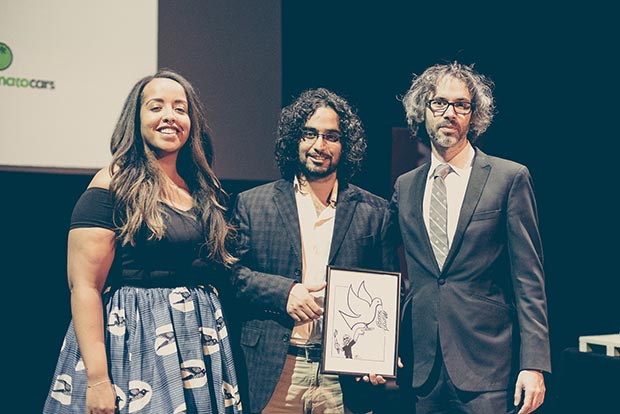
Theatre director Nadia Latif, 2016 Freedom of Expression Arts Fellow Murad Subay and pianist James Rhodes (Photo: Elina Kansikas for Index on Censorship)
Subay, who creates murals protesting against Yemen’s civil war, was given a grant to study under the Institute of International Education’s Artistic Protection Fund, sponsored by the Andrew W. Mellon Foundation, which makes fellowship grants to artists from any field of practice, and places them at host institutions in safe countries where they can continue their work and plan for their futures.
The visa that would have allowed Subay to study was rejected by authorities on Friday, he told Index via email.
“This rejection highlights a spreading hostility to artistic freedom around the world. From Uganda to Indonesia to Cuba, proposed legislation threatens to control artists, while a growing number of supposedly democratic countries such as the UK frequently refuse visas to foreign authors, musicians and activists for events or training. This reinforces notion that constraining artistic freedom is acceptable,” Jodie Ginsberg, CEO of Index on Censorship said.
“We ask French authorities to reverse this decision and allow Murad, an Index fellow, to study.”
Subay’s murals grew from the frustration he felt as his homeland descended into chaos and factionalism. Amid the destruction and anger, Subay picked up his brush. He went out into the streets with friends and began painting in broad daylight. After a few days he was joined by people from the community driven by their desire for peace amid Yemen’s civil war.
The Yemeni civil war has been raging since 2015. An estimated 13,600 people have been killed, including more than 5,200 civilians. The strife has contributed to the death of an estimated 50,000 people from an ongoing famine. In 2018, the United Nations warned that 13 million Yemeni civilians face starvation in what it says could become “the worst famine in the world in 100 years.”
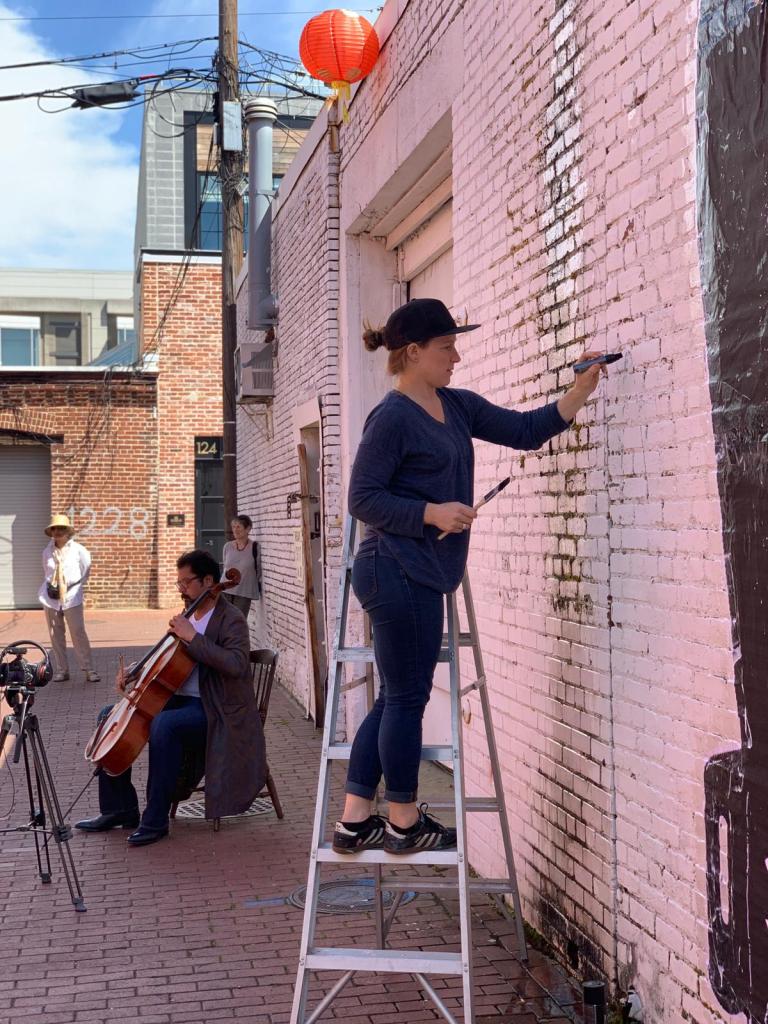
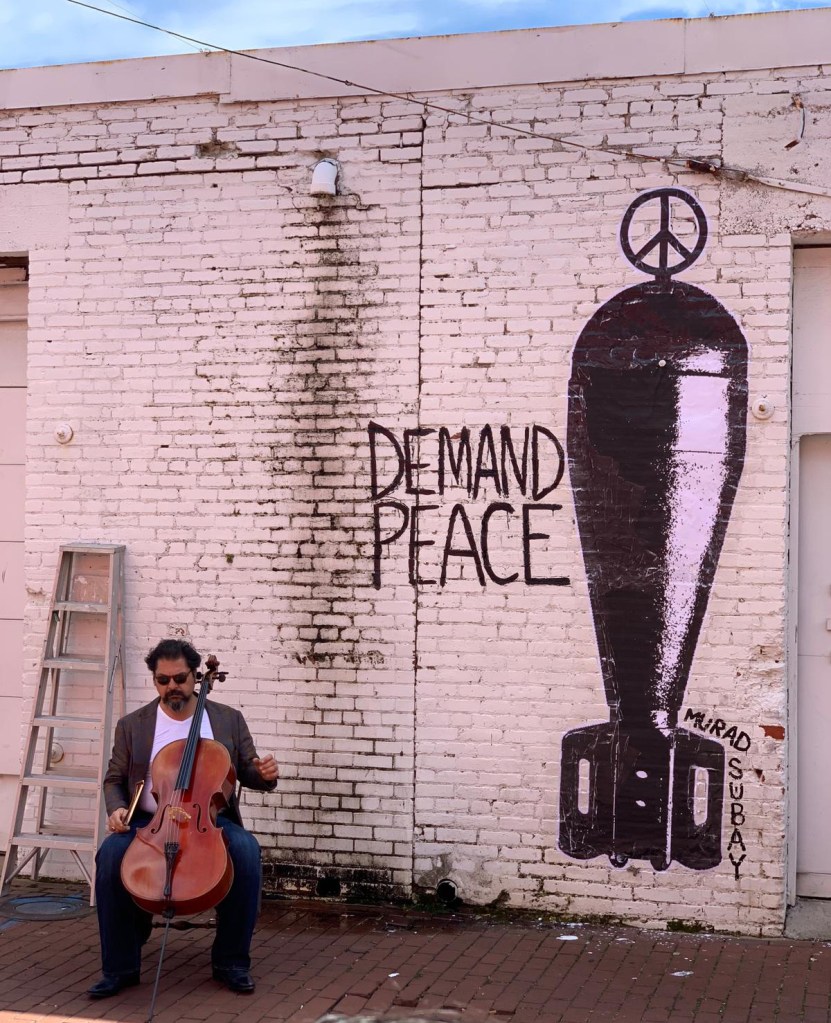
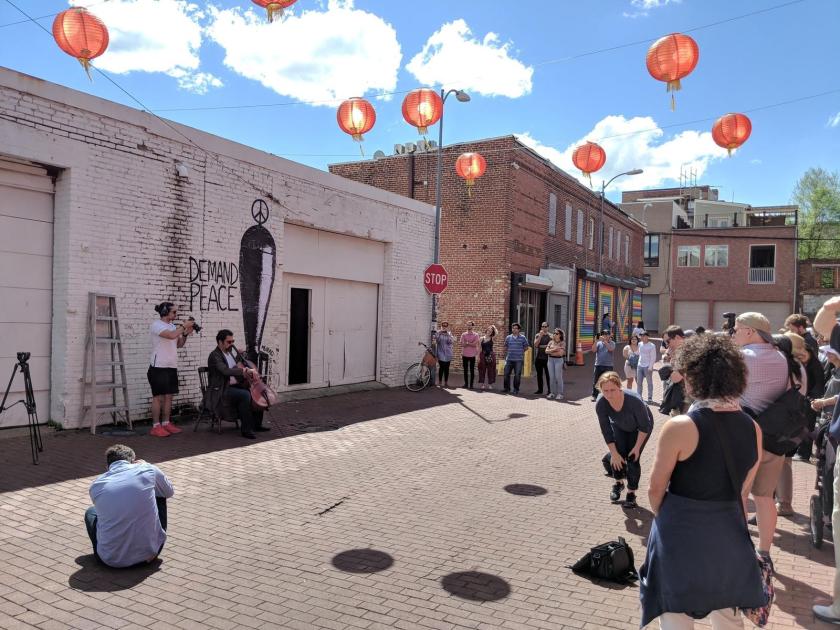
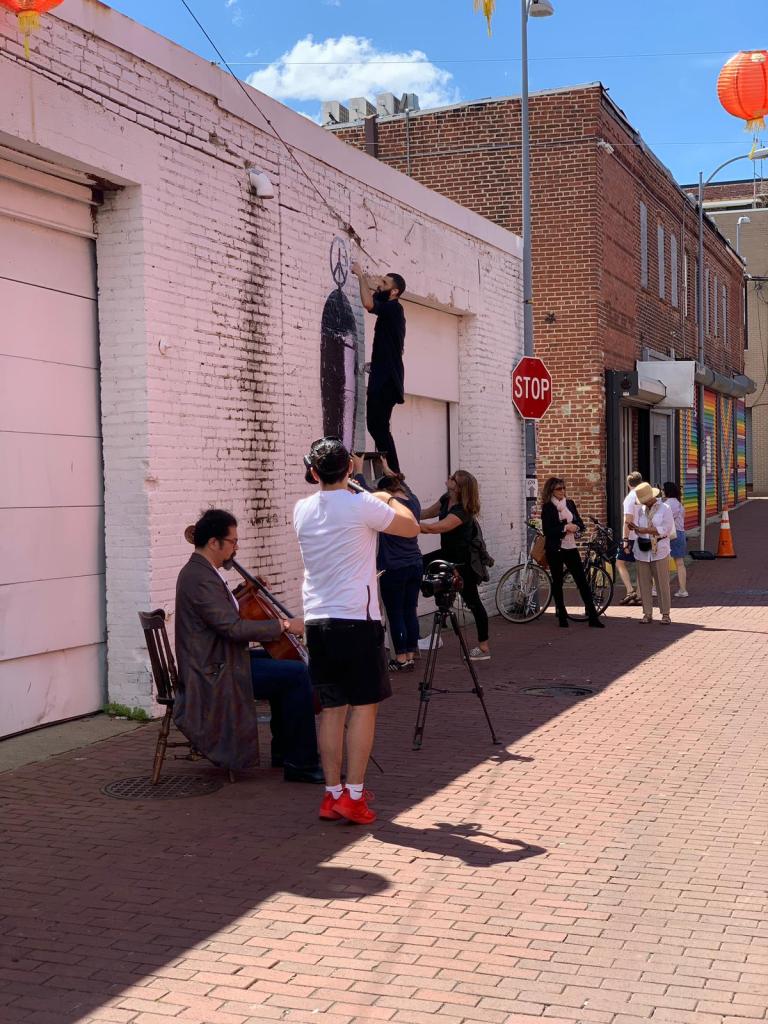
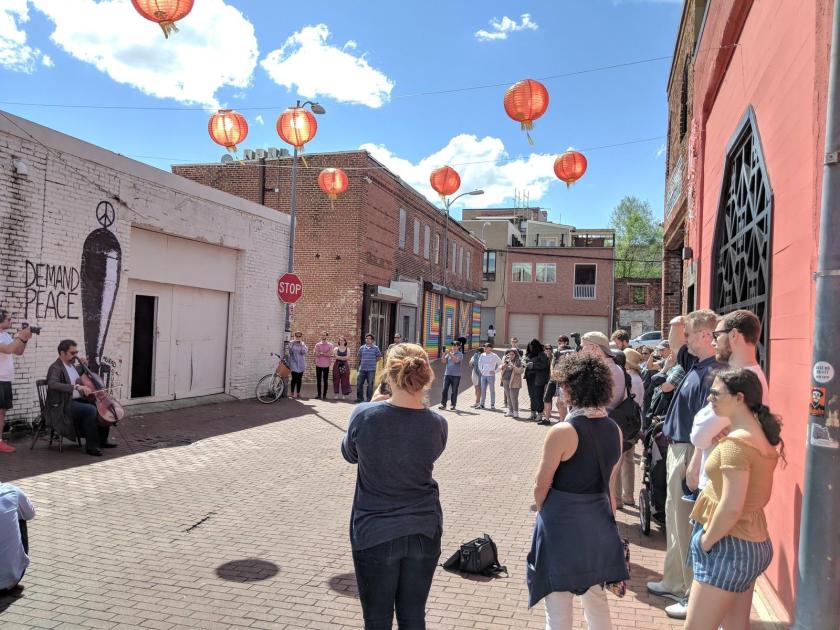
صور من الفعالية الفنية والموسيقية الذي أقامها المعهد اليمني للثقافة والتراث والفن، في العاصمة الأمريكية واشنطن, 20 إبريل 2019. إقيمت الفعالية جدارية “ماركة حرب” وعرض موسيقي من الموسيقار العراقي “كريم وصفي” والفنانة الأمريكية “مارسيلا كريبل”.
Photos from the artistic and musical event, that organized by the Yemeni Institute for Culture, Heritage and Art, Washington, DC, April 20, 2019. The event held by installing my mural “War Brand” and a musical performance by Iraqi musician “Karim Wasfi” and American artist “Marcella Kriebel.”
كان لي شرف التعاون مع الصديقات والأصدقاء الرائعين وكل من شاركهم في إقامة الحدث في المدن التسعة داخل اليمن وحول العالم.
صفاء أحمد, كريستين بيرنارد، سلطان القادري، علاء روبل، منال القدسي، سايبو”بيير باولو سبينيزا”، سهيلة البناء, جيمي موون, ذي يزن العلوي، صامد السامعي،باتريك لا روكس، ثريا منصر، و هيفاء سبيع.
تصميم جمعت فيه صوره من كل مدينة أقيم فيها الحدث.
#Open_Day_of_Art
It was an honor to collaborate with the amazing friends from around the world and inside Yemen, and all those who took part or coordinate for the event in the nine cities, where it was held.
CIBO Pier Paolo Spinazzè, Safa’a Ahmed, Christine Bernard, Sohila AlBna’a, Joo Im Moon, Manal Alkadasi, Samed Al-Samei, ذي يزن العلوي, Alaa Rubil, Sultan ALqadri, Patricia Benech-Le Roux, Soraya Monassar and Haifa Subay.
A design, where I put a photo from every city where the event was held in.
Artists paint murals of hopes and fears in war-torn Yemen
CGTN
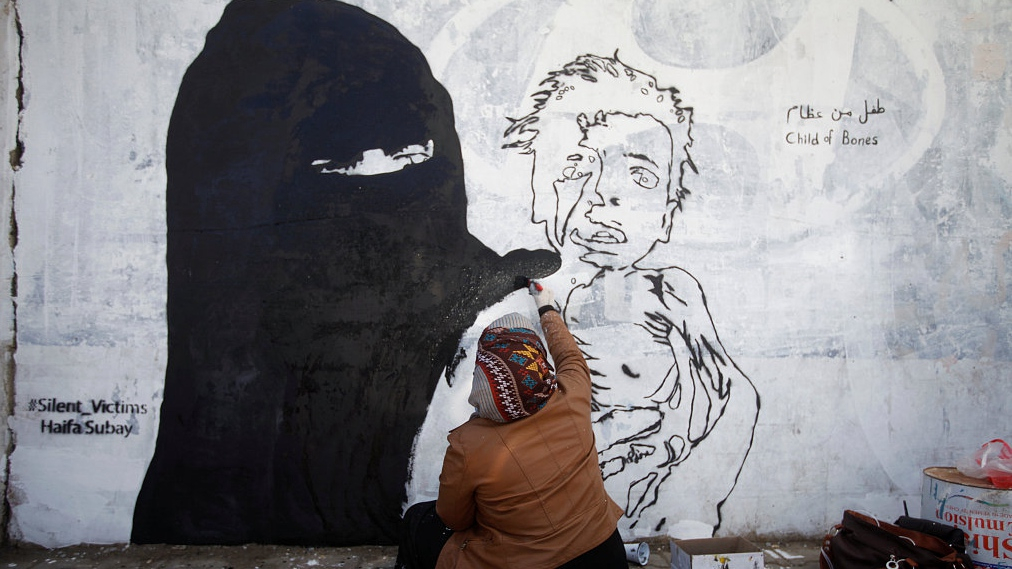
Young artists lined up across a wall in the Yemeni capital Sanaa on Thursday painting murals that reflect their fears as well as hopes in a country crippled by war.
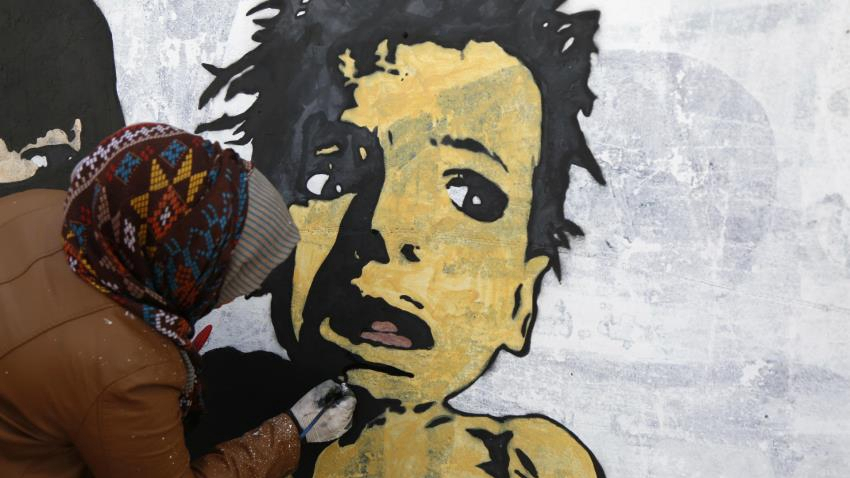
“We are here as a tribute to art and culture and to spread the message of peace in an attempt to revive what this war has taken from us,” Haifa Subay, her glasses spotted with white paint, tells AFP. The graffiti artist is taking part in an open-air exhibition, painting a mural of what seems to be an abstract face with words of hope and encouragement in bold, red letters.
“The war has destroyed Yemen. It has destroyed all the capabilities of this beautiful country,” she says from the rebel-held capital. The conflict between the pro-government forces backed by a Saudi-led military coalition, and the Iran-aligned Huthi rebels has pushed the country to the brink of famine.
File of artist paint murals on a wall in the Yemeni capital Sanaa, March 14, 2019. /AFP Photo
Since 2015, when Saudi Arabia and its allies intervened in the war, around 10,000 people – mostly civilians – have been killed and more than 60,000 wounded, according to the World Health Organization. Rights groups say the real figure could be five times as high.
Like Subay, Thiyazen al-Alawai hopes to bring back life to the city through his art work.
“Street art in Yemen is not separate from society but a part of it,” he said, as people, young and old, paused to admire the artists’ work. “The people (of Yemen) are not spectators, but they are participants in such art work.”
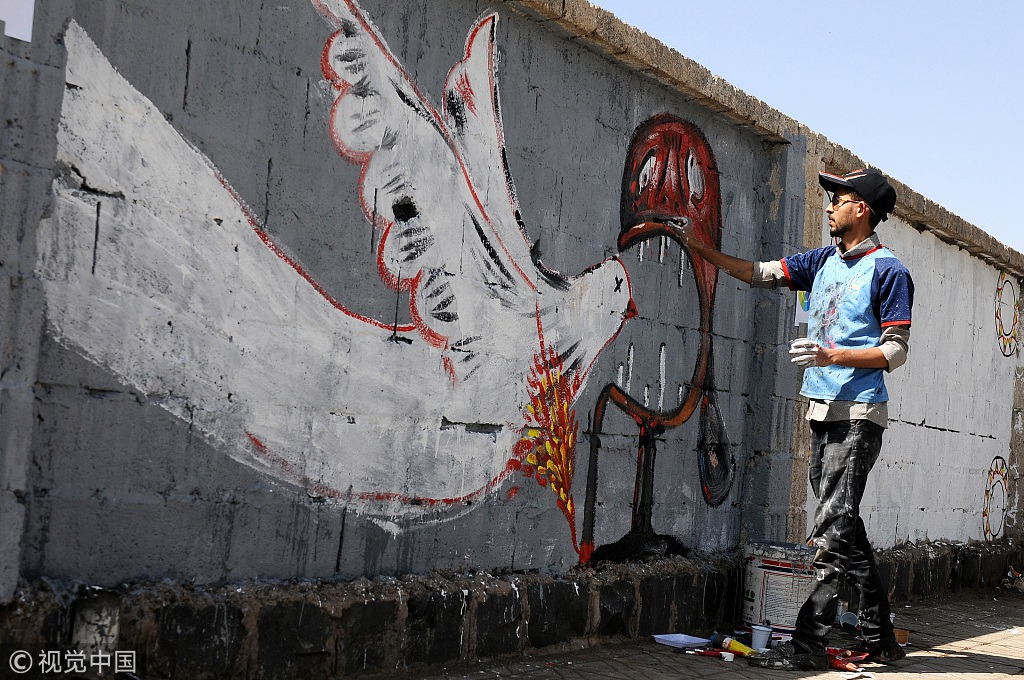
File of a Yemeni artist draws graffiti during an Open Day of graffiti campaign call for peace on March 15, 2018 in Sanaa, Yemen.
A teenage boy donning a hoodie and a respirator mask spray paints a wall using his country’s flag colors: red, white and black. Another wall has the word Arabia Felix, or Happy Arabia – used by the Romans to describe the part of the region to which Yemen belonged and was home to the legendary Queen of Sheba.
“We just hope that Yemen returns to the way it was,” said Subay.

















 Murad Subay