
On “FRANCE 24”
By: Samia Metheni

On “FRANCE 24”
By: Samia Metheni


Image: Color the walls of your street, Sanaía, 2012, courtesy of Murad Subay.
Since 2011, Syria and Yemen have witnessed unprecedented destruction and degradation of art and cultural infrastructure, in addition to humanitarian crisis, as a result of the ongoing conflicts in both these countries. In this symposium, artists, curators and scholars investigate the current status and future of art and culture from the point of view of artists working inside these countries as well as those who are presently living outside Syria and Yemen. What are the challenges? How is war affecting artistic expression? What means are there for artists to communicate their practice? How does artistic mobility reflect on art and how do artists cope with migration and exile, forced or voluntary? How can artists engage individually and collectively, through art and other means of expression with a possible future post-conflict era?
The symposium will be divided into three sessions, one each on Yemen and Syria, introduced by overviews of the art scenes prior to the present conflicts. The third session, in the afternoon, will show a series of recent films by Syrian and Yemeni filmmakers.
For full details of speakers and films, visit shubbak.co.uk from 1 May.
Produced by British Museum.
Syria panel supported by the Atassi Foundation.

للعام الثاني على التوالي، أتشرف بالتعاون مع الأصدقاء في جمعية “بلانترولر”، عبر تنسيق من الصديقة العزيزه “كريستين بيرنارد & باتريكا لاروكس”، للحدث السنوي #اليوم_المفتوح_للفن، 17 مارس 2019، في مدينة باريس، فرنسا.
For the second year, I am honored for such a collaboration with the amazing people at “Planetroller”, that Orginised the #Open_Day_Of_Art, in Paris, France, which coordinated by the wonderful “Christine Bernard& Patricia Benech-Le Roux“, March 17, 2019.
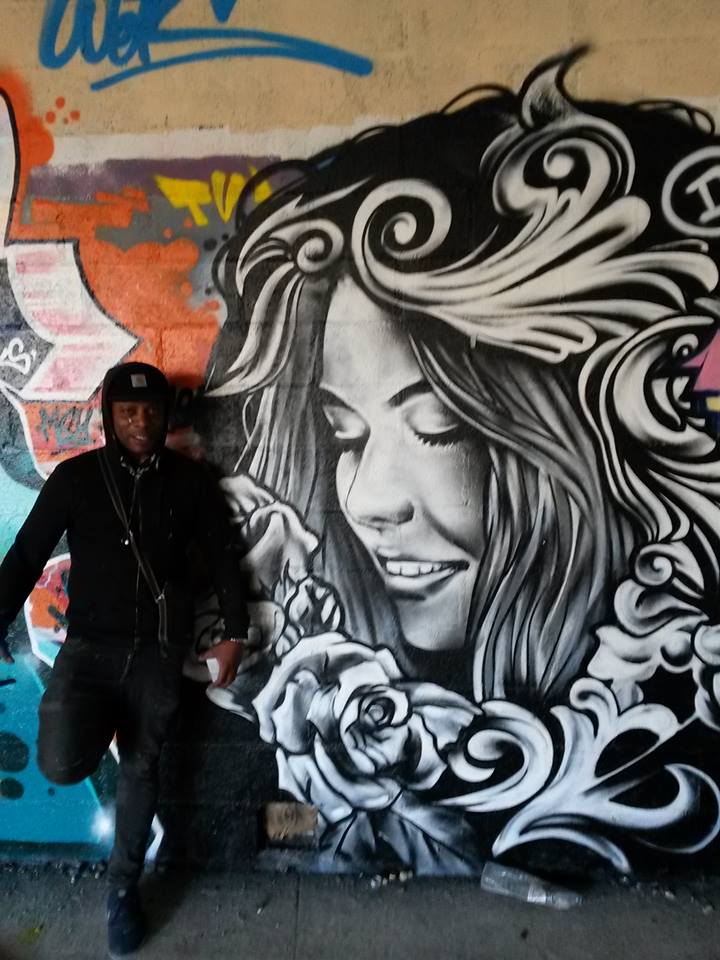

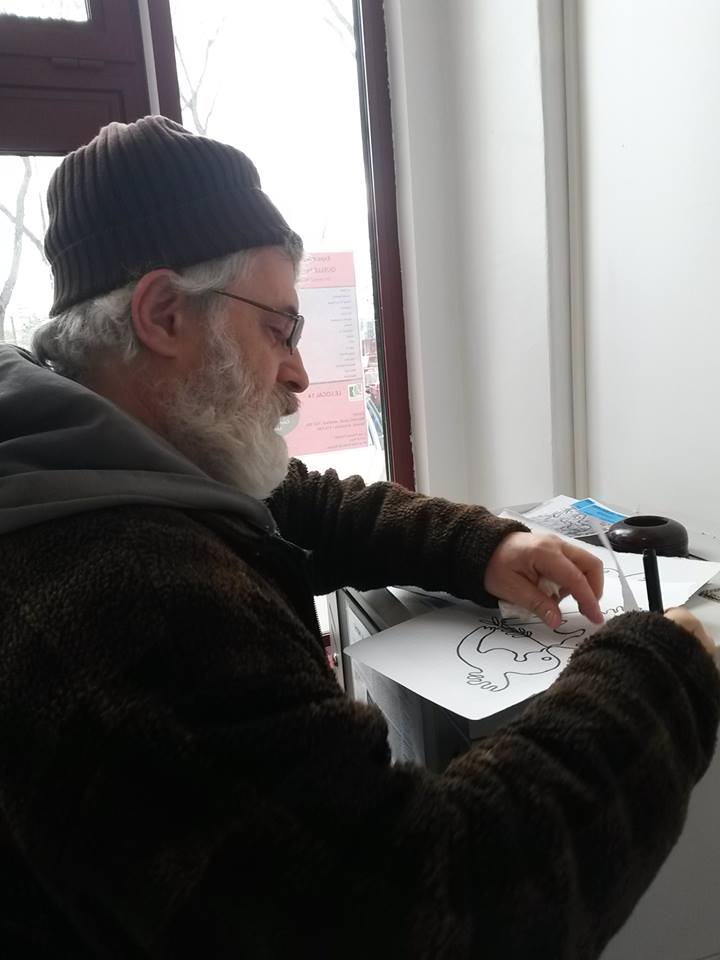
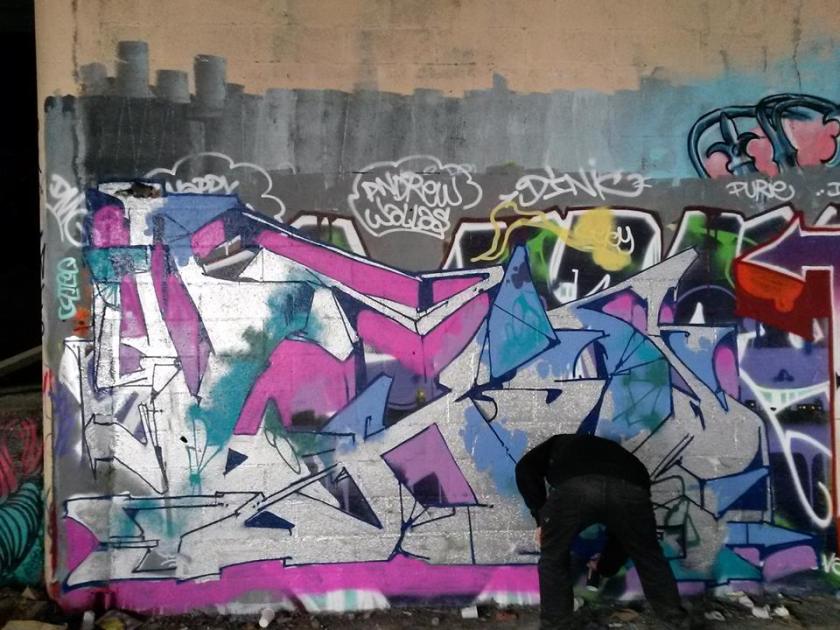
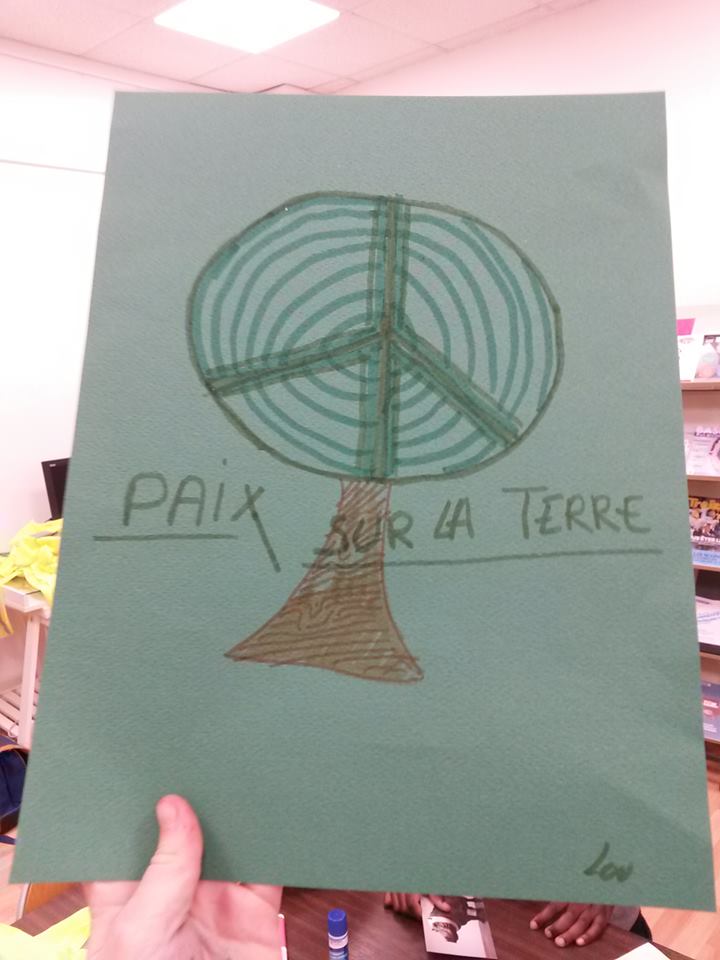
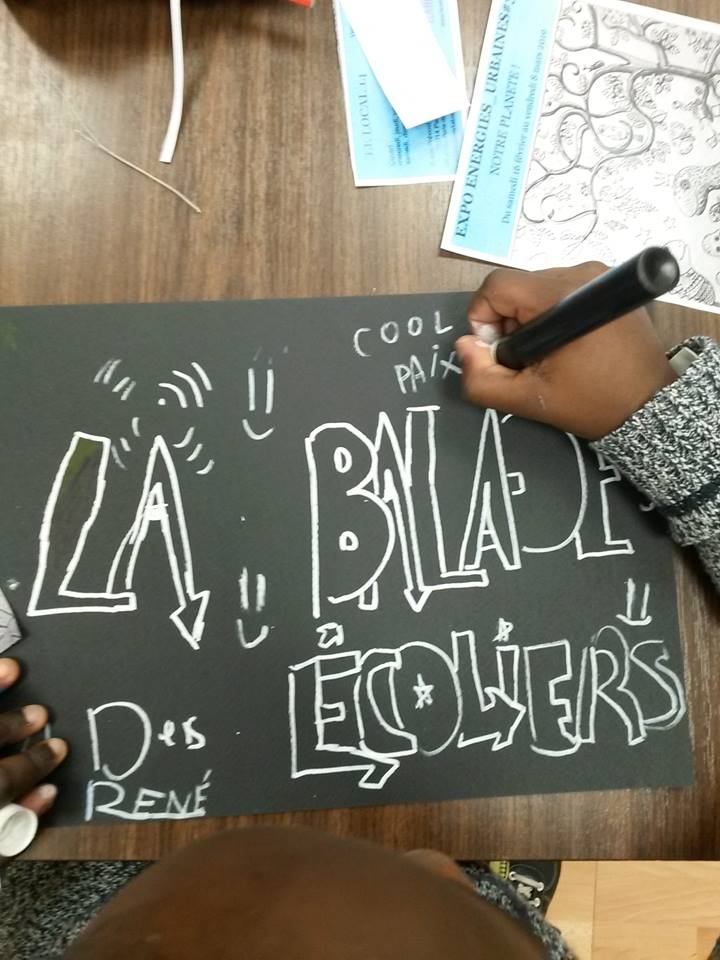

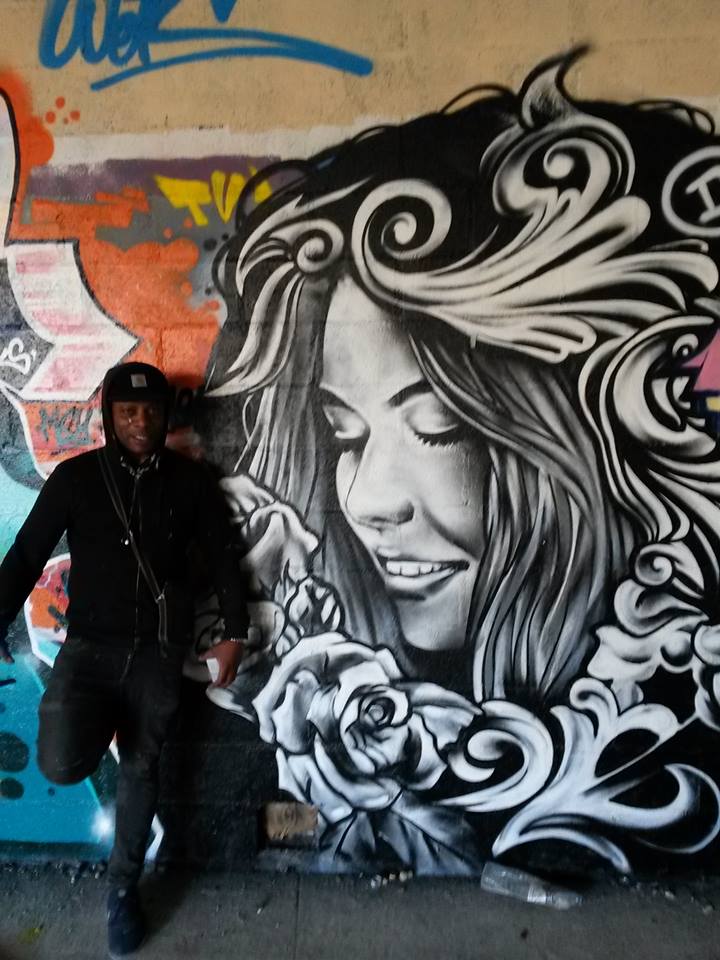

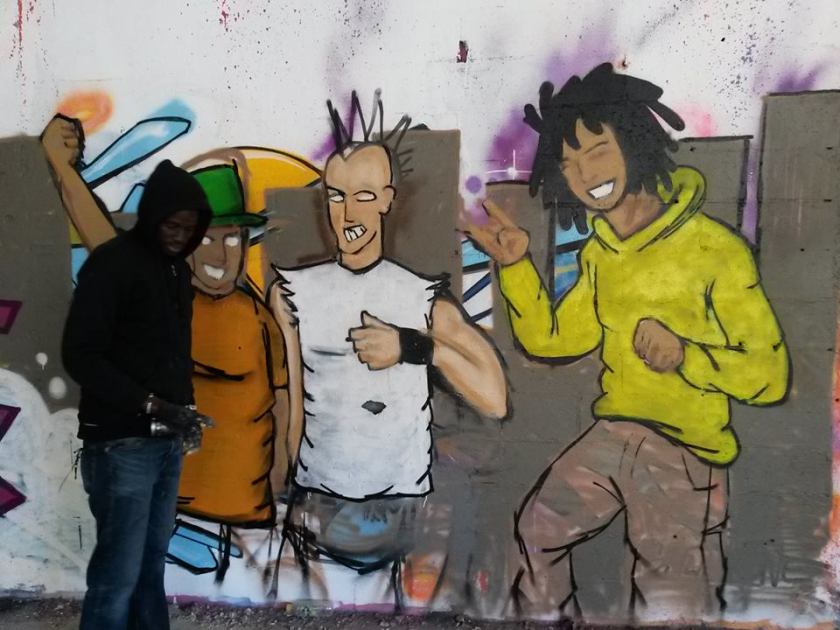
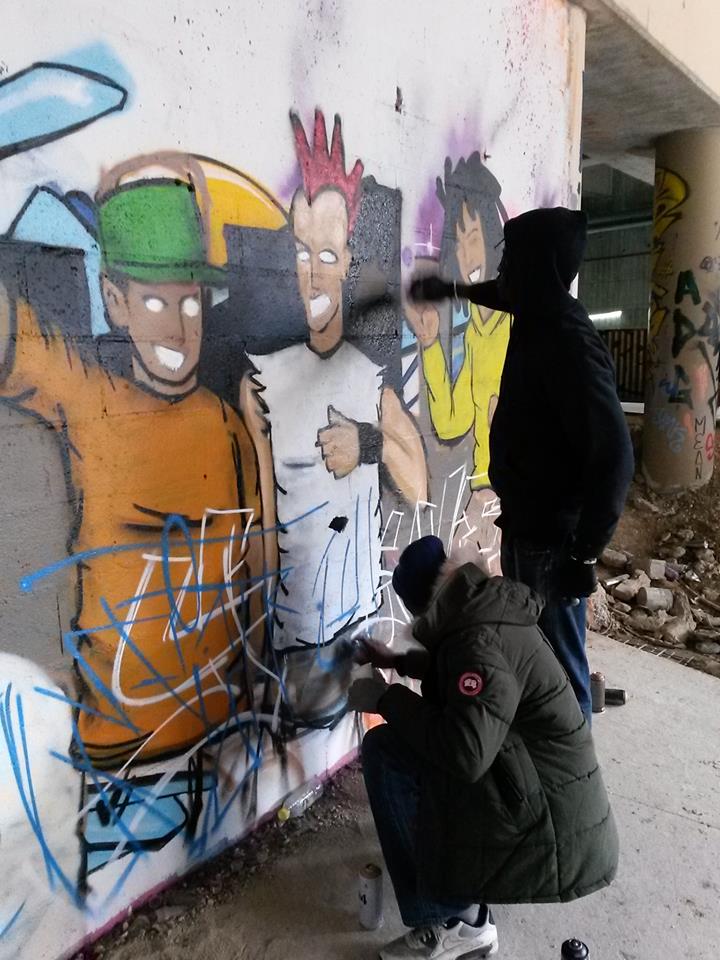
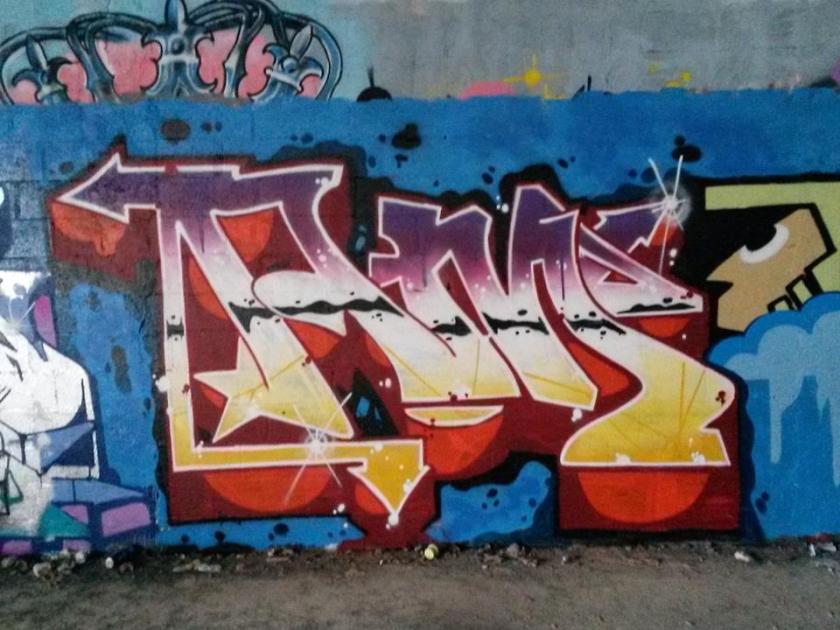
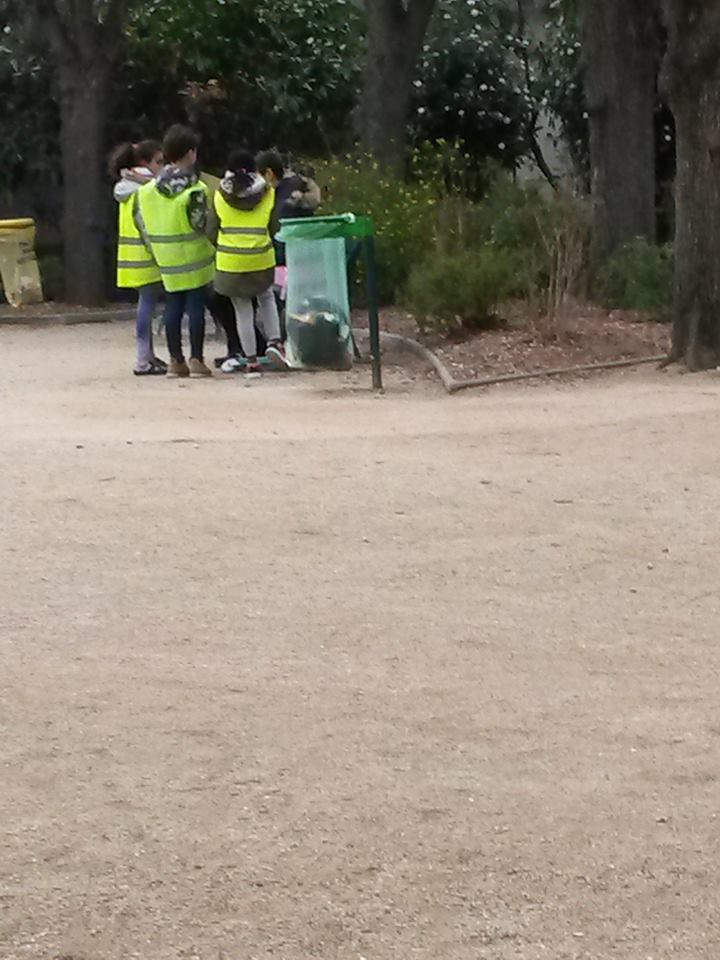
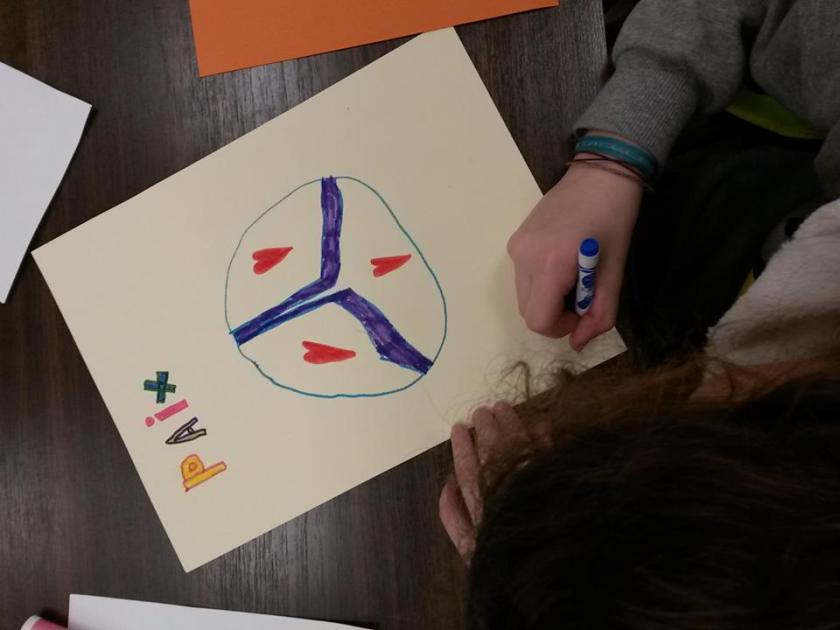
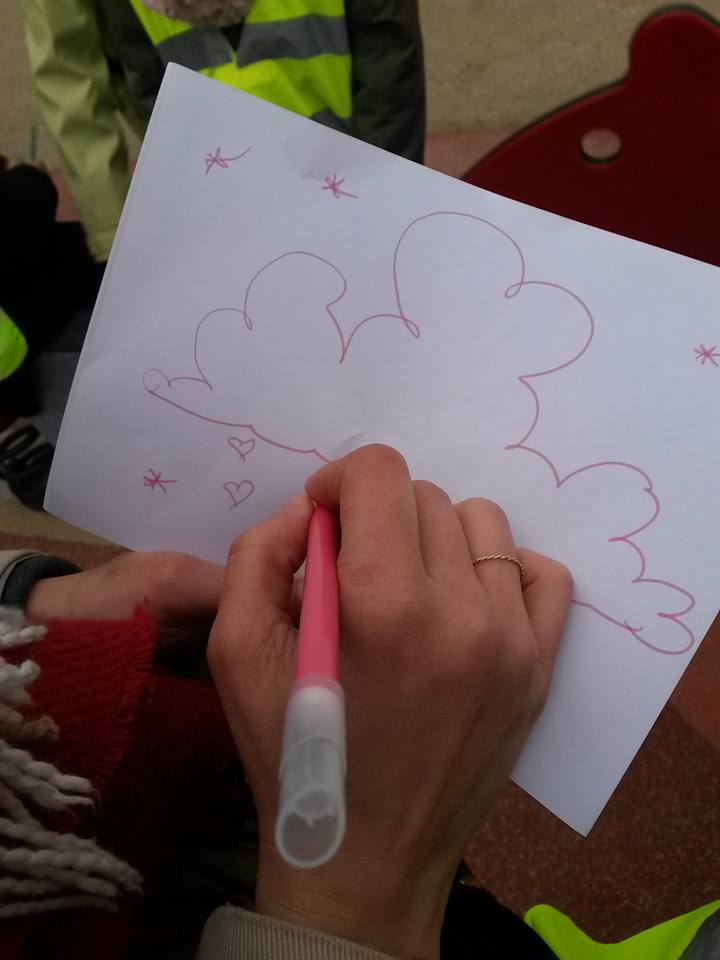
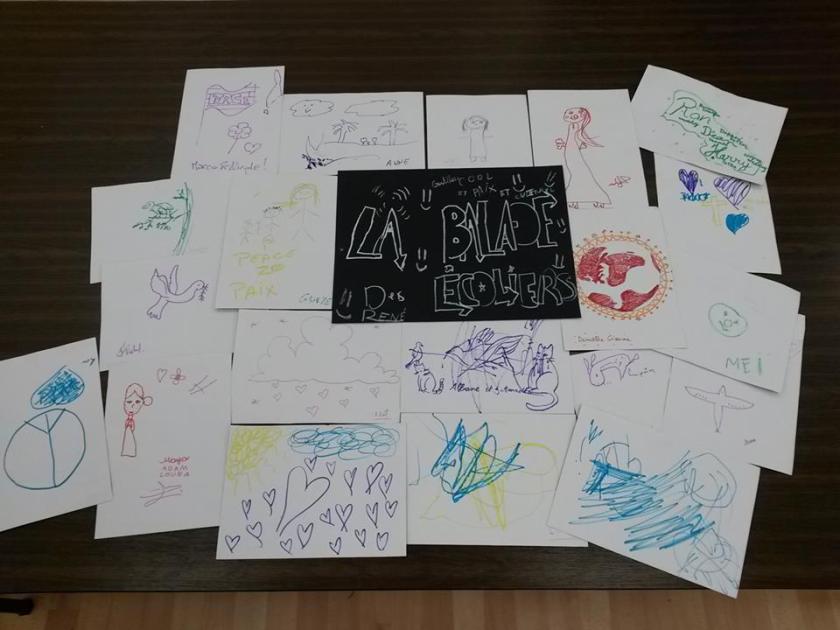
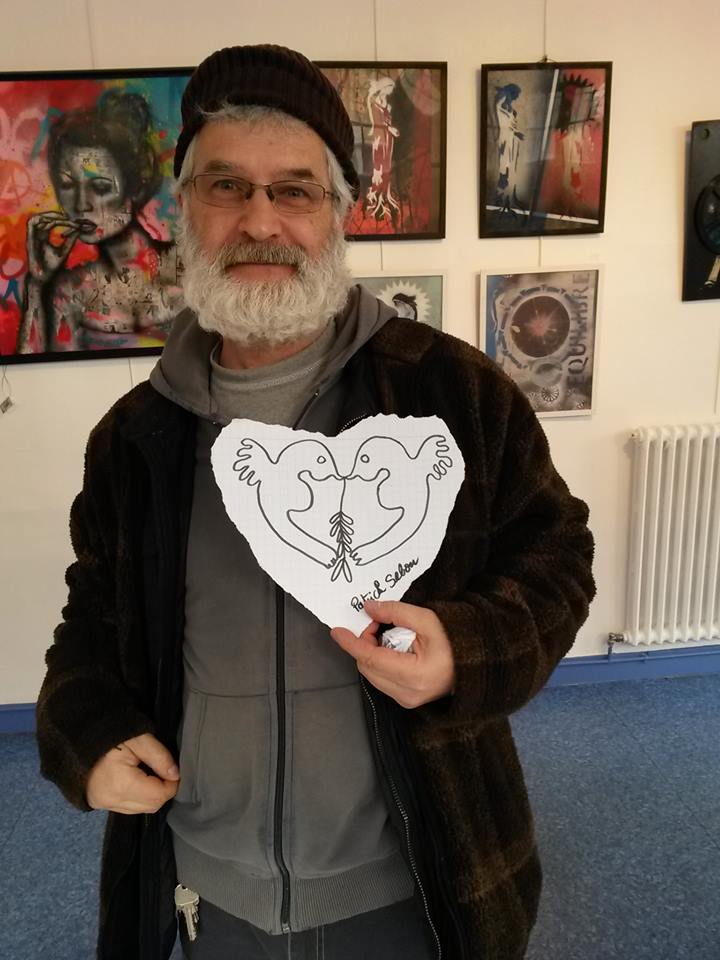


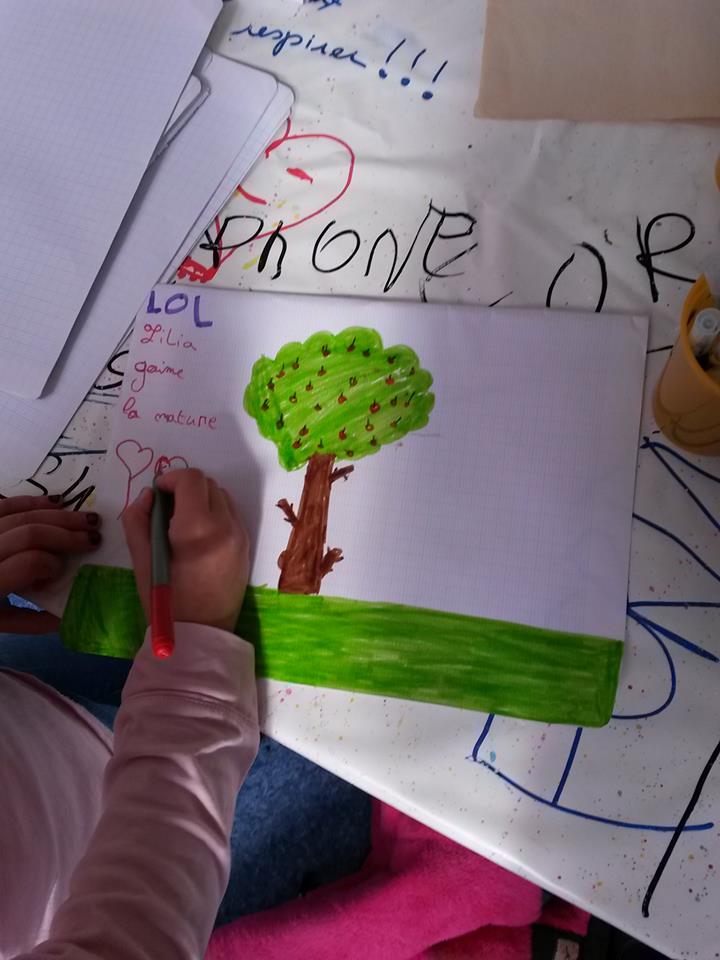

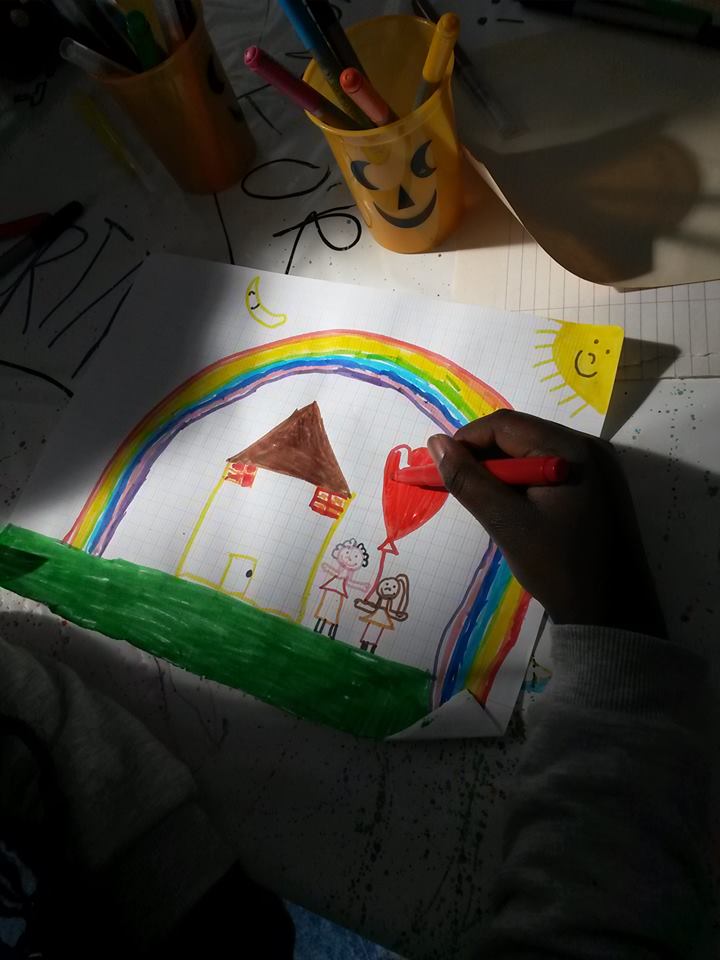
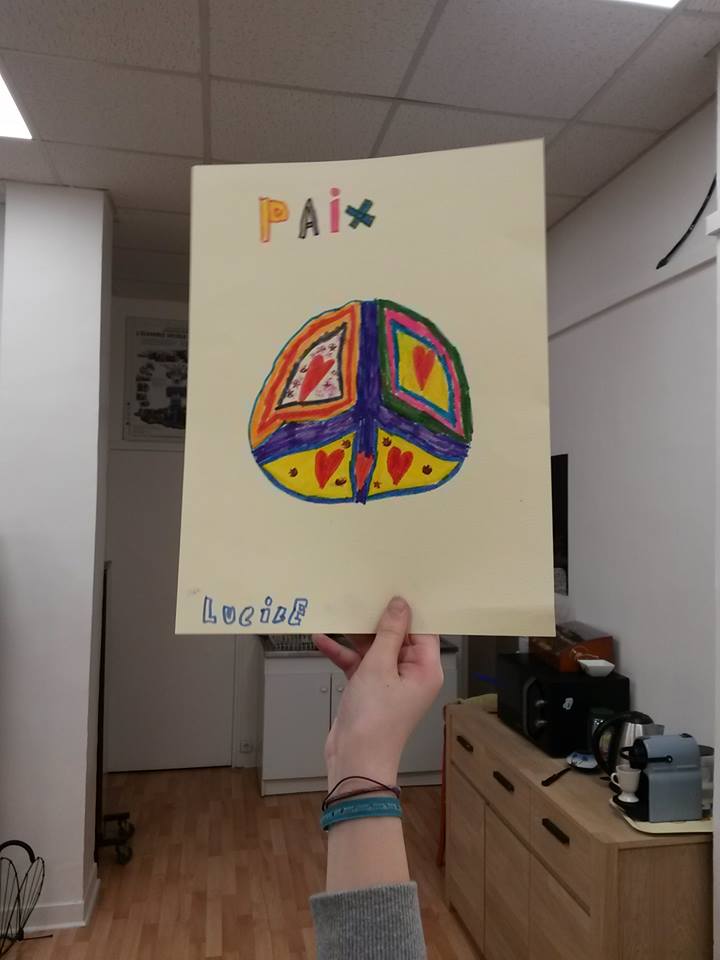

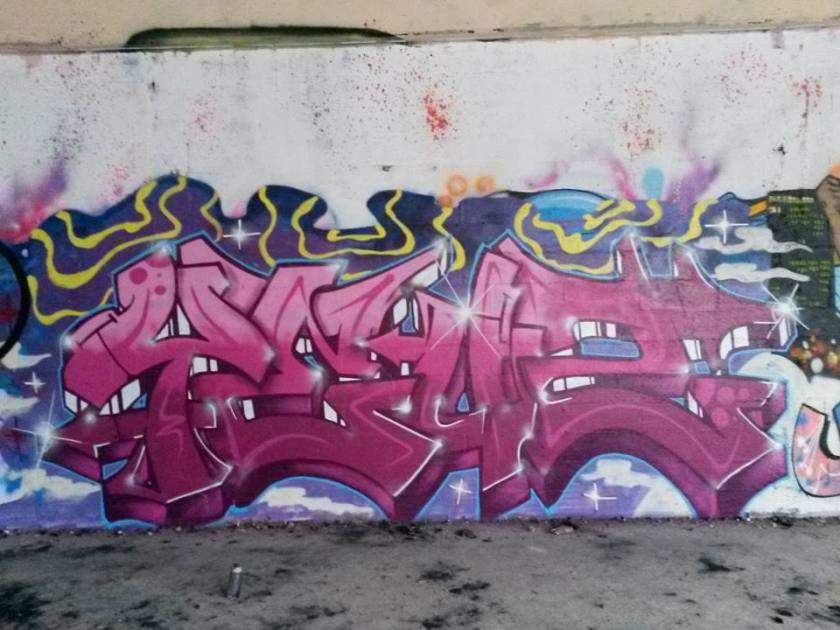

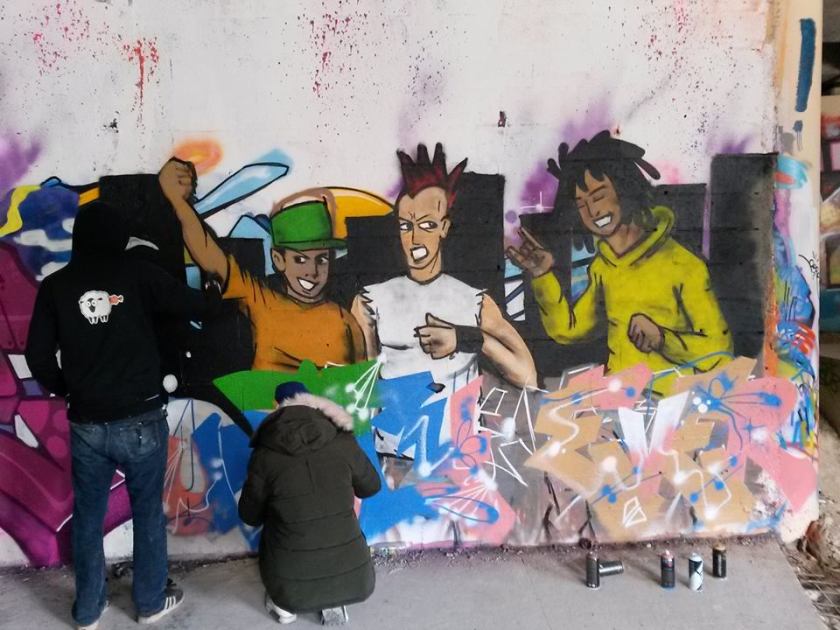
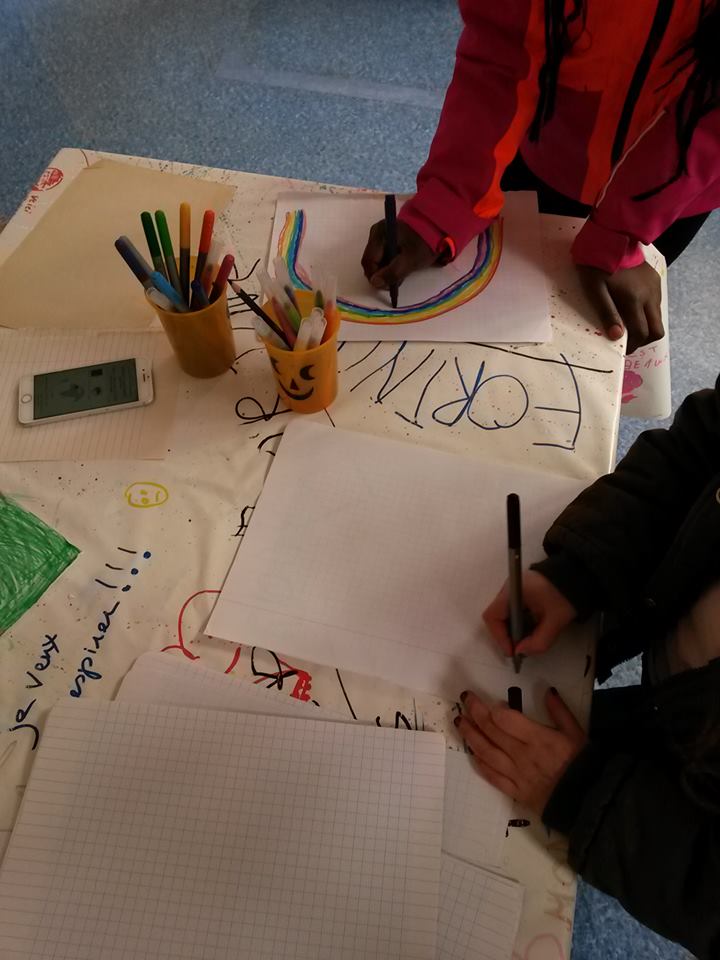
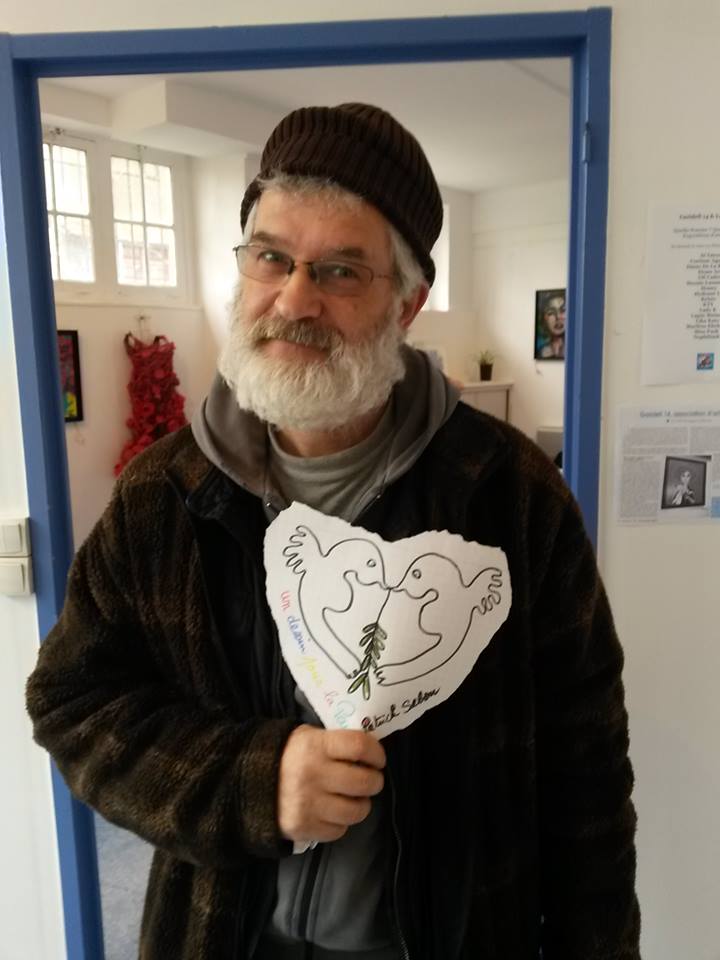


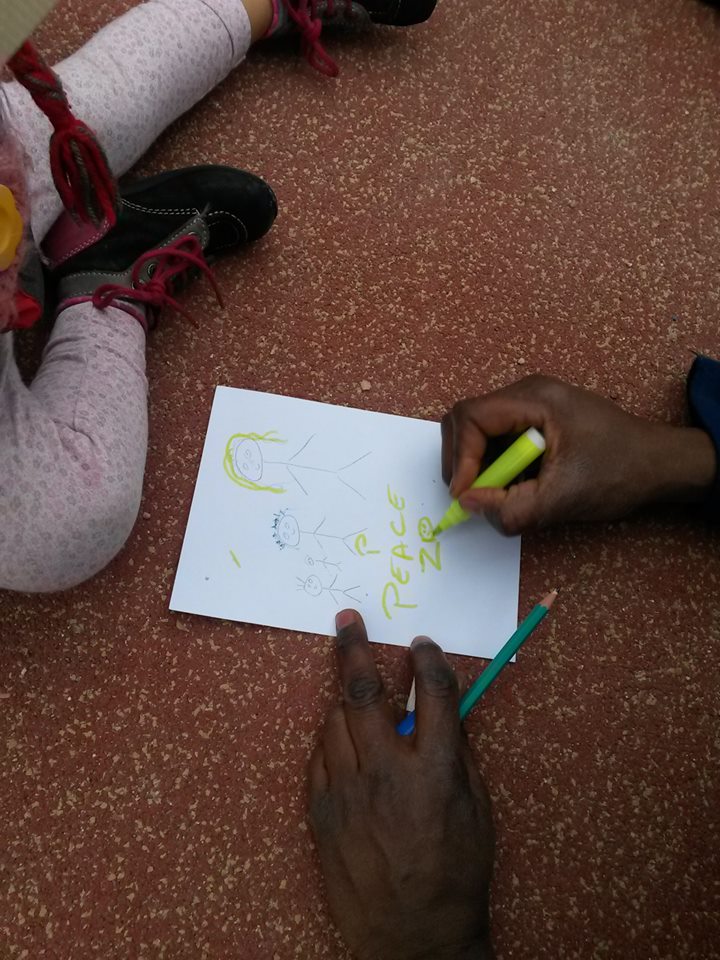



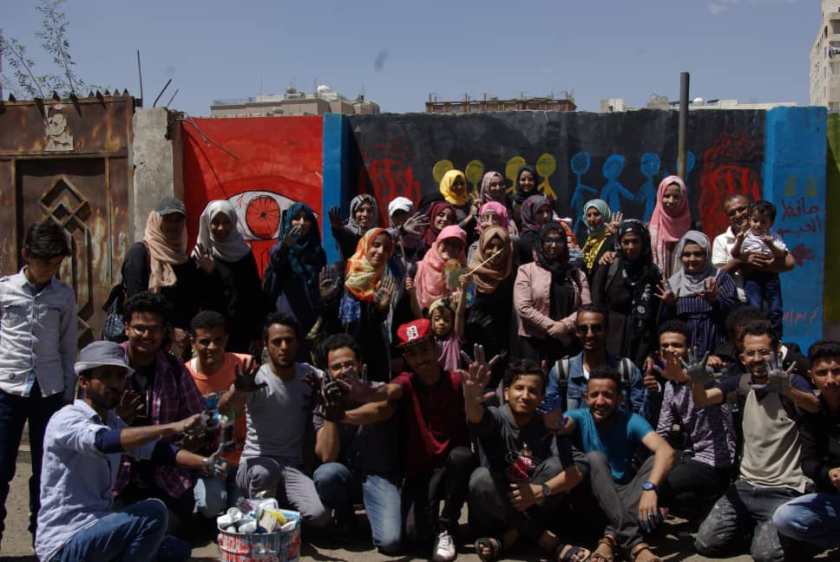
لا أعرف كيف يمكن أن أصف هذه الصورة وغيرها من الصور المبهجة التي ادخلت الفرحة للروح.
خرج اليمنين كبار وصغار في مدن عدة من عدن إلى تعز، وإلى صنعاء و انتانانا ريفوا بمدغشقر وسيخرج أصدقاء لنا في مدن أخرى حول العالم، ليرسموا لأجل الحياة والأمل.
يجب ان ننحني لكم تقديرا على مجهودكم/ن الفاتن لإدخالكم/ن الفرحة لقلوب اليمنيين واليمن على الرغم من الصعوبات التي واجهتموها.
الصوره الجماعيه التقطت في صنعاء اليوم، من الحدث السنوي #اليومالمفتوحللفن.
شكر جزيل لكل من ساهم بإنجاح هذا العمل المتواضع بالأمكانيات والكبير بمن فيه, ولطاقم فريق الحدث في صنعاء “هيفاء سبيع, صامد السامعي وذي يزن العلوي” وللفنانة العزيزة صفاء أحمد في مدينة “انتانا”
تصوير: محمد عبدالله
I do not know how can I describe this picture and other fascinating images that have brought joy to the soul.
Yemenis came out in the cities of Aden to Taiz, to Sanaa and Antanana, and other friends in other cities around the world will join the event too.
paint for life and hope and coexistence.
We all should bow to you for the incredible efforts you done to bring this amazing moments to Yemen and Yemenis despite the difficulties you faced.
Group photo of the event in Sana’a from the annual event #Open_Day_Of_Art.
Special thanks for those who make this happen, and to the event team in Sana’a “Haifa Subay, Samed Alsame and Thiyazen Alalawi” and to the artist “Safa’a Ahmed” in Antana city, Madagascar.
Photo by: Mohammed Abdulah

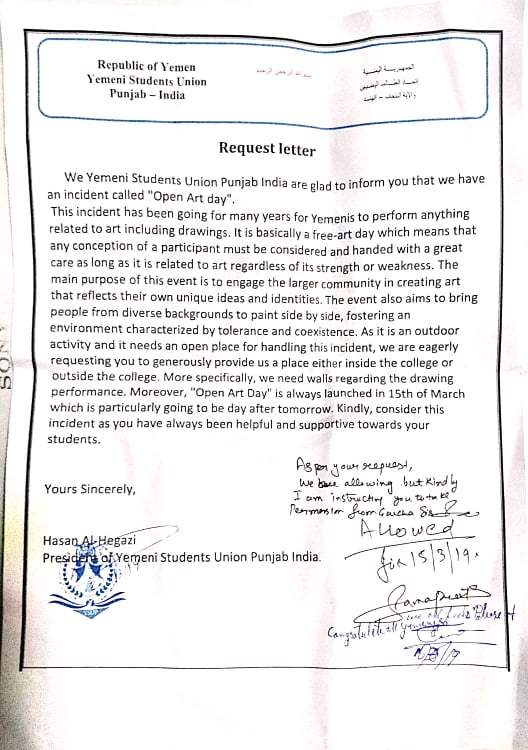
تصريح من جامعة “Bhutta Group of College”, في مدينة “لوديانا” الهندية،لـ “إتحاد طلاب اليمن في البنجاب” وبتنسيق من الصديق العزيز “سلطان القادري” بالرسم على جدرانها. شكرا جزيلا يا سلطان.
A permission from “Bhutta Group of Colleges”, Ludhiana city, India, to “Yemeni Student Union in India”, and this annual event was Coordinated by Sultan Alqadri so that the drawings can be done in the walls of the college. #Open_Day_Of_Art.


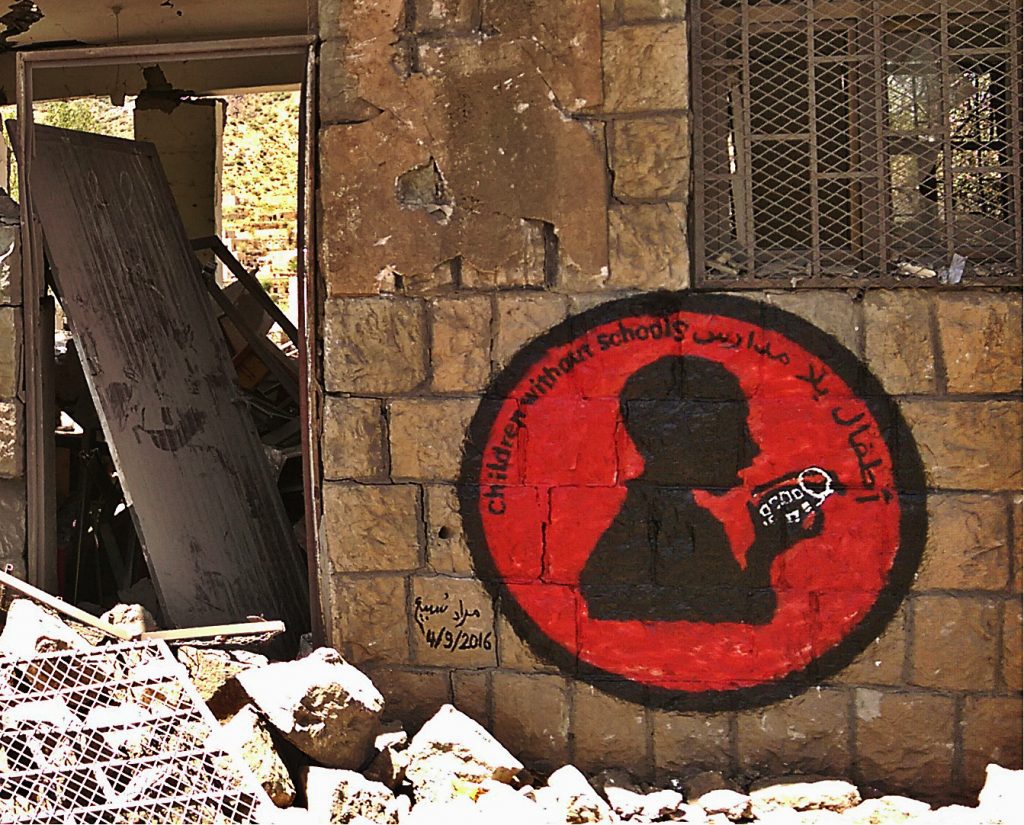
An anti-war mural created by Yemeni street artist Murad Subay, 2016 Freedom of Expression Arts Award winner.
Art has been used as a form of protest during times of crisis throughout history. It is a popular and, at times, effective platform to express opinions about societal or governmental problems, particularly when other forms of protest are not available. Protest art includes performances, site-specific installations, graffiti and street art.
Here Index highlights key articles about art and protest from around the world, from the past five decades.
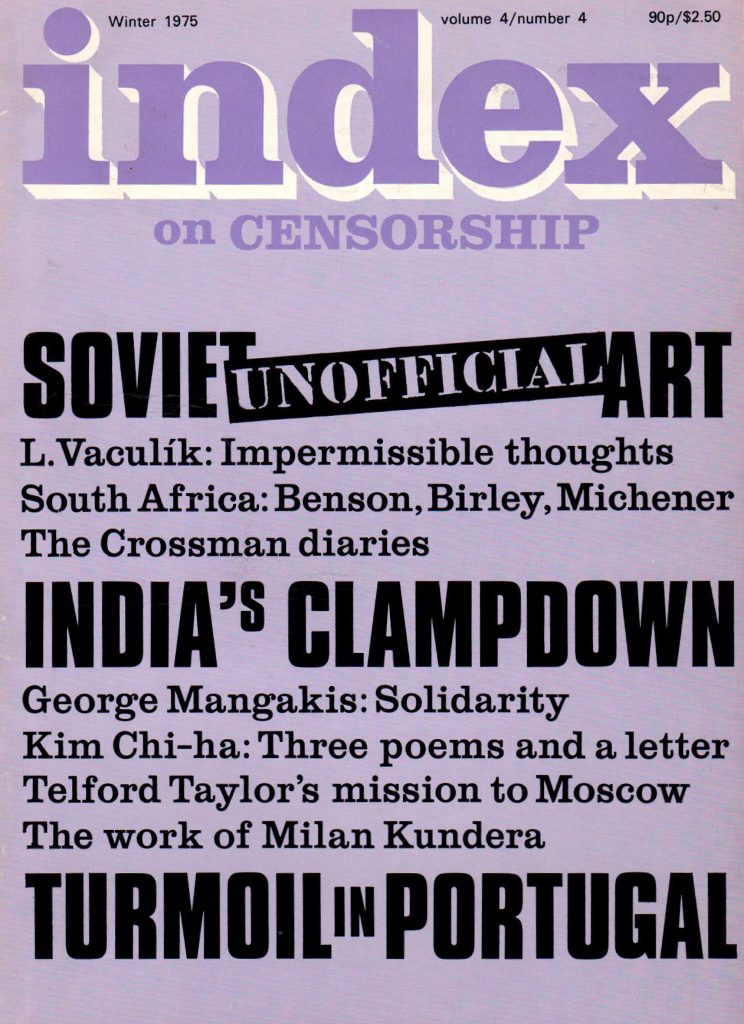
December 1975, vol. 4 issue: 4
Alexander Glezer writes about his participation in organising the unofficial art exhibit in Moscow. When the first exhibition opened, it was bulldozed by undercover police officers and agents from the KGB (Committee for State Security). In the second exhibition, the authorities were forced by the public to grant permission and ten to fifteen thousand people came to see the paintings and sculptures of 50 nonconformist artists’. Glezer, 41-years-old, was questioned by the KGB, arrested and sentenced 10 days for “hooliganism”. He was allowed to leave the Soviet Union in 1975 February.
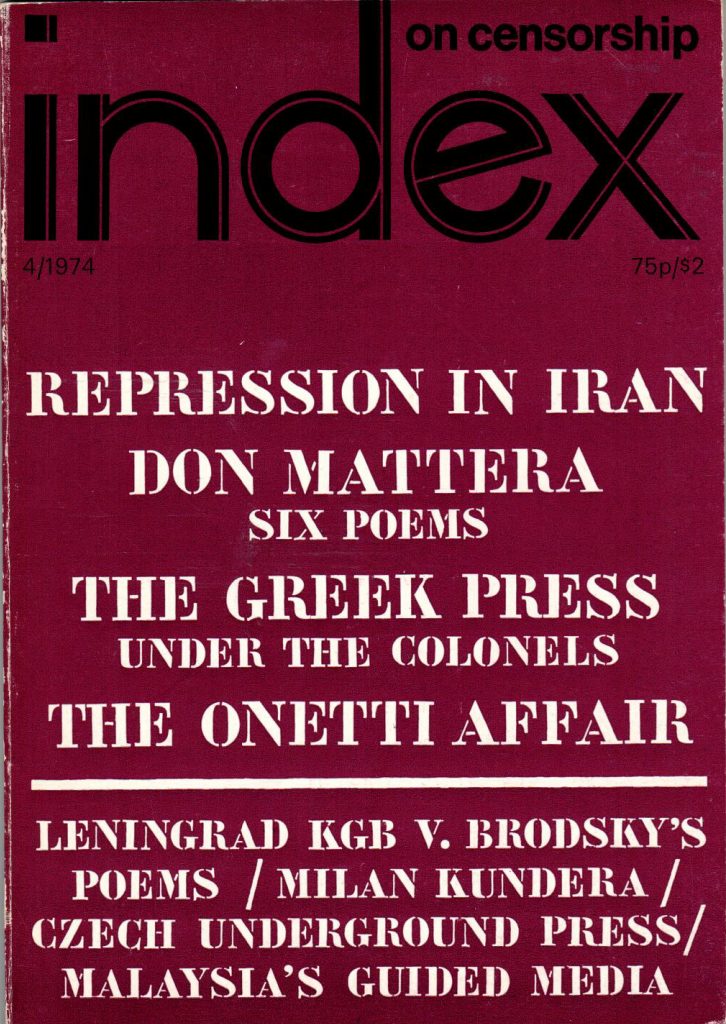
December 1974, vol. 3 issue: 4
The Sao Mamed Gallery opened with 186 artworks by 87 artists who had never shown their work in public before due to the regime’s dictating of Portuguese life. The gallery was built to celebrate the result of the military coup abolishing censorship of expression.
Published in the New York Times.
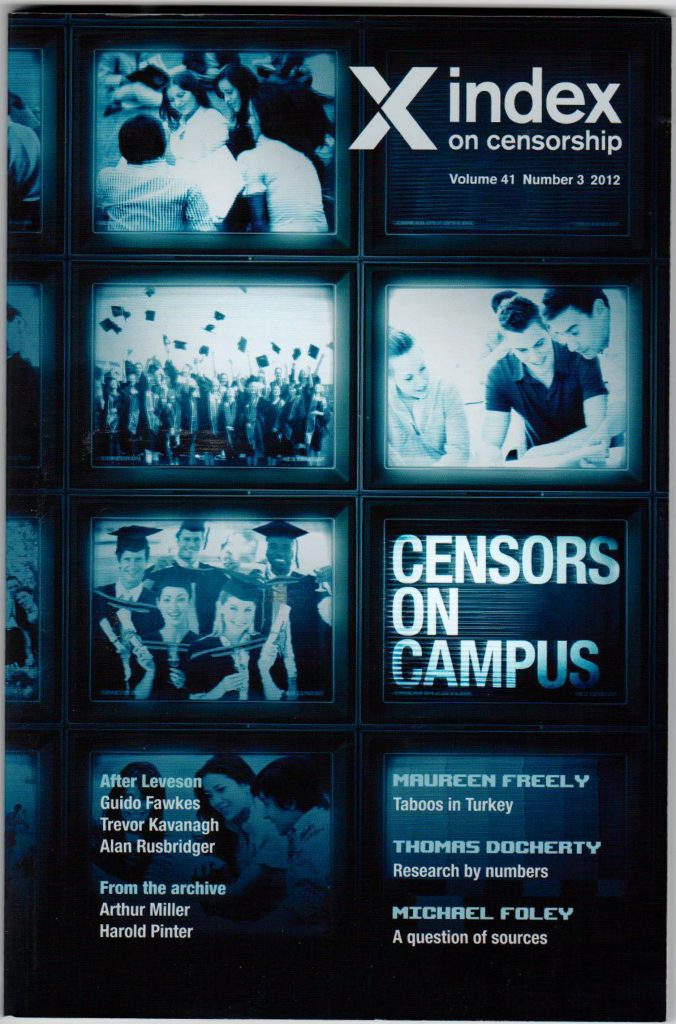
September 2012, vol. 41 issue: 3
Malu Halasa, co-curator of the exhibition Culture in Defiance: Continuing Traditions of Satire, Art and the Struggle for Freedom in Syria, writes about how the violence in Syria affected country’s art of resistance production and then created ideas of spreading this work further West which was the reason for the exhibition’s creation.
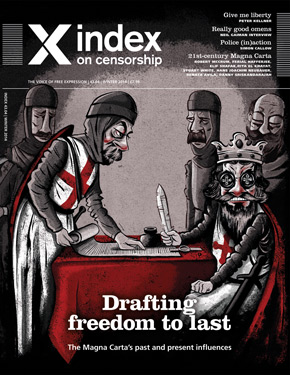
Dark Arts: Three Uzbek artists speak out on state constraints
December 2014, vol. 43 issue: 4
Author Nargis Tashpulatova interviews writer three Uzbek artists – Sid Yanishev, photographer Umida Akhmedova and conceptual artist Vyacheslav Akhunov who continue to create artwork throughout governmental threats and censorship and the regression of art in Uzbek society.
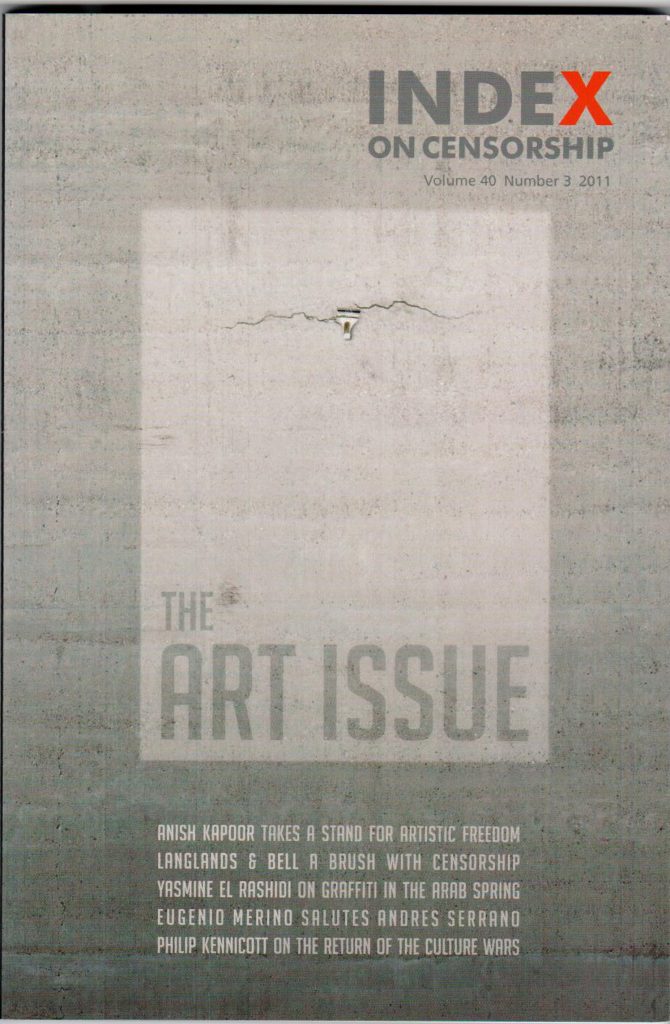
October 2011, vol. 40 issue: 3
Yasmine El Rashidi writes on the outbreak of graffiti in the streets in Cairo during the 18 days of the Egyptian revolution.
Continue reading “Student reading list: Art and protest/ BY GILLIAN TRUDEAU, On Index Magazine”


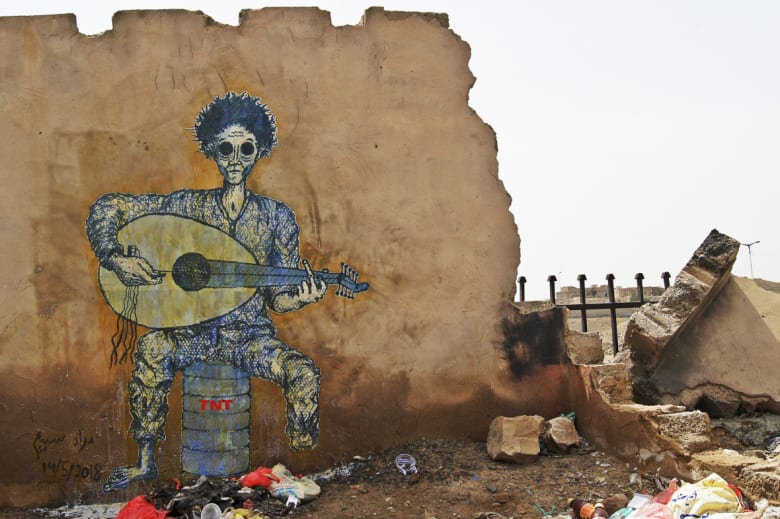
دبي، الإمارات العربية المتحدة (CNN)– ينتقل بين طيات الآلام اليومية وصراخ الأحياء الباحثين عن الموتى، إلى عالم آخر يرتطم الصمت فيه بجدار اجتازه رصاص القناصين في اشتباك سابق. ويستعين الرسام اليمني مراد سُبيع بألوان الأكريليك والبخاخات للرسم على الجدار الشبه صامد في إحدى مناطق اليمن.
ويلتصق جلد الشخصية التي يرسمها بعظامها لتبدو هزيلة لا قوة لها، بينما يبدو شعر الشخصية الأشعث متطايراً بلا مبالاة، ويحتل السواد أبيض العيون، ولكن كل تلك التفاصيل لم تخرج من عدم الفنان، بل من التجارب التي عاشها خلال الحرب في اليمن.
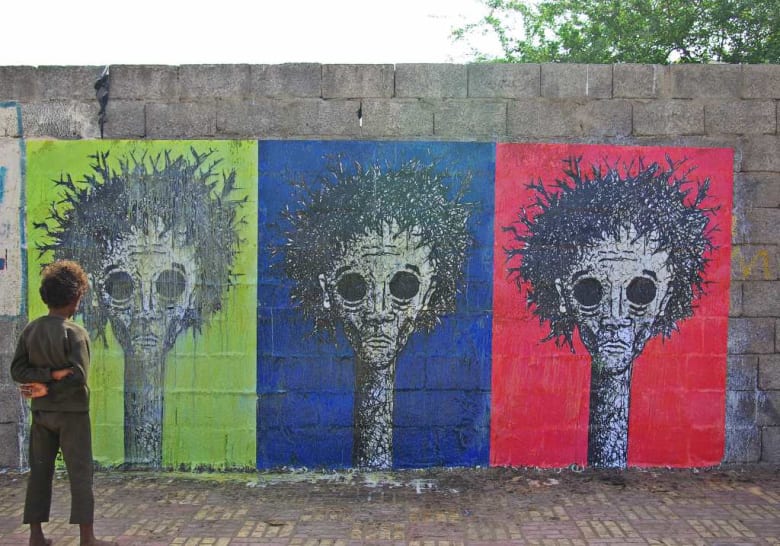
وأراد الفنان اليمني “نقل وتأريخ الفترة الصعبة جداً” في تاريخ “بلد يحدد مستقبله” على حد تعبيره، إذ اختار سبيع في عمله الفني “وجوه الحرب” أن يرسم شخصيات هزيلة، في إشارة إلى حالات “الجوع والحرب والمرض” التي يعيشها أهل اليمن، وشبّه شعر شخصياته بـ “الغابات المحترقة”، وقرر استبدال الأعين “بثقب أسود” ليجسد “تأثير الحرب التي أخرجت العيون من محجرها”.
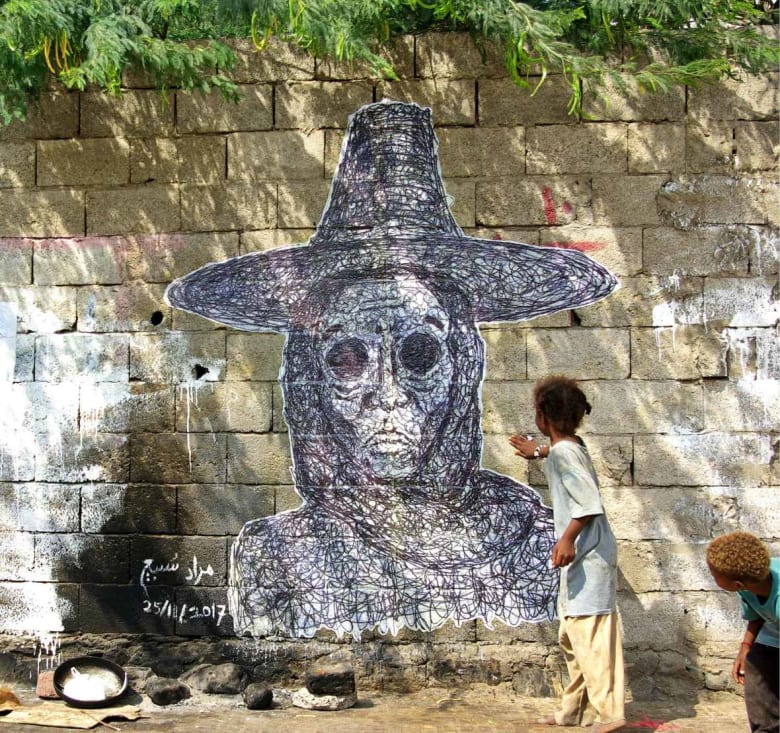
ولا تتربص ويلات الحرب وأشباحها بفن سُبيع دائماً إذ تخترق الألوان المبهجة أعماله الفنية بين الحين والآخر، حيث هدف أول مشروع له حمل عنوان “لوّن جدار شارعك” والذي بدأه في عام ٢٠١٢ إلى “محو الصراع” الذي حصل في موقع اللوحة وإخفاء آثار الدمار على الجدران.
وبدأ الفنان اليمني بالرسم وحيداً في بداية الحملة، إلا إنه وبعد أسبوع من العمل تقريباً، بدأ أهل المنطقة بالانضمام إليه والانغماس في عالم الألوان أيضاً، واعتبر سُبيع الحملة الفنية “كرنفالاً لونياً فريداً من نوعه بسبب تواجد الناس”.
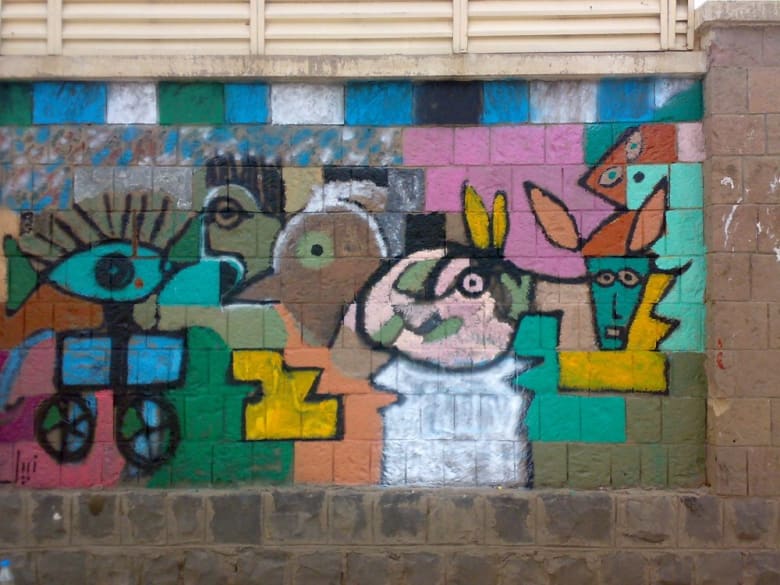
“صورة لجدارية الفنان نبيل القاسم من ضمن حملة “لون جدار شارعك
ويرى الفنان اليمني أن الفن هو “وسيلة للتواصل مع الآخرين”، بينما اختار ممارسة فن الشارع كونه “بعيد عن الأماكن المغلقة ويستطيع الفنان من خلاله الوصول إلى كل الناس”.
أما فيما يتعلق بحيثيات الرسم على الجدران في اليمن، فقال سُبيع لموقع CNN بالعربية إنه من الضروري زيارة الحائط قبل البدء بالرسم وذلك بهدف “التشبع بالقصة وتكوين علاقة مع الجدار”.
وغالباً ما تتلقى الأعمال الفنية نقداً في الحالة الطبيعية، إلا أن جداريات سُبيع عانت من عمليات “الطمس” على حد تعبيره، كما منع في بعض الأحيان من إكمال الرسم، وتعرضت مجموعة الفنانين المشاركين معه في أحيان أخرى للاعتقال.
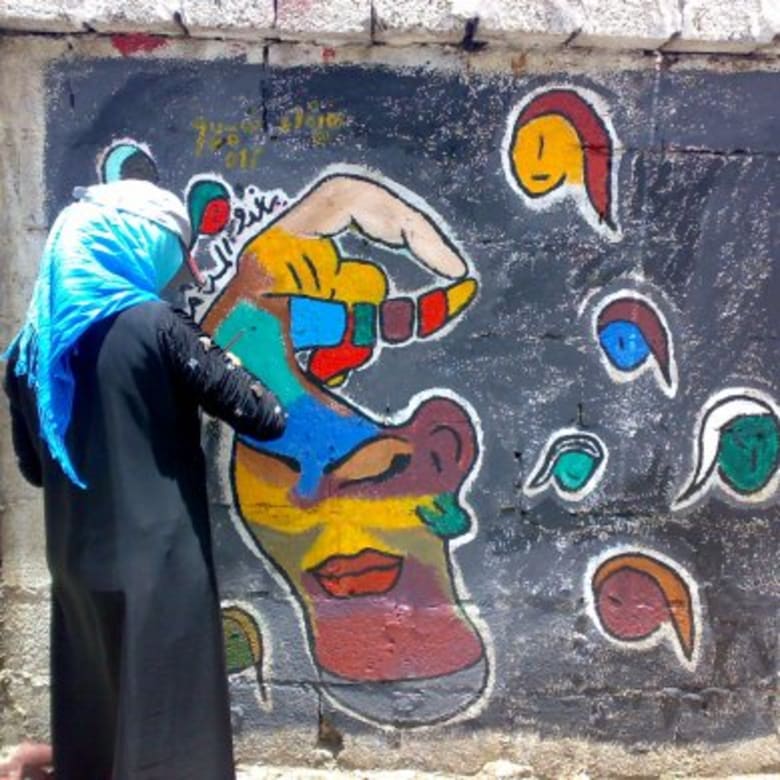
صورة لجدارية الفنانة هيفاء سبيع من ضمن حملة “لون جدار شارعك”
ولكنه رغم كل المصاعب استمر برش الألوان على الحائط دون استسلام، ليقينه بأن “الفن أهم في وقت الحرب” كونه الزمن الذي “تختفي فيه الآمال والأحلام والحياة” في حين يحاول الفن أن يكون موجوداً رغم الصعاب مما يجعله أسلوباً تعبيرياً “عميقاً ومهماً”، على حد تعبيره.
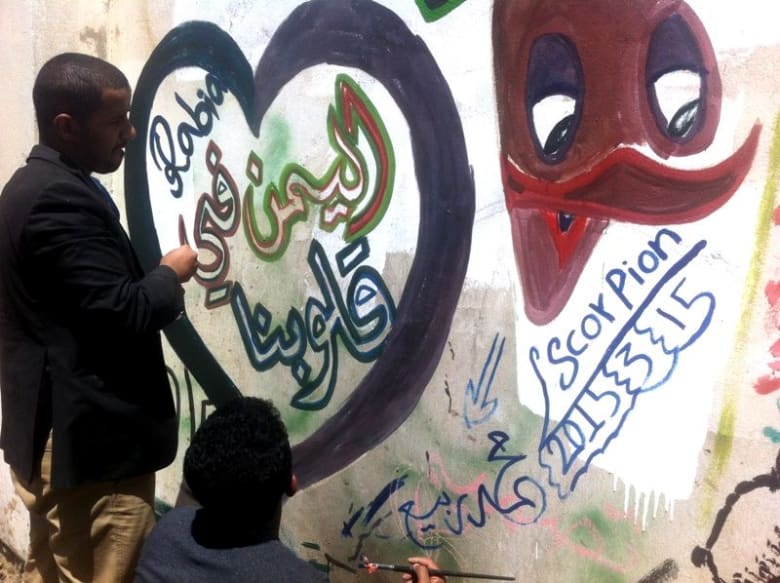
ينظم سُبيع النسخة الخامسة من مشروع “اليوم المفتوح للفن” والذي سيقام في 15 من مارس 2019، بهدف “المحافظة على التواصل المستمر بين الناس”، إذ يقوم الأشخاص في مدن مختلفة من اليمن والبلدان الأخرى المشاركة بالمهرجان بالرسم في نفس الوقت واليوم بهدف بناء “جسر في الوقت الذي تفرق فيه الحدود والحرب بين الناس”.

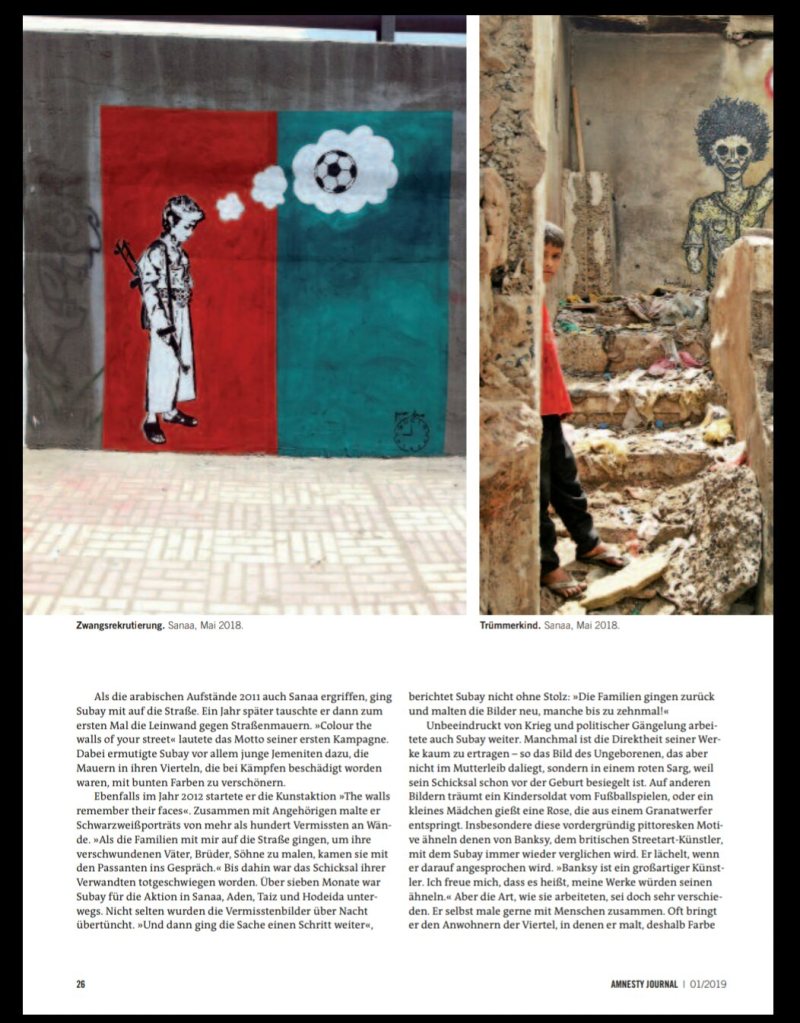
“لوحات على الركام”
عنوان مقال في مجلة “العفو الدولية” في المانيا، فيه مقابلة أجرتها معي الصحفية الرائعة “كورنيليا”.. ونشر في أربع صفحات.
“Paintings on Ruins”
An article title, on “Amnesty Journal”, Germany, in an interview about my work by the amazing author”Cornelia”, and it was published in four pages.




جداريتي “زهرة الهاون” كغلاف لمجلة “العفوا الدولية”, في ألمانيا.
My mural, as the cover of “Amnesty Journal” Magazine, Germany


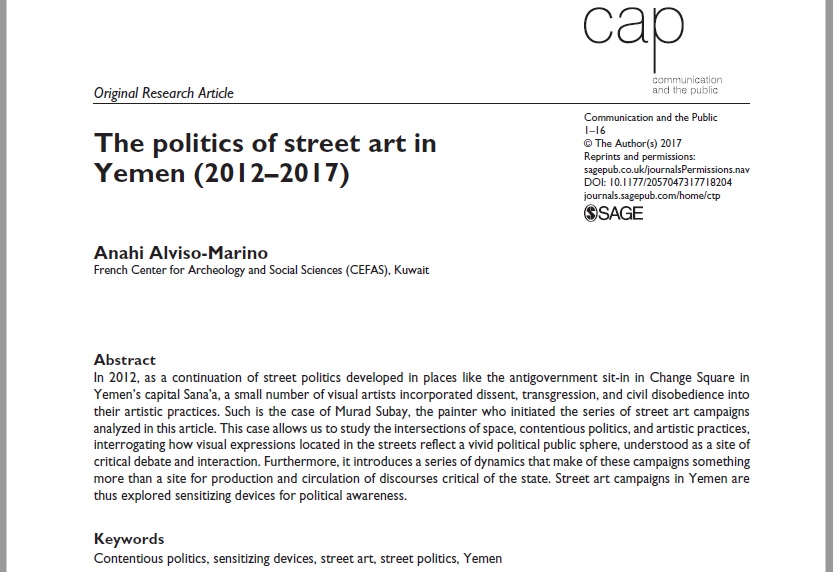
First Published July 14, 2017 Research Article 
PDF: CAP-the politics of street art in Yemen (2012-2017) 2 copie
Link: http://journals.sagepub.com/doi/abs/10.1177/2057047317718204

 Murad Subay