Artists paint murals of hopes and fears in war-torn Yemen
CGTN
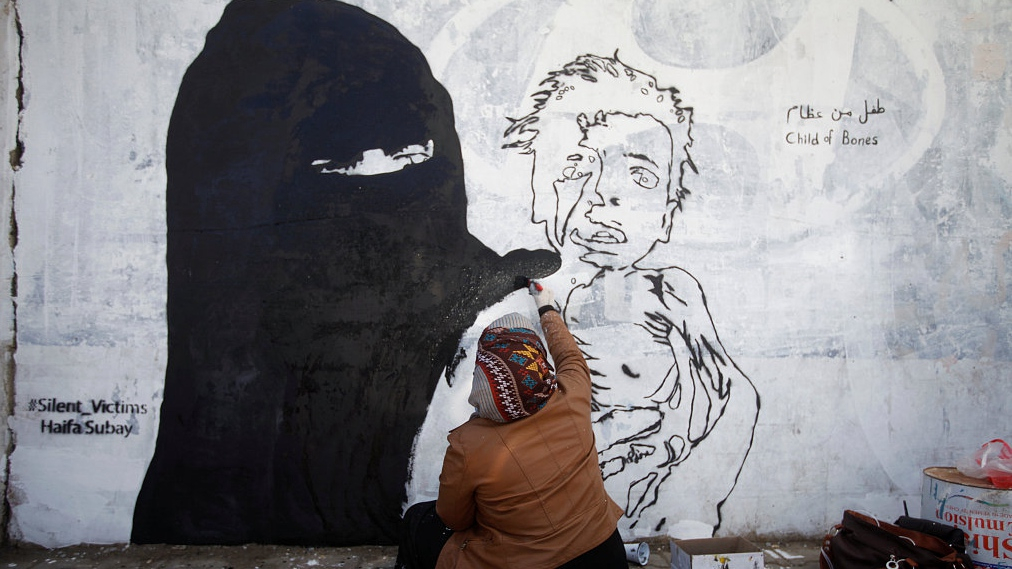
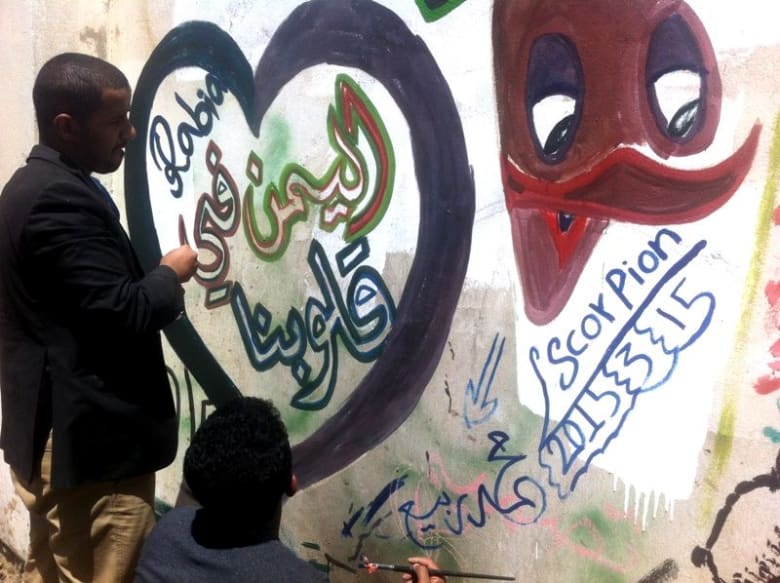
Young artists lined up across a wall in the Yemeni capital Sanaa on Thursday painting murals that reflect their fears as well as hopes in a country crippled by war.
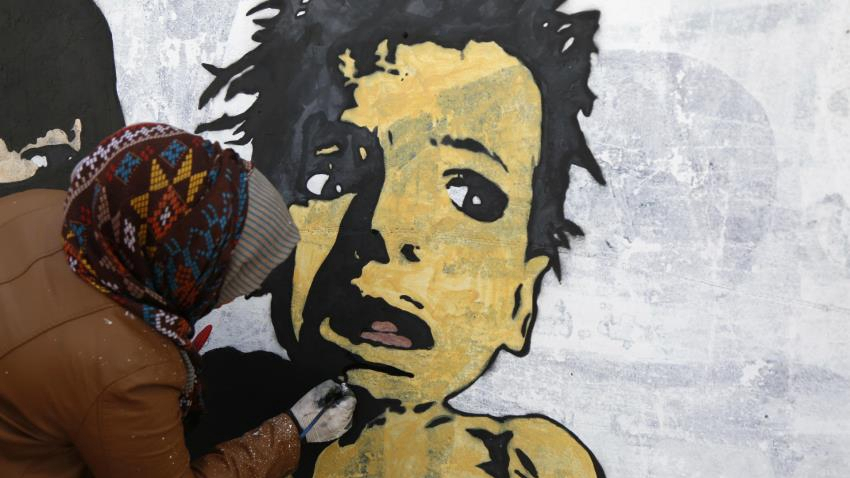
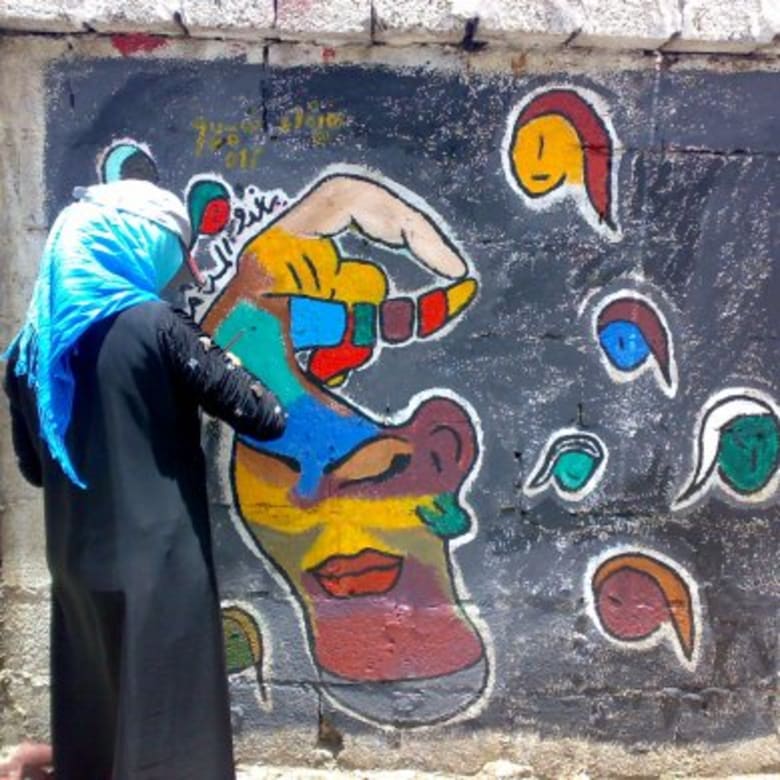
“We are here as a tribute to art and culture and to spread the message of peace in an attempt to revive what this war has taken from us,” Haifa Subay, her glasses spotted with white paint, tells AFP. The graffiti artist is taking part in an open-air exhibition, painting a mural of what seems to be an abstract face with words of hope and encouragement in bold, red letters.
“The war has destroyed Yemen. It has destroyed all the capabilities of this beautiful country,” she says from the rebel-held capital. The conflict between the pro-government forces backed by a Saudi-led military coalition, and the Iran-aligned Huthi rebels has pushed the country to the brink of famine.
File of artist paint murals on a wall in the Yemeni capital Sanaa, March 14, 2019. /AFP Photo
Since 2015, when Saudi Arabia and its allies intervened in the war, around 10,000 people – mostly civilians – have been killed and more than 60,000 wounded, according to the World Health Organization. Rights groups say the real figure could be five times as high.
Like Subay, Thiyazen al-Alawai hopes to bring back life to the city through his art work.
“Street art in Yemen is not separate from society but a part of it,” he said, as people, young and old, paused to admire the artists’ work. “The people (of Yemen) are not spectators, but they are participants in such art work.”
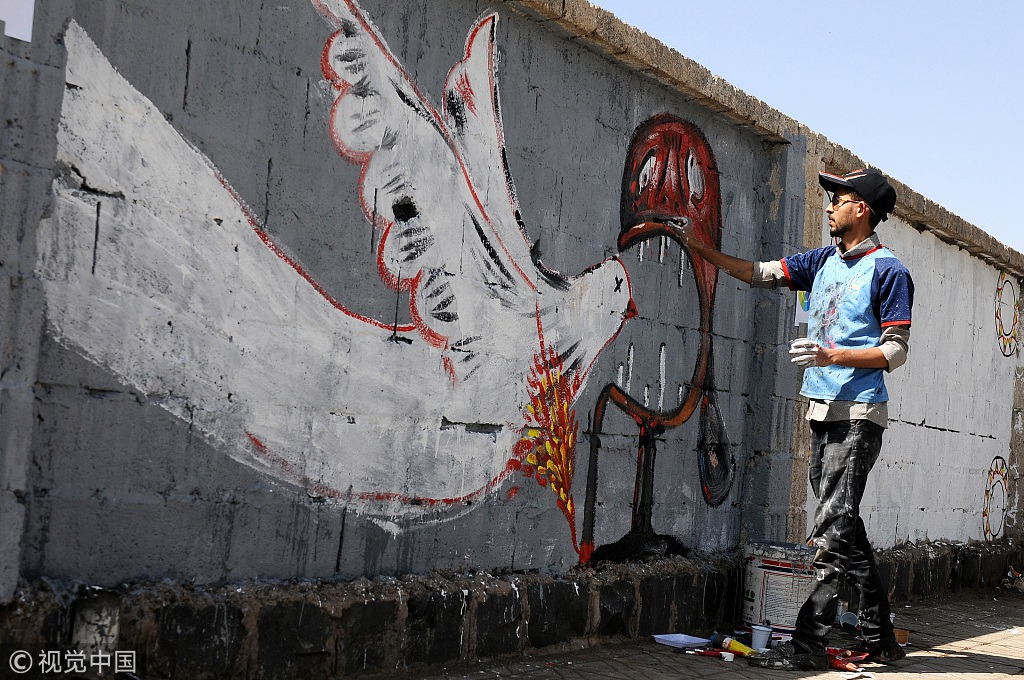
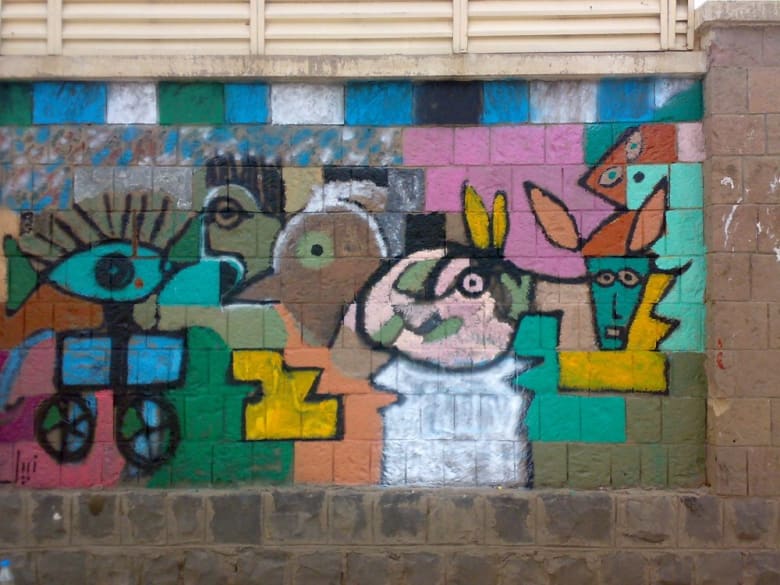
File of a Yemeni artist draws graffiti during an Open Day of graffiti campaign call for peace on March 15, 2018 in Sanaa, Yemen.
A teenage boy donning a hoodie and a respirator mask spray paints a wall using his country’s flag colors: red, white and black. Another wall has the word Arabia Felix, or Happy Arabia – used by the Romans to describe the part of the region to which Yemen belonged and was home to the legendary Queen of Sheba.
“We just hope that Yemen returns to the way it was,” said Subay.
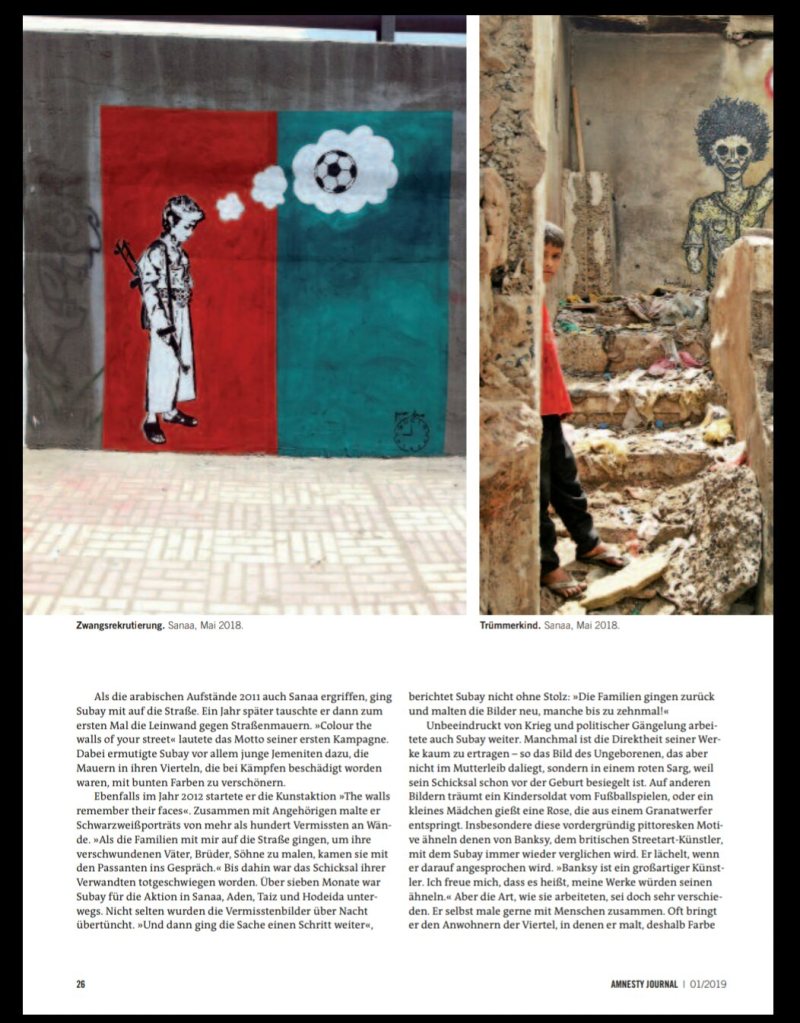
صوره من عرض الليزر الذي تم مساء أمس في العاصمة “واشنطن” لجدارية “تجنيد الأطفال” بالتعاون مع منظمة “أوكسفام أمريكا”, على الطريق المؤدي إلى “المركز الوطني”.
أشرف على العرض فنان عروض الليزر “ويلي”
الصورتان من صفحة “أوكسفام” على التويتر و العزيزه “سماء الهمداني”
“Photo of the laser projection of my mural “Children Recruitment” from the show in “Washington DC” yesterday night, in a collaboration with “Oxfam America”. The projection was on a building wall of a road led to the “National Mall”.
The show was by the laser artist “Willie”.
Photo by: Oxfam America & Sama Alhamdani
Children around street art in Yemen (Najeeb Subay)
Yemen’s ongoing war has left millions of people displaced, hungry, and hopeless. The fluid authority of local factions, the lack of news sources, and pervasive illiteracy all work to stifle public discussion within Yemen. But street graffiti, presented in local context, is a way to slip past those obstacles: to promote citizens’ involvement and provide hope. A burgeoning group of artists has developed street campaigns and involved the community in work that visualizes the indomitable spirit of Yemenis. Murad Subay, maybe the most well-known of them, vows to continue to draw graffiti: “This is how I fight in this war.”
AGSIW spoke with Murad about his beginnings in street art, the effects of the war on his art campaigns, and his motivation to persist.
AGSIW: Describe how you became involved in street art. Why does street art appeal to you?
Murad: I have been interested in art since I was young. But, during Yemen’s revolution in 2011, I was tested. I decided to go out in the streets to participate. On the streets, I learned the power of my voice. Although the revolution failed, I knew I had to persist.
What could I do? I don’t believe in taking up arms, so I decided to take my paintbrushes and make public murals. I launched my first campaign, “Color the Walls of Your Street.” Other artists and community members came out to help paint in the streets and express common grievances. After that, I continued to launch campaign after campaign in different parts of Yemen.
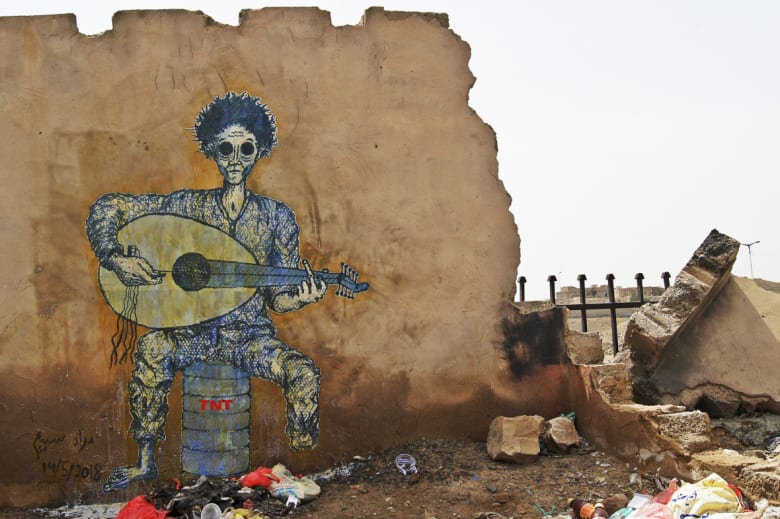
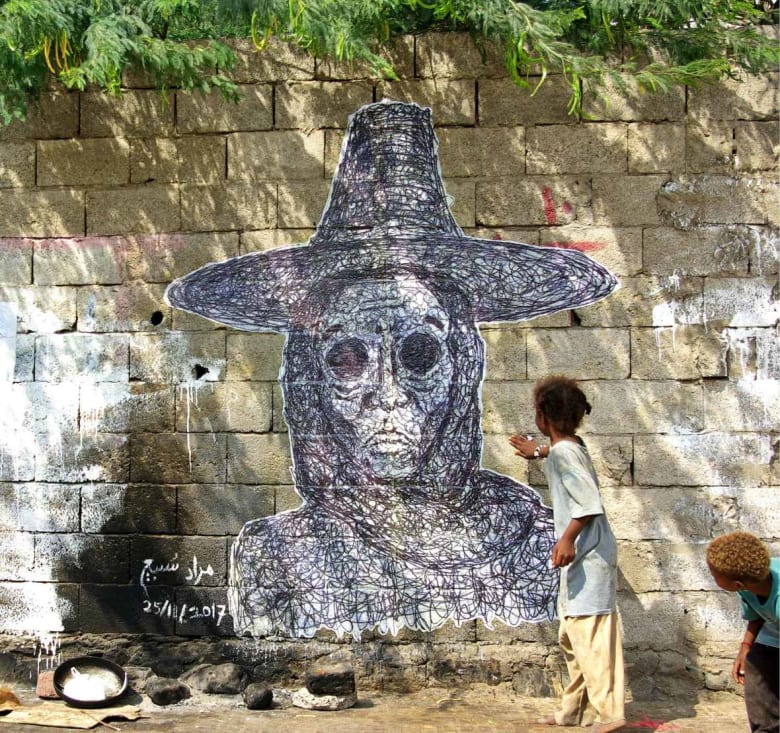
Murad Subay’s mural “War Brands.” Yemen has been pounded by airstrikes. Murad’s fifth campaign, “Ruins,” explores the devastation of war. “War Brands” reflects the size and weight of the war on the minds of Yemenis. (Najeeb Subay)
AGSIW: Tell us about your recent art campaigns.
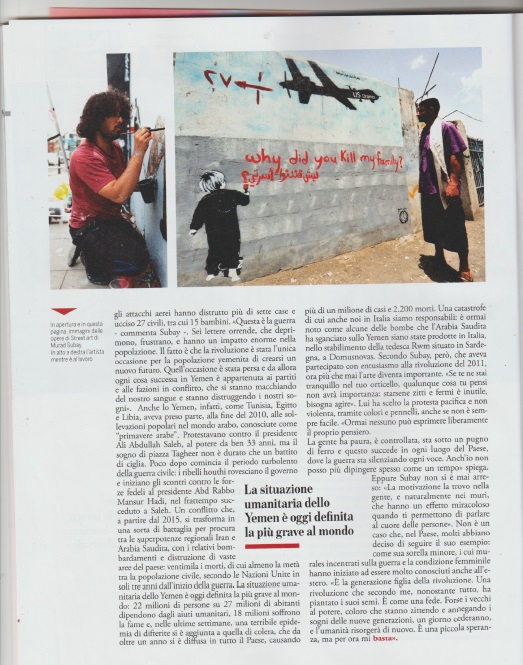
Murad: I just completed my fifth campaign called “Ruins,” which was my biggest campaign, lasting two and a half years. Right after our civil war broke out, I wanted to draw focus to all of the human devastation. No one seemed to care about the civilian casualties, and all the warring sides were only trying to grab as much power as possible. I set out to paint on the walls of destroyed areas to break the silence of the war.
The first painting was near the airport in Sanaa. An airstrike destroyed more than seven homes and killed 27 people, including 15 children. I painted a mural of children hanging up rows of flowers along an exterior wall where the airstrike occurred. Throughout the campaign, I traveled to different parts of Yemen to paint 14 murals. Other artists also contributed to the campaign and painted an additional eight murals.
The campaign ended a few months ago, so that I could develop a new collective called “FOW” [Faces of War]. I launched the first three murals in November of this year in [the port city of] Hodeidah, a very disastrous area where there are several ongoing crises including civilian starvation and a terrible cholera outbreak. These murals show the ugliness of war. I know that art cannot actually cure people or feed people, but it can give a voice and a feeling of hope to people who only know the voice of war. I planned to paint several additional murals, but security officials told me I had to stop until they investigated the existing three.
Murad Subay’s mural “Children of Graves.” As part of “Ruins,” Murad set out to paint on physical spaces affected by the war. “Children of Graves” is in a displacement camp in Amran governorate in western central Yemen. (Najeeb Subay)
AGSIW: How have you helped other young artists get involved?
Murad: The reason I call my art projects “campaigns” is because I do not work on them alone. I have an annual event every March where I organize an open day for street art. Many new young artists [such as Tammam Al-Shebani, Thiyazen Al-Alawi, and Haifa Subay] got their start through one of these campaigns and went on to become important artists in Yemen’s graffiti scene, starting their own art initiatives [such as “Street Caricature,” “Open Book,” and “Silent Victims”]. Last March, I tried to connect Yemeni youth with communities outside of Yemen. In Reading, England, artists participated and, next year, we aim to hold public events in the United States and South Korea.
AGSIW: How has the public reacted to your art?
Murad: Yemenis are inquisitive by nature. Whenever I am painting a mural, people come to look at it and ask me questions. Commonly, people are suspicious and ask, “Who is sponsoring you?”
Back in 2012, I was painting on a particularly hot day. A man came up and asked me lots of questions. He thought I was annoyed with his line of questioning and walked away. He came back with a cold bottle of water and said, “Take it, Oh Artist.”
Another time, a man driving his family stopped his car and asked what I was doing. I told him that I was working with a collective of artists to discuss issues related to civilian casualties. He was so moved that he tried to give me money. I politely declined but he insisted that he wanted to help in some way. He drove off and came back 20 minutes later with buckets of paint.
Older women come up and often say that they are praying for my work. Words can make miracles, so I am energized by all of the different people I meet and their support for me. This is why I continue because we continue to give each other hope. It is hard to describe this feeling of solidarity but it is very strong in Yemen.
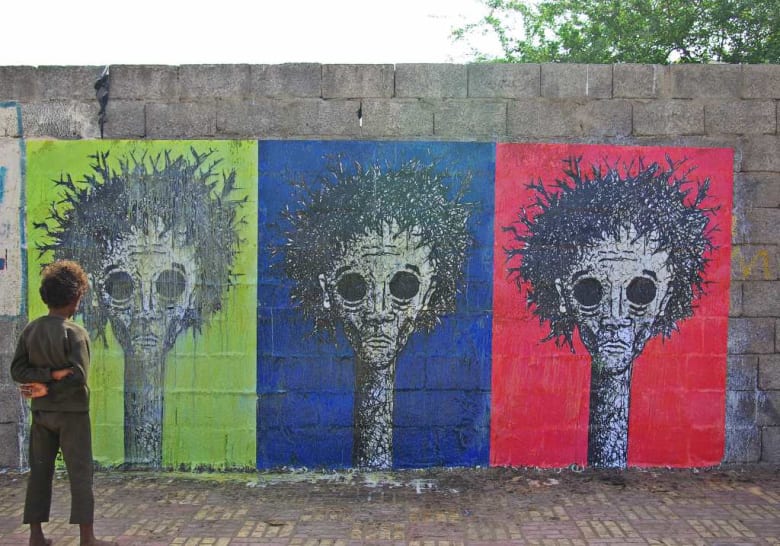
Murad Subay’s mural “Trilogy of War, Hunger, and Illness.” As part of Murad’s newest campaign “FOW” (Faces of War), which began in November, Murad painted three freehand murals to show how the war has transformed Yemenis. “Triology of War, Hunger, and Illness” features Yemeni youth with haggard faces and blank eye sockets due to all they have seen. (Najeeb Subay)
AGSIW: Has the ongoing conflict affected your work?
Murad: Two months before Yemen’s most recent outbreak of war, I started a new project on Yemen’s cultural heritage. I tried to shape metal to make public art installations. However, once the war broke out, I could no longer depend on regular access to electricity. I decided I had to go back to painting murals and graffiti. That is when I decided to launch “Ruins.” War was central to this campaign.
War is normal now, and it is very difficult to operate. I have to make sure that my art does not take sides. I was once investigated by security forces while painting in [the southwestern city of] Taiz. Another time, some artists and I were painting on a school destroyed by one of the common airstrikes. We were trying to highlight what the war has done to Yemen’s education. Some armed men detained us and kept us in a barn that was turned into a jail.
In my current campaign, “FOW,” I have refined my style and moved away from stencils, using free-form. War is the absence of order. The central character in “FOW” has no eyes because of what all Yemenis have witnessed from the wretchedness of all sides who continue to fight. Black hollow sockets remain as to witness Yemen’s destruction. In another one of my paintings, the faces of the three children have vanished. Their faces are skin and bone, empty of dreams and hope.
To see more of his artwork and follow his campaigns, visit Murad’s website.
فنان يمني يستخدم الجدران المدمرة كلوحات لتوثيق يوميات الحرب
ستايل
نشر
دبي، الإمارات العربية المتحدة (CNN)– ينتقل بين طيات الآلام اليومية وصراخ الأحياء الباحثين عن الموتى، إلى عالم آخر يرتطم الصمت فيه بجدار اجتازه رصاص القناصين في اشتباك سابق. ويستعين الرسام اليمني مراد سُبيع بألوان الأكريليك والبخاخات للرسم على الجدار الشبه صامد في إحدى مناطق اليمن.
ويلتصق جلد الشخصية التي يرسمها بعظامها لتبدو هزيلة لا قوة لها، بينما يبدو شعر الشخصية الأشعث متطايراً بلا مبالاة، ويحتل السواد أبيض العيون، ولكن كل تلك التفاصيل لم تخرج من عدم الفنان، بل من التجارب التي عاشها خلال الحرب في اليمن.
وأراد الفنان اليمني “نقل وتأريخ الفترة الصعبة جداً” في تاريخ “بلد يحدد مستقبله” على حد تعبيره، إذ اختار سبيع في عمله الفني “وجوه الحرب” أن يرسم شخصيات هزيلة، في إشارة إلى حالات “الجوع والحرب والمرض” التي يعيشها أهل اليمن، وشبّه شعر شخصياته بـ “الغابات المحترقة”، وقرر استبدال الأعين “بثقب أسود” ليجسد “تأثير الحرب التي أخرجت العيون من محجرها”.
ولا تتربص ويلات الحرب وأشباحها بفن سُبيع دائماً إذ تخترق الألوان المبهجة أعماله الفنية بين الحين والآخر، حيث هدف أول مشروع له حمل عنوان “لوّن جدار شارعك” والذي بدأه في عام ٢٠١٢ إلى “محو الصراع” الذي حصل في موقع اللوحة وإخفاء آثار الدمار على الجدران.
وبدأ الفنان اليمني بالرسم وحيداً في بداية الحملة، إلا إنه وبعد أسبوع من العمل تقريباً، بدأ أهل المنطقة بالانضمام إليه والانغماس في عالم الألوان أيضاً، واعتبر سُبيع الحملة الفنية “كرنفالاً لونياً فريداً من نوعه بسبب تواجد الناس”.
“صورة لجدارية الفنان نبيل القاسم من ضمن حملة “لون جدار شارعك
ويرى الفنان اليمني أن الفن هو “وسيلة للتواصل مع الآخرين”، بينما اختار ممارسة فن الشارع كونه “بعيد عن الأماكن المغلقة ويستطيع الفنان من خلاله الوصول إلى كل الناس”.
أما فيما يتعلق بحيثيات الرسم على الجدران في اليمن، فقال سُبيع لموقع CNN بالعربية إنه من الضروري زيارة الحائط قبل البدء بالرسم وذلك بهدف “التشبع بالقصة وتكوين علاقة مع الجدار”.
وغالباً ما تتلقى الأعمال الفنية نقداً في الحالة الطبيعية، إلا أن جداريات سُبيع عانت من عمليات “الطمس” على حد تعبيره، كما منع في بعض الأحيان من إكمال الرسم، وتعرضت مجموعة الفنانين المشاركين معه في أحيان أخرى للاعتقال.
صورة لجدارية الفنانة هيفاء سبيع من ضمن حملة “لون جدار شارعك”
ولكنه رغم كل المصاعب استمر برش الألوان على الحائط دون استسلام، ليقينه بأن “الفن أهم في وقت الحرب” كونه الزمن الذي “تختفي فيه الآمال والأحلام والحياة” في حين يحاول الفن أن يكون موجوداً رغم الصعاب مما يجعله أسلوباً تعبيرياً “عميقاً ومهماً”، على حد تعبيره.
ينظم سُبيع النسخة الخامسة من مشروع “اليوم المفتوح للفن” والذي سيقام في 15 من مارس 2019، بهدف “المحافظة على التواصل المستمر بين الناس”، إذ يقوم الأشخاص في مدن مختلفة من اليمن والبلدان الأخرى المشاركة بالمهرجان بالرسم في نفس الوقت واليوم بهدف بناء “جسر في الوقت الذي تفرق فيه الحدود والحرب بين الناس”.
Fifth Wall create and enhance projects based around art, culture and social movements.
Murad Subay isn’t your average street artist. For the last seven years, he’s been changing the facade of war torn buildings in the heart of Yemen.
Today, regular air strikes attack markets, funerals and school buses, lack of access to clean drinking water has caused the world’s biggest outbreak of cholera and blocked access to vital food supplies have caused nationwide famine. Despite this, Murad Subay creates his artwork with a smile on his face and resillience in his demeanor.
In this week’s video, I’m in conversation with Murad discussing how art empowers communities, what it’s like making street art surrounded by armed militias and the what like is like in the heart of a revolution.
Les “visages de la guerre”, le projet qui dit “merde” à la guerre au Yémen
Crimes de guerre, disparitions forcées, épidémies : le Yémen vit depuis 5 ans dans le chaos. Un artiste-peintre de la capitale, Murad Subay, dénonce l’horreur du conflit en décorant les murs du pays avec des graffitis. Son projet s’appelle « les visages de la guerre ».
“Merde à la guerre” : un artiste yéménite rassemble les civils autour du graffiti
Un artiste yéménite peint depuis le début du conflit au Yémen les murs de la capitale Sanaa pour dénoncer les crimes de guerre, les disparitions forcées, la pauvreté et les épidémies. Surnommé le “Banksy arabe “par les médias occidentaux, il adopte un mode de travail singulier: le graffiti collaboratif, c’est-à-dire que les habitants d’un quartier réquisitionnent leurs murs pour s’y exprimer librement.
Murad Subay a 30 ans. Artiste-peintre, il vit à Sanaa dont il décore les murs de graffitis aux résonnances politiques depuis le début du conflit, en 2014, entre séparatistes houtistes et forces pro-gouvernementales. Engagé dans les révoltes anti-gouvernementales de 2011, il s’efforce depuis de dénoncer les horreurs de la guerre.
Il a récemment peint une œuvre intitulée “Fuck war “[merde à la guerre, en français], qui a eu beaucoup de succès sur les réseaux sociaux.
L’artiste peint régulièrement les immeubles et maisons en ruines, détruits par les bombardements de la coalition menée par l’Arabie saoudite, qui soutient les forces pro-gouvernementales.
Il s’attarde aussi sur les conséquences sanitaires du conflit pour la population.
Cette fresque dénonce l’épidémie de choléra qui touche le pays. Plus de 300 000 Yéménites auraient contracté cette maladie depuis juin 2017, selon l’OMS.
Cette autre fresque symbolise les “trois maux du Yémen” : la guerre, la faim et la maladie.
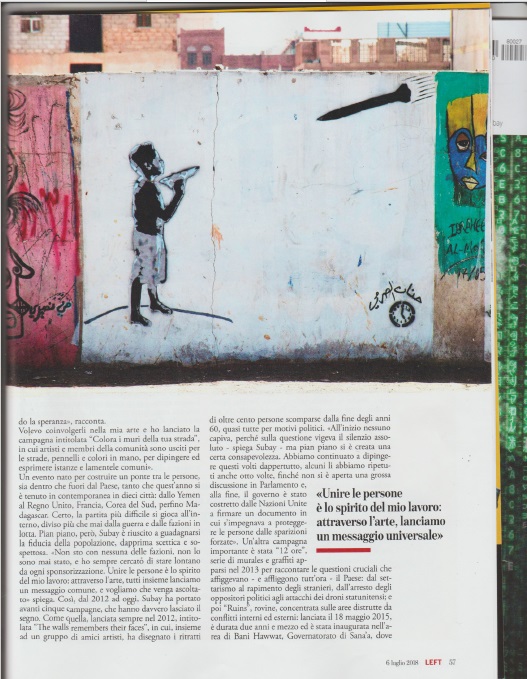
Cette œuvre dénonce l’utilisation d’équipements militaires américains par la coalition dirigée par l’Arabie saoudite, qui bombarde les régions tenues par les houthis, soutenus par l’Iran.













 Murad Subay